Tamron 12-20mm f2.8 review
-
-
Written by Thomas
Quality
Longitudinal Chromatic Aberration and focus shift
I tested the Tamron 12-20mm f2.8 at 20mm for longitudinal color aberrations (loCA, a.k.a. “axial color” or “bokeh CA”) and focus shift. The former can show up as magenta coloration in the foreground and greenish hues in the background and are not easily corrected in post-processing. The new zoom lens shows hardly any loCA when used wide open but there is a bit of focus shift towards the background which becomes very strong in close-up shooting at 20mm focal length:
Tamron 12-20mm f2.8 loCA at 20mm; 50% crops from 180MP image
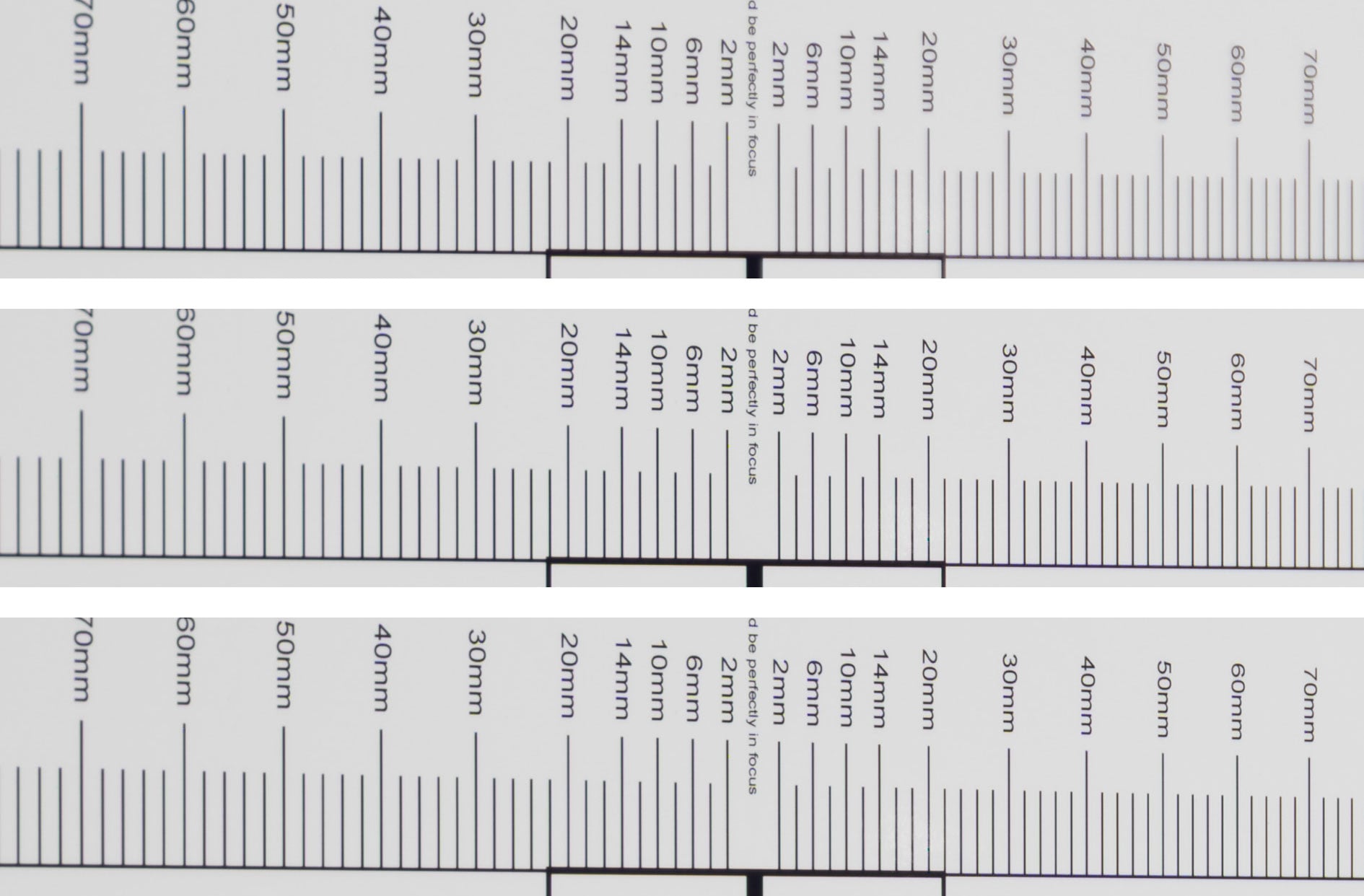
Above from top to bottom: f2.8, f4.0, f5.6; left = foreground, right = background; click image for 100% crops
The Tamron 12-20mm f2.8 also shows little fringing around high-contrast edges in the focus plane or green outlining around background subjects. And spill-over of bright background light is relatively well controlled:
Above: Tamron 12-20mm f2.8 at 20mm, f2.8; 100% crop, click image for 4k version, here for large original
Only the image of the glittering water from the fountain in the samples section shows a bit of purple fringing in the specular highlights.
Sharpness and contrast
Let’s have a look at the theoretical performance of the new Tamron 12-20mm f2.8 first and compare it to the alternatives from Sony and the Nikon:
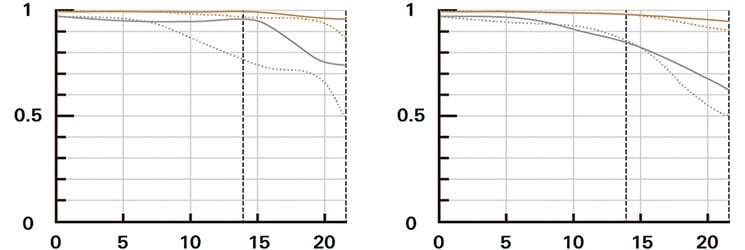
Above: MTF Tamron 12-20mm f2.8 at 12mm f2.8 (left) and 20mm f2.8 (right)
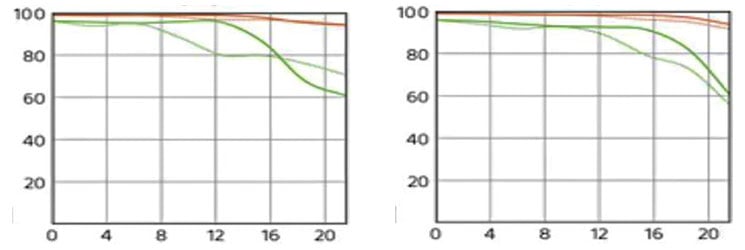
Above: MTF Sony FE 12-24mm f2.8 GM at 12mm f2.8 (left) and 24mm f2.8 (right)
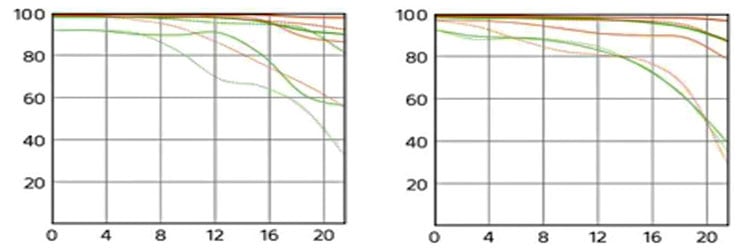
Above: MTF Sony FE 12-24mm f4 G at 12mm f4.0 (left) and 24mm f4.0 (right)
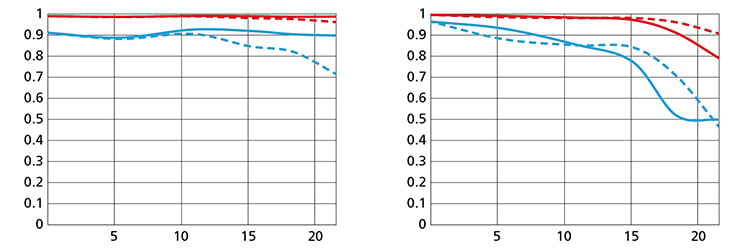
Above: MTF Nikon Z 14-24mm f2.8 S at 14mm f2.8 (left) and 24mm f2.8 (right)
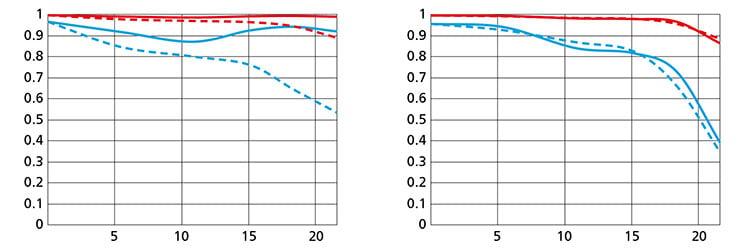
Above: MTF Nikon Z 14-30mm f4 S at 14mm f4.0 (left) and 30mm f4.0 (right)
These MTF charts show the computed lens-performance wide open without influence of diffraction at 10 line-pairs/mm (in red/yellow) and 30 lp/mm (in blue/green/gray); for the Sony 12-24mm f4 G only the green lines are relevant. Higher values are better (more contrast) and the closer the dotted and solid lines are together the less astigmatism (= resolution depends on the orientation of the test-pattern) the lens has. The x-axis displays the “image height” which is the distance from the optical axis (=center of the sensor) in mm. I’ll show you the real-life performance at 4 mm (near center), 13 mm (APS-C/DX-corner), and 20 mm (FF/FX-corner).
From the charts the Tamron seems to be right up there with the best from Sony and Nikon, except for the FF/FX-corner of the Nikon Z 14-24mm f2.8 S at the wide end. But let’s see how this theoretical performance translates into real life results in the sharpness test based on Siemens-stars shot on a 45MP Nikon Z8 set to 16 image pixel shift shooting. The 16 individual images for each shot were merged in NX Studio 1.9.1 into a 180MP RAW file and further processed in Lightroom 15.5.1/CRAW 18.5.1 to Adobe Color profile with the lens profile compensating CA, distortions, and vignetting. Noise-reduction was set to 0, sharpening to 50/1/36/10, with no extra tone, color, or saturation adjustment. White-balance was adjusted to a neutral white and I did some exposure compensation to make the brightness of all crops match. So you will not see light fall-off in the corners. I also focused separately for the center, the APS-C/DX-corner, and FF/FX-corner which eliminates any effect field-curvature might have. If you want to know more about the advantages and perils of pixel shift shooting head over page 2 of my Tamron 28-75mm f2.8 Di III G2 Nikon Z review.
First up is an overview of the wide-open performance at different focal lengths (presented as 50% crops). You can jump to the detailed results at different apertures and comparisons with other lenses by clicking on the crops of the respective focal length.
Tamron 12-20mm f2.8; 50% crops from 180MP image near center, APS-C/DX-corner, FF/FX-corner
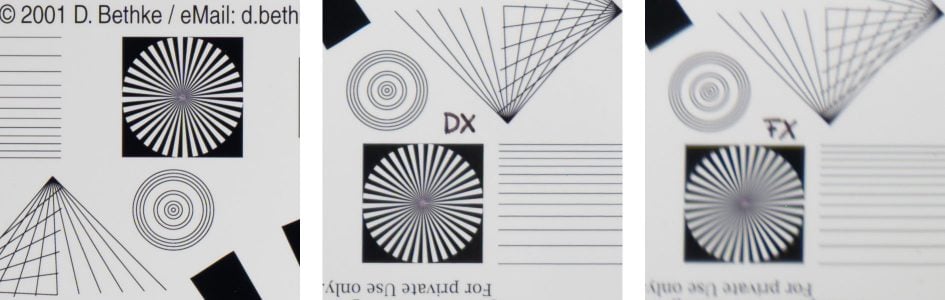
Above: 12mm, f2.8
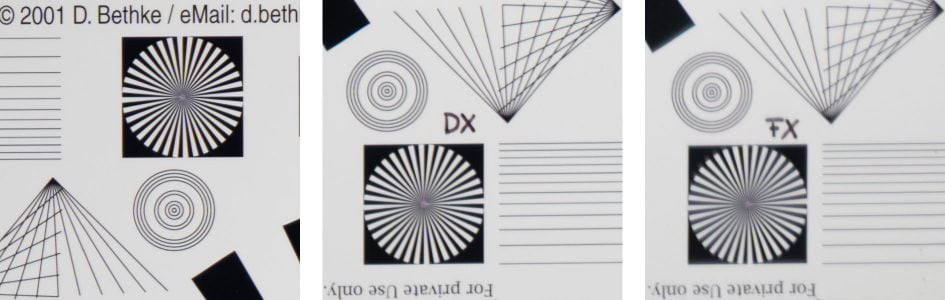
Above: 16mm, f2.8
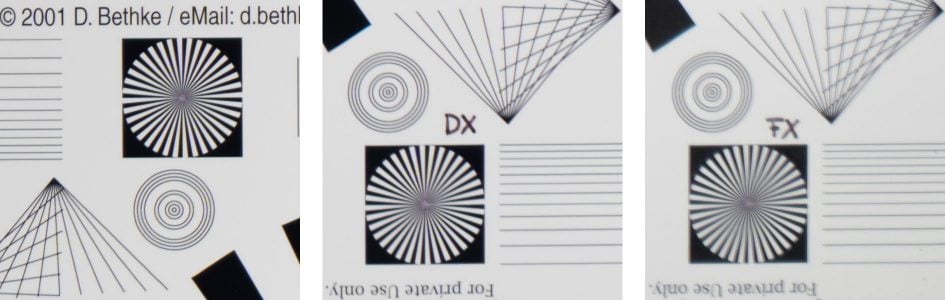
Above: 20mm, f2.8
At the wide end Tamron’s 12-20mm f2.8 looks very sharp within the APS-C/DX image circle with an excellent center but the FF/FX-corner is mushy. At 16mm the FF/FX-corner improves markedly while the APS-C/DX-corner softens a bit. Zooming in to 20mm softens the APS-C/DX image circle again a tiny bit. Field curvature is relatively moderate at 20mm and normal shooting distances but gets stronger at the shorter focal lengths and closer distances.
Detailed results
The following crops for each focal length show the Tamron 12-20mm f2.8 at f2.8 compared to the Nikon Z 14-24mm f2.8 S (shot on a 45MP Nikon Z7) and Sony FE 12-24mm f2.8 GM. At f4.0 the Nikon Z 14-30mm f4 S and Sony FE 12-24mm f4 G enter the comparison. Both Sony lenses were shot on a 42MP Sony A7R II in RAW and processed to the same standard in Lightroom. As only the Tamron and the Nikon Z 14-30mm f4 S were shot at 180MP the crops from the other lenses suffer from aliasing artifacts which are very visible in the center of the Siemens star – which makes comparisons a bit harder.
You can skip the details and fast-forward to the summary for this chapter.
Performance at 12mm:
Tamron 12-20mm f2.8 at 12mm compared; 50% crops from 180MP image near center, APS-C/DX-corner, FF/FX-corner
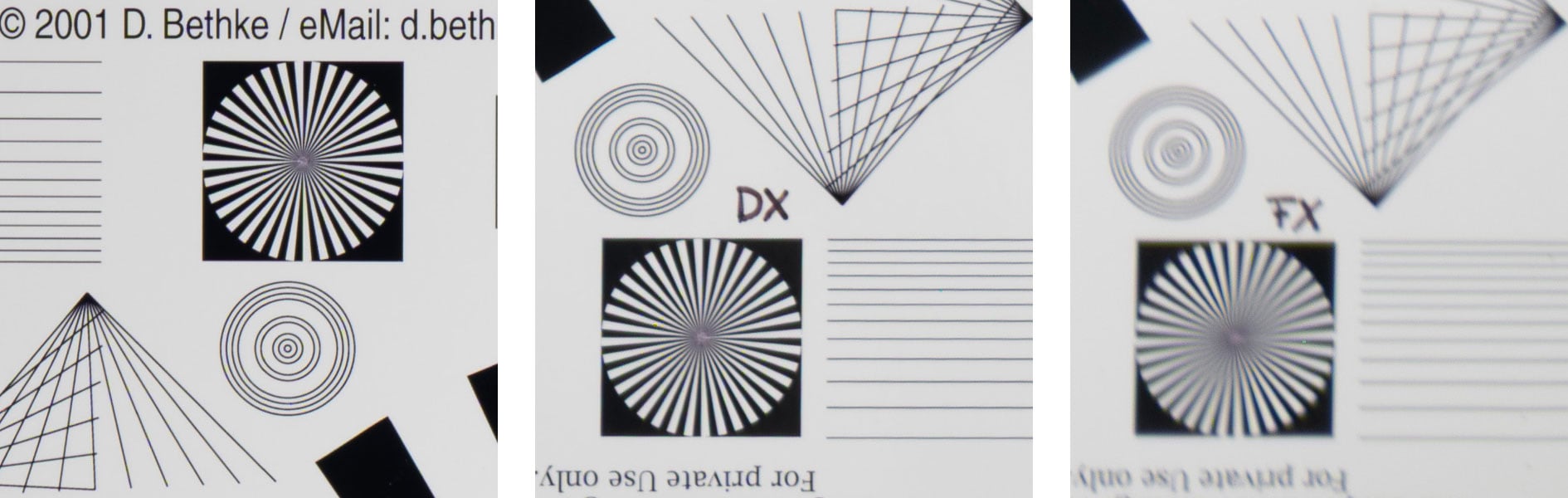
Above: Tamron 12-20mm f2.8 at 12mm, f2.8; click image for full resolution 100% crops
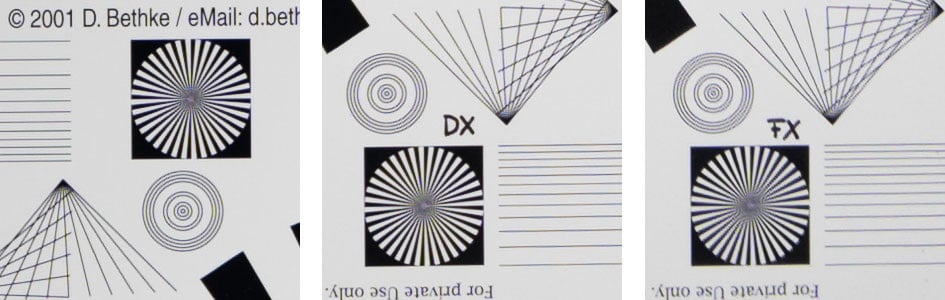
Above: Nikon Z 14-24mm f2.8 S at 14mm, f2.8; shot at 45MP on a Nikon Z7
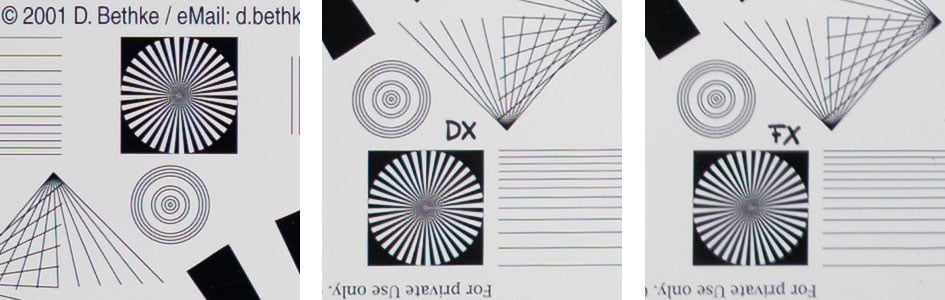
Above: Sony FE 12-24mm f2.8 GM at 12mm, f2.8; shot at 42MP on a Sony A7R II
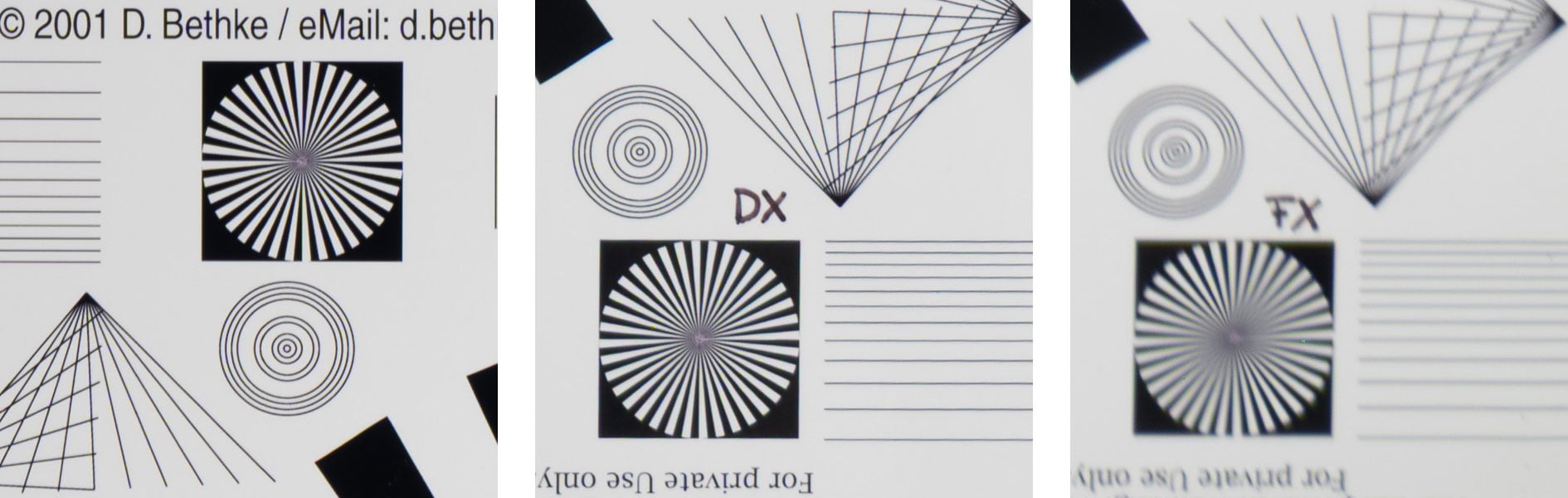
Above: Tamron 12-20mm f2.8 at 12mm, f4.0; click image for full resolution 100% crops
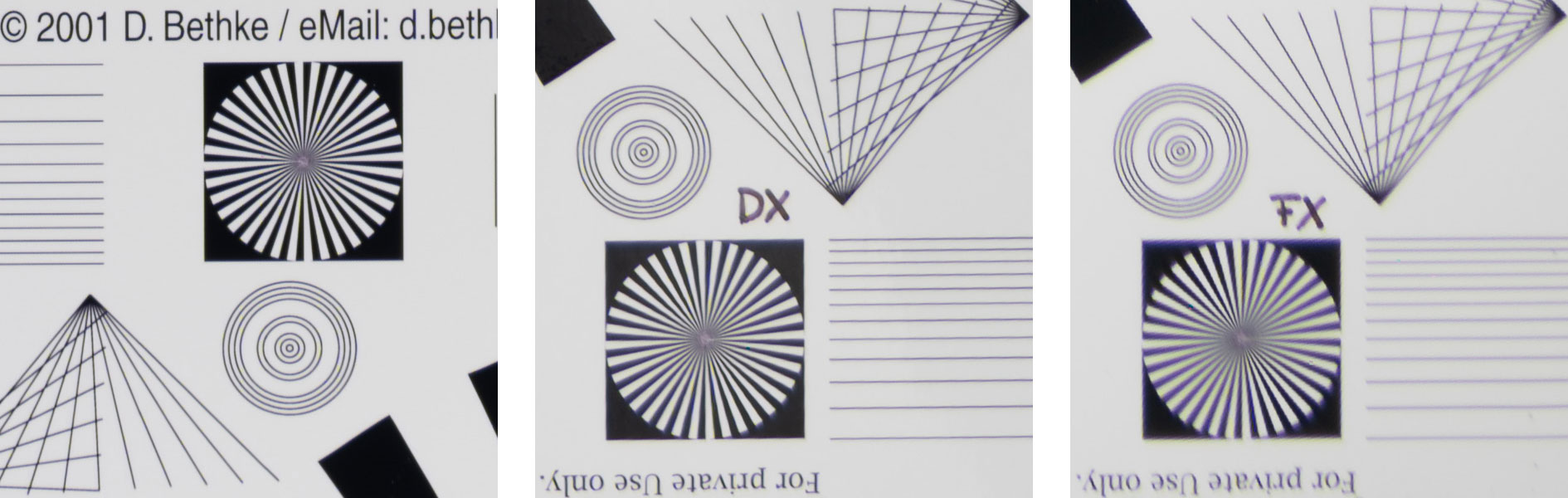
Above: Nikon Z 14-30mm f4 S at 14mm, f4.0; click image for full resolution 100% crops
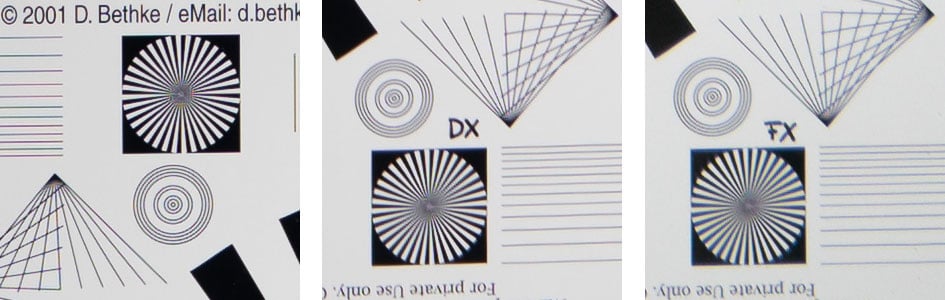
Above: Sony FE 12-24mm f4 G at 12mm, f4.0; shot at 42MP on a Sony A7R II
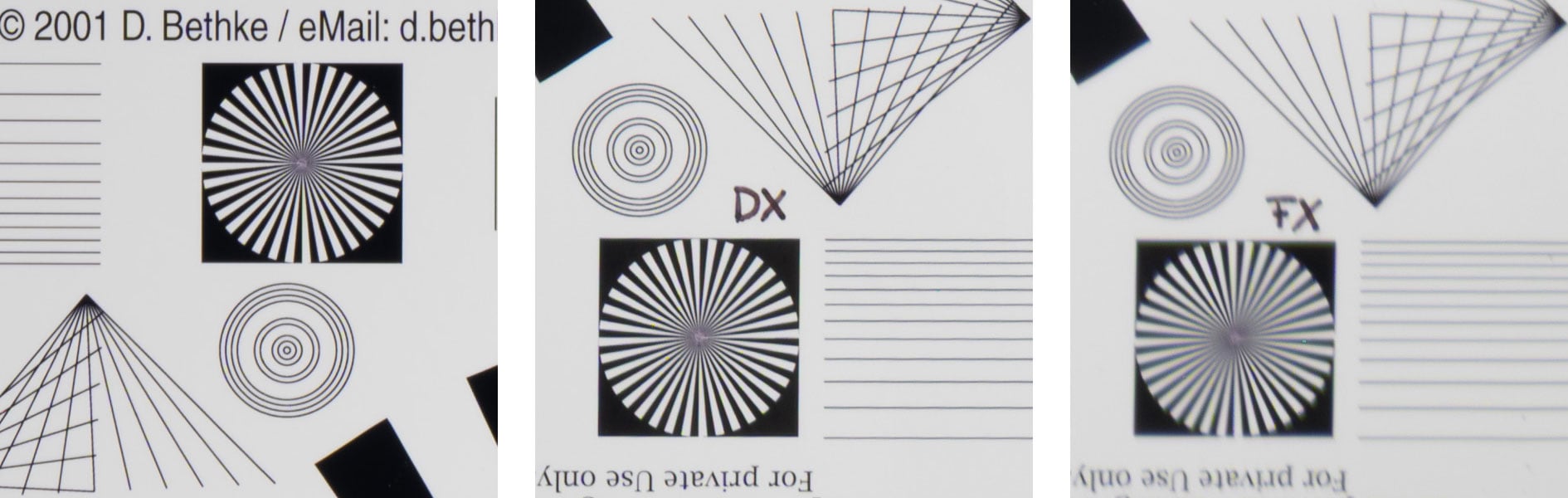
Above: Tamron 12-20mm f2.8 at 12mm, f5.6; click image for full resolution 100% crops, also available at f8.0
At 12mm the Tamron 12-20mm f2.8 is comparably sharp within the APS-C/DX image circle but looses out in the FF/FX-corner where every other lens in this comparison is clearly sharper. The visible drop in acuity happens around 16mm image height which is just outside the APS-C/DX-corner (14mm). Stopping down helps a bit but only at f5.6 and beyond sharpness becomes acceptable.
Performance at 16mm:
Tamron 12-20mm f2.8 at 16mm compared; 50% crops from 180MP image near center, APS-C/DX-corner, FF/FX-corner
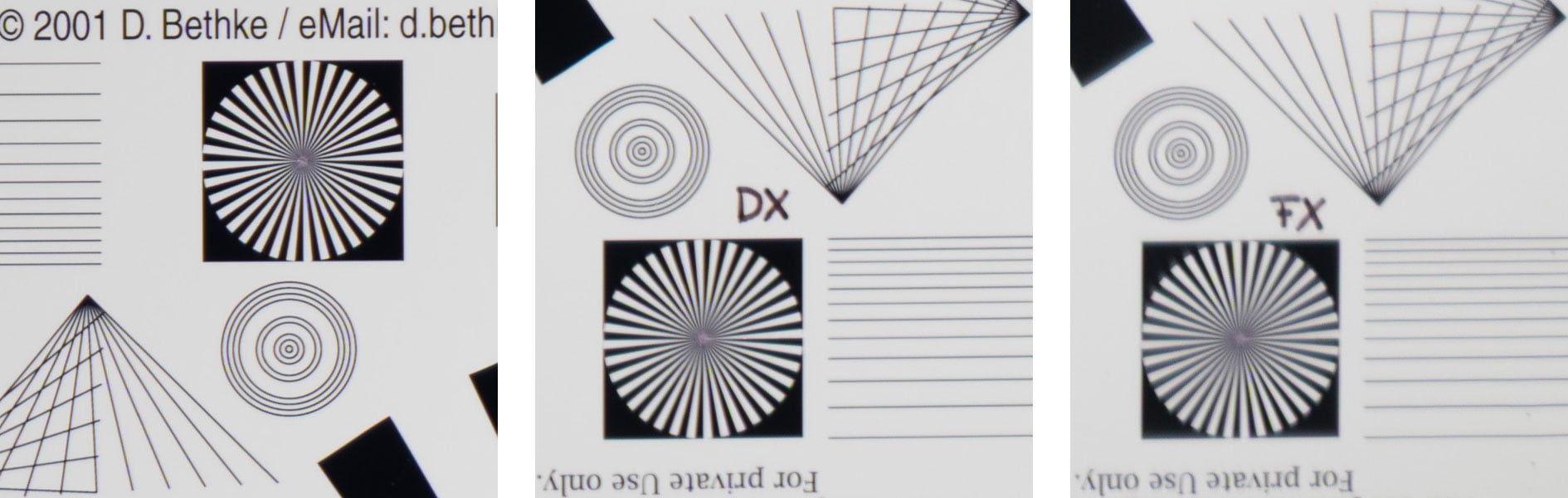
Above: Tamron 12-20mm f2.8 at 16mm, f2.8; click image for full resolution 100% crops
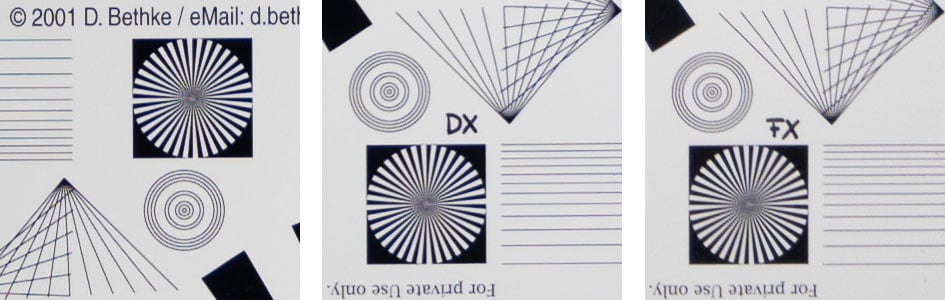
Above: Nikon Z 14-24mm f2.8 S at 17mm, f2.8; shot at 45MP on a Nikon Z7
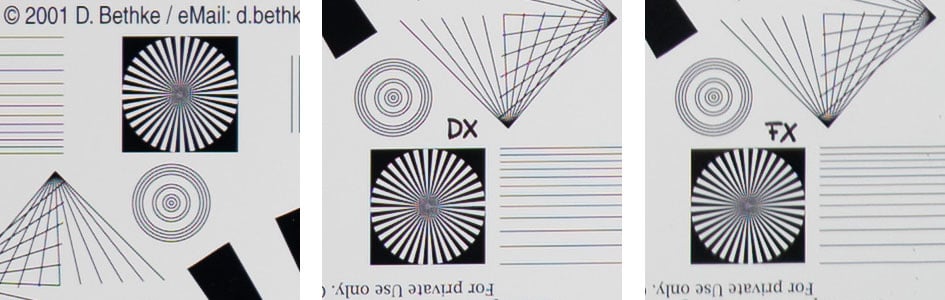
Above: Sony FE 12-24mm f2.8 GM at 17mm, f2.8; shot at 42MP on a Sony A7R II
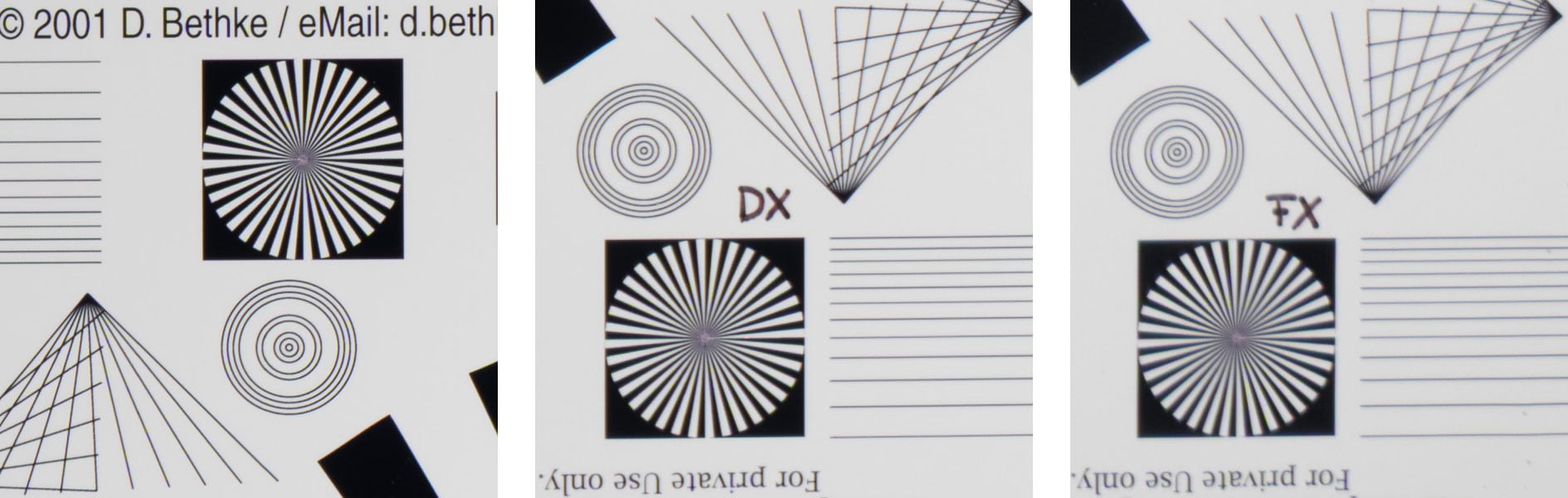
Above: Tamron 12-20mm f2.8 at 16mm, f4.0; click image for full resolution 100% crops
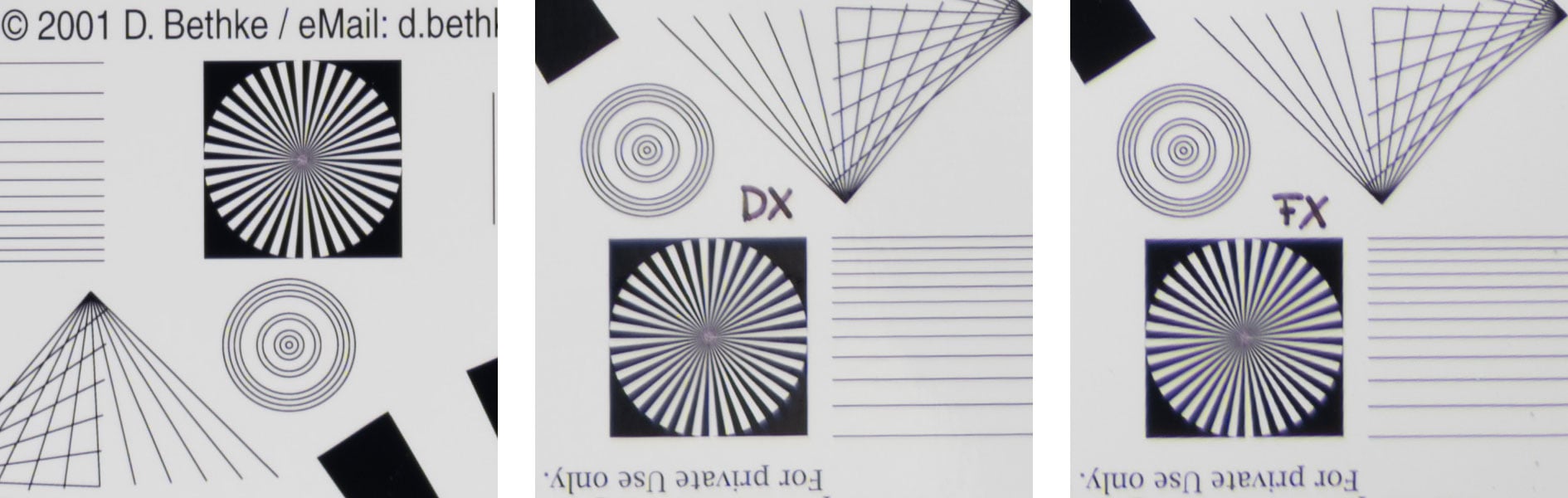
Above: Nikon Z 14-30mm f4 S at 16mm, f4.0; click image for full resolution 100% crops
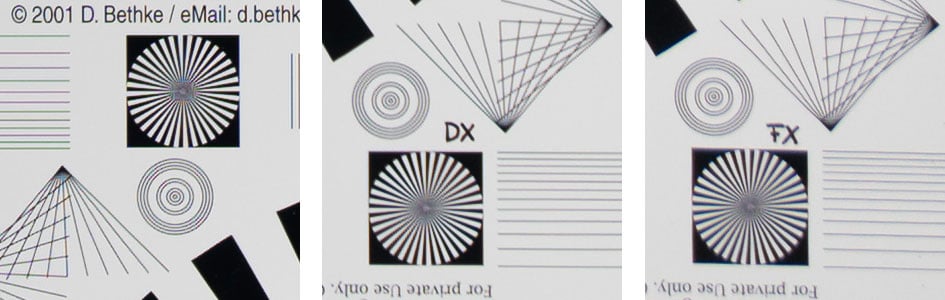
Above: Sony FE 12-24mm f4 G at 17mm, f4.0; shot at 42MP on a Sony A7R II
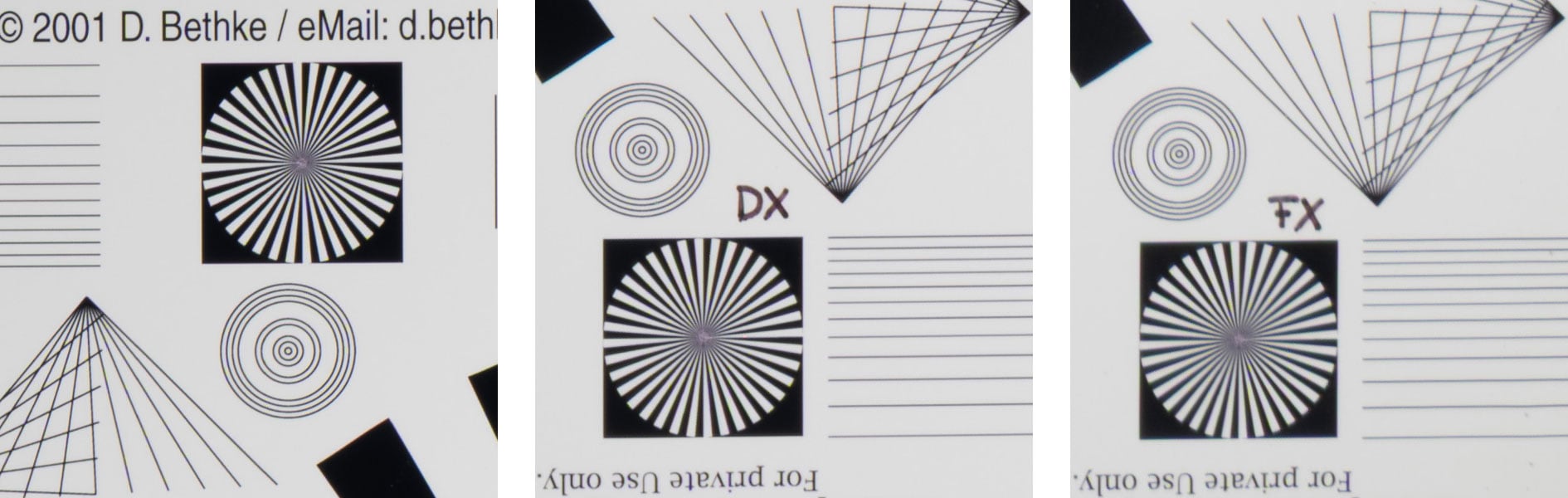
Above: Tamron 12-20mm f2.8 at 16mm, f5.6; click image for full resolution 100% crops, also available at f8.0
At 16mm the comparison yields similar results to 12mm focal length, but the FF/FX-corner of the Tamron 12-20mm f2.8 now is much closer to its competitors. Stopping down to f4 makes the extreme corners look pretty good and the lens delivers very good and even acuity across the full-frame sensor. Compared to the Nikon Z 14-30mm f4 S the Tamron is slightly sharper in the center and slightly softer in the FF/FX-corner.
Performance at 20mm:
Tamron 12-20mm f2.8 at 20mm compared; 50% crops from 180MP image near center, APS-C/DX-corner, FF/FX-corner
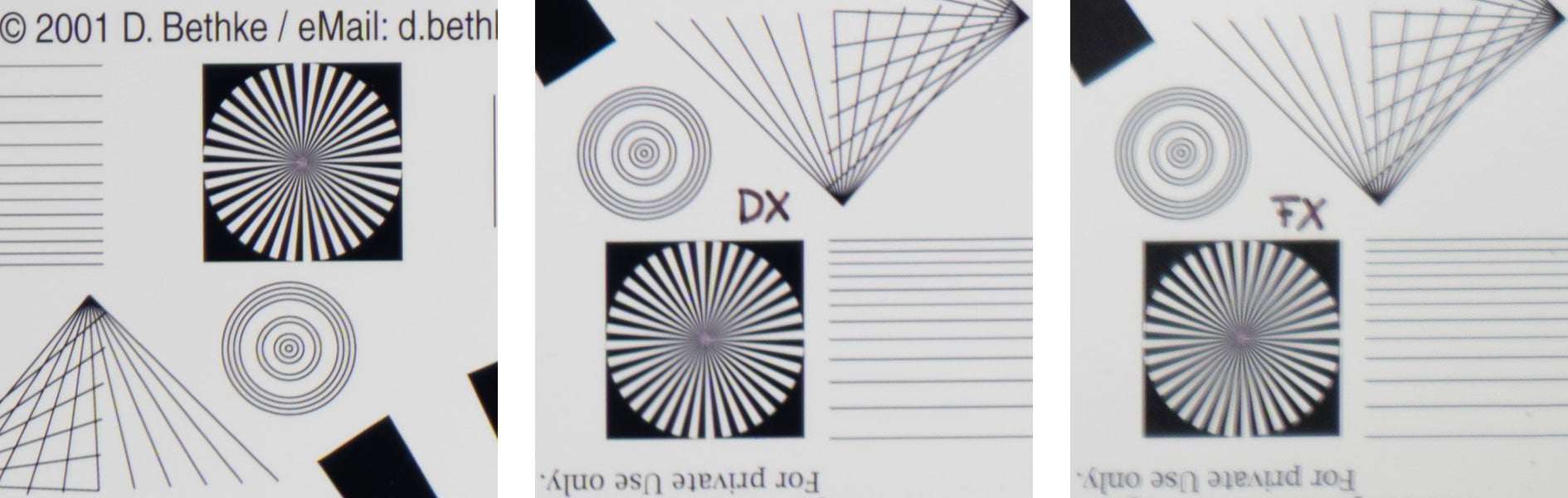
Above: Tamron 12-20mm f2.8 at 20mm, f2.8; click image for full resolution 100% crops
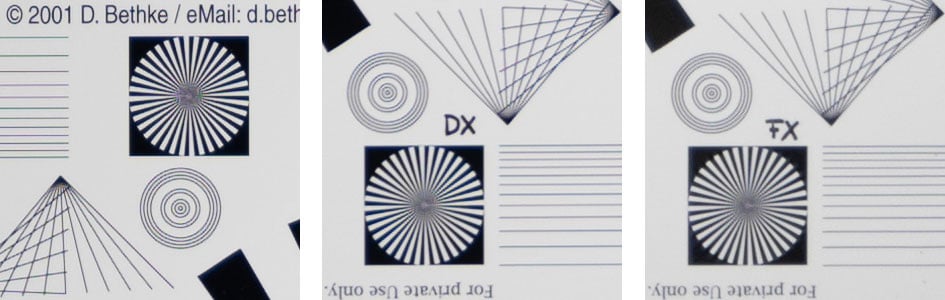
Above: Nikon Z 14-24mm f2.8 S at 20mm, f2.8; shot at 45MP on a Nikon Z7
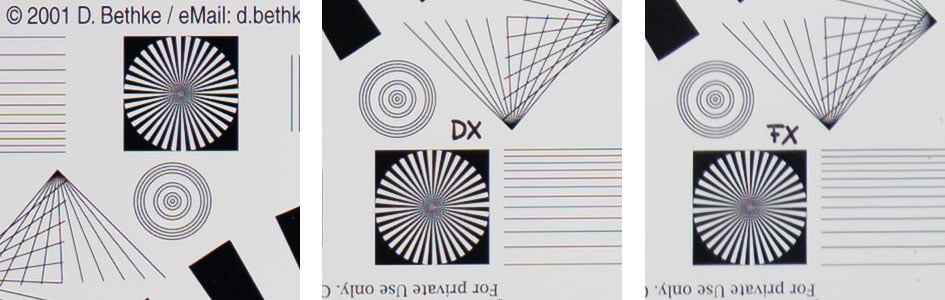
Above: Sony FE 12-24mm f2.8 GM at 20mm, f2.8; shot at 42MP on a Sony A7R II
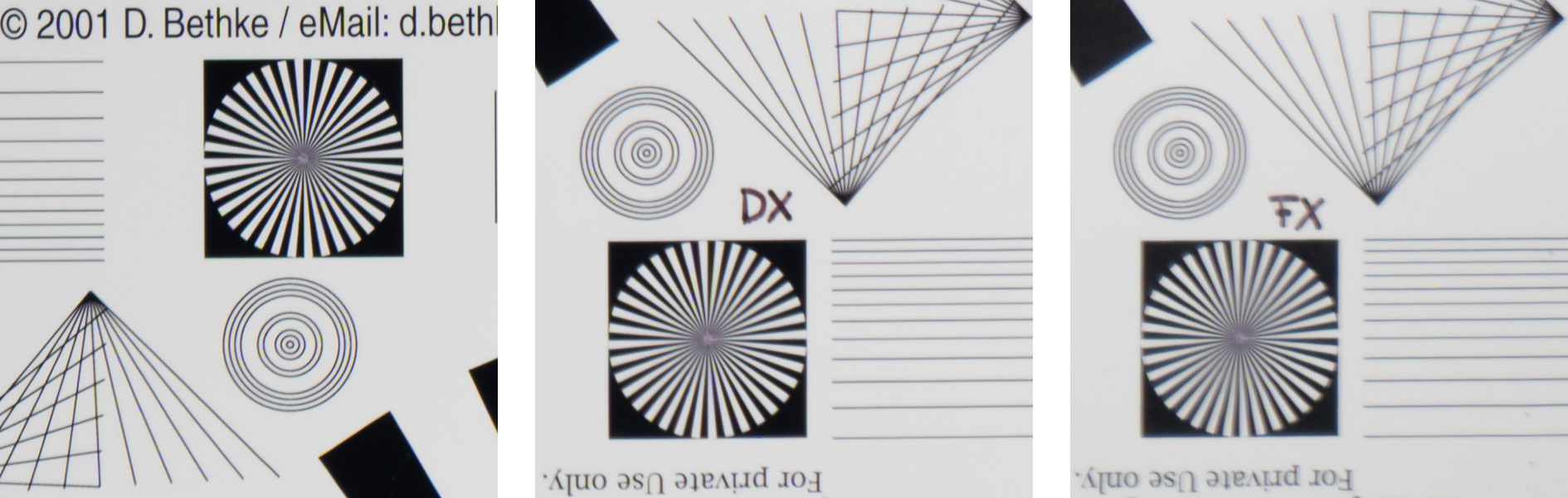
Above: Tamron 12-20mm f2.8 at 20mm, f4.0; click image for full resolution 100% crops
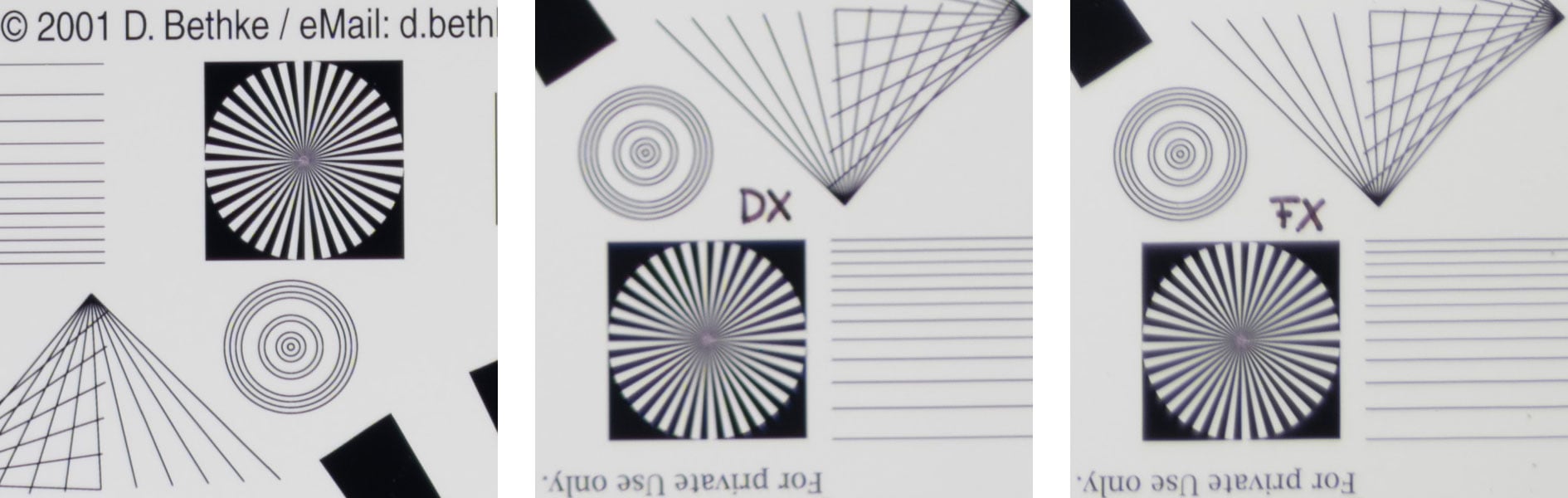
Above: Nikon Z 14-30mm f4 S at 20mm, f4.0; click image for full resolution 100% crops
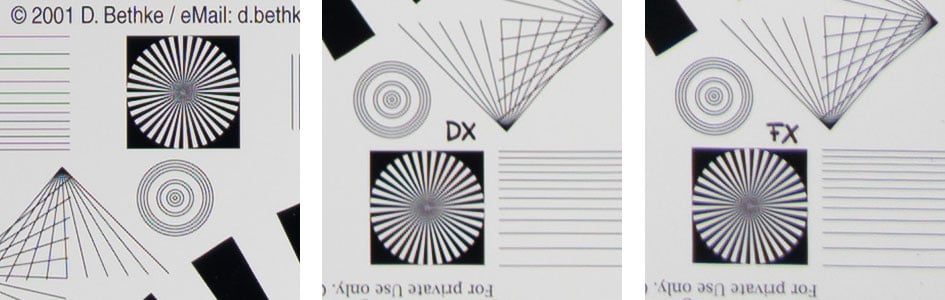
Above: Sony FE 12-24mm f4 G at 20mm, f4.0; shot at 42MP on a Sony A7R II
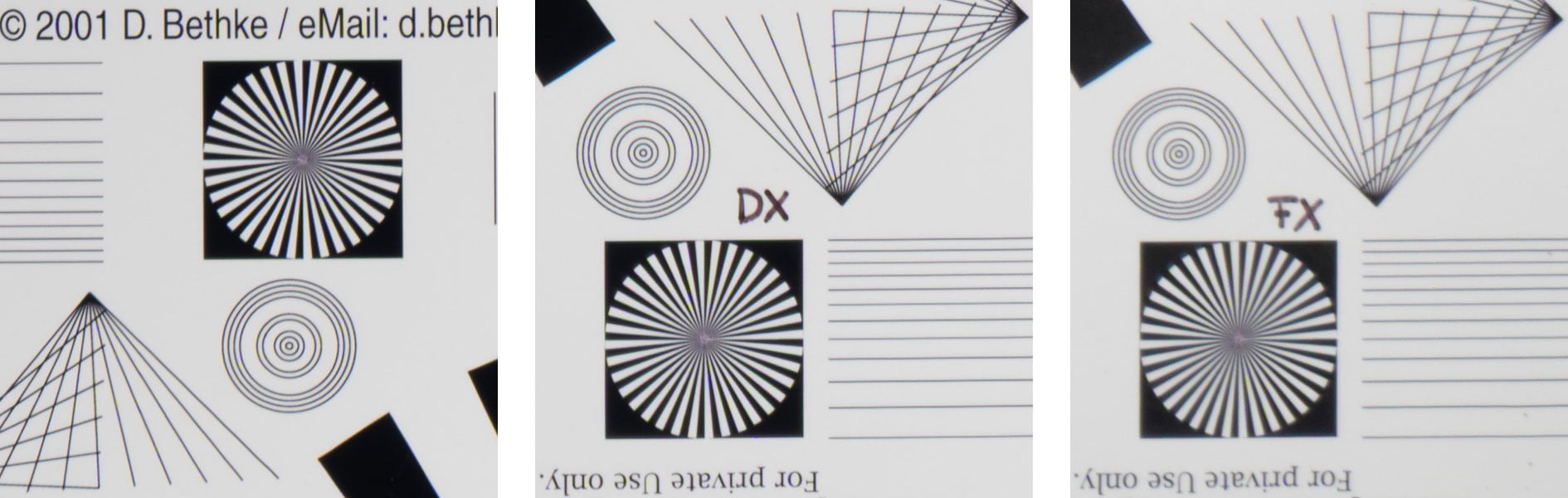
Above: Tamron 12-20mm f2.8 at 20mm, f5.6; click image for full resolution 100% crops, also available at f8.0
At 20mm and f2.8 the Tamron 12-20mm f2.8 is neck-and-neck with the Nikon Z 14-24mm f2.8 S but a bit less sharp than the Sony FE 12-24mm f2.8 GM. At f4.0 the Tamron has the better APS-C/DX-corner than the Nikon Z 14-30mm f4 S or the Sony FE 12-24mm f4 G but its FF/FX-corner needs stopping down to f5.6 to catch up with its rivals.
Summary:
The comparisons show that the Tamron 12-20mm f2.8 suffers only from one drawback: It’s less sharp outside the APS-C/DX image circle than the alternatives – and at the short end clearly so. Otherwise its sharpness is up there with the best.
Performance at long distances
The Siemens-star test-targets are shot at a distance of 45x focal length (i.e. at around 0.9m for 20mm focal length). But performance of lenses also depends on the shooting distance. Therefore, I shot another series of a city around 1 km away on a Nikon Z8 set to 16 image pixel shift shooting. The 16 individual images for each shot were merged in NX Studio 1.9.1 into a 180MP RAW file and further processed in Lightroom 15.5.1/CRAW 18.5.1 to Adobe Color profile with the the lens profile compensating CAs, distortions, and vignetting. Noise-reduction was set to 0, sharpening to 50/1/36/10, with no extra tone, color, or saturation adjustment. I used manual focus at the largest aperture and did not change focus for other apertures. All shots were made from a heavy tripod with image stabilization switched off at ISO 64. As usual I have selected the diagonal that provided the better corner results as the lens was a bit decentered..
The following images show the complete scene wide open shot with the Tamron 12-20mm f2.8 plus 50% crops from near center, APS-C/DX-corner, and FF/FX-corner. All crops in a row are from the same image so there is no compensation for field curvature. You can access the large 180MP originals, but the files are for personal evaluation only and cannot be used in another publication or website without permission.
Tamron 12-20mm f2.8 at 12mm
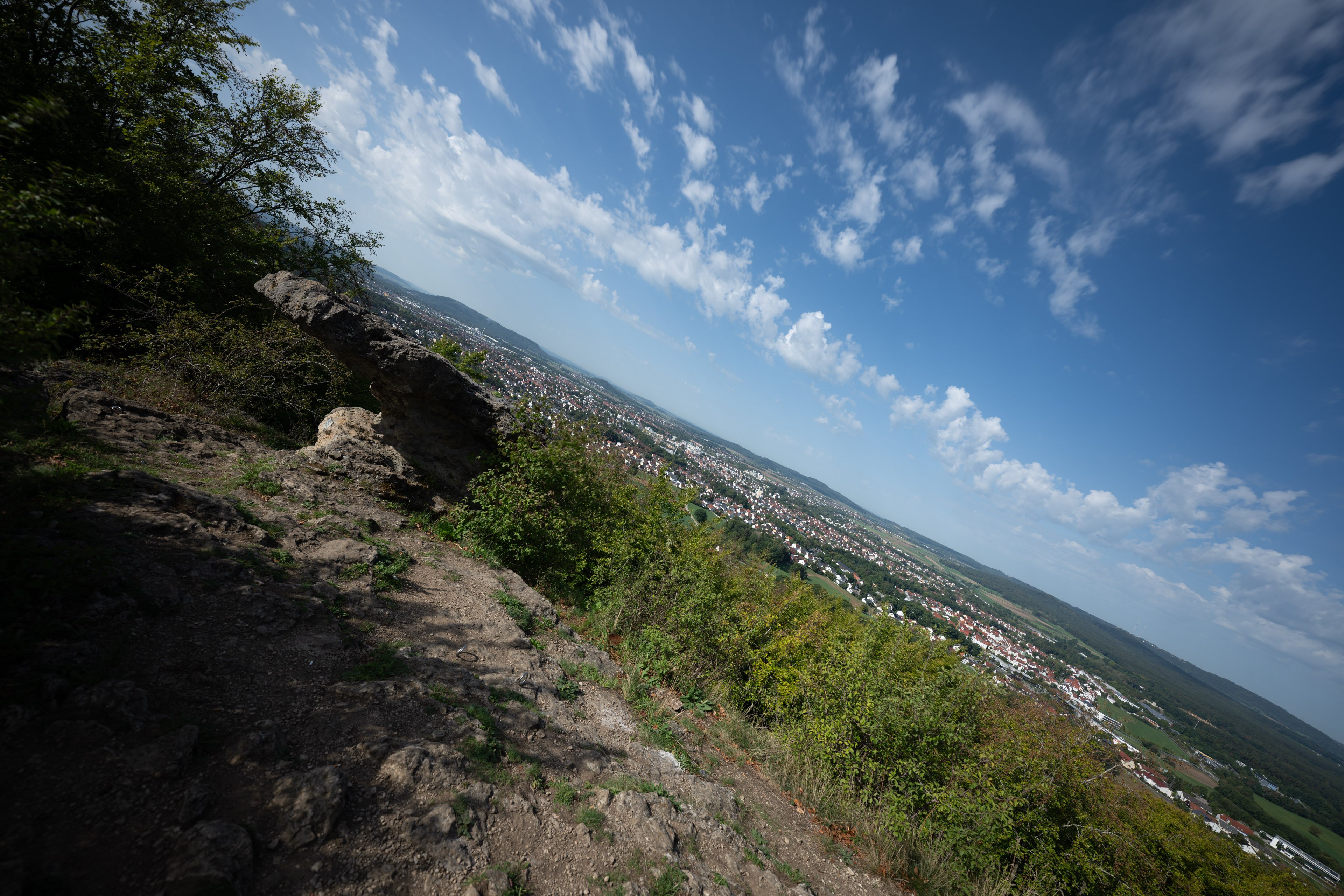
Above: Tamron 12-20mm f2.8 at 12mm, f2.8; click image for 4k version, here for 180MP original
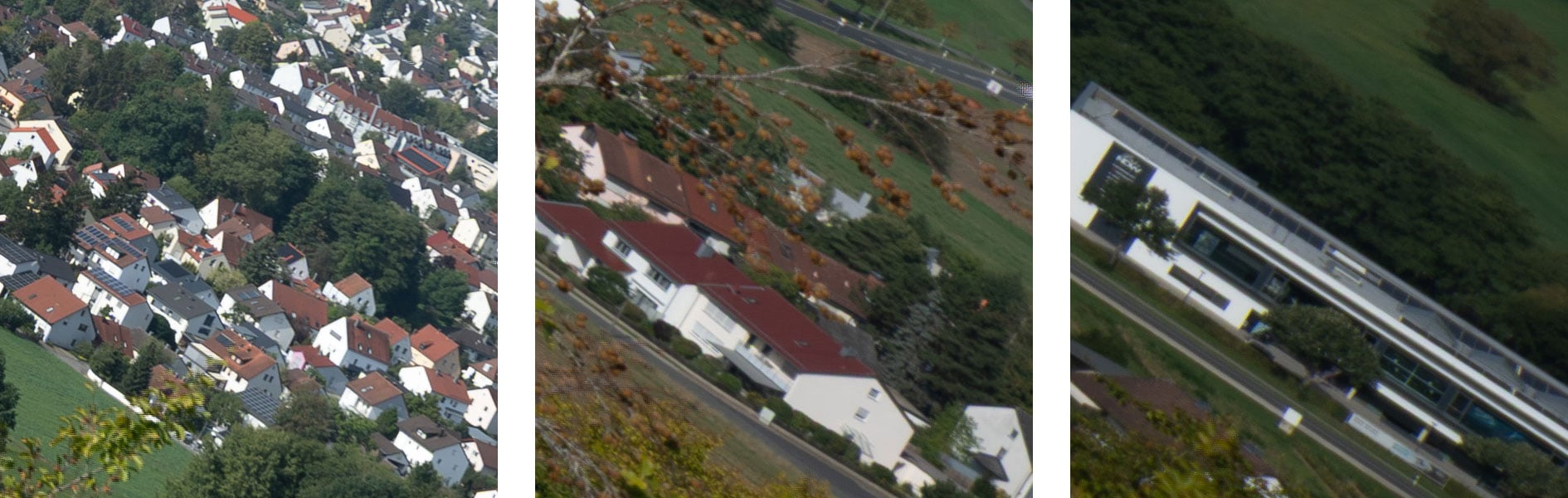
Above: Tamron 12-20mm f2.8 at 12mm, f2.8; 50% crops, click image for full resolution 100% crops
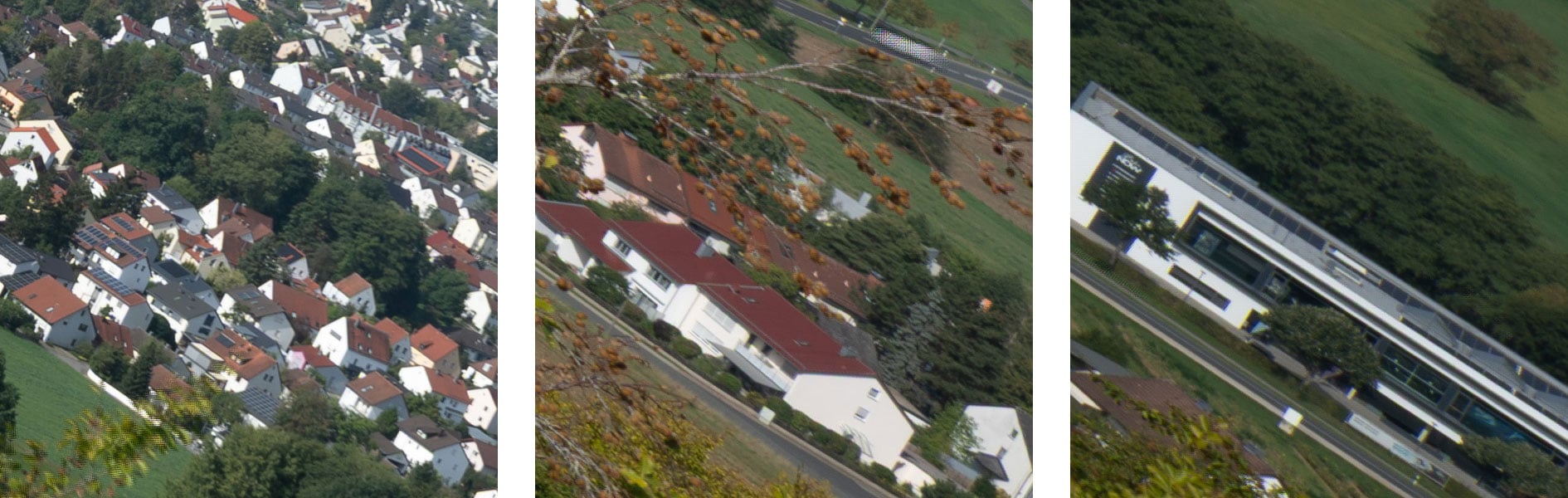
Above: Tamron 12-20mm f2.8 at 12mm, f4.0; 50% crops, click image for full resolution 100% crops
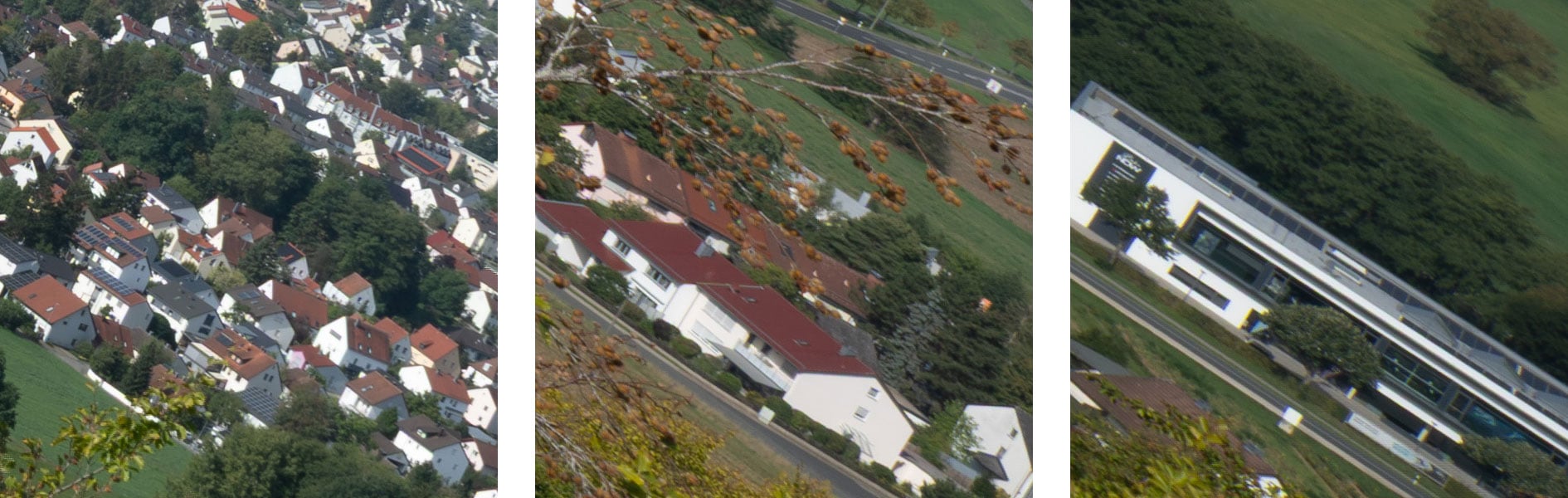
Above: Tamron 12-20mm f2.8 at 12mm, f5.6; 50% crops, click image for full resolution 100% crops, also available at f8.0
Tamron 12-20mm f2.8 at 16mm
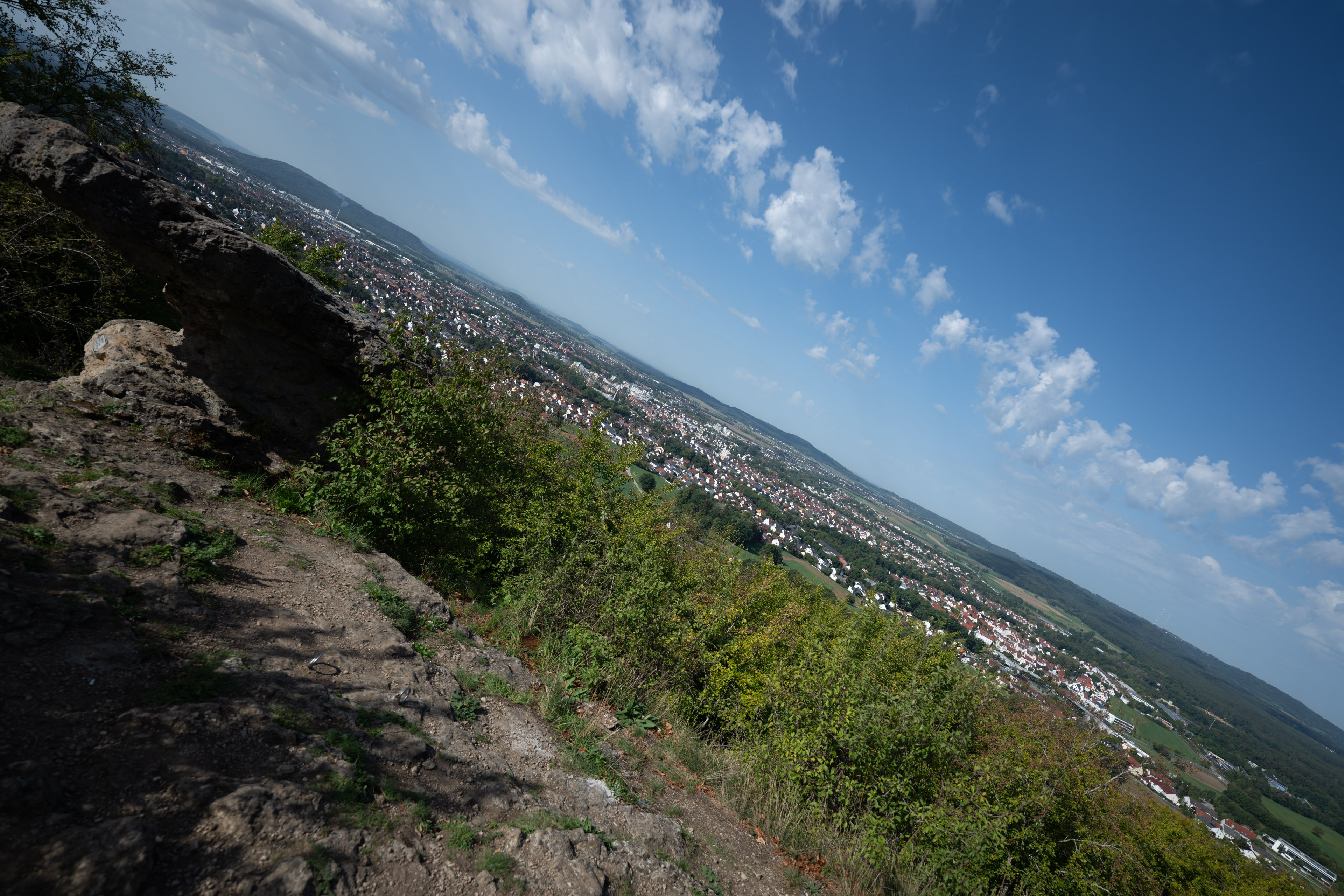
Above: Tamron 12-20mm f2.8 at 16mm, f2.8; click image for 4k version, here for 180MP original
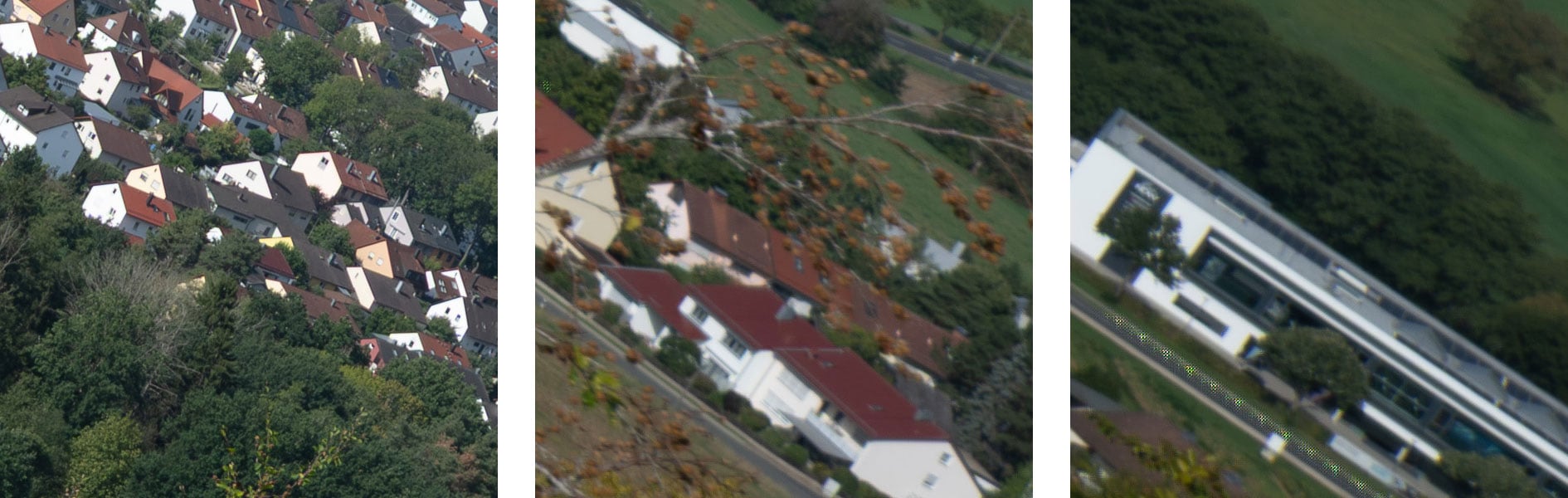
Above: Tamron 12-20mm f2.8 at 16mm, f2.8; 50% crops, click image for full resolution 100% crops
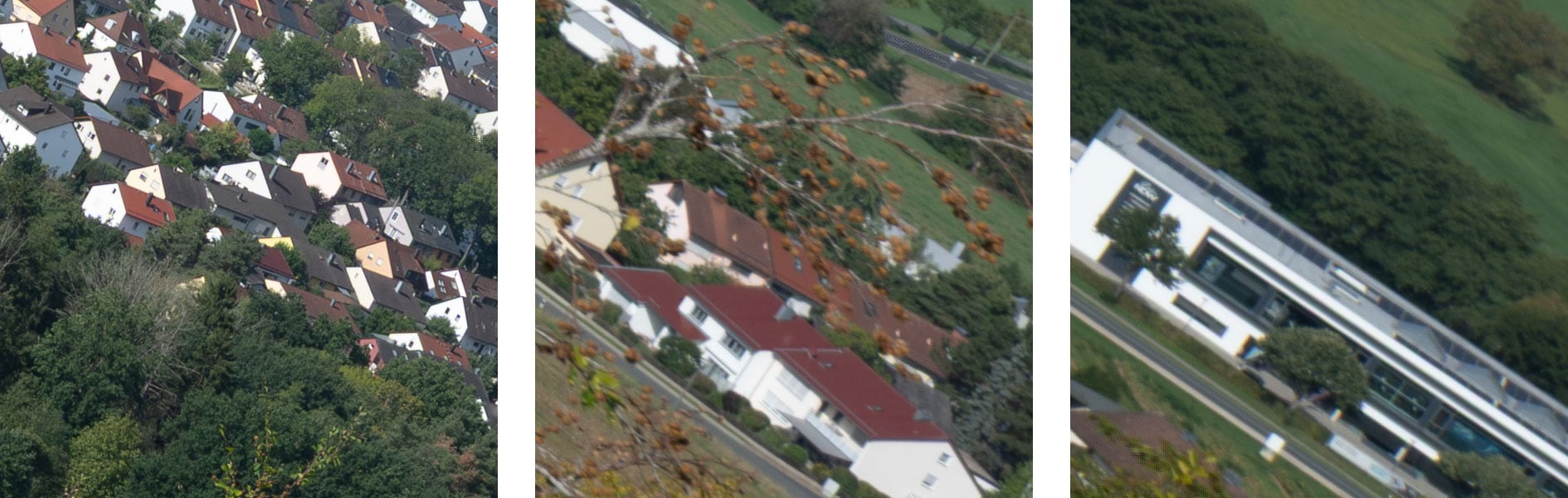
Above: Tamron 12-20mm f2.8 at 16mm, f4.0; 50% crops, click image for full resolution 100% crops
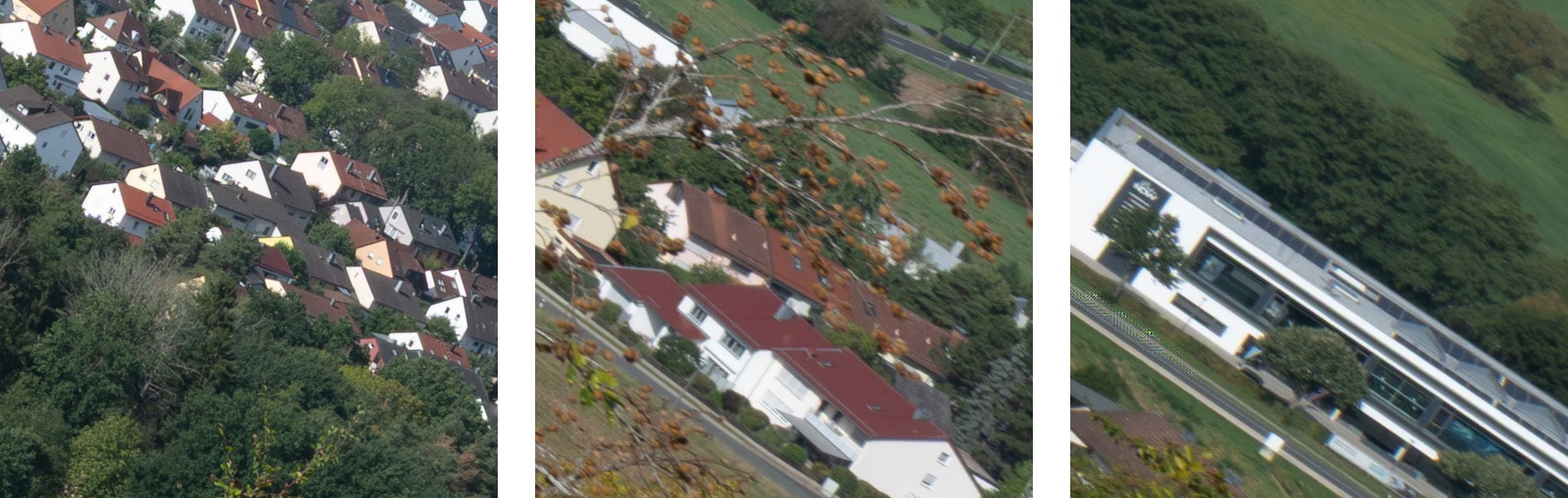
Above: Tamron 12-20mm f2.8 at 16mm, f5.6; 50% crops, click image for full resolution 100% crops, also available at f8.0
Tamron 12-20mm f2.8 at 20mm
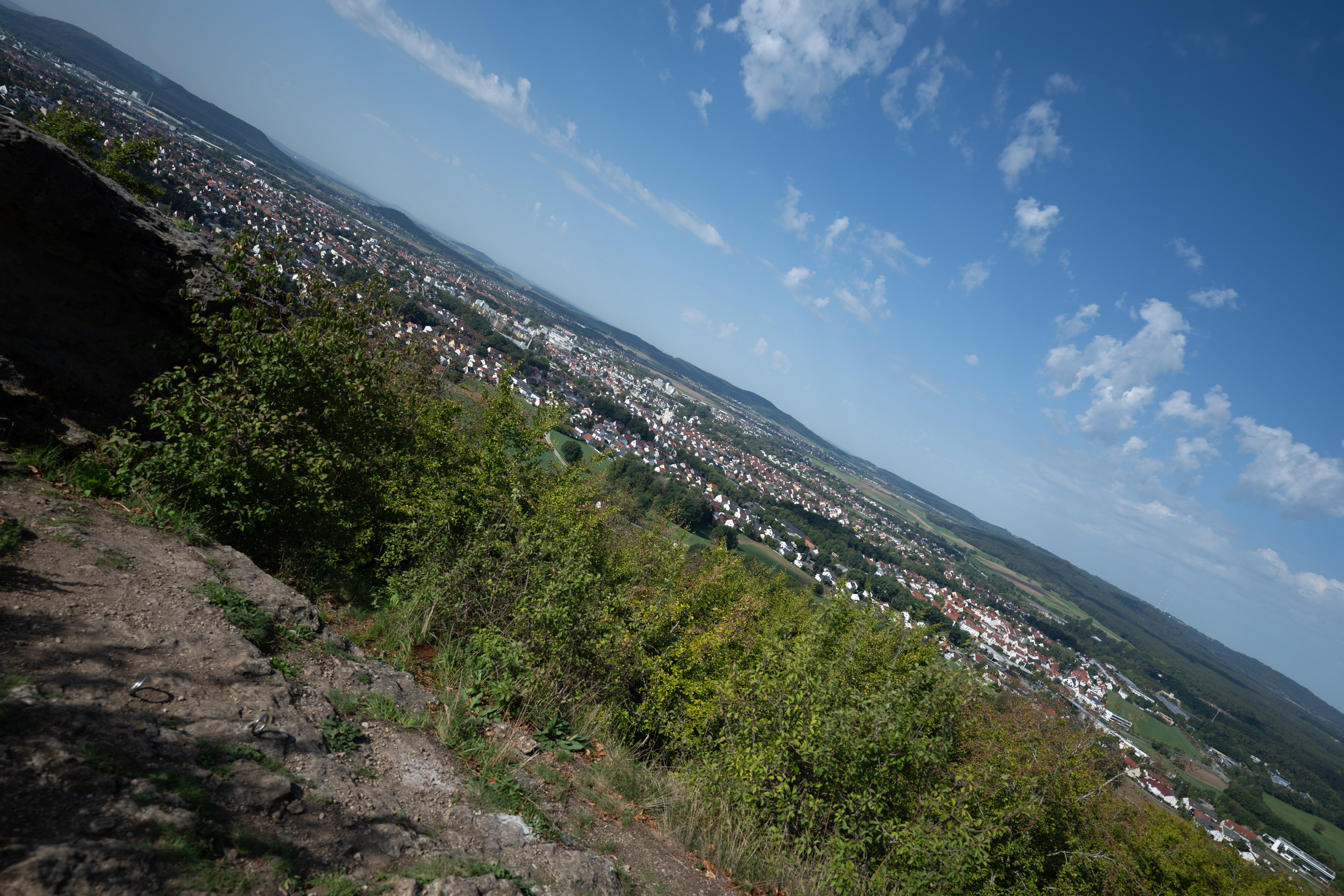
Above: Tamron 12-20mm f2.8 at 20mm, f2.8; click image for 4k version, here for 180MP original
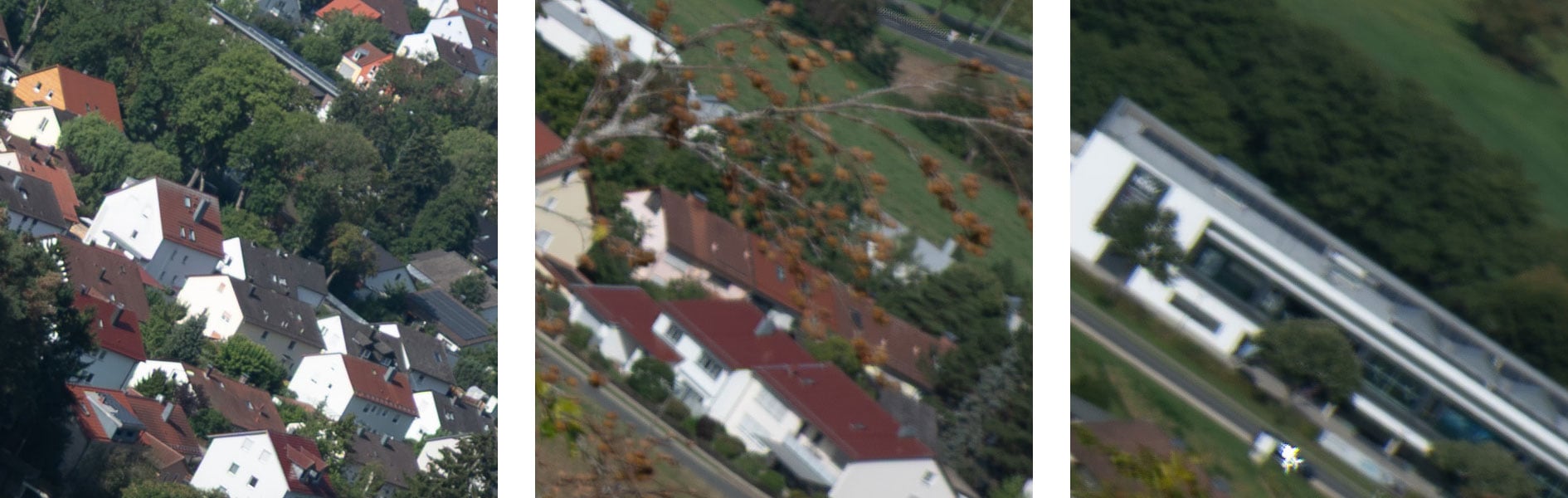
Above: Tamron 12-20mm f2.8 at 20mm, f2.8; 50% crops, click image for full resolution 100% crops
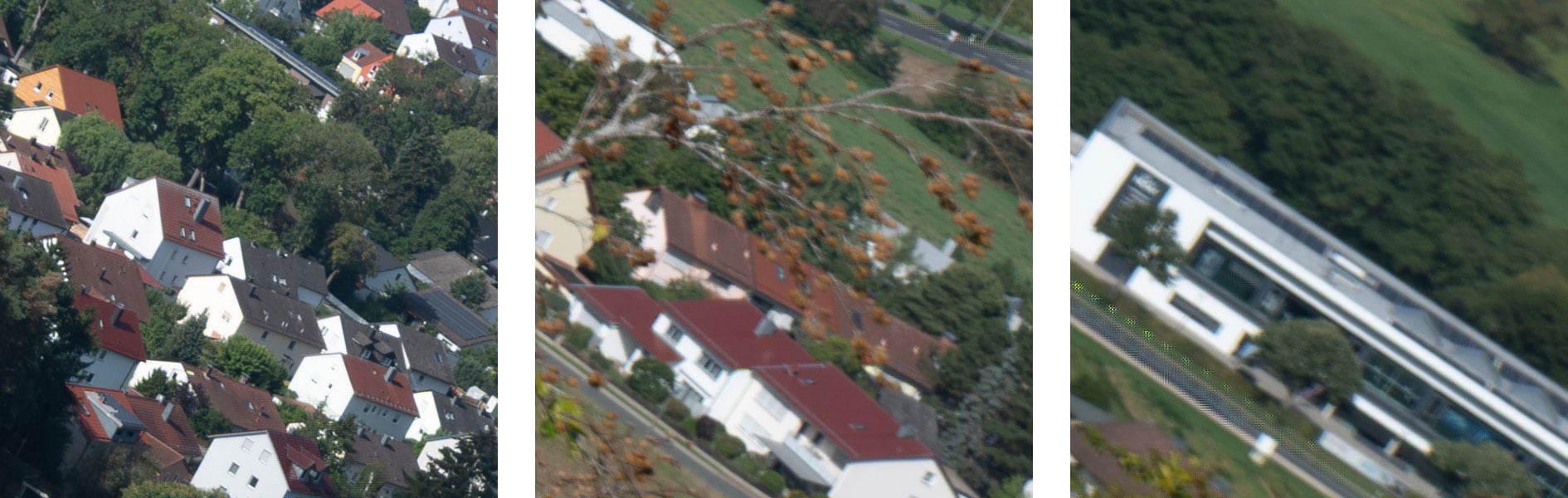
Above: Tamron 12-20mm f2.8 at 20mm, f4.0; 50% crops, click image for full resolution 100% crops
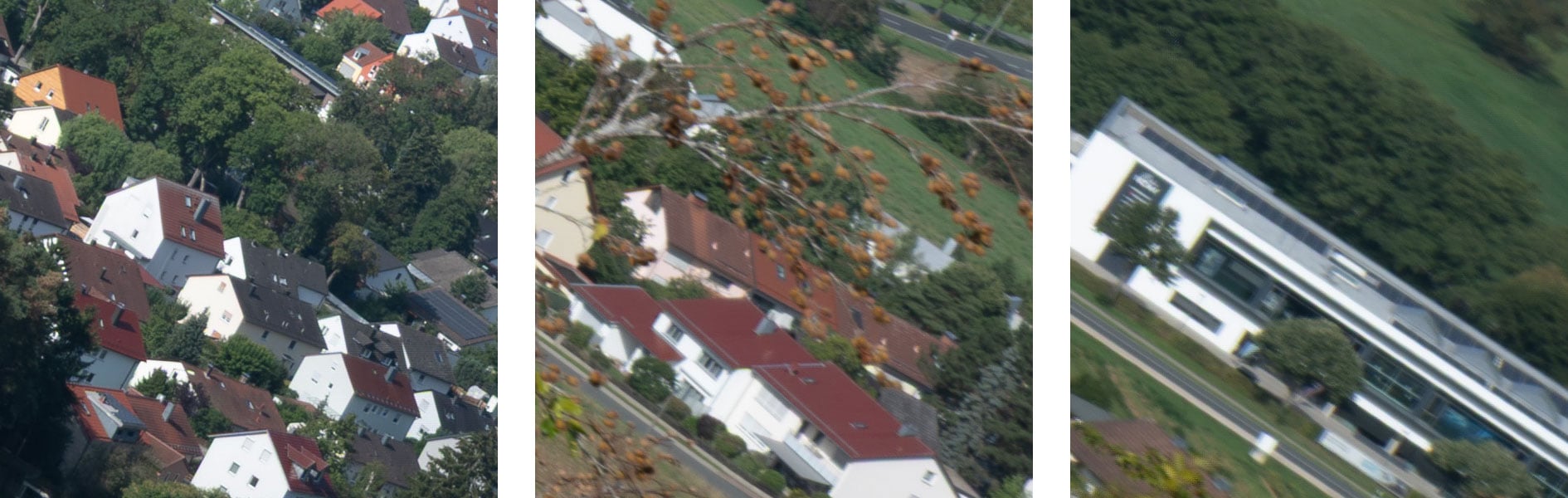
Above: Tamron 12-20mm f2.8 at 20mm, f5.6; 50% crops, click image for full resolution 100% crops, also available at f8.0
Summary:
At 12mm the Tamron 12-20mm f2.8 looks very sharp in the center but profits a bit from stopping down to f4.0 outside the center. At 16mm the lens is visibly soft outside the center and needs stopping down to f5.6 to get very sharp results. This characteristic intensifies at 20mm focal length where stopping down to f5.6 does only yield good sharpness. The softness can clearly be seen at 45MP resolution already so I wouldn’t recommend the lens for 180MP pixel-shift shooting wide open.
Vignetting and distortions
To make it easier to see light fall-off in the corners of a full-frame sensor I’ve arranged a series of three shots each with the Tamron 12-20mm f2.8 at 12mm and 20mm focal length and different apertures. All images were developed from RAW to the same brightness in the center and are shown with vignetting correction from the lens profile Off (1st row) or Normal/100% (2nd row):
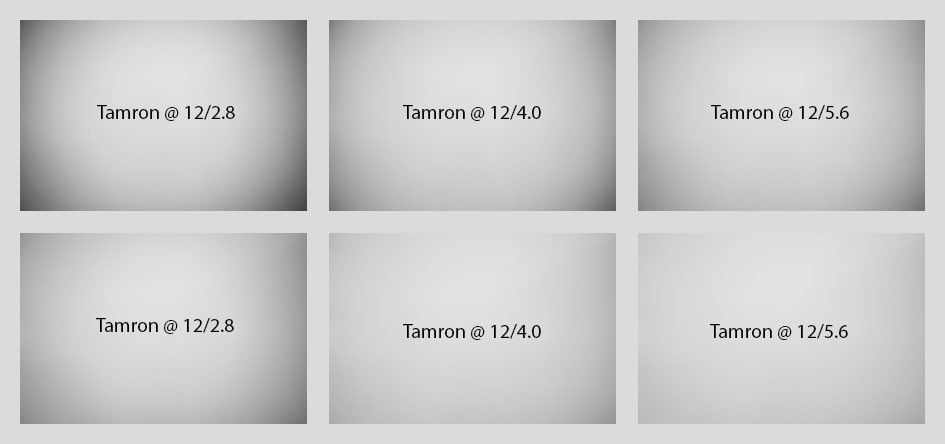
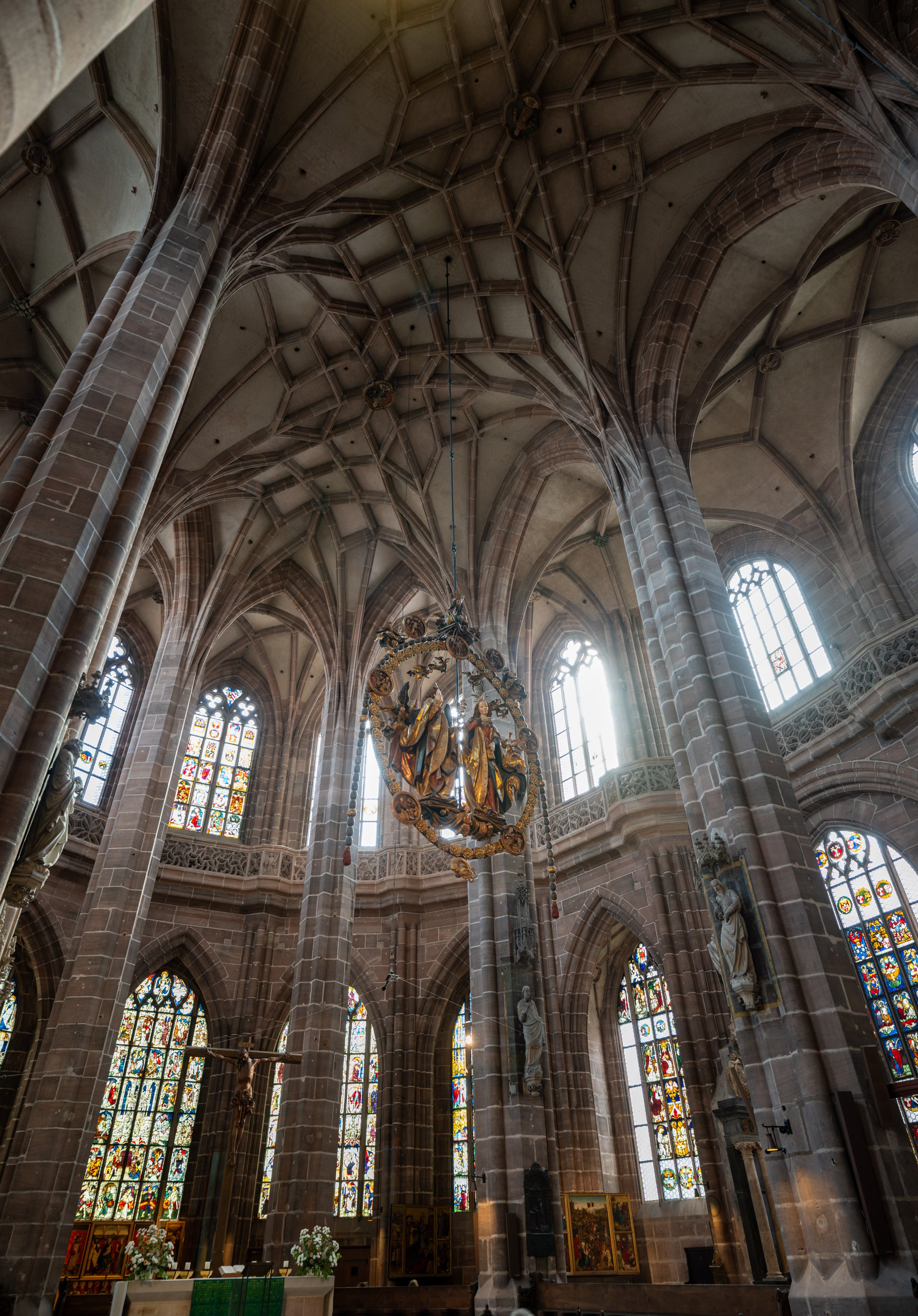
Above: Tamron 12-20mm f2.8 at 12mm focal length with vignette correction Off (top) or Normal/100% (bottom)
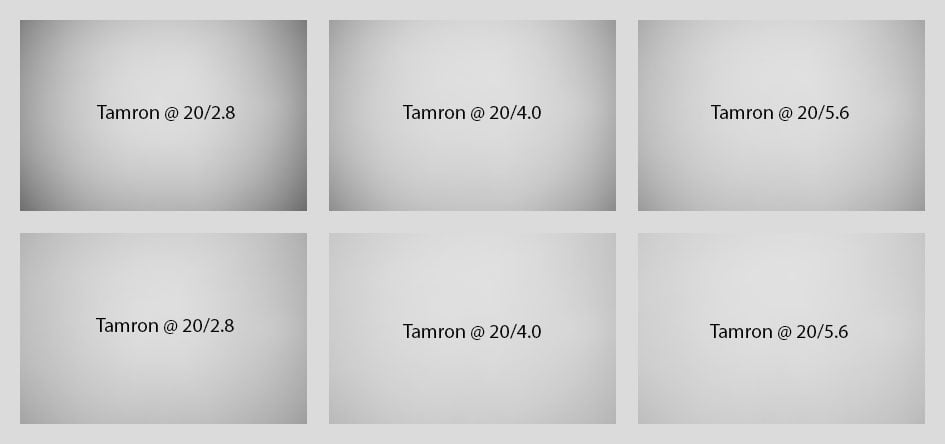
Above: Tamron 12-20mm f2.8 at 20mm focal length with vignette correction Off (top) or Normal/100% (bottom)
At both focal lengths vignetting at f2.8 is very visible at around -2.1 EV at 12mm and -1.4 EV at 20mm when left uncorrected. With vignette control set to Normal/100% the extreme corners are lifted by around +0.9 EV at 12mm resp. +0.8 EV at 20mm – which still leaves a visible vignette at the short end.
Handling of lens profiles by Adobe’s Lightroom Classic V15.5 and RAW converter V18.5 continues to be confusing. Set vignetting and distortion control in camera to On and the Tamron 12-20mm f2.8 gets its lens profile applied but you can change the strength of the correction in post-processing with sliders between 0 and 200%: Very good! But if you switch vignetting control in camera to Off the slider to control the strength of vignetting in Lightroom or CRAW is disabled. While if you switch distortion control in camera to Off Lightroom/CRAW simply ignore this and the slider is still enabled and set to 100%. NX Studio always applies what was set in camera but you can switch vignetting and distortion control On or Off (unless you have a lens which does not allow auto distortion control to be switched Off). So it’s better to leave the lens profile in camera On which enables all options when processing the image in Lightroom/CRAW.
Distortions are of a mustachioed barrel type at 12mm and a pin-cushion type at the long end (see below). The lens profile corrects them well in camera or postprocessing. See the following composite images showing the upper part of two images shot as RAW:
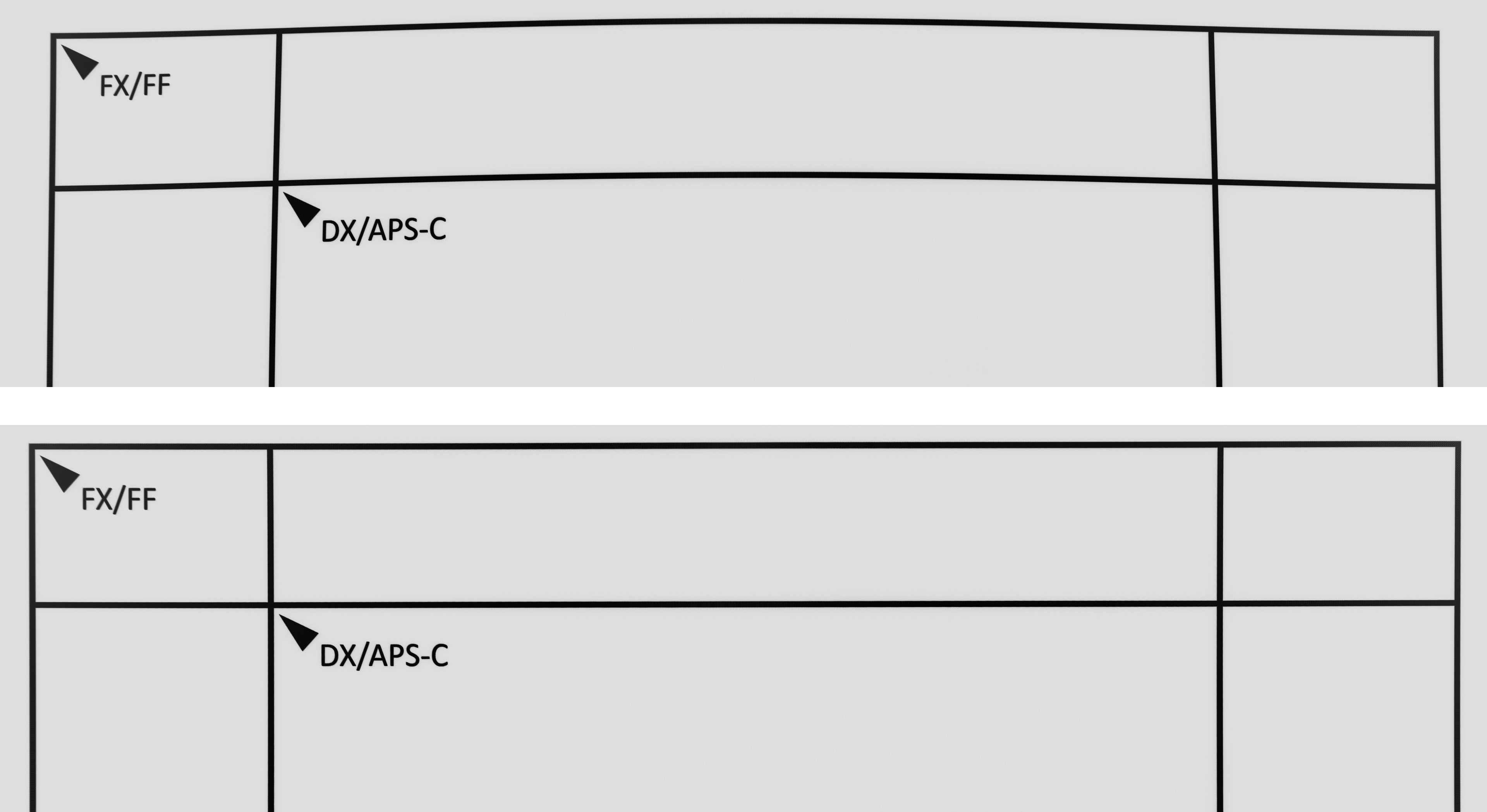
Distortions: Tamron 12-20mm f2.8 at 12mm, as is (top) / with lens-profile at 100% (bottom); click image for 4k version
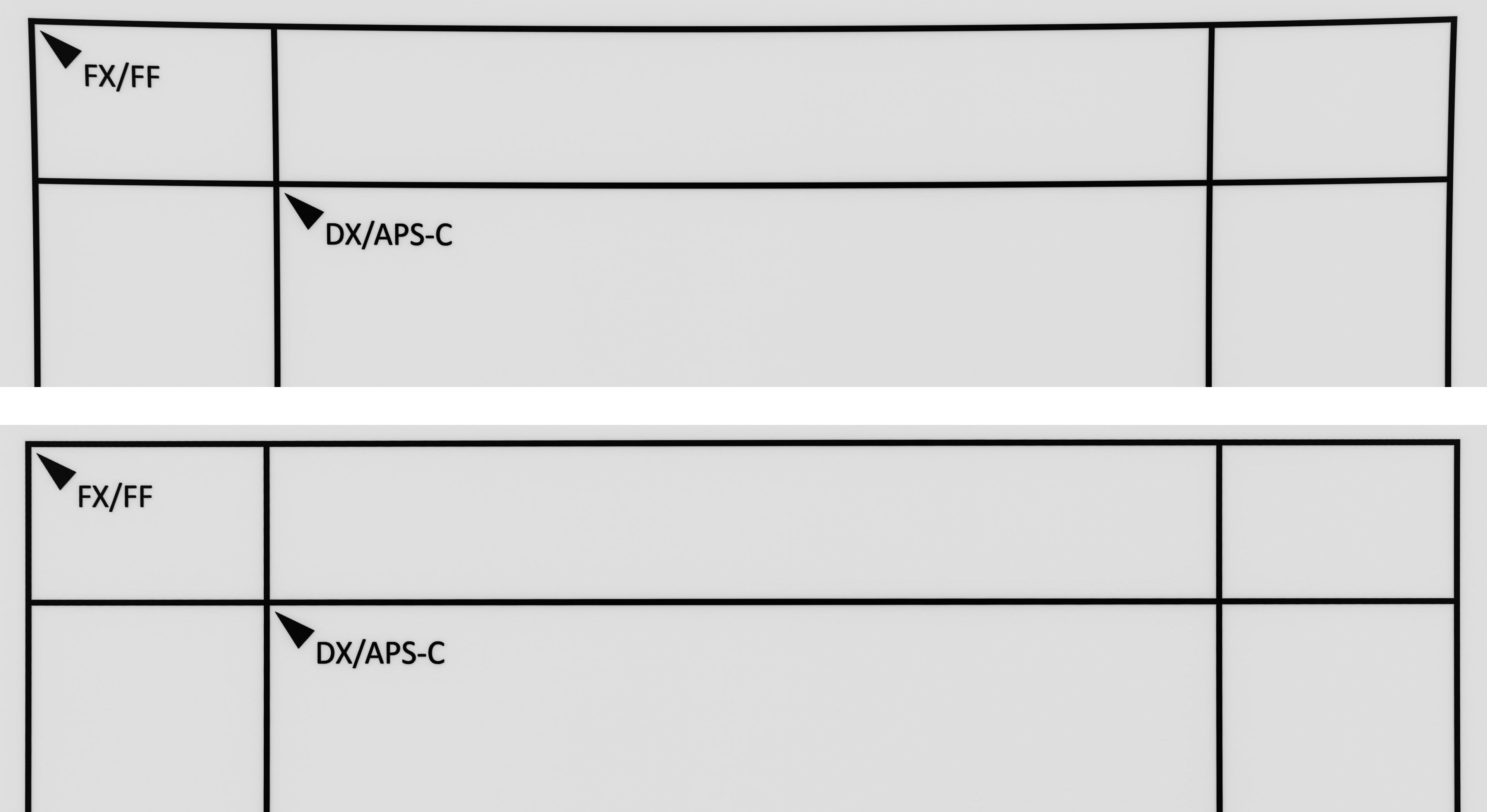
Distortions: Tamron 12-20mm f2.8 at 20mm, as is (top) / with lens-profile at 100% (bottom); click image for 4k version
Rendering of point-light sources at night-shots
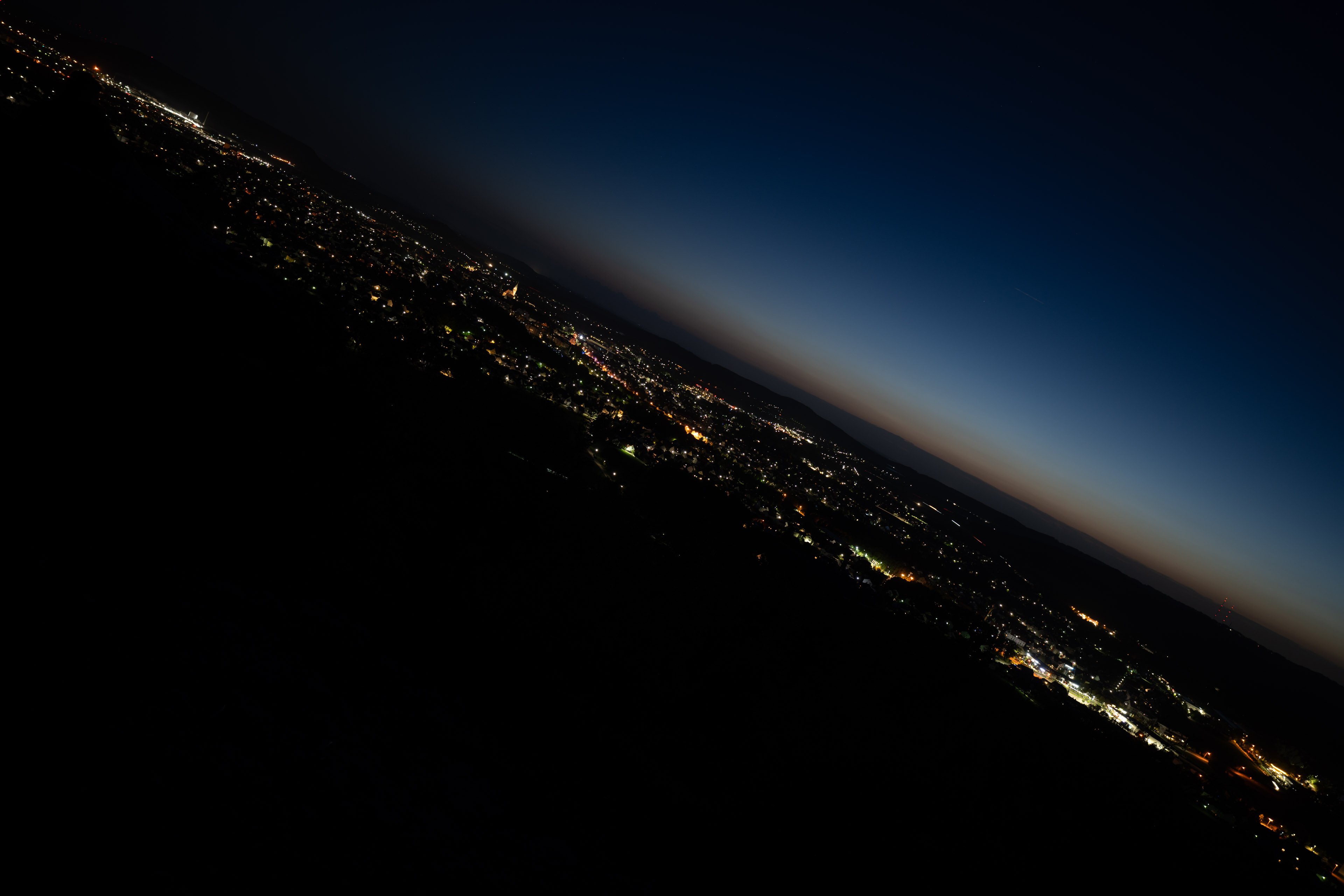
Night-shots pose a different challenge for lenses as the contrast is even higher than under bright sun and point-light sources can reveal some weaknesses such as coma, haloing and colour-aberrations that do not show up as prominently in other test-shots. The 100% crops below the main image show the effect of coma in the FF/FX-corner of the Tamron 12-20mm f2.8 at 12mm and 20mm focal length and different apertures:
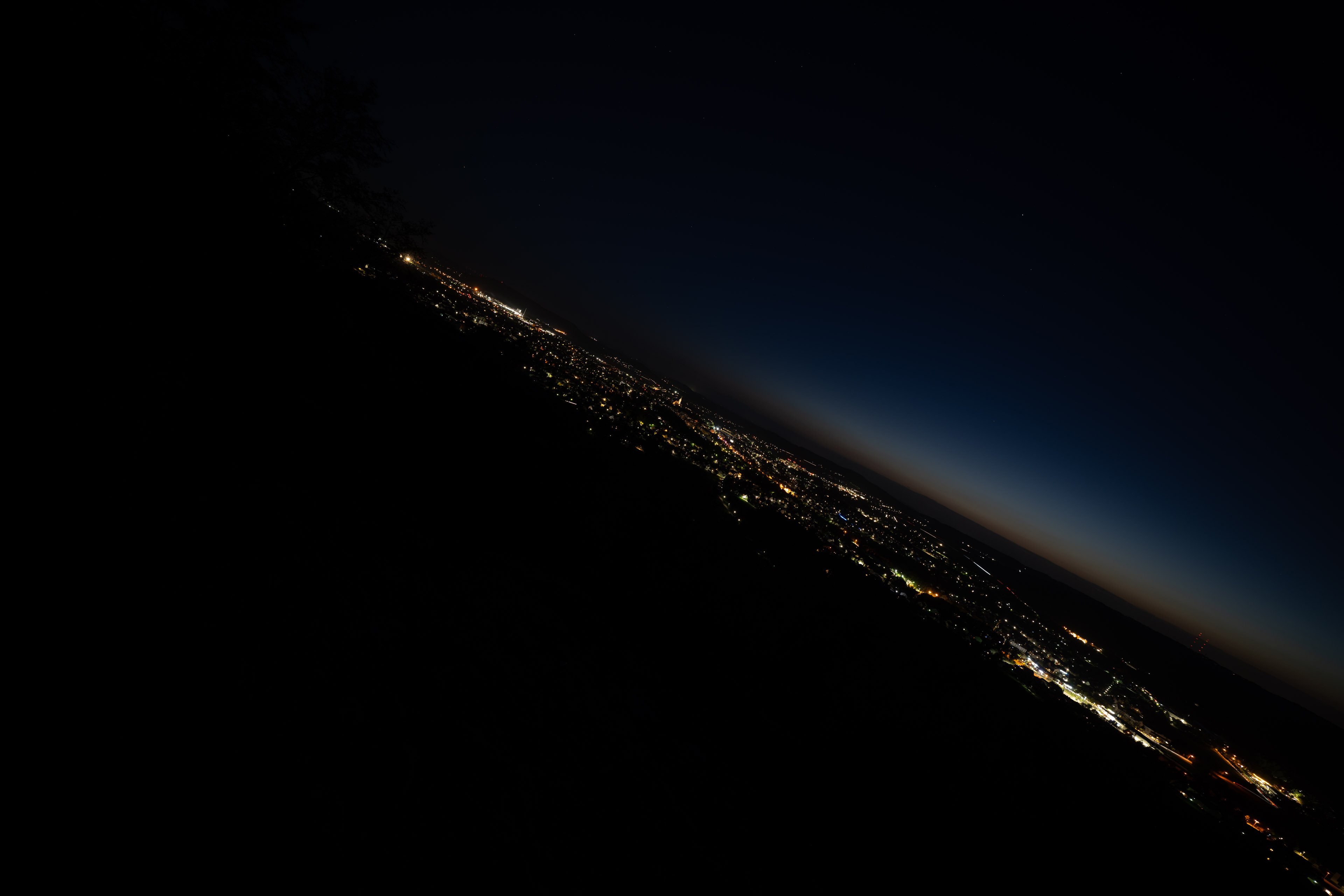
Above: Tamron 12-20mm f2.8 at 12mm, f2.8; click image for 4k version, here for large original
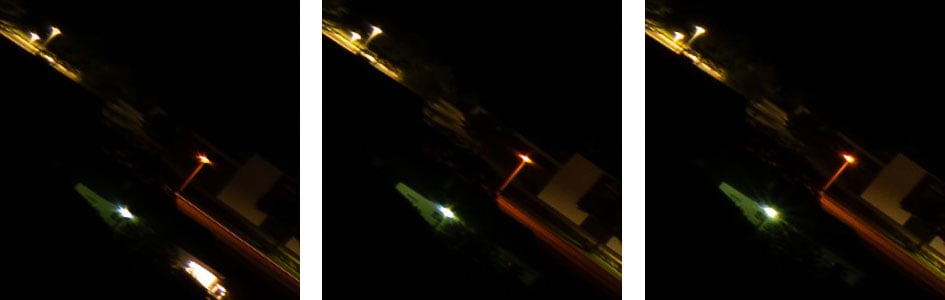
Above: Tamron 12-20mm f2.8 at 12mm; 100% crops from the FX-corner at f2.8 (left), f4.0 (middle), f5.6 (right)
Above: Tamron 12-20mm f2.8 at 20mm, f2.8; click image for 4k version, here for large original
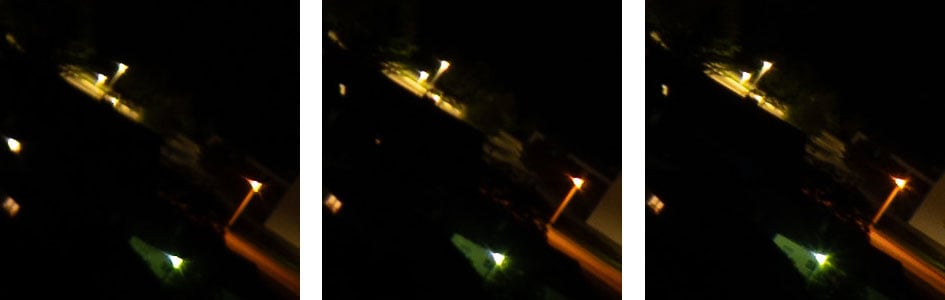
Above: Tamron 12-20mm f2.8 at 20mm; 100% crops from the FX-corner at f2.8 (left), f4.0 (middle), f5.6 (right)
The Tamron 12-20mm f2.8 shows very little coma at 12mm or 20mm focal length and I couldn’t detect any haloing.
Bokeh quality
This test is for the rendering of point-light sources in an out-of-focus background. The circle of confusion that is produced by the test is pretty indicative of Bokeh performance (in the background) and light fall-off. Ideally the out-of-focus image of the point-light is evenly lit and perfectly circular, with no “onion-rings”, and without coloration. Lenses normally produce an effect known as “cat’s eye” the further away from the optical axis the point-light is projected. This is due to optical vignetting in the lens barrel when light enters the lens from an angle.
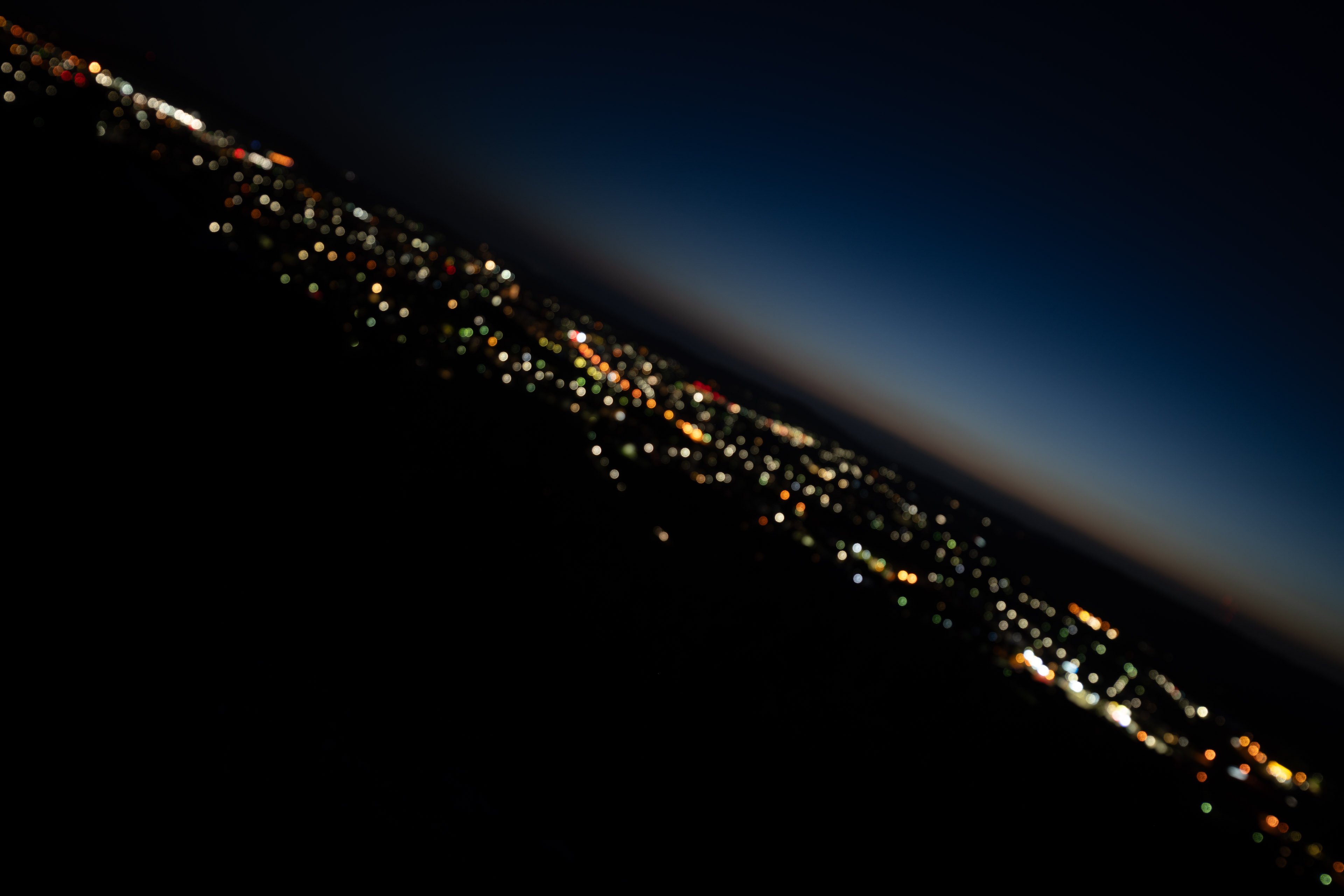
Above: Tamron 12-20mm f2.8 at 20mm, f2.8; click image for 4k version, here for large original
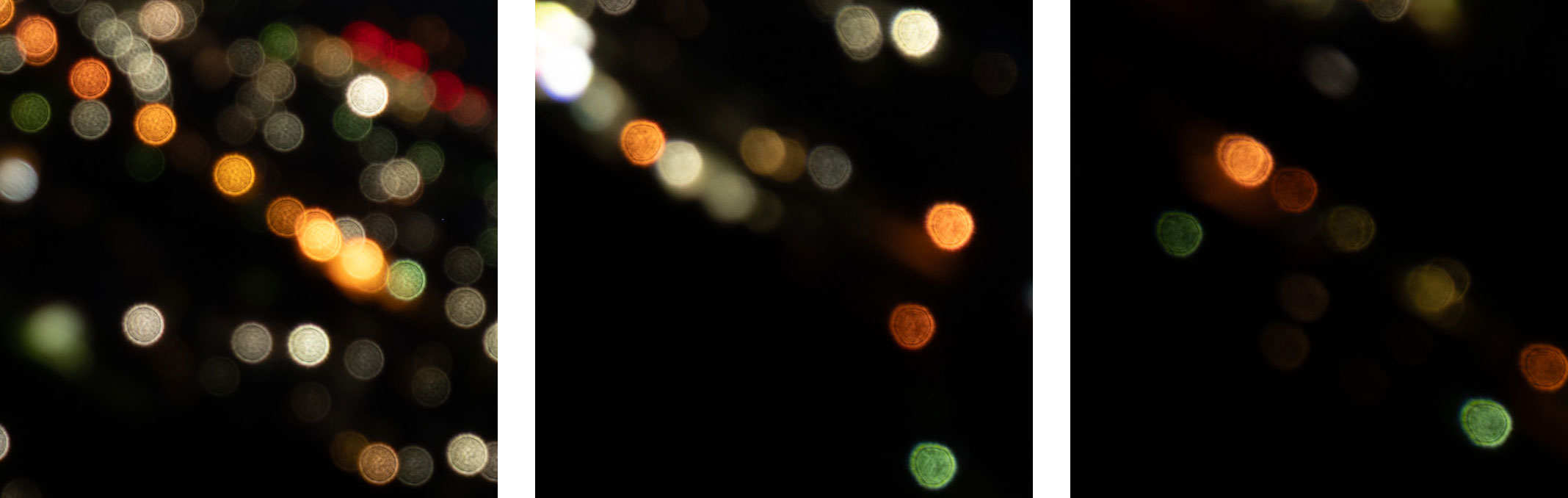
Above: Tamron 12-20mm f2.8 at 20mm, f2.8; click image for 100% crops
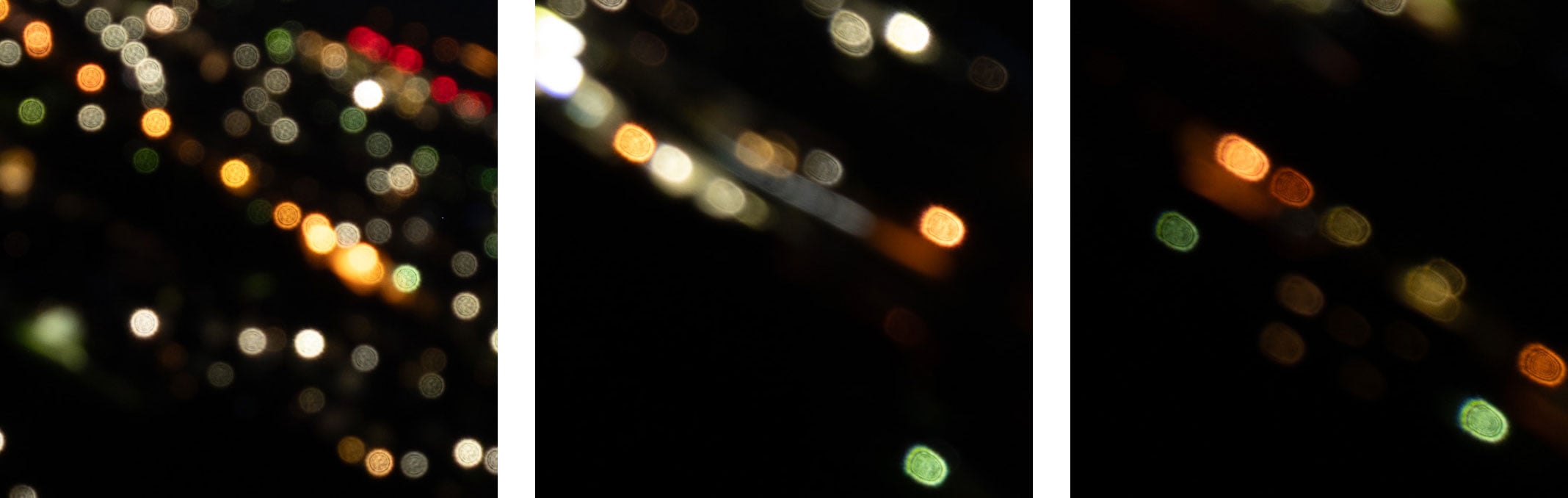
Above: Tamron 12-20mm f2.8 at 20mm, f4.0; click image for 100% crops
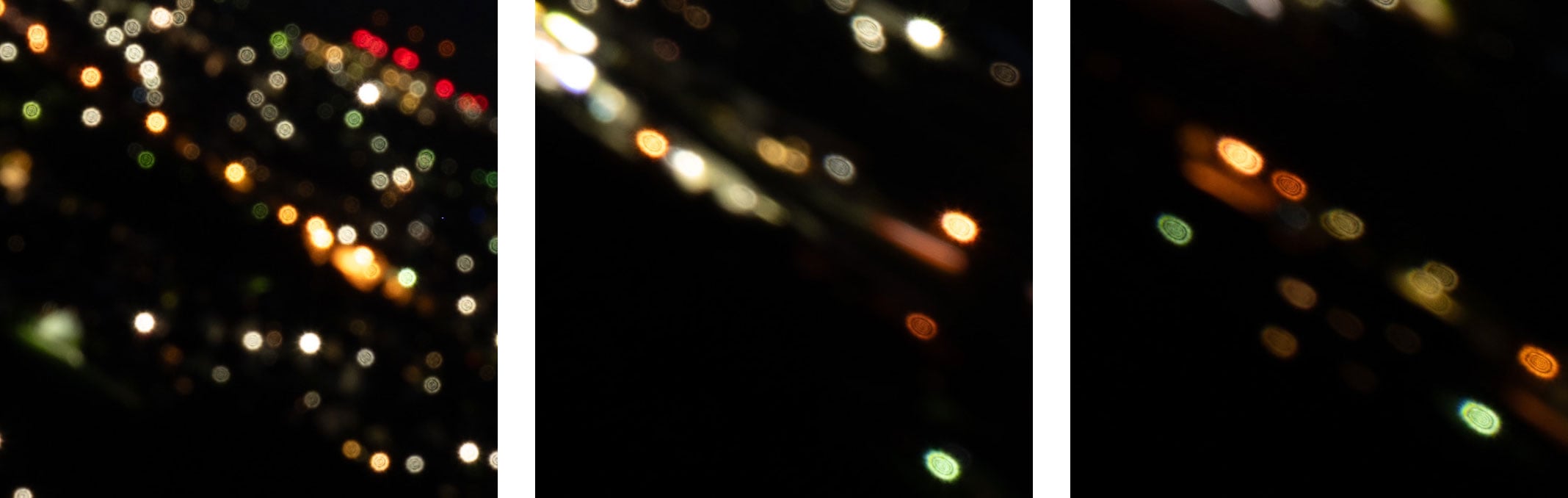
Above: Tamron 12-20mm f2.8 at 20mm, f5.6; click image for 100% crops
Naturally the bokeh balls of the Tamron 12-20mm f2.8 are pretty small due to its small entrance pupil of only 7mm. They show almost no compression of the circle in the DX- and FX-corner wide open. Bokeh balls stay well rounded even down to f5.6 – an indicator that sun-stars (diffraction spikes) will only become prominent when the lens is stepped even further down. There is some outlining albeit free of coloration from loCA. The inside of the Bokeh balls shows some texture but no onion rings.
Let’s see how this analysis of out-of-focus point-light sources translates into Bokeh-performance shooting a book-shelf. Crops are from the foreground, middle-ground, and background resized to make them comparable across all my reviews.

Above: Tamron 12-20mm f2.8 at 20mm, f2.8; click image for 4k version, here for large original

Above: Tamron 12-20mm f2.8 at 20mm, f2.8; click image for 100% crops, here for large original

Above: Sony FE 12-24mm f2.8 GM at 24mm, f2.8; click here for large original

Above: Nikon Z 14-24mm f2.8 S at 24mm, f2.8; click here for large original

Above: Sony FE 12-24mm f4 G at 24mm, f4.0; click here for large original

Above: Nikon Z 14-30mm f4 S at 30mm, f4.0; click here for large original
The Tamron 12-20mm f2.8 does not produce the smoothest Bokeh: Especially the foreground Bokeh is dismal but also the middle-ground is not smoother than the f4.0 lenses in this comparison. Only in the background Bokeh of the Tamron is OK-ish.
Looking at the ruler (below, now at 100%) shows that the Tamron 12-20mm f2.8 produces almost no double-contours in the transition zone – similar to the Sony FE 12-24mm f4 G:
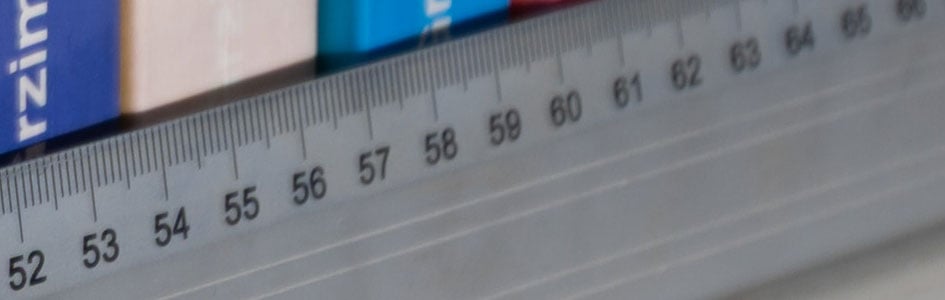
Above: Tamron 12-20mm f2.8 at 20mm, f2.8; 100% crop from middle-ground

Above: Sony FE 12-24mm f2.8 GM at 24mm, f2.8; 100% crop from middle-ground

Above: Nikon Z 14-24mm f2.8 S at 24mm, f2.8; 100% crop from middle-ground

Above: Sony FE 12-24mm f4 G at 24mm, f4.0; 100% crop from middle-ground

Above: Nikon Z 14-30mm f4 S at 30mm, f4.0; 100% crop from middle-ground
For some real-life examples look at the grass and the trees in the background of my sample images at 20mm f2.8.
Close-up performance
The Tamron 12-20mm f2.8 achieves a maximum magnification of 1:5.1 at 12mm focal length with an area of sharp focus of 122 x 184mm. The following set of crops was shot at 1:7.0 from 1mm, 12mm, and 18mm off the center of the sensor respectively. I focused separately for each crop to avoid the influence of field curvature which is pretty heavy at these short distances.
Tamron 12-20mm f2.8 at 12mm, 1:7.0 magnification; 100% crops

Above: Tamron 12-20mm f2.8 at 12mm, f2.8

Above: Tamron 12-20mm f2.8 at 12mm, f4.0

Above: Tamron 12-20mm f2.8 at 12mm, f8
Wide open the lens produces a pretty sharp center (up to 5mm image height). But to get good sharpness towards the DX-corners you need to stop down at least to f8.
At 20mm focal length the lens achieves a maximum magnification of 1:6.6 with an area of sharp focus of 158 x 238mm. The following set of crops was shot at 1:7.2 from 1mm, 12mm, and 18mm off the center of the sensor respectively. I focused separately for each crop to avoid the influence of field curvature.
Tamron 12-20mm f2.8 at 20mm, 1:7.2 magnification; 100% crops

Above: Tamron 12-20mm f2.8 at 20mm, f2.8

Above: Tamron 12-20mm f2.8 at 20mm, f4.0

Above: Tamron 12-20mm f2.8 at 20mm, f5.6
The results are in general sharper than from shooting at 12mm focal length. Wide open the lens produces a pretty sharp center (up to 7mm image height). To get good sharpness outside the center better stop down to f5.6. There is also the influence of focus shift which makes the center crop softer when stopping down as I didn’t refocus. This problem is eliminated when you (re-)focus at the actual aperture.
Flare, ghosting, and sun-stars
Catching a strong light-source shining directly into the lens is always a risky business: it could produce strange colorful ghost-images or reduce contrast considerably through flare and glare. The appearance of flare and ghosting depends on factors like the aperture and the angle of the light hitting the lens. So, to judge the proclivity of the Tamron 12-20mm f2.8 for these artifacts I went through a series of well calculated shots against a strong light source to provoke glare and ghosting. Following are two of the worst examples. The little red square inset in the upper left shows the respective area with an exposure compensation of +3 EV to make it easier to see which levels of black the lens renders at that point:
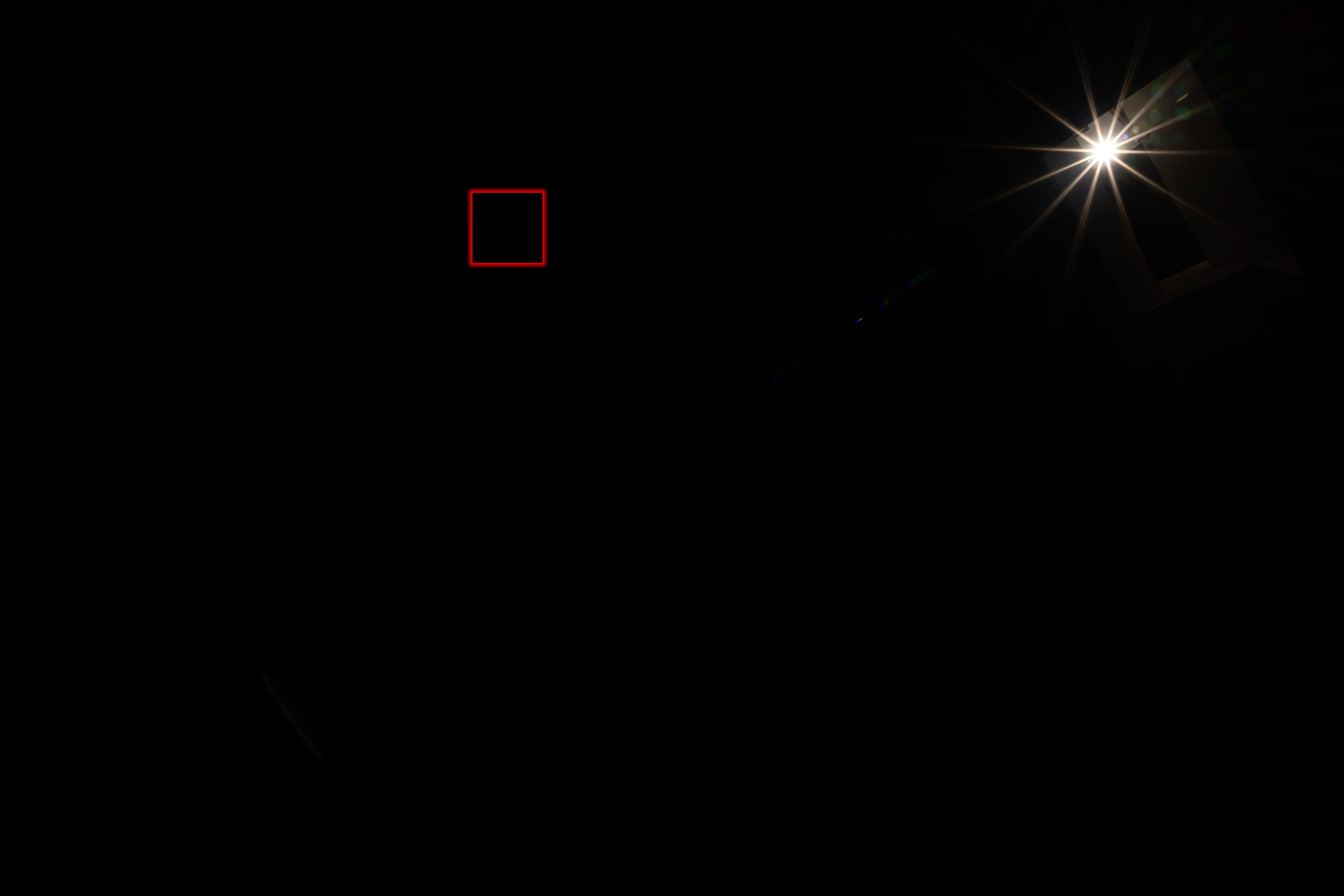
Above: Flare and ghosting. Strong light hitting the Tamron 12-20mm f2.8 at 12mm, f11; click image for 4k version or here for +3 EV exposure compensation
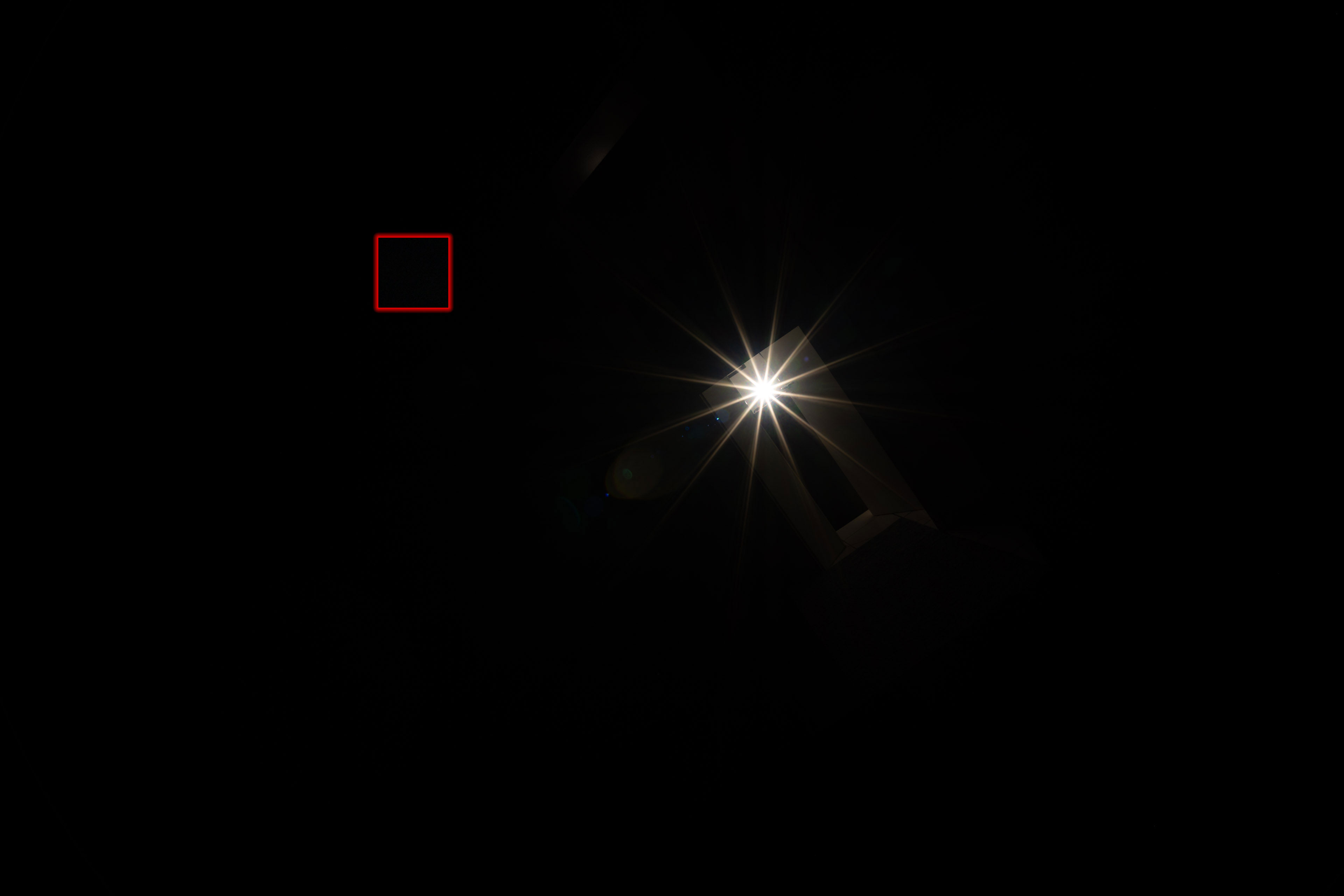
Above: Flare and ghosting. Strong light hitting the Tamron 12-20mm f2.8 at 20mm, f11; click image for 4k version or here for +3 EV exposure compensation
The Tamron 12-20mm f2.8 produces some ghosting artifacts but little veiling glare: The blacks outside these artifacts stay deep black. And there’s almost no flare which is typical for some lenses when the light-source is just around the FF/FX-corner – neither at the short nor the long end. But with the sun as a stronger light source some artifacts can be seen: Have a look at the following sample images: Tamron12-20f2-8_12f2-8_42229, Tamron12-20f2-8_20f2-8_42207 (look at the tree).
At f11 the lens renders very nice sunstars with 12 diffraction spikes (see above). But up to f8.0 sunstars are not very prominent:
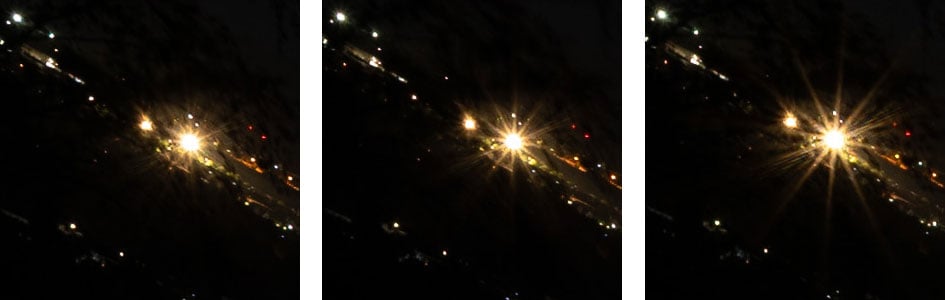
Above: Sunstars from the Tamron 12-20mm f2.8 at 12mm, f4.0, f5.6, f8.0; 100% crops
Next check out my sample images!
Check prices or buy the Tamron 12-20mm f2.8 (model A084) in the USA from B&H or Adorama. Buy it in the UK from WEX, or in Europe at Calumet.de. Buy used gear from MPB. Sell your used gear to MPB. Or why not treat yourself to a copy of my In Camera book, an official Cameralabs T-shirt or mug, or treat me to a coffee! Thanks!