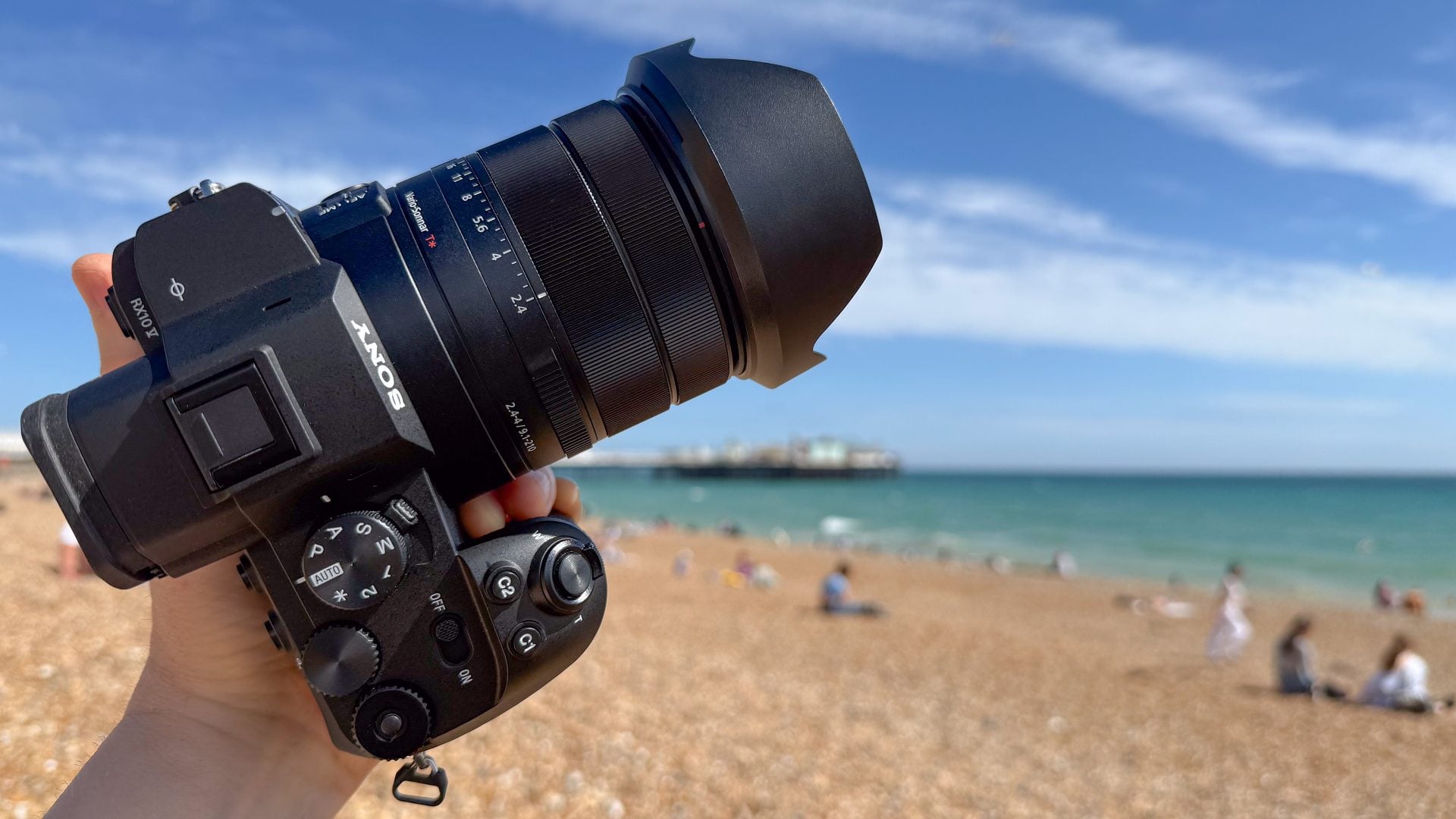
 The Sony RX10 V is the long-awaited update to one of the most flexible cameras around, packing a huge 24-600 zoom into something that looks and feels more like a mirrorless camera with a standard kit lens. The 1in Type sensor may be smaller than a mirrorless camera, but the zoom range is longer than any interchangeable lens. Crucially the autofocus can actually capture wildlife and sports in practice, while weather-sealing means you’ll take it everywhere. A lot is inherited from the earlier Mark IV, including the lens and sensor, but the Mark V upgrades the viewfinder, battery, autofocus and general video modes, while also adding a joystick and USB C charging, but the super slow motion HFR videos and popup flash of the Mark IV have gone and there’s sadly no pre-burst mode. The price has also jumped into territory where you could alternatively buy, say a Sony A6700 with a Sigma 16-300, giving you a bigger sensor, but ‘only’ reaching 450mm. Ultimately if you want a longer 24-600 range from a new all-in-one camera with performance that can genuinely handle sports, wildlife and action, there’s nothing to rival the RX10 Mark V, and even though the price has gone up, it’s a relief to actually have it available.
Sony RX10 V review
-
-
Written by Gordon Laing
The Sony RX10 V is a super-zoom bridge camera with a built-in 24-600 lens, a 1in Type stacked sensor, 20 Megapixel photos at up to 30fps, 4k 120 video, and one of Sony’s best autofocus systems. It all adds up to an extremely flexible all-rounder for travel, sports and wildlife, and unless you’re happy lugging around multiple lenses, I’d say it’s the ultimate camera for a safari.
Announced in July 2026, it comes nine years after the previous Mark IV, a long wait given the brief one year gap between the III and IV. The new Mark V inherits the lens and sensor from the earlier Mark IV – in fact the lens originally made its debut on the Mark III – but now couples them with a more recent image processor and AF system with much broader subject recognition.
The Mark V may lose the super slow motion HFR video up to 960p, but arguably more usefully boosts 4k from 30p to 120p with support for 10 bit, while photo bursts enjoy a small increase from 24 to 30fps. It’s all packed into a newly-designed body, styled more like an Alpha 7 mirrorless camera, and now includes a more detailed viewfinder, USB C port, joystick, support for faster UHS-II cards, and the larger FZ100 battery pack giving it longer life. See it in action in my video below, or if you prefer to read the written highlights, keep scrolling!
These upgrades along with the nine year gap between it and the Mark IV have seen the launch price increase from $1700 to around $2400. That’s a significant investment which could alternatively get you any number of mirrorless bodies with larger APSC or even full-frame sensors – but try finding anything near a 25x optical zoom for them.
For example, you could get a Sony A7 IV and Sigma 20-200 and enjoy the benefits of a much larger full-frame sensor with 33 Megapixels. But this combination will cost you about $500 more, with a much shorter 10x range, no motorised zoom, a lower res viewfinder and no 4k 120 video. A closer alternative could be a Sony A6700 with a Sigma 16-300 for about $2200, which gets you a slightly larger APSC sensor, but not quite as long a reach, and again a lower res viewfinder and no motorised zoom. Ultimately there’s nothing that quite matches the proposition of a super-zoom bridge camera, and at the time of launch, no direct rivals for the RX10 Mark V either in terms of overall performance.
Panasonic’s FZ2000 was the closest competition to the earlier RX10 Mark IV, but it felt less confident focusing on action, hasn’t been updated since 2016 and has long been discontinued. You could find a bargain on a used model if you don’t need phase-detect AF or uncropped 4k though. Meanwhile Nikon continues to mildly update their bridge cameras, with their latest P1100 from 2025 remaining uncontested for the longest optical zoom range: a whopping 125x that takes you from 24 to an enormous 3000mm. Plus it’s around half the price of the new Sony. But that kind of range demands a smaller sensor, in this case a 1 / 2.3in Type, and again less confident autofocus for moving subjects.
Ultimately different people prioritise different features, but Sony continues to be the only company to give you a big motorised range with a decent sensor that can genuinely stay focused on fast subjects. So let’s put the latest RX10 V through its paces and see how it measures-up.
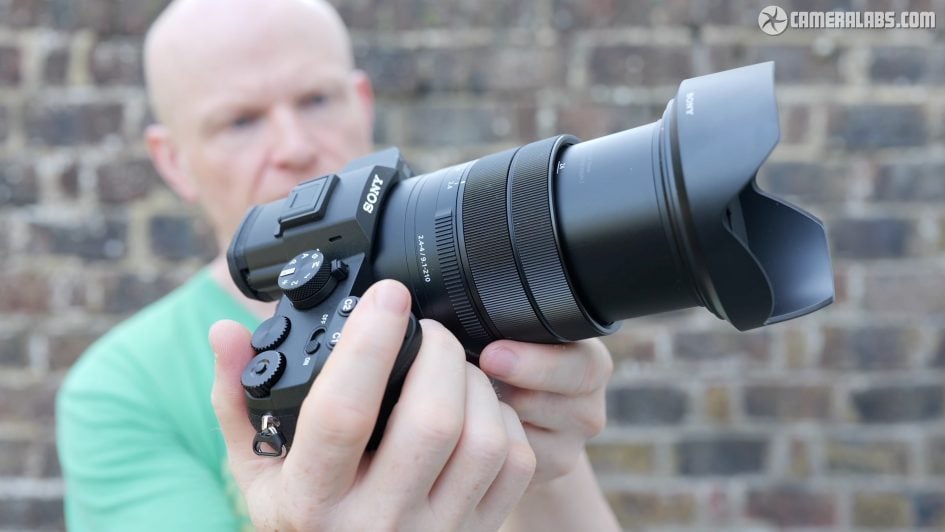
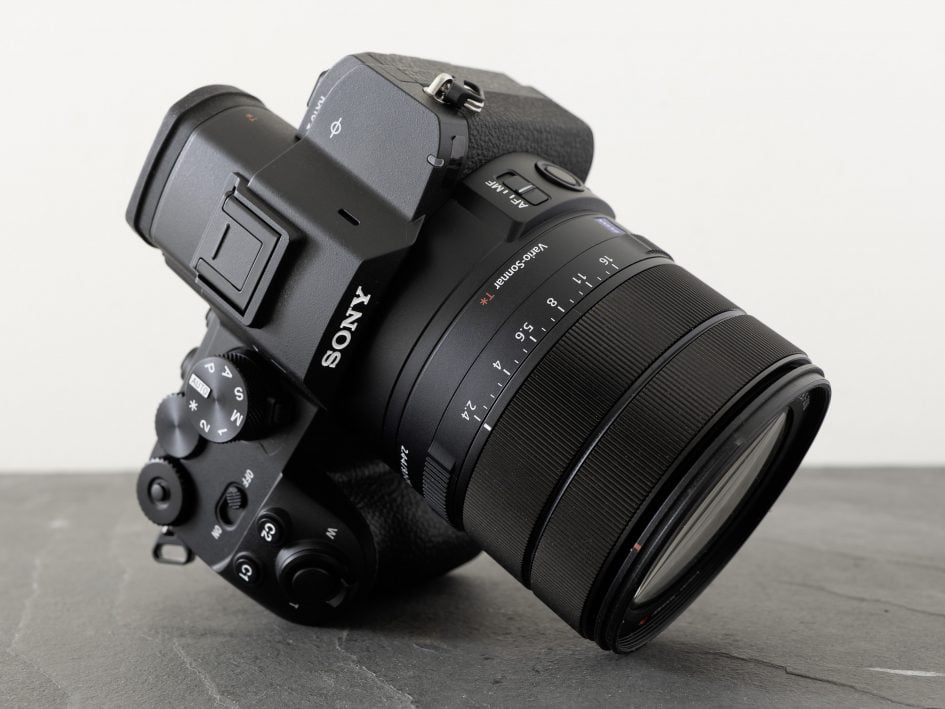
Measuring 136x95x151mm and weighing just over 1.1Kg with battery, the RX10 V is essentially the same size and weight as its predecessor. As such, it’s similar to handling a full-frame mirrorless camera fitted with something like a 24-105 zoom. As before, Sony describes it as being sealed against dust and moisture, a valuable feature on a camera designed to be taken everywhere, and reassuring since you can’t remove the lens to clean the sensor. I’d love to hear from any long-term owners of previous models regarding any issues with dust over time.
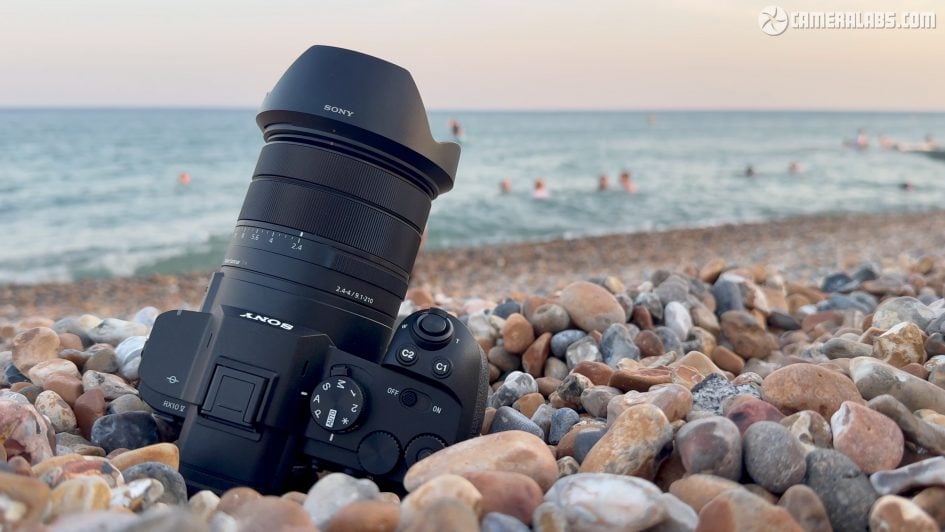
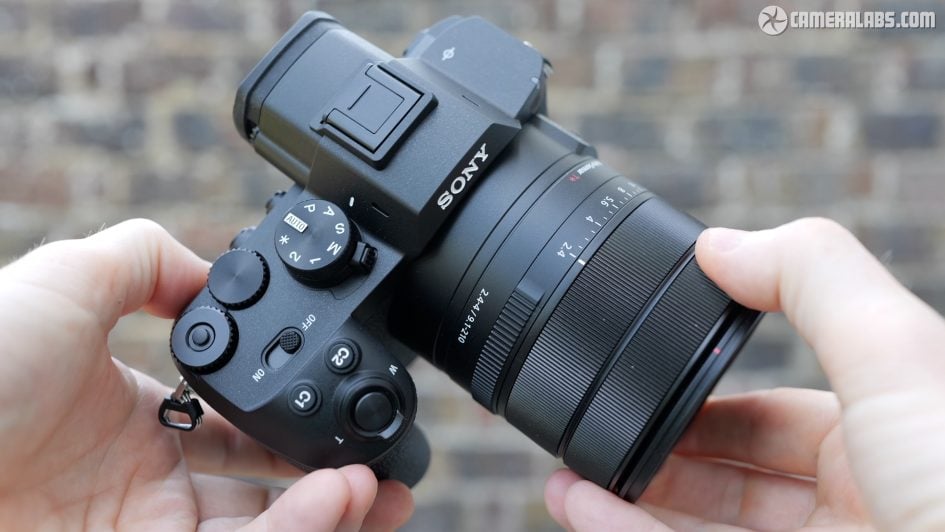
But in terms of design, the RX10 V represents a new direction for the series, switching the body for one that looks more like one of their Alpha 7 models, with a control layout that will be immediately familiar to anyone who’s used one. The camera feels great in your hands with a generous and comfortable grip, allowing you to hold it securely without any fingers dangling. Your index finger rests naturally on the soft-touch shutter release with a spring-loaded rocker to operate the motorised zoom. These are on a higher platform than the A7 bodies.
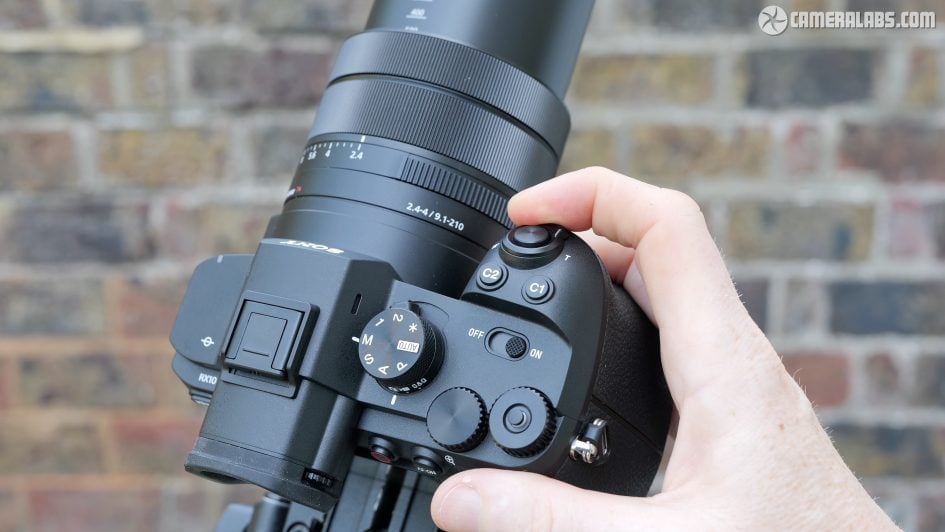
Behind the shutter are a pair of custom function buttons and a chunky power slider. To its left is an A7-style mode dial, featuring a useful collar to switch between stills, video and S&Q modes. And to its right are a pair of unmarked, customisable thumb dials, the outer one lockable. This is more flexible than the dedicated and unlockable compensation dial of the Mark IV, although by adopting the A7 layout, the previous top LCD display is no more.
Turning to the rear of the camera, you could be looking at a recent A7 body, with chunky buttons, a tilting thumbwheel and the useful addition of a joystick. Note how the dedicated record button is now next to the viewfinder though, when the A7V has it on the top.
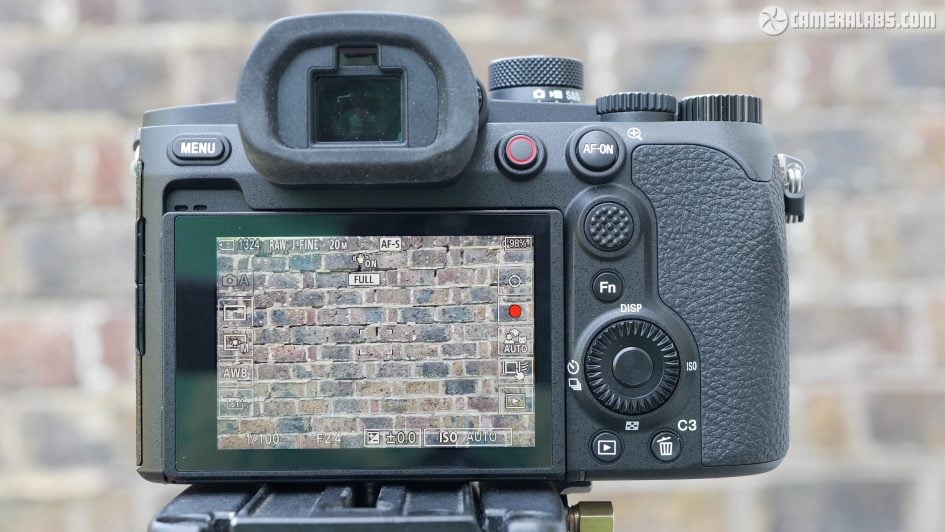
In terms of composition, the RX10 V gives you the choice of a vertically-tilting touchscreen or an electronic viewfinder. The EVF, which you’re looking at now, represents a welcome upgrade over the Mark IV, now sporting a more detailed 3.69 million dot OLED panel and a larger 0.78x magnification. It looks great in use, and with a zoom this long, you will be using it a lot for easier framing and stability.
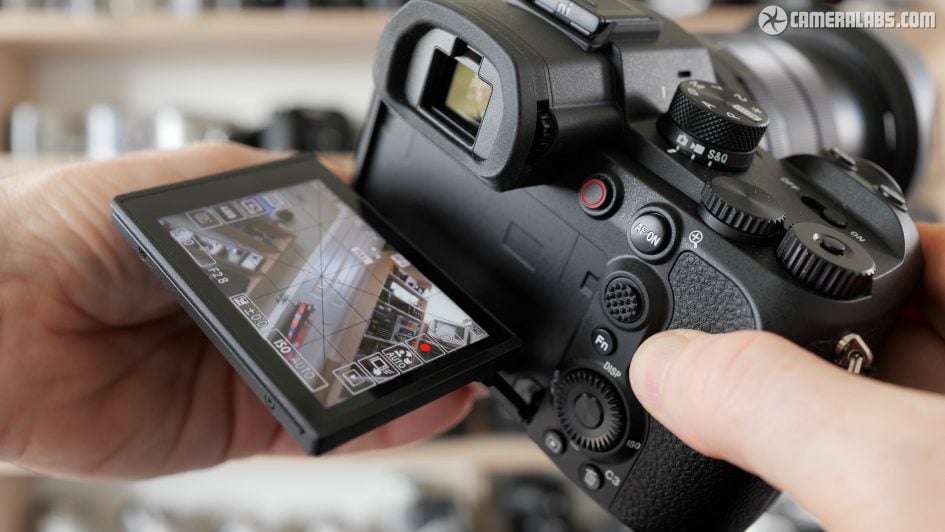
The screen size remains 3in, but has changed from 4:3 to a wider 3:2 shape that allows native images to fill it rather than being mildly letterboxed. Coupled with a slightly higher resolution of 1.62 million dots, it means the picture looks more detailed than before. Interestingly despite adopting much of the A7 body style, Sony’s resisted fitting a side-hinged fully-articulated screen. Instead the RX10 V sticks with one that only tilts vertically, up by about 90 degrees or down by about 45. On the plus side, this is quicker to deploy and easier to frame in-line with the optical axis especially at longer focal lengths, but it does mean you can’t face it forward for selfies or vlogs. Like recent A7’s, the RX10 V also inherits the ability to rotate the shooting information to remain upright when composing vertically with the screen or viewfinder. This extends to the Function menu, but not the main menu pages.
Behind a door on the left side you’ll find 3.5mm mic and headphone jacks, while behind a second door below are Micro HDMI, USB-C and an older style Micro USB port. The USB-C port is a welcome upgrade to the Mark V, providing faster data transfer as well as the chance to Live Stream up to 4k 30p. Atop the viewfinder head is a Multi Interface shoe, upgraded to now support both analogue and newer digital connections like recent microphone accessories. Sadly though the popup flash of the previous models has now gone.
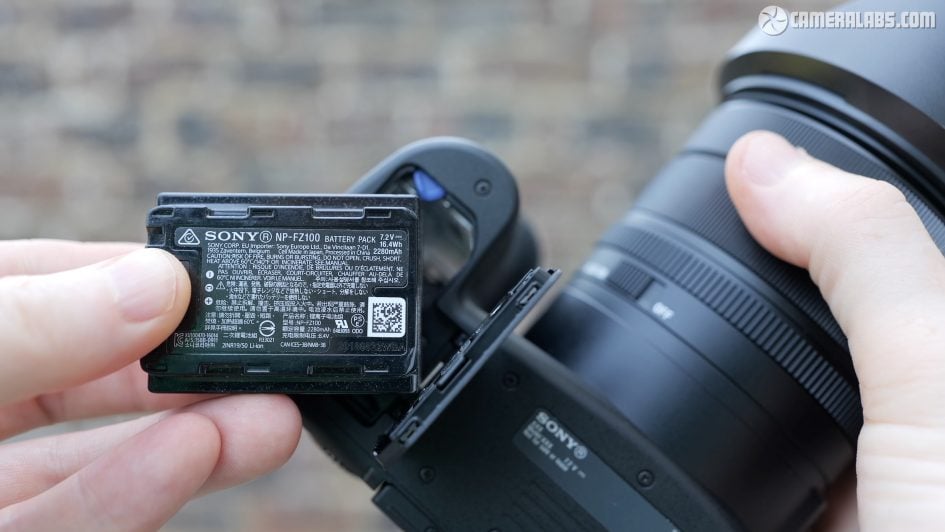
Under the camera you’ll find a tripod thread in line with the optical axis and a compartment for the battery and memory card. Unsurprisingly the image processor now demands the more recent FZ100 battery pack, but this in turn extends the battery life by 50% under CIPA conditions, at least when using the screen. Meanwhile the single SD card slot now supports faster UHS-II speeds which in theory should allow quicker flushing of the buffer. I’ll share my results for that later in the review.
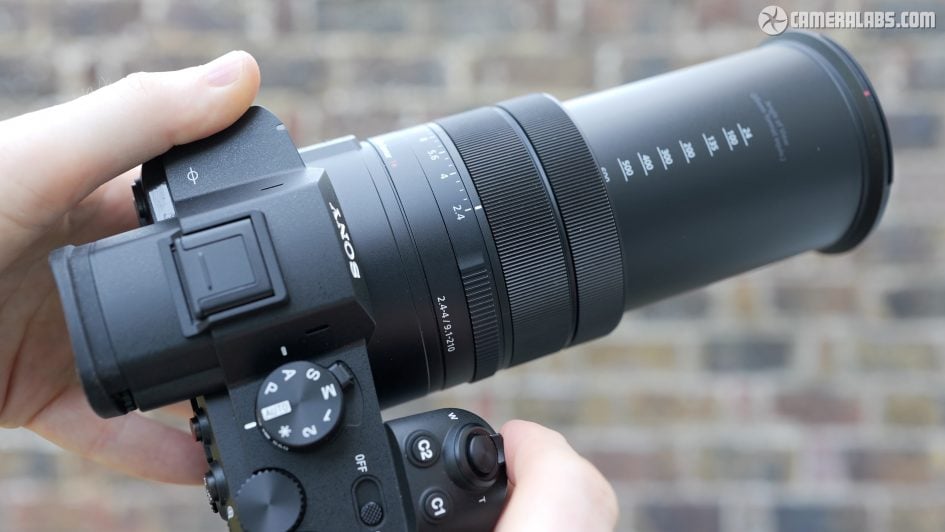
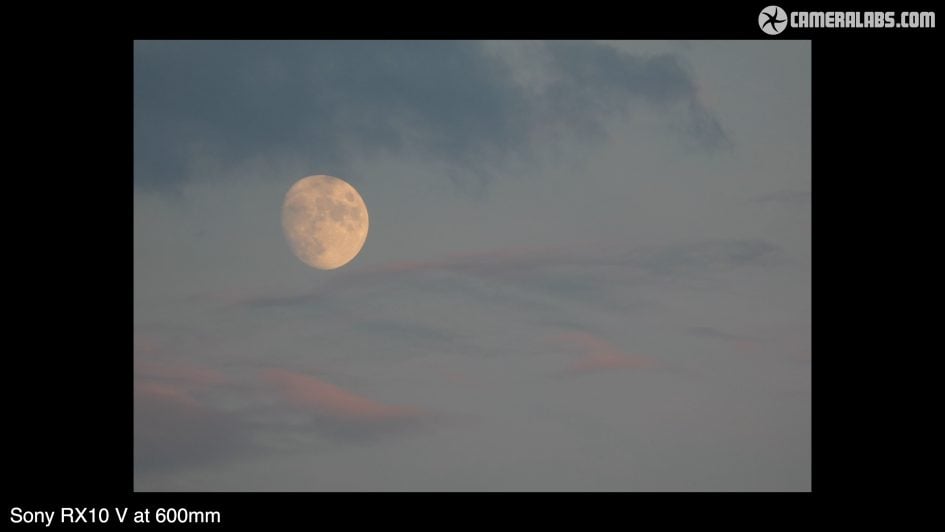
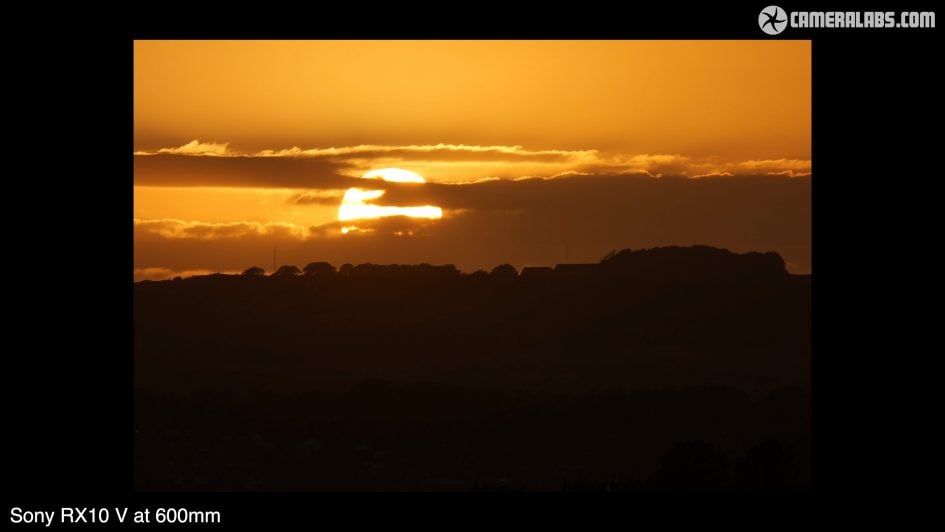
Moving on, the lens appears unchanged from the earlier RX10 Mark III where it made its debut in 2016, but even a decade later it remains a major highlight. It delivers a generous 25x optical range taking you from a wide-angle equivalent of 24mm all the way to super-telephoto 600mm, and as you’ll see, the results look good across the range.
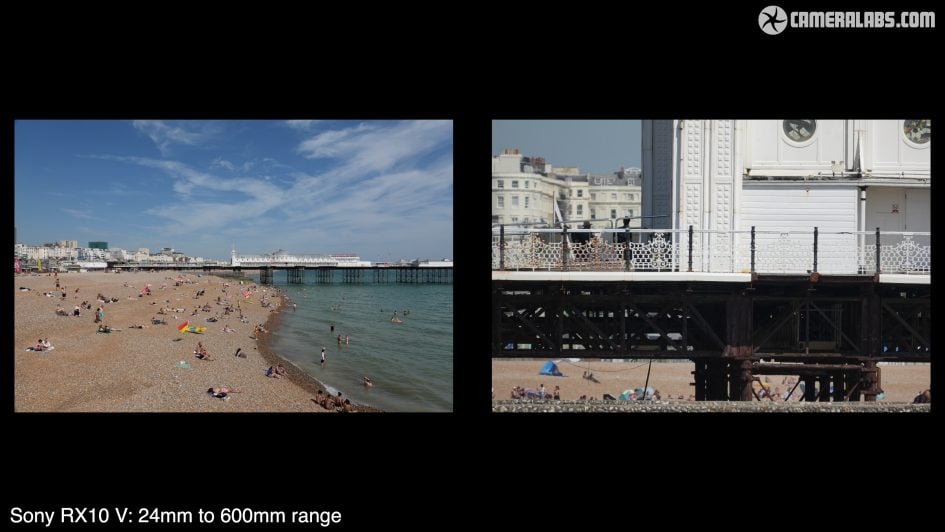
Objects that are almost invisibly small at the wide-end become dominant on the frame at the long-end, giving you enormous compositional flexibility without the hassle of caring and swapping lenses. You could be framing-up a big landscape view at one moment before spotting something in the far distance and zooming-in to grab it too.
The camera powers-up and is ready for action in about one and a half seconds, and the motorised zoom takes about two and a half seconds to fully-extend from 24 to 600mm. The zoom is operated either by the rocker control around the shutter or using one of the two control rings around the barrel which provides finer adjustments. Meanwhile the other lens ring offers manual focus. You can switch these around, but not assign other functions to them.
Near the body are three lens controls: an AF / MF switch, a custom focus hold button and a distance-limiter switch of 3m to infinity or the full range. At the end of the barrel is a 72mm filter thread and Sony supplies a petal hood, albeit one that obviously isn’t optimised for longer focal lengths.
The maximum aperture is variable, starting at f2.4 at the wide-end, dimming to f4 at the longer-end. It starts dimming the moment you touch the zoom, closing to f2.8 at 27mm, f3.2 at 35mm, f3.5 at 58mm, then f4 from 100 all the way to 600mm. That said it is brighter than most super-zooms and if you exploit closer focusing, there is some potential for background blur. The barrel features a dedicated aperture ring which can be clicked or de-clicked, but it only works in Aperture Priority and Manual, and the largest apertures are overridden as you zoom-in.
The optics don’t appear to be parfocal, but the continuous autofocus is good enough to keep a subject sharp as you adjust the zoom whether shooting photos or video. And during video, the zoom slows to mostly avoid juddering adjustments or obvious exposure changes at f4 or dimmer, delivering a pretty smooth result, free from most distractions.
It can focus close too, just 3cm from the front when set to 24mm, or from a distance of 72cm when zoomed to 600mm. Both deliver roughly similar magnification approaching 50%, but the longer-end can be useful for avoiding shadows or disturbing subjects like insects.
Like other lenses with super-telephoto reach, the primary stabilisation for photos is optical, with video supporting optional digital enhancement. SteadyShot proved very effective in my tests for holding a static image, but tended to compensate when I tried to pan. As such I found it hard to smoothly film, say, a bird flying past at longer focal lengths, but there may be a setting or technique to improve this.
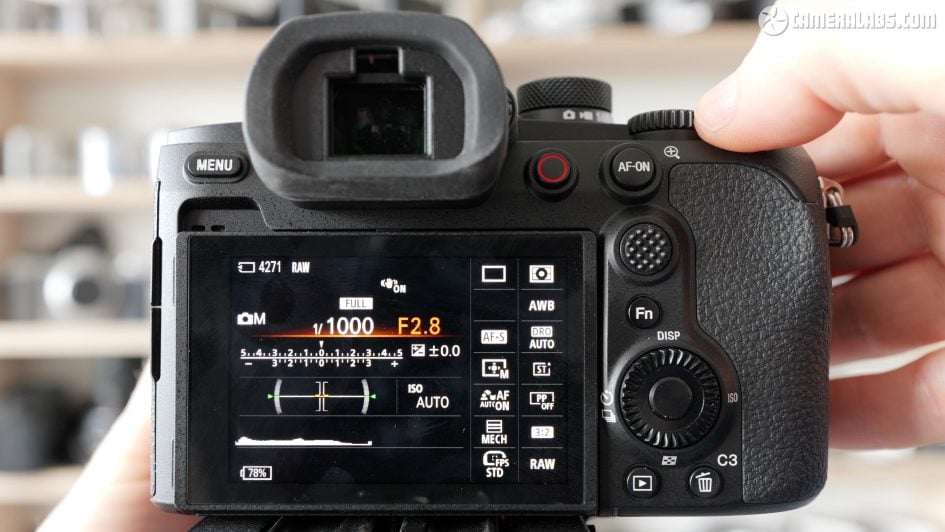
As for the shutter, you can select either fully Mechanical or fully Electronic. The Mechanical mode uses a quiet leaf shutter with a range of 1/2000 to 30 seconds or Bulb. A Bulb timer is available, allowing you to preset exposures between two and 900 seconds. Like most leaf shutters which also adjust the aperture, there’s some restrictions. At apertures between f2.4 and f7.1, the maximum shutter speed on the RX10 V drops to 1/1000, and only allows 1/2000 at apertures of f8 or dimmer. This can be limiting when shooting with large apertures under bright conditions. But the electronic shutter faces no such restrictions, while increasing the fastest speed to 1/16000, and as you’ll see the stacked sensor minimises skewing too.
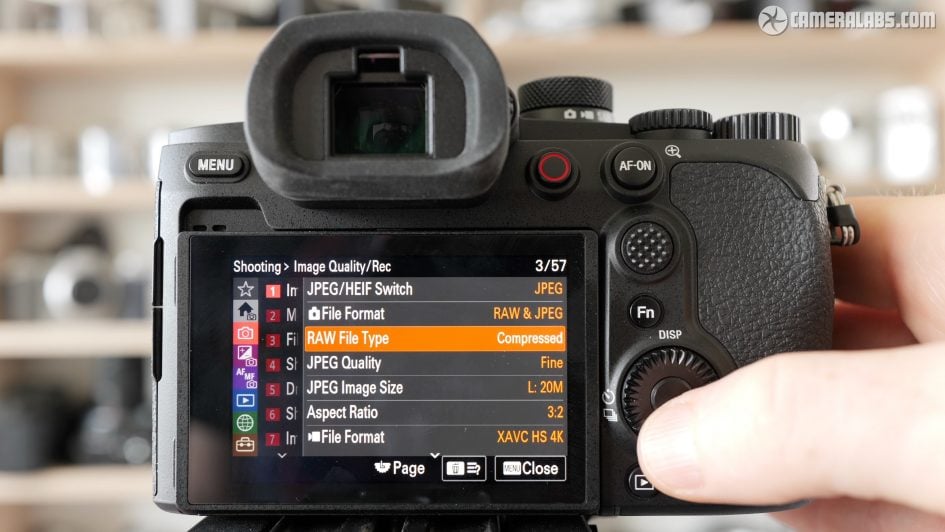
From the image quality menus, you can choose between JPEG or two types of HEIF and whether they’re recorded with a RAW or a RAW by itself. RAW files can be encoded in Lossless Compressed or Compressed formats, while JPEG and HEIF files offer four types of compression, three resolutions and four aspect ratios. I’m confirming the bit-depth for RAW files and if it changes for the shutter type. The native format of the sensor is 3:2, delivering 20.1 Megapixel images with 5472×3648 pixels. Sony’s also added a selection of Creative Looks and expanded the upper limit in D-Range Optimiser or DRO mode. There’s also an interval timer, as well as bracketing for exposure, white balance or DRO.
Moving onto video, the RX10 V represents a big upgrade over the Mark IV with many of the options from recent A7 models. So from the menus you can choose between 1080 HD and 4k resolutions in a choice of encoding formats, frame rates, bit rates and bit depths. I’m showing the PAL options here, and thanks to the latest operating system the Mark V banishes the confusing menus of its predecessors.
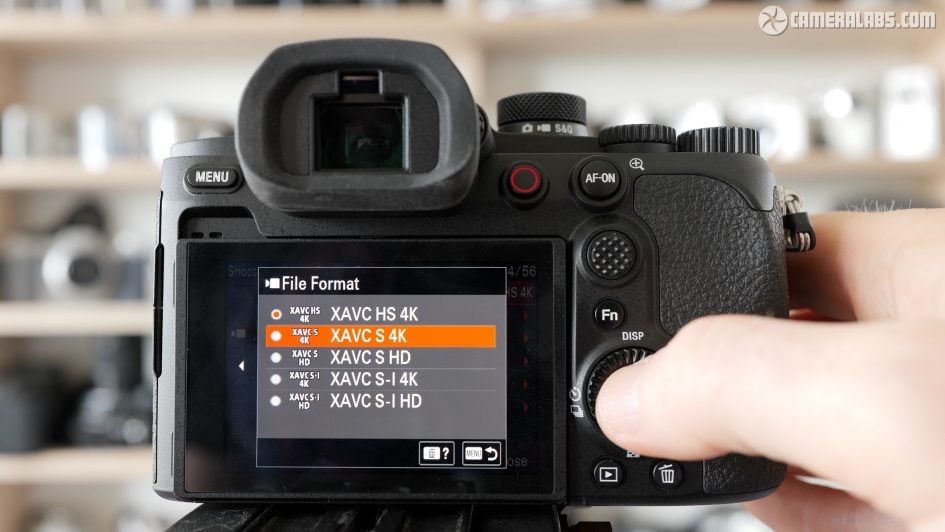
Uncropped 1080 is available from 24 to 120p, with the choice of 8 or 10-bit up to 60p, or 8-bit only at 100 and 120p. Uncropped and over-sampled 4k is available from 24 to 60p, while 4k at 100 or 120p is available, but with a fairly substantial crop that I measured at about 1.5x horizontally. 8 and 10-bit options are available. Like most Alpha cameras, switching to the high efficiency XAVC HS mode means no 25 or 30p frame rates, and there’s also nothing higher than 4k in resolution, nor different aspect ratios like DCi or Open Gate.
S&Q mode allows you to record footage that’s sped-up or slowed-down in-camera, including 1080 up to 240p, albeit lacking the HFR modes of the Mark IV which could increase to 960fps with a steady loss of quality. I believe this may be because the image processor used on the Mark V doesn’t support it, and the A7-style controls don’t show the option either. A shame, but having 4k up to 120p and in 10-bit is a decent consolation. S-Log 3 is also available for those who want to grade, more useful now with support for 10-bit video modes.
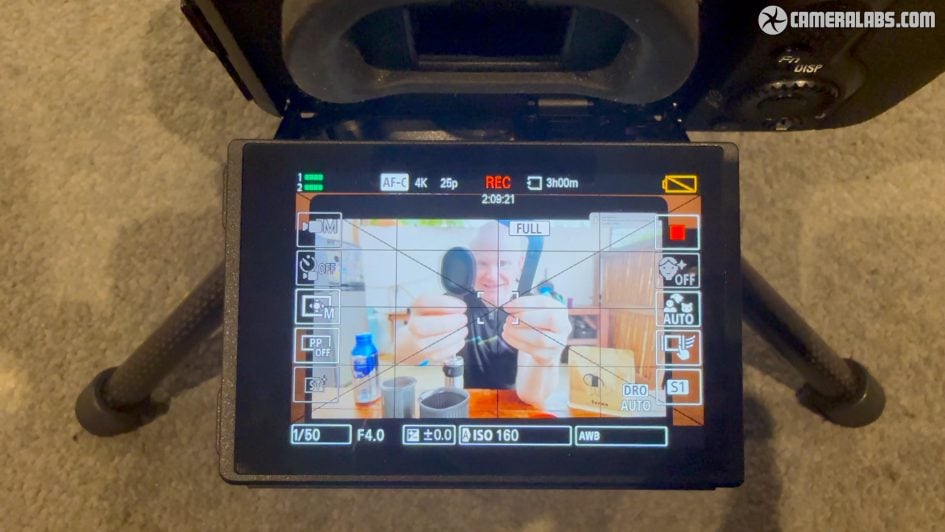
To find out how long the camera could record for, I set the temp warning limit to High and pointed it at a laptop looping videos from my Gordon Gets Coffee channel as I thought it might need a caffeine boost. What do you mean, you’ve never heard of that channel? If you’re into coffee and seeing cafes from around the World, check out Gordon Gets Coffee after watching this review, cheers! Anyway in a warmish room on a full charge, the RX10 V managed to record two hours and 13 minutes of 4k at 25p before the battery expired. There were no overheating warnings, although some surfaces of the body, especially behind the screen and around the battery had become very warm at this point, but not hot.
Just before moving onto my next photo test, a quick look at rolling-shutter performance for video, starting with 1080 at 25p. Here as I shake the camera back and forth, there’s virtually no visible skewing. Likewise at 1080 50p where the camera remains well-behaved, and now at 1080 100p, where again it avoids most skewing artefacts. Next in 4k 25p, again looking pretty good here, before switching to 4k at 50p, still avoiding most skews and finally in 4k at 100p with the crop in this mode, but again looking well-behaved, all thanks to the fast readout of the stacked sensor. You’ll see a bunch of electronic photo bursts soon.
Next for a photo noise test, with a still life scene you’ll see in my video review above. Boost the sensitivity to 200 ISO and again to 400 ISO and you’ll already begin to notice evidence of increased noise reduction dealing with artefacts. At 800 ISO there’s another visible drop in fine details, especially on the buds where some of the textures have been smeared out. At 1600 ISO there’s another drop and I’d say this is about as far as you’d want to go if you’re pixel-peeping. Meanwhile the top three sensitivities of 3200 to 12800 ISO exhibit steady drops in quality, with increased noise and smearing, as well as reduced saturation. So the sensor may be fast but perhaps as a result you will be seeing noise artefacts sooner than later.
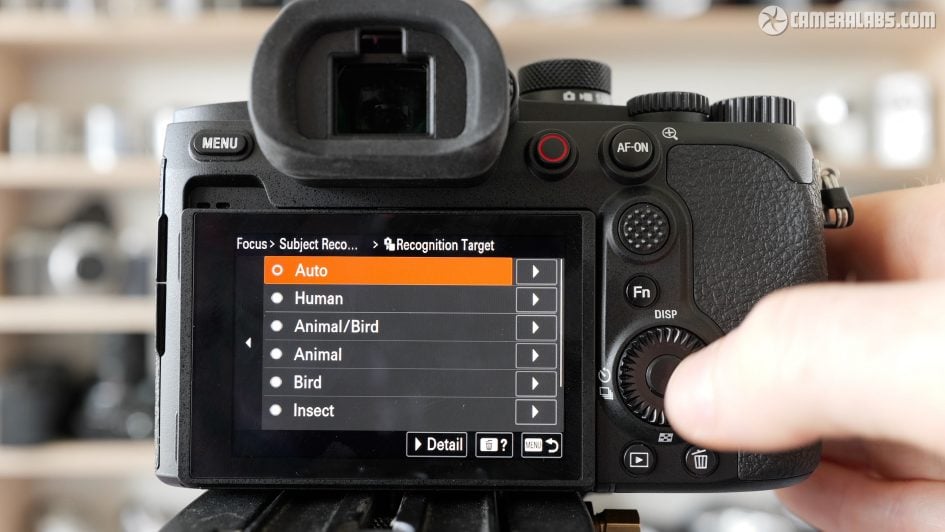
Moving onto focusing where the RX10 V enjoys a big upgrade over its predecessors in terms of subject recognition. You’re now getting the full set of targets for photo and video including human, animal, bird, insect, car and train or aeroplane, as well as the Auto mode which in my tests did a great job at figuring out what I was pointed at. In fact I’d only drill down to specific types if that’s all I was shooting during that session.
How about the potential for bokeh blobs at closer range? The RX10 V is certainly capable of very close focusing at the wide-end, just 3cm away from a subject with the lens at 24mm f2.4. There’s some textures within the blobs, but general-speaking it’s a good result from a camera with a fixed zoom lens.
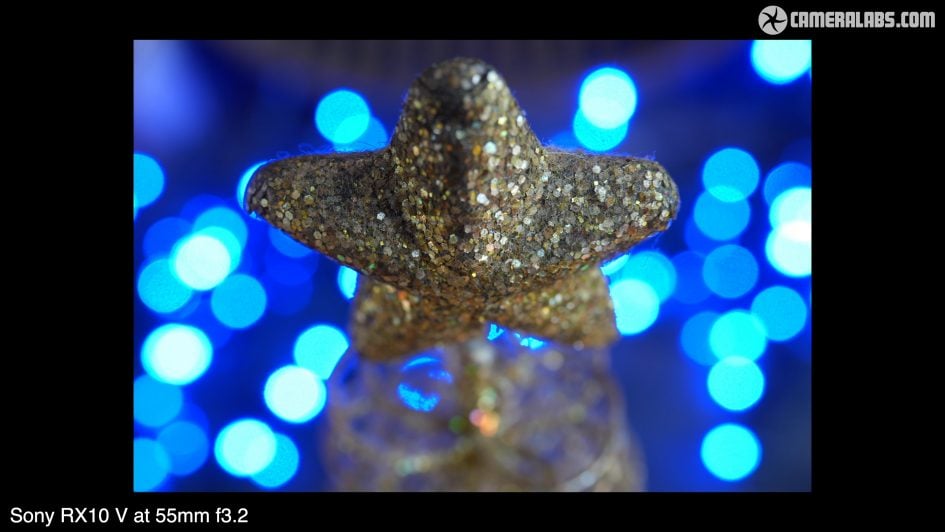
Stand back and zoom-in a little and you can enjoy even better results. Here’s the lens set to 55mm f3.2, where the blobs are larger than before and the slightly greater subject distance avoids most shadows. Zoom the lens fully to 600mm f4 though, and from the closest focusing distance of 72cm you can transform the blobs into much larger shapes. As noted earlier, the lens roughly maintains the maximum magnification throughout the range, so in these three examples the subject is similar in size. At the long-end of the range, you can fill the frame with a subject measuring 70mm across.
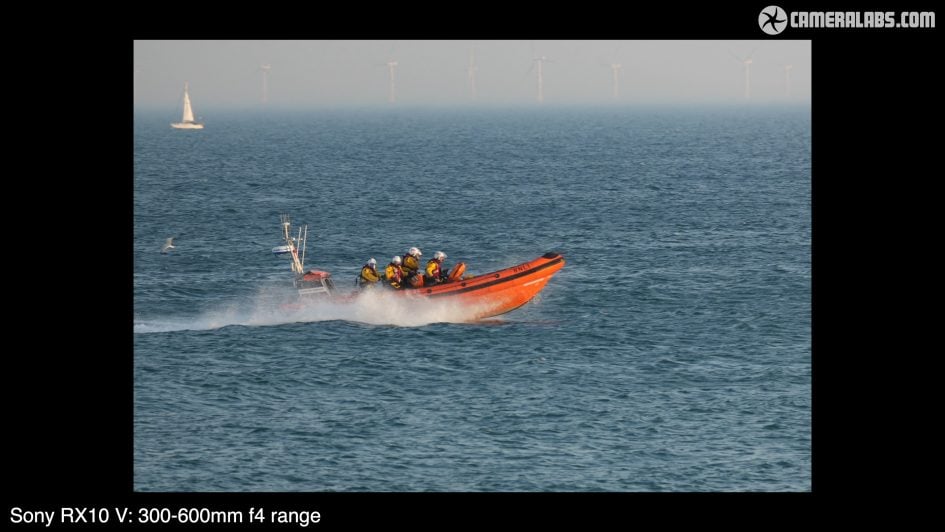
To see how all the capabilities work together, I headed out to Brighton’s seafront to seek out Steven Seagull and friends as they scouted-out unsuspecting tourists with their fresh chips and donuts. In my video review I’ll show you a bunch of examples while talking through the settings and the experience.
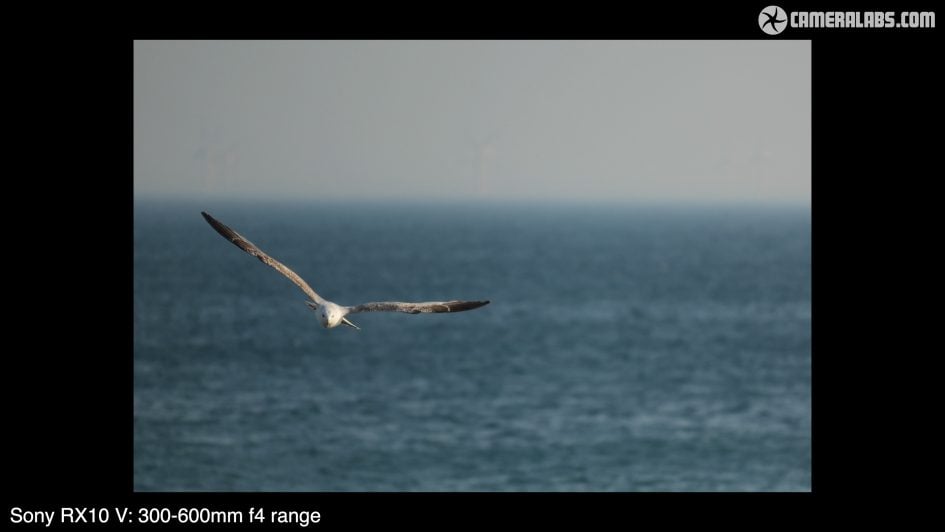
Photographing fast-moving subjects with the RX10 V was a satisfying experience with a blackout-free viewfinder allowing me to easily frame the birds, and an AF system that easily recognised them and was able to keep them mostly sharp during long bursts. Set to JPEG-only you can keep shooting without apparent limits with the buffer clearing straightaway. As I’ll mention in a moment, even RAW files allow decent burst sizes, although you’ll need the Compressed type to unlock the top speed.
As the subject zooms past, you may find the zoom a bit too slow to reframe, but I did find holding the AF-On button while zooming did allow the camera to stay focused as I adjusted the focal length. That said, I’d recommend setting a focal length and sticking with it during a burst.

I was also disappointed not to find a pre-burst mode on the RX10 V, as a camera this good at action would benefit from it. So anyone who regularly waits for the moment a bird takes flight, will find themselves more drawn to a mirrorless camera with pre-burst capabilities. Another issue I found was the SteadyShot stabilisation was being so effective at maintaining a static view that it jerked a bit when trying to compensate for panning. This was most obvious when filming video and I hope there’s a more panning-friendly mode I missed or which can be added. But ultimately solid performance and a camera that can easily deliver a very high hit rate for action, sports and wildlife. I just wish it had pre-burst too.
How about a more formal test of burst speeds? I fitted the RX10 V with a 256GB Lexar Professional 2000x card and tested each of the modes. When set to the mechanical shutter, the top speed is labelled Mid and in my tests was able to record what felt like unlimited JPEGs at around 10fps with no pause to write them at the end.
Set to Lossless Compressed RAW with the mechanical shutter, I maintained the 10fps speed with no sign of slowing down. This time though, it took about seven seconds to fully clear the buffer after a 100 frame burst with a count-down in the corner. Switching to Compressed RAW mode saw the same 10fps speed, but the buffer cleared immediately after I let go of the shutter.
Changing to the Electronic Shutter unlocks the H and H+ drive modes, which can shoot from five to 30fps. When set to JPEG alone, I confirmed the top speed of 30fps during a 300-frame burst, and as before, zero write-time once I let go of the shutter. Switch to RAW with the electronic shutter and you’ll have two different experiences. First, the Lossless Compressed RAW mode only works with the mechanical shutter, so you’ll get the same results as before, so around 10fps with a delay as it writes the files afterwards. Set to Compressed RAW though, I managed 160 frames in 5.29 seconds, working out at 30fps before it slowed down. Letting go of the shutter at this point saw the camera then take around 14 seconds to completely flush the buffer.
Sony RX10 V verdict
The Sony RX10 Mark V is the long-awaited update to one of the most flexible cameras in their range, packing a huge 24-600 zoom into something that looks and feels more like a mirrorless camera with a standard kit lens. The 1in Type sensor may be smaller than a mirrorless camera, but that zoom range much longer than any interchangeable lens outside of giant pro broadcast models. At one moment you could be photographing an expansive landscape before deploying that 25x optical zoom to grab a close-up of some rare bird animal or aircraft you spot in the far distance, then back again without having to carry or swap multiple lenses.
All super-zoom cameras promise this convenience, but so far in my tests only Sony has coupled them with an autofocus system that can actually grab those shots in practice, along with weather-sealing which means you’ll take it everywhere. The RX10 V makes big promises but is one of the few that delivers on them. But then so did the earlier RX10 Mark IV launched seven years previously, and it’s testament to how much they got right on that model that both the sensor and the lens on the new version are exactly the same.
What’s new on the Mark V is a modern image processor and autofocus system, greatly improving the range and accuracy of subjects it can detect and track, as well as now delivering far better video with uncropped 4k up to 60p or up to 120p with a crop, 10-bit options, and slightly faster bursts up to 30fps. This is packed into a body styled more like a familiar A7 series camera, including a more detailed viewfinder, bigger battery, joystick and USB-C port.
These upgrades along with seven years of inflation has seen the price jump to around $2400 which could alternatively get you all manner of mirrorless bodies and a long lens to go with them. For example an A7 IV with a Sigma 20-200 for about $500 more, or an A6700 with a Sigma 16-300, both of which will deliver cleaner images at high ISOs and greater dynamic range thanks to their bigger sensors. But neither of which can get you from wide to 600mm super-telephoto with a single non-broadcast lens.
Don’t get me wrong, the RX10 won’t be for everyone. For a camera so adept at action, there’s annoyingly no pre-burst mode, pixel-peepers will see evidence of noise reduction pretty early in the ISO range, and some will miss the popup flash and HFR video from the Mark IV. Indeed it’s certainly worth keeping an eye open for a used Mark IV as the lens and sensor are the same, and the AF on that model was still very good back then.
But ultimately if you want this kind of range from a new all-in-one camera with performance that can genuinely handle sports, wildlife and action, there’s nothing to rival the RX10 Mark V, and even though the price has gone up, it’s a relief to actually have it available.
Check prices or buy the Sony RX10 V in the USA from B&H or Adorama. Buy it in the UK from WEX, or in Europe at Calumet.de. Buy used gear from MPB. Sell your used gear to MPB. Or why not treat yourself to a copy of my In Camera book, an official Cameralabs T-shirt or mug, or treat me to a coffee! Thanks!