 The Sigma FP2 is a tiny full-frame modular body aimed at pro videographers and becomes a tempting option for those who value a small modular body with plenty of rigging options within the L-mount system. It looks and feels solid, operates confidently and delivers great results. If you’re more of a vlogger or casual shooter though, the Lumix S9 simply represents amazing value for money right now with similar quality.
Sigma FP2 review
-
-
Written by Gordon Laing
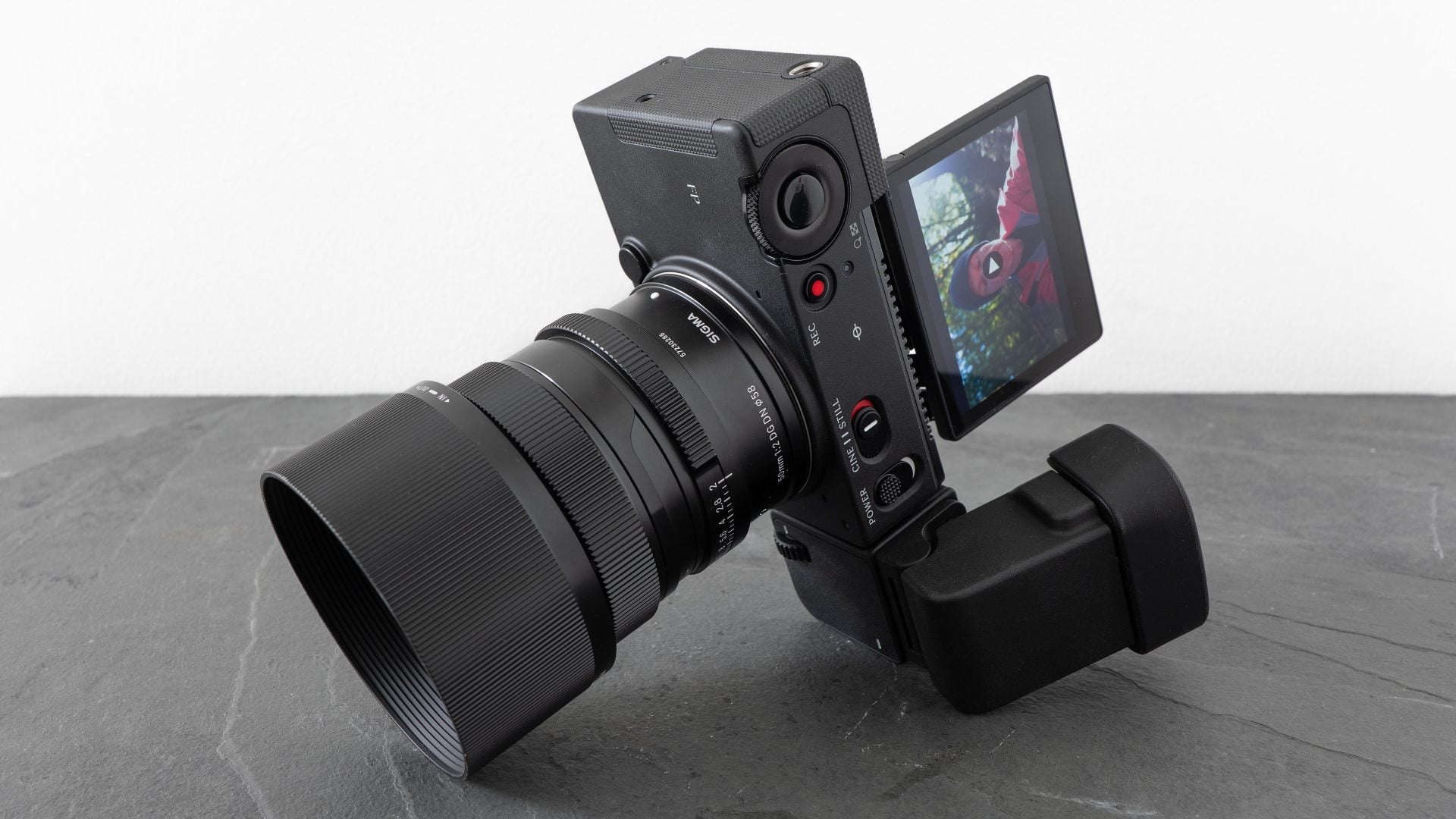
This is the Sigma FP2, a tiny full-frame modular body aimed at pro videographers. It has a 24.5 Megapixel, partially stacked full-frame sensor, 6k Open Gate recording, cropped 4k 120, a tilting screen, 70GB of internal storage and the chance to record ProRes RAW onto external SSDs, plus you can fit a tilting EVF or hotshoe accessory on the side. As you’d expect, it uses L-mount lenses, but there’s no IBIS.
Announced in October 2026, it comes seven years after the original fp and five after the fp L version. It launches at a body price of around $2200 or £1900, or in the choice of two kits with either the EVF or the 50mm f2 DG lens for about $2700 or £2400.
With the bare body measuring 113x70x42mm and weighing 460g including battery, the FP2 is certainly one of the smallest, if not the smallest full-frame cinema cameras to date.
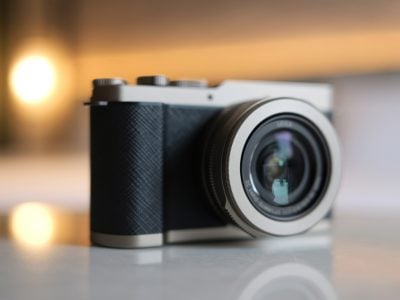
The most obvious comparison to make is with Panasonic’s Lumix S9. Both are full-frame L-mount bodies with electronic shutters that can film 6k Open Gate. The S9 is wider, but includes IBIS and a screen that can flip out to face-forward. It’s also considerably cheaper, around half the price at about a grand or even less during sales.
The FP2 sports a faster sensor that’s less susceptible to skewing, feels more robust with weatherproofing too, has greater rigging options, and the key benefit of a tilting EVF accessory, or an optional hotshoe that coincidentally supports Lumix and OM accessories. But the EVF does make the overall package considerably larger.
Another camera with a more similar sensor to the FP2 is Panasonic’s Lumix S1 II. Both are again full-frame L-mount cameras, and both feature partially-stacked sensors with 6k open gate capabilities. As always no-one will say if the sensors are the same, but the 4k 120 crops do differ and the photos have fractionally different pixel counts, so maybe the FP2 sensor is closer to the Z6 III.
The S1 II costs around $2800 or £2600 which is more than the fp 2’s bare body price, but includes IBIS, a built-in EVF, a hotshoe, fully-articulated screen that can face forward, a mechanical shutter that’s better for stills, active cooling, and twin slots with faster CF Express cards supporting internal ProRes RAW. 4k 120 on the S1 II also incurs a milder crop. The FP2 is of course smaller and cheaper for the bare body, but add the viewfinder and it does grow substantially as well as coming close to the S1 II price. That said, the FP2 still feels tougher and is better-suited to rigging.
I really like the controls on the FP2, with large chunky switches and very positive dials on the top and rear. There’s tripod threads on both sides as well as below, and notice a pair of USB C ports, the upper one supporting accessories while leaving the lower faster one free. Despite its size, the HDMI port is also full-size and there’s a 3.5mm mic input alongside it, while headphones are supported over USB.
The screen now tilts out to reveal a passive heatsink, and angles vertically up by about 90 degrees or down to about 45. The EVF accessory delivers a large and detailed 5.76 million dot panel which can be angled up by 90 degrees and comes with a choice of two eyecups.
Meanwhile it’s powered by what looks like the same battery as the Lumix bodies, with a UHS-II SD card slot alongside. The FP2 also includes around 70GB of internal memory, although limited speed means Sigma restricts ProRes RAW recording to external SSDs only. Also it’s not possible – yet anyway – to record to both the internal storage and SD or SSD for backup. I hope that can be added later, because without this or the speed to support ProRes, it’s not particularly useful.
From the clean menus you can choose H.264, H.265 and L-Log for internal or SD memory, while again connecting an external SSD unlocks the ProRes RAW and RAW HQ modes. These can all be recorded in 2k, 4k or 6k resolutions, with 4k and 6k available in 4:3, 3:2 Open Gate, 16:9 or 17:9 shapes.
Full-frame 2k is available from 24 to 120p, 4k from 24 to 60p or up to 120p in a Super 35 (1.57x) crop, while 6k is up to 60p in 16:9 or up to 30p in 3:2 Open Gate.
Pushing the Colour button lets you choose between 13 modes, and from the menus you can mimic the composition with popular pro cinema cameras with the Director’s Viewfinder, and there’s also a wealth of anamorphic de-squeeze options.
The sensor now has phase detect autofocus, backed up by some decent AF software that allows smooth and confident focus pulls. There’s also subject tracking for humans, animals including birds, or both.
Many run-and-gunners will lament the absence of IBIS, but the FP2 can record gyro data for stabilisation in post. Or for a steadier result out of camera you can enable electronic stabilisation available in 2k or 4k modes, albeit unable to also record gyro data at the same time. Unsurprisingly the Lumix bodies with IBIS and digital stabilisation do a better overall job with the latest models also supporting a cropless option.
Meanwhile despite not having active cooling, the FP2 never got particularly hot in my tests with the screen angled-out, and I managed to record just under an hour of 4k 25p before my storage ran out – and this was with half the battery remaining and camera only slightly warm.
The FP2 can also take still photos at 24 Megapixels, and while it only has an electronic shutter, the partially-stacked sensor does reduce potential skewing. Meanwhile the electronic viewfinder accessory made it much more enjoyable to shoot with than the Lumix S9 in my opinion, whether taking stills or video, but hybrid shooters will probably prefer the S1 II.
And that’s all I can say based on my tests so far. The FP2 becomes a tempting option for L-mount videographers who value a small modular body with plenty of rigging options and makes you wonder if or when Panasonic will make one too. It looks and feels solid, operates confidently and delivers great results. If you’re more of a vlogger or casual shooter though, the Lumix S9 simply represents amazing value for money right now with similar quality.
Check prices or buy the Sigma FP2 in the USA from B&H or Adorama. Buy it in the UK from WEX, or in Europe at Calumet.de. Buy used gear from MPB. Sell your used gear to MPB. Or why not treat yourself to a copy of my In Camera book, an official Cameralabs T-shirt or mug, or treat me to a coffee! Thanks!