Panasonic Lumix TZ300 ZS300 review
-
-
Written by Gordon Laing
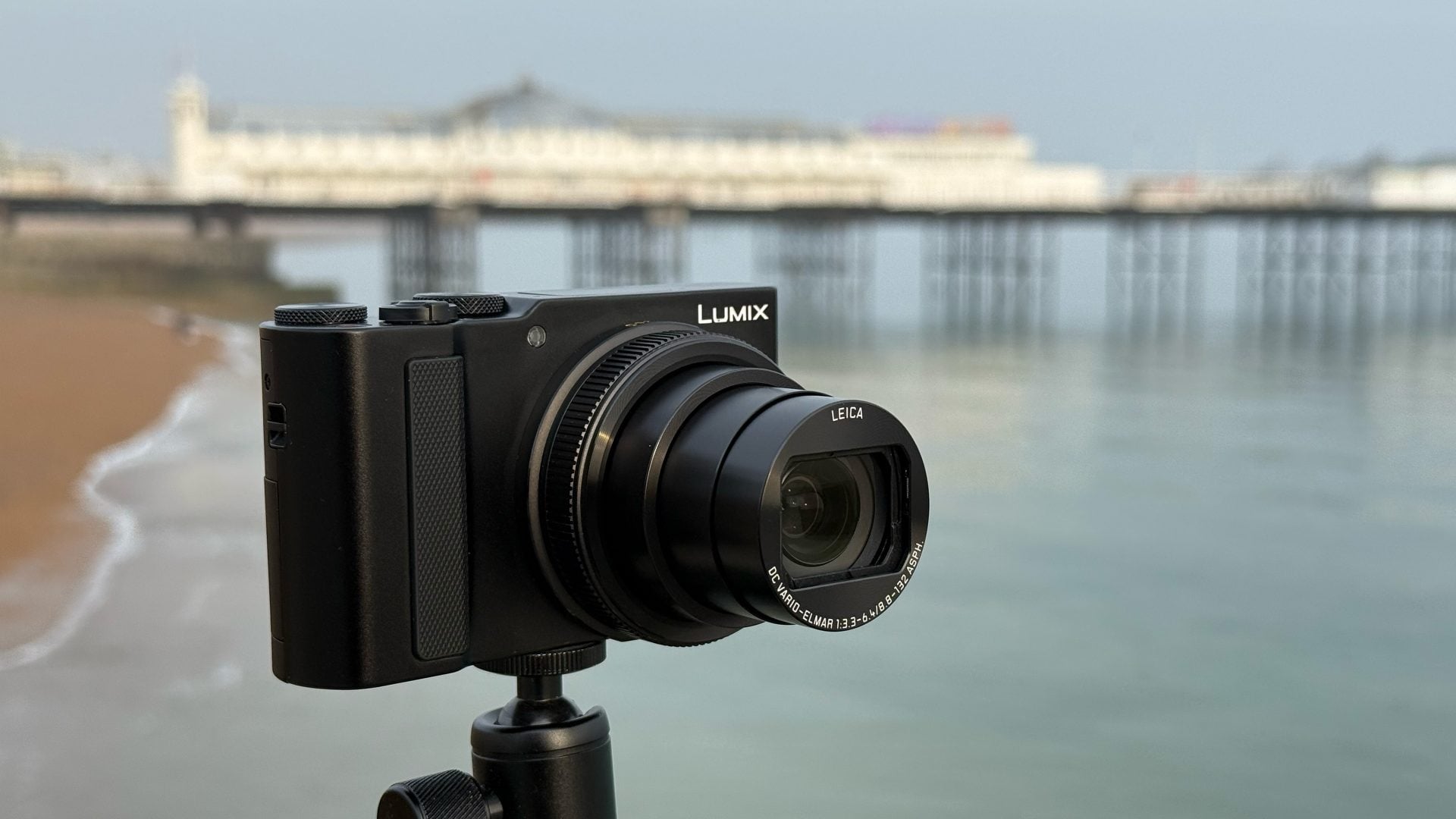
The Panasonic Lumix TZ300 is a super-zoom compact which packs a 1in-type sensor and 15x optical zoom into a pocket-sized body – the longest range in its class. Note I’m calling it the TZ300 as that’s how it’s known in most regions, but in North America it’s called the ZS300. It’s the same camera though.
Announced in March 2026, the TZ300 is the follow-up to the TZ200 or ZS200 launched eight years previously in 2018. Check out my Panasonic Lumix TZ200 ZS200 review for more details. In the meantime, my video about the TZ300 / ZS300 is below, but if you prefer to read the written highlights, keep scrolling!
Back then, the TZ200 was the latest in what had become an enormously popular series of pocketable travel-zoom cameras, packing longer zooms than any phone, as well as bigger sensors in later models too. And lest we forget, Panasonic actually pioneered this category with the original TZ1 back in 2006.
Canon and Sony competed with their G7X and RX100 series, but by 2019 pretty much every company pulled out of the compact market, leaving these as the latest models. Since then, demand for compacts has grown again, but most companies have been cautious about releasing new models, instead testing the water with mildly-updated versions of previous cameras or simply continuing to sell ones that are seven years old.
As such it feels odd to say this, but the TZ300’s biggest competitors with 1in-type sensors are 2019 models: Canon’s G5X II and G7X Mark III, the latter recently re-released with a new paint job, and Sony’s RX100 VII which is the same as before, but in many respects still the one to beat.
Let’s start with the biggest highlight of the TZ300: the 15x optical zoom range which remains unchallenged in this size body with a 1in-type sensor. The previous TZ200 boosted the range from 10 to 15x, and the TZ300 inherits the same optics, taking you from an equivalent of 24 to 360mm.
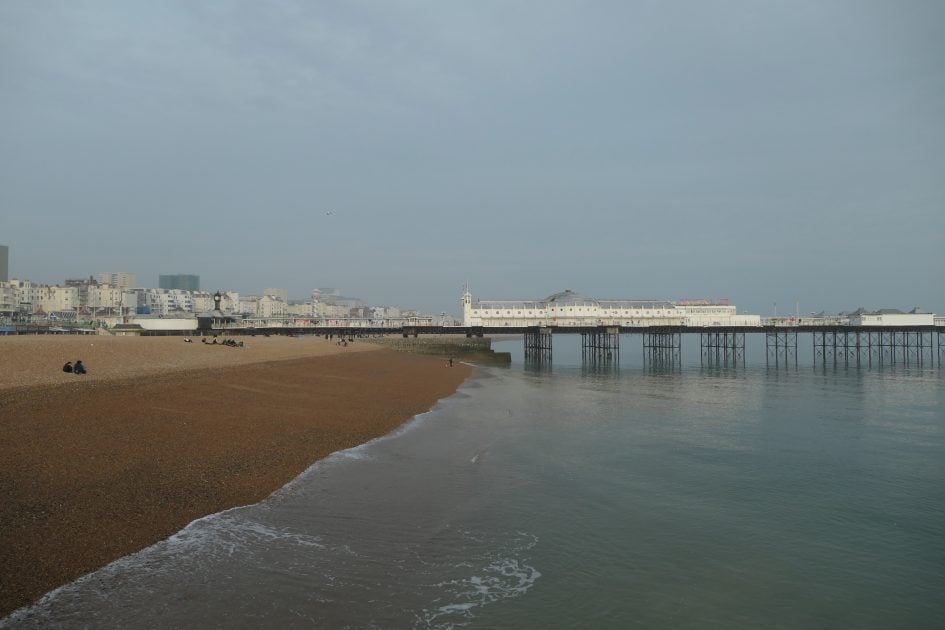
Above: So for still photos, you can go from 24mm, capturing a nice wide-angle view…
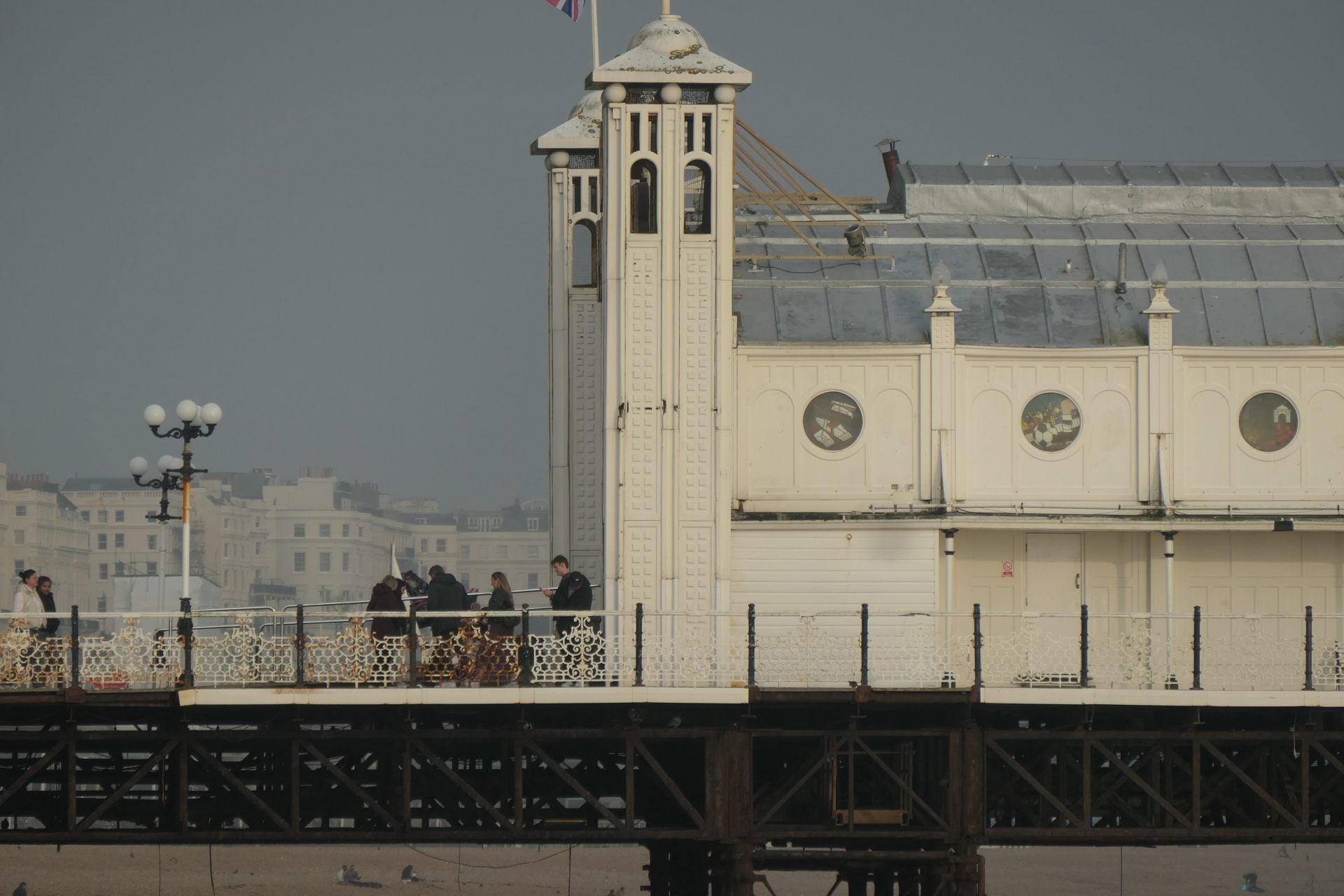
Above: all the way to 360mm where you can really see the details of small and distant subjects.
While Canon and Sony start with the same 24mm wide-angle, neither can reach anywhere near as far at their telephoto ends. The Sony RX100 VII zooms to 200mm, while the Canon G5X II and G7X III reach just 120 and 100mm respectively.
So for pure reach, the TZ300’s lens remains unmatched in the pocket form factor if you want a 1in-type sensor behind it, and Panasonic’s excellent optical stabilisation allows you to handhold some seriously impressive photos and videos. Check out the handheld videos in my review above, where an additional crop is delivering an even longer effective range of 36-540mm, but the stabilisation is doing a great job at keeping the view steady.
And if you’re feeling lost when fully zoomed-in, you can now push a button on the rear to temporarily zoom back out to reveal the bigger scene with the previous framing indicated by a white box, before punching back in again to the same degree. A handy upgrade. The lens can also focus really close, with the Macro mode unlocking the ability to get as close as 3cm with the lens set to wide.
But there are some compromises to be aware of. First, as before, the aperture of f3.3 to f6.4 is inevitably dimmer than its rivals, in turn requiring higher sensitivities to achieve the same shutter speeds, and reducing the chance for shallow depth of field effects. If you want some background blur, be prepared to stand back and zoom-in.
Secondly, while the TZ300 shares the same 20.1 Megapixel resolution as most cameras equipped with 1in-type sensors, there are differences in their readout speed and autofocus. Panasonic may have updated the TZ300’s sensor to a Back-Illuminated model, in theory improving light gathering over the TZ200, but it still lacks the stacked design and phase-detect autofocus of the most recent Sony RX100 models, instead still relying on Panasonic’s DFD technology.
In general use for stills, I found the TZ300’s autofocus could certainly be quick and confident, but on my pre-production sample it struggled with faster moving subjects like birds in flight or quick sports. So while the longer zoom range is tempting to reach distant subjects, I found the autofocus of the Sony RX100 VII to be more confident overall. Plus you could of course crop its images to match the coverage, albeit of course at the cost of some resolution.
The autofocus technology was also noticeable on some of my TZ300 video clips, where some pulsing was visible as the autofocus wobbled to confirm. Sometimes it worked well for leisurely focus-pulls, but at other times less so. Certainly if I were presenting to camera, I’d prefer the Sony for its more confident AF and a screen that faced-forward.
DFD autofocus isn’t the only throwback on the TZ300, as you’ll also find Panasonic’s 4K Photo modes available. These leveraged the fact that 4k video is essentially capturing 8 Megapixel photos at 30fps and could be used for burst photography – albeit with some caveats including a cropped view and slow autofocus.
On the plus side, 4K Photo on the TZ300 inherits the pre-burst option which allows you to keep a rolling buffer as you half-push the shutter, so you don’t miss a moment due to reaction times. Great for birds taking flight, and I enjoyed using the playback interface to extract the desired frames from the video clip, although again the autofocus may be too slow for subjects moving towards or away from you.
As mentioned earlier, the 4k video modes, available at 24, 25 and 30p, also involve a substantial crop, operating between 36 and 540mm. Great for getting even closer to distant subjects of course, but missing out on the wide-angle end. This means filming in 4k is going to be too tight for handheld vlogging at arm’s length, so if this is your thing, you may want to switch to the slightly wider 1080 modes, available in 25 to 60p, but in either case – spoiler alert – you won’t be seeing yourself while filming. Oh and 4k clips are still limited to 15 minutes. Meanwhile if you want higher frame rates, 1080, as before, is available up to 120fps in a High Speed mode.
In terms of design and controls, the new Lumix TZ300 looks and feels a lot like the TZ200 before it: the same size body, and essentially the same weight at 337g including battery and card. Obviously there’s slimmer and lighter compacts around, generally with smaller sensors, but it should still squeeze into all but the tightest pockets, and it feels solid and well-built.
From the top it also looks much the same, with a power switch around the mode dial and a zoom rocker around the shutter release. As you switch the camera on, the lens physically extends by about 38mm, and as you increase the zoom the barrel briefly dips back a little before then extending to a maximum of about 73mm. It’s quite a dramatic-looking extension which caused a few heads to turn during testing, but at least it powers up and down fairly quickly, and like most compacts of this type includes an automatic cover.
The mode dial offers fully automatic Intelligent Auto, Program, Aperture and Shutter Priority and full Manual modes with fully adjustable aperture and shutter speeds. There’s also a dedicated movie mode, two custom positions and two more for Scene presets and effects. Eagle-eyed Lumix followers will note the Panorama position on the older TZ200’s dial has been switched for one of the new Custom modes.
There’s two control dials, one that’s clicky for your thumb on the top corner of the camera, and the other a ring around the lens barrel that turns smoothly. Meanwhile in line with the lens is a popup flash that’s activated using a switch behind it. In a World of nasty LED lights masquerading as flashes, I’m pleased to report this is a traditional type.
Turning to the rear, the control layout is almost identical to the TZ200, but there’s one major omission: the electronic viewfinder previously in the top left of the TZ200 has been removed. Personally speaking, this is a big loss as I find it easier to frame-up with a viewfinder and hold the camera steadier, especially at the longer focal lengths offered by the TZ300, and as my eyes become older I find menu navigation and playback easier with viewfinders too.
But equally I realise many people prefer to compose solely with a screen, so I guess they’re more the target audience than me. And to be fair, Canon’s G7X doesn’t have a viewfinder either, but if you do want one, you’ll be gravitating towards the G5X II or Sony RX100 VII at this point.
So on the TZ300, composition is entirely down to the 3in screen with 1840k dots, the same as the TZ200 before it. In use it looks crisp and also bright enough to be visible outdoors, but unfortunately like its predecessor it remains fixed in position and unable to tilt. Considering it’s now the only means of composition, I think this is a major downside, not just for easier composition at high or low positions or for angling reflections away, but it also rules out a forward-facing view for vlogging or selfies, surely a common activity on a travel camera. And lest we forget, the Canon G5X II, G7X III and Sony RX100 VII all have tilting screens that can face-forward.
Moving on, behind a flap on the grip-side, you’ll find Micro HDMI and USB-C, the latter for data or charging in-camera. Note the older TZ200 had a Micro USB port, but like many updated models, the TZ300 has switched this for USB-C. Inside there’s still Wifi and the Bluetooth has been updated to version 5.
Under the camera you’ll find a metal tripod thread in the middle of the body, and while that’s not in line with the optical axis, it’s still better than the corner position on some models. As before, the card and battery are housed in a compartment alongside, with the TZ300 unsurprisingly powered by the same DMW-BLG10 pack as before which should be good for roughly 360 shots.
Panasonic Lumix TZ300 ZS300 verdict so far
The Lumix TZ300 marks the welcome return of Panasonic’s enormously popular travel zoom series of compacts after an eight year hiatus, packing a long zoom range and large sensor into a pocket-sized body.
It may inherit the same lens as the TZ200 before it, but the 15x range remains unmatched taking you from 24mm wide angle to a serious 360mm telephoto.
This gives the camera comfortably longer reach than its rivals with similar sized sensors, and the stabilisation is excellent, although as before the autofocus is better-suited to more leisurely subjects.
That said, I still loved the flexibility and creative options of having such a long range in a convenient form factor, and the image and video quality out of my pre-production sample looked good. I’ll leave a more detailed analysis to a potential follow-up video when final production samples are available if there’s demand for it. Let me know in the comments.
But apart from employing a back-illuminated sensor and switching Micro USB for USB-C, there’s nothing new here over the earlier TZ200. I complained about the screen not tilting eight years ago, so it’s frustrating to find it still fixed in place today, but doubly-so now that Panasonic has unforgiveably removed the electronic viewfinder.
This is a major downgrade in my personal view, especially for framing and tracking a subject with a long lens, although I do understand many of the target audience may not have used it. But I am sure almost all the target audience would have appreciated a tilting screen, as it makes the TZ300 less than ideal for vlogging or selfies.
If you desire a tilting screen and viewfinder, you’ll be drawn to Canon’s G5X II and Sony’s RX100 VII, the latter also boasting the most confident autofocus system of the bunch. But in doing so you’ll quickly find availability and pricing issues.
For starters, the G5X II is hard to find new anywhere, and even used prices can exceed a new TZ300. Meanwhile the RX100 VII may have the best specs overall, albeit with a shorter 200mm reach, but if you can even find one new, it can cost up to double that of the TZ300. There’s some on the used market, but again at typically over a grand, so it’s a much more expensive proposition.
And ultimately that’s the secret weapon of the TZ300: simple availability. By refreshing an older model, the TZ300 should at least be available to buy new if you want to, an approach shared by Canon with the new finish on the G7X III anniversary edition.
Speaking of which, the G7X III costs a similar amount to the TZ300 and also lacks a viewfinder, but it does have a newer sensor, tilting screen and mic input, so it’s a case of comparing those and their different lens specs.
I should also mention used TZ200s with the same zoom range as the TZ300 and a viewfinder are generally available for about £500.
Ultimately I’m frustrated Panasonic didn’t upgrade the TZ300 with a tilting screen and more confident autofocus, and again I’m personally disappointed about removing the viewfinder, but price-wise it’s still pitched competitively for a new camera and there’s little else like it.
Hopefully growing demand for compact cameras will see genuinely new or upgraded models arrive in the future, but during this transitional period, I’m just happy to see their return.