Nikon Z 70-200mm f2.8 VR S II review so far
-
-
Written by Thomas
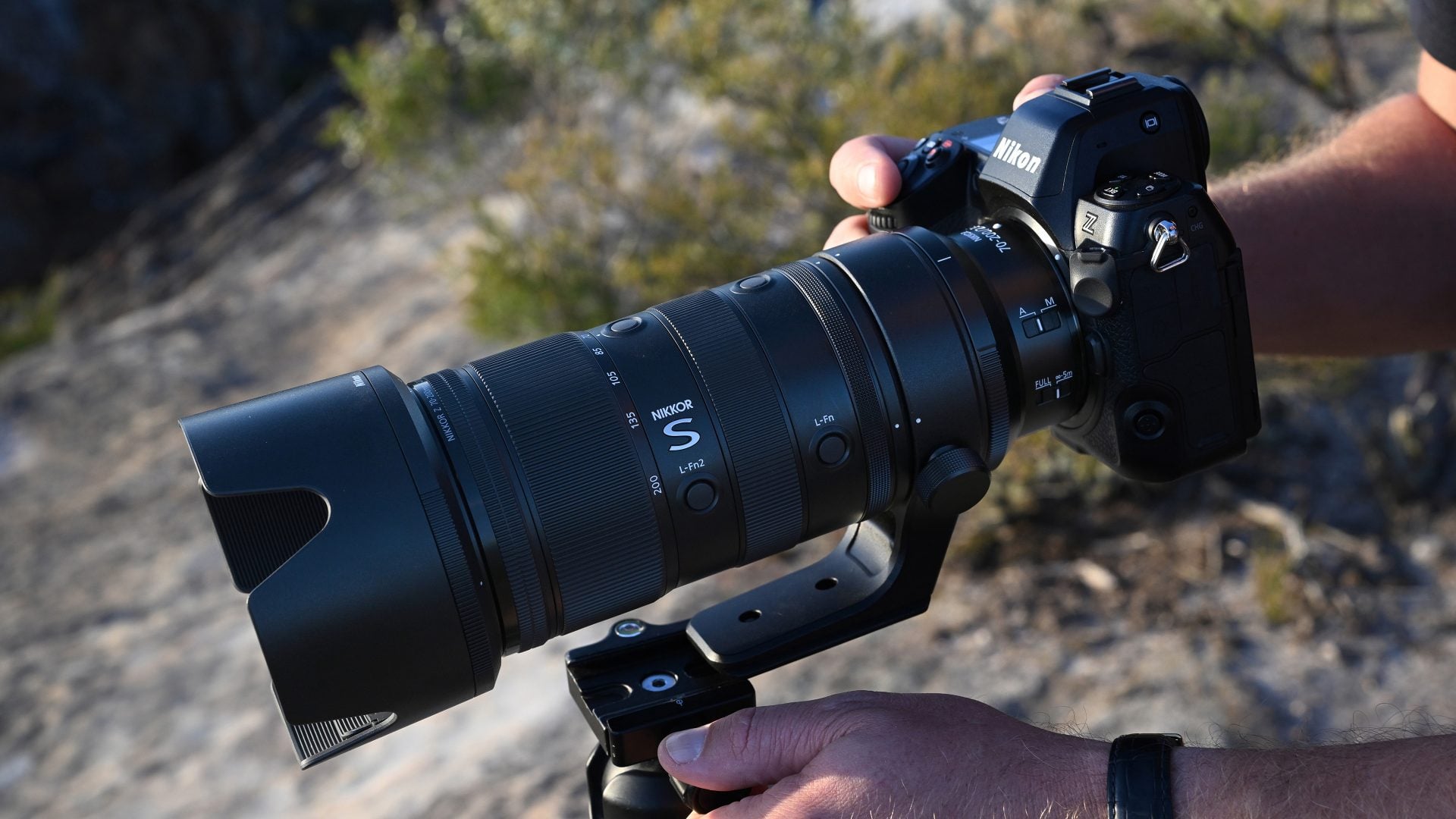
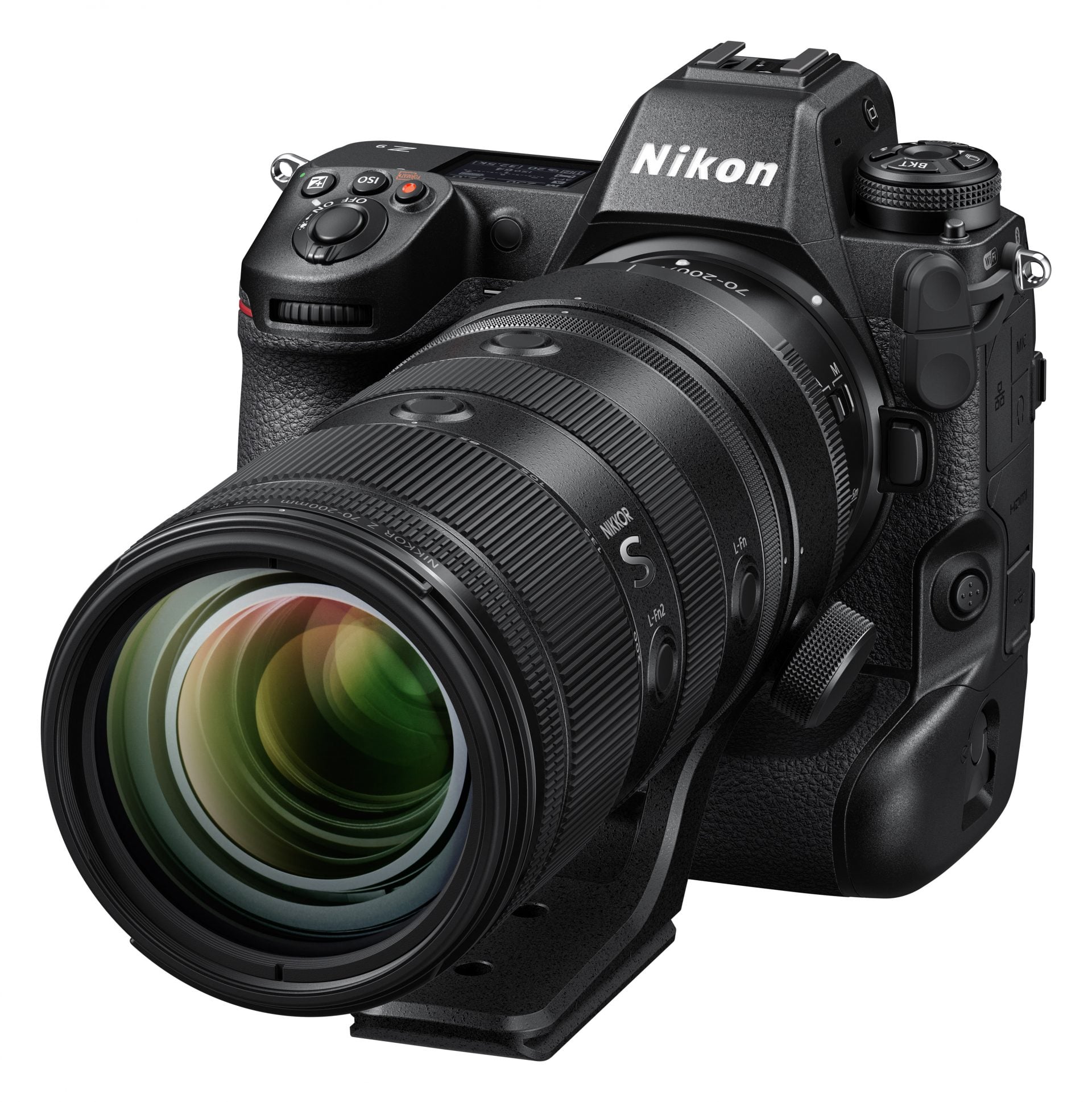
The Nikon Z 70-200mm f2.8 VR S II is a professional telephoto zoom designed for Nikon’s full-frame Z-series mirrorless cameras – and the second lens in Nikon’s line-up of Z-Nikkors to get an update. Its predecessor, the Z 70-200mm f2.8 VR S, was announced in January 2020 as one of the trinity of Z-Nikkor zoom lenses with a fast f2.8 focal ratio.
Nikon changed the optical formula of the Z 24-70mm f2.8 S II claiming improved optical performance and no shift in the center of gravity while zooming. They also improved maximum magnification by 50%, made the new lens a bit shorter and a substantial 360g (26%) lighter, added a second customizable L-Fn button, upgraded the focus drive from a stepper motor to a faster voice coil drive, applied their latest meso-amorphous coating, and added two features they just recently introduced with the updated Z 24-70mm f2.8 S II: A lens hood with a window for easier use of rotating filters and a multi-function control ring that can now be set to provide clickable tactile feedback, such as when adjusting the aperture. On top of that Nikon finally made the foot of the detachable tripod collar Arca-Swiss compatible. Bravo! The only features of its predecessor which didn’t make it to the new lens: The OLED display for indicating focal length, aperture, focusing distance and depth-of-field.
The Nikon Z 70-200mm f2.8 VR S II costs 3349 EUR (incl. 19% VAT) / 3197 USD / 2999 GBP and should become available mid of March. Read on for a detailed comparison of facts and features of the new lens vs. some alternatives.
Facts and features
Let’s compare the Nikon Z 70-200mm f2.8 VR S II to its predecessor (the Nikon Z 70-200mm f2.8 S VR), and the Tamron 70-180mm f2.8 Di III VC VXD G2 (“Tamron” for short). As usual I’ve rated the features with a [+] (or [++]), when it’s better than average or even state of the art, a [0] if it’s standard or just average, and [-] if there’s a disadvantage.
Size (diameter x length): 90 x 208mm (3.5 x 8.2in.) plus an estimated 62mm for the lens hood. The predecessor is 89 x 220mm + 56mm lens hood. The Tamron is the shortest, certainly helped by its 20mm shorter focal length and the extending zoom design: It measures 83 x 159mm + 46mm lens hood and extends by 27mm when zoomed in to 180mm focal length. [+]
Weight: 998g (2.2 lb) plus an estimated 90g for the plastic lens hood and another 180g for the tripod mount. This is much lighter than the predecessor at 1359g + 82g lens hood + 71g tripod foot. But the Tamron is still lighter at 865g + 50g lens hood. [+]
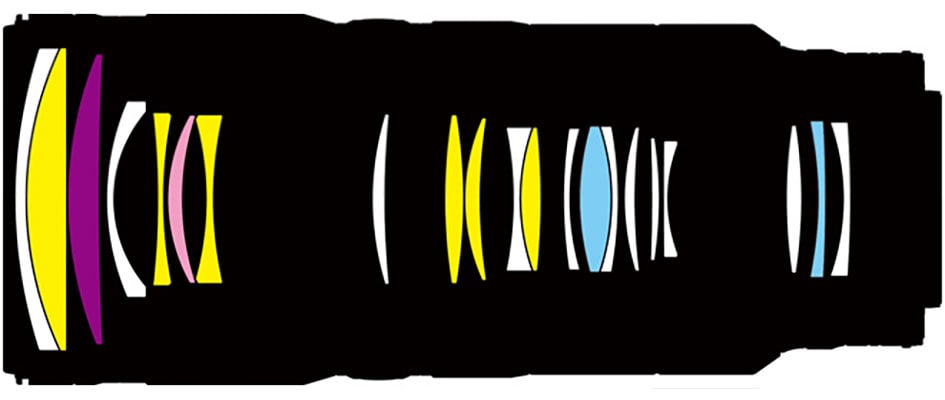
Optics: 18 elements in 16 groups including one fluorite element, 4 special dispersion and 3 aspherical elements. Both Z-Nikkors use Nikon’s “ARNEO” anti-reflective coating to reduce flare, glare and ghosting but only the new Z 70-200mm f2.8 VR S II profits from additional Meso-amorphous coating. The predecessor has 21 elements in 18 groups including 10 special dispersion elements and 2 aspherical elements. The Tamron has 20 elements in 15 groups including 4 special dispersion elements and 3 aspherical elements. [+]
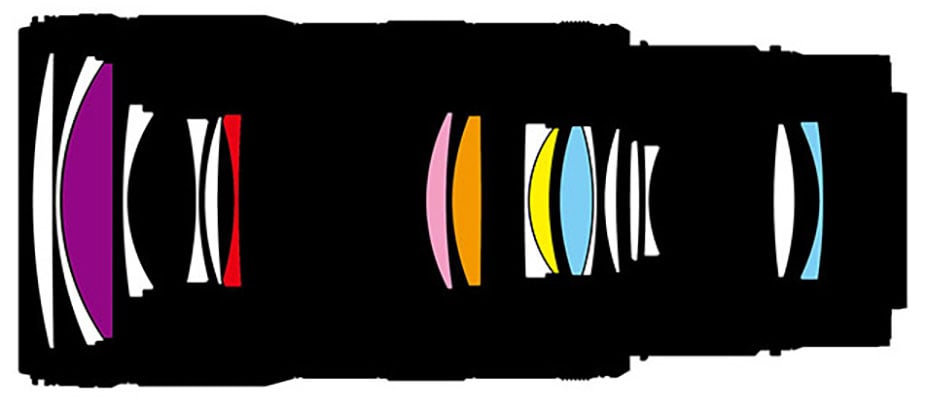
Nikon Z 70-200mm f2.8 VR S II (above), Nikon Z 70-200mm f2.8 VR S (below)
Coverage: Both Z-Nikkors have a 2.9x zoom-range while the Tamron only covers 2.6x. To achieve the same angle of view at the long end images from the Tamron need a 1.11x crop reducing resolution from 45MP to 37MP. [0]
Minimum object distance is 0.38m (1.25ft.) at 70mm focal length and 0.8m (2.63ft.) at 200mm zoom position. Maximum magnification is 1:3.3 at 70mm and 1:4 at 200mm. This results in a working distance of 16cm at the short end and 0.58m at the long end. The predecessor achieves 1:4.6 at 200mm focal length and a working distance of 0.72m. The Tamron achieves 1:2.5 at 70mm focal length and 13cm working distance or 1:4.4 at 180mm focal length and 0.64m working distance. [+]
Use with teleconverter: Yes, the Z-Nikkors can use both Nikon teleconverters for Z-mount. The TC-1.4x converts the Z-Nikkors into 98-280mm f4 zooms, the TC-2.0x into 140-400mm f5.6 zooms. Minimum object distances stay unchanged but the maximum magnification is increased to 1:2.4 (TC-1.4x) resp. 1:1.7 (TC-2.0x) on the Z 70-200mm f2.8 VR S II and 1:3.3 resp. 1:2.3 on its predecessor. The Tamron is not compatible with teleconverters. [+]
Filter-thread: Both Z-Nikkors use 77mm filters while the Tamron takes 67mm filters. [+]
Image stabilization: All three lenses in this comparison offer optical stabilization. The body-based stabilization on Nikon’s full-frame Z cameras works in conjunction with the optical stabilization of the lenses to achieve a claimed 6 stops of stabilization over 5 axes for the Z 70-200mm f2.8 VR S II (measured in compliance with the new CIPA 2024 standards). [+]
Autofocus: All lenses in this comparison offer autofocus with built-in focus drive. But Nikon swapped the stepper motor of the predecessor to a voice coil drive (SSVCM) which they claim is 3.5x faster, 17.5x more precise, “functionally silent”, and has 40% better focus tracking while zooming. Btw: The strong magnetic field from the new drive made Nikon advise you to keep at least 5cm distance from cardiac pacemakers. Tamron also has a voice coil drive. Manual-focus override is by simply turning the dedicated focus ring. The focus ring has the usual variable gearing which allows for very precise manual focus when turned slowly. You can reverse the focus ring direction and switch to linear response with different settings for focus throw in camera. [+]
All lenses in this comparison cover full frame sensors or can equally be used on a cropped DX sensor. The angle of view of a 70-200mm zoom lens is equivalent to a 105-300mm zoom lens on a cropped sensor. The Tamron becomes equivalent to a 105-270mm zoom. [+]
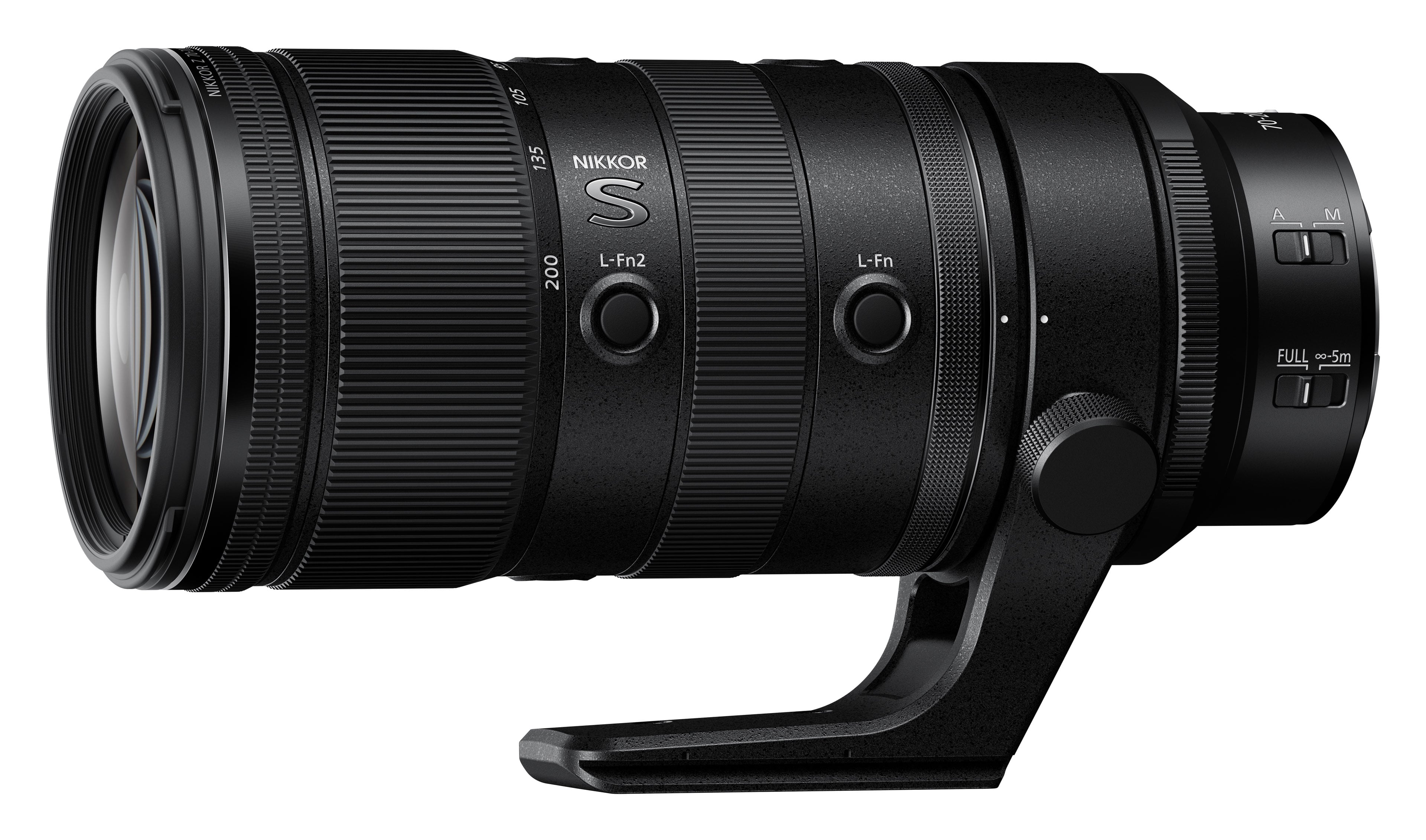
Display: No, the Nikon Z 70-200mm f2.8 VR S II does not features the OLED display of its predecessor or some other S-class lenses. Same with the Tamron. [0]
Price: 3349 EUR (incl. 19% VAT) / 3197 USD / 2999 GBP. The Nikon Z 70-200mm f2.8 VR S currently goes for 2339 EUR / 2897 USD / 2379 GBP, the Tamron is at 1099 EUR / 1149 USD / 999 GBP. Prices for Nikon Z teleconverters are: 547 EUR (incl. 19% VAT) / 587 USD / 579 GBP for the TC-1.4x and 599 EUR / 647 USD / 599 GBP for the TC-2.0x. [0]
Both Z-Nikkors come with a flimsy pouch which has no strings to pull it close. So if you put the lens in your bag it might easily slip out of its pouch and bang around unprotected. This is simply unacceptable for a lens costing around 3000 EUR/USD/GBP. The Tamron does not come with a pouch. All lens hoods are reversible for transport. The new Z-Nikkor has a windowed design which allows for easier access to rotating filters like polarizers but puts away with the black velvet coating of its predecessor. [0]
Aperture ring and other control elements: Both Z-Nikkors have a slim multi-function control ring in addition to the dedicated focus ring. The control ring can be assigned to operate the aperture (which is the default), exposure compensation, or ISO sensitivity – or simply switched off. The new Z-Nikkor has a switch on the right side to make the ring clickable for more tactile feedback e.g. when operating the aperture, or smooth which is preferred for adjustments in video. Both Z-Nikkors have 4 L-Fn2 buttons between the zoom-and focus-ring but the new lens now has 2 L-Fn buttons which can be assigned many different functions e.g. AF-lock. This is different from its predecessor which only has one L-Fn button and makes it easier to operate the button when shooting in portrait orientation. There is also a switch to limit focus to infinity-5m. The Tamron has no dedicated multi-function control ring but you can set its focus set button to switch the focus ring to operate the aperture. You can also assign more functions via Tamron’s Lens Utility (TLU) than what the Z-Nikkors have to offer. [+]
Lens profile: All three lenses come with an integrated lens profile which can be controlled from the camera. Vignette control offers the usual options of High, Normal, Low and Off. Diffraction compensation and Auto distortion control can be activated or deactivated – as it is for the predecessor and the Tamron. [+]
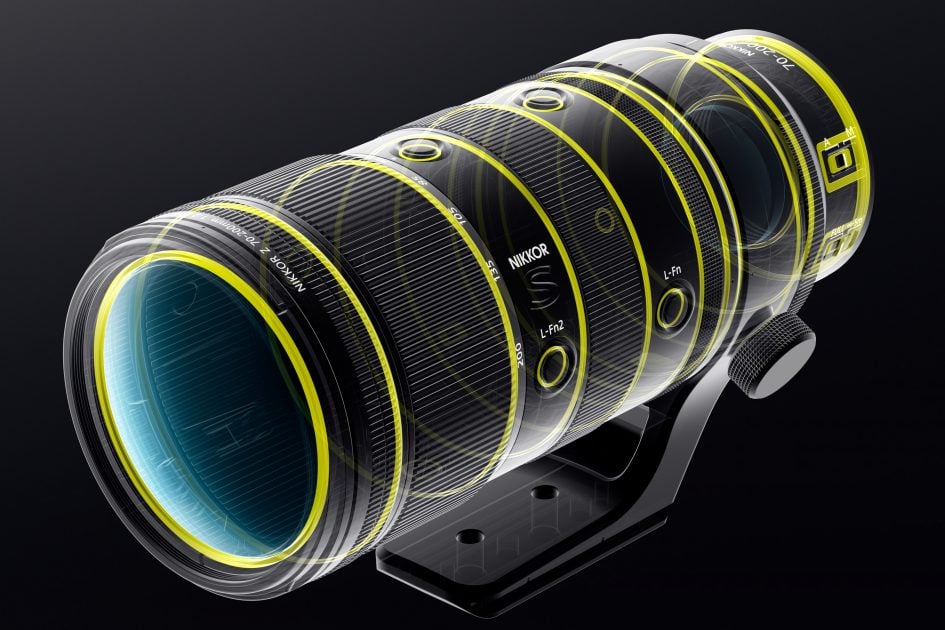
Sealing: All lenses in this comparison have a rubber grommet at the lens-mount plus further special weather-sealing throughout the construction. And all three have fluorine coating on the front lens to repel water, dust, and dirt and should make for easier cleaning. [+]
Tripod mount: Both Z-Nikkors have a tripod collar and foot, the Tamron has none. On the new Z 70-200mm f2.8 VR S II the tripod collar can be completely removed, which saves an estimated 180g of weight. On its predecessor only the foot (71g) could be removed. Nikon supplies a “protective cover” with the new lens which can be installed when the collar is removed. But it is not mandatory to use as it is only for convenient hand-holding, not for protection against the elements. If the implementation of tripod collars on other Z-Nikkors are an indication, the ring should rotate smoothly – when unlocked – and have little play but probably misses click-stops at 90 degrees. Under the rubber cap of the screw is a security slot for attaching an anti-theft cable. And finally Nikon made the foot Arca-Swiss compatible. [+]
At a score of 0[-]/3[0]/14[+] the Nikon Z 70-200mm f2.8 VR S II is an exceptionally well featured design – albeit at a high asking price. It is much lighter than its predecessor, has a promising new optical formula and sports three features that most other Z-Nikkors miss: A (de-)clickable function ring, a lens hood with a filter window, and an Arca-Swiss compatible tripod foot. You may miss the OLED display of its predecessor but I think not many users valued this highly.
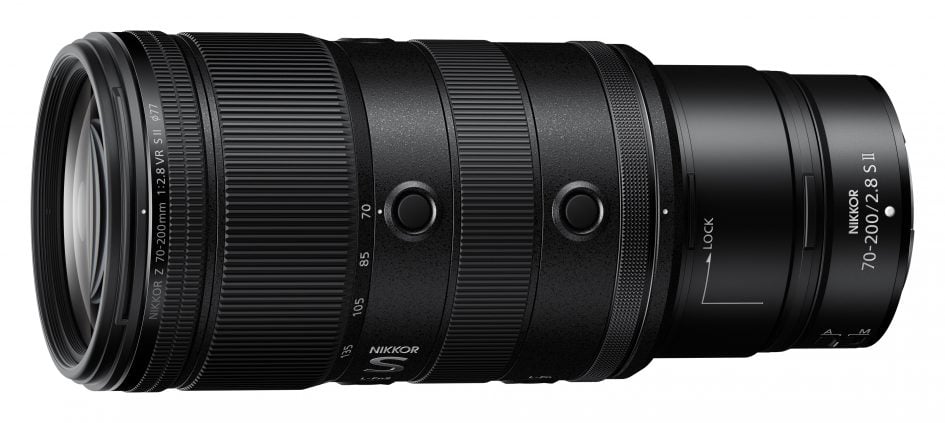
Above: Nikon Z 70-200mm f2.8 VR S II without tripod collar or protective cover
Sharpness and contrast
Let’s have a look at the theoretical performance of the new Nikon Z 70-200mm f2.8 VR S II first and compare it to its predecessor and the Tamron 70-180mm f2.8 Di III VC VXD G2:
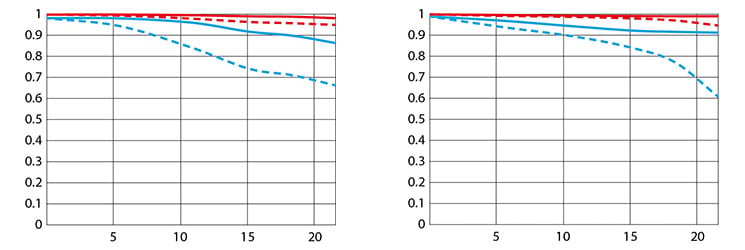
Above: MTF Nikon Z 70-200mm f2.8 VR S II at 70mm f2.8 (left) and 200mm f2.8 (right)
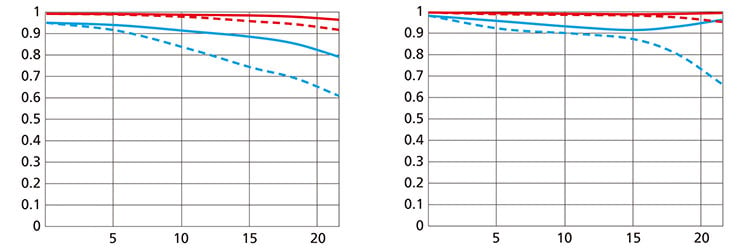
Above: MTF Nikon Z 70-200mm f2.8 VR S at 70mm f2.8 (left) and 200mm f2.8 (right)
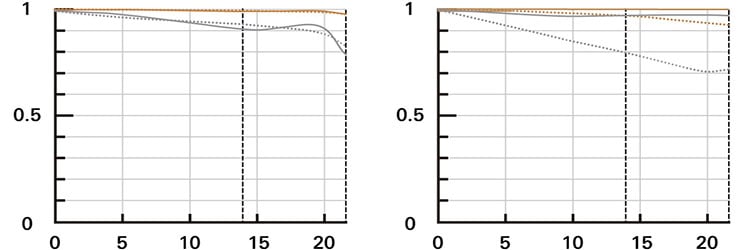
Above: MTF Tamron 70-180mm f2.8 Di III VC VXD G2 at 70mm f2.8 (left) and 180mm f2.8 (right)
These MTF charts show the computed lens-performance wide open without influence of diffraction at 10 line-pairs/mm (in red/yellow) and 30 lp/mm (in blue/gray). Higher values are better (more contrast) and the closer the dotted and solid lines are together the less astigmatism (= resolution depends on the orientation of the test-pattern) the lens has. The x-axis displays the “image height” which is the distance from the optical axis (=center of the sensor) in mm.
At the short end there are some meaningful differences between both Z-Nikkors: The new lens shows higher contrast overall and a better resolution of finer structures. But at 200mm the predecessor seems to have a slight advantage outside the DX image-circle. The Tamron looks astonishingly good on paper slotting in between both Z-Nikkors at the short end but suffering from strong astigmatism at the long end.
In my upcoming full review I’ll have a very close look at its optical qualities – using pixel shift shooting on a Nikon Z8 which quadruples the resolution of the camera to 180MP. Check back soon!
Check prices or buy the Nikon Z 70-200mm f2.8 VR S II at B&H, Adorama, WEX UK or Calumet.de. Buy used gear from MPB. Sell your used gear to MPB. Or why not treat yourself to a copy of my In Camera book, an official Cameralabs T-shirt or mug, or treat me to a coffee! Thanks!