 The Lumix L10 is a very welcome new player in a market hungry for premium compact cameras. On the surface it does what we all asked for: coupling the lovely lens of the earlier LX100’s with an updated sensor. And while you still don’t get to use the whole area, the L10’s Four Thirds sensor from the GH7 still brings a small boost in photo resolution, hugely improved video options and the crucial upgrade of more confident phase-detect autofocus. It would have been easy to leave it at that, but I’m delighted Panasonic also equipped the L10 with a flip-out screen and I’m relieved the viewfinder has switched to a far superior OLED panel, plus there’s a mic input too. In my view the Lumix L10 becomes the best premium compact camera if you’re shooting both stills and video. The photo experience is up there with the Fujifilm X100 VI, but the video capabilities are way ahead. And if you value a zoom over a prime lens, the L10 could be preferred for photo over the X100. Definitely a contender for the most desirable premium compact crown at this price point, but it could have been better with a built-in flash, joystick and more effective stabilization.
Panasonic Lumix L10 review
-
-
Written by Gordon Laing
The Panasonic Lumix L10 is a premium compact camera with a Four Thirds sensor delivering 20 Megapixel images, a 3x optical zoom, flip-out screen and viewfinder. Announced in May 2026 at the Lumix 25th Anniversary event, it costs around $1500 or £1300, and is the long-awaited successor to the much-loved Lumix LX100 II from 2019. It’s available in black or silver, or for an extra 100 bucks in the Titanium Gold finish which also includes an automatic opening lens cap.
I have two videos for you below, the first is an initial first-looks which goes over the features with a bunch of sample photos and videos, while the second compares the L10 as part of a group test of five cameras with a deep dive on the features and quality of each. If you prefer to read the written highlights of my initial review, keep scrolling!
First things first, I’m not sure why it isn’t called the LX100 III, or maybe even the L25 to commemorate the anniversary. Plus anyone who’s been watching my channel since the start will know Panasonic already had a Lumix L10 back in 2007, but that was a DSLR. Either way it inherits the lens and some key features of the LX100 II, but tweaks and upgrades a number of others.
Like its predecessors, the L10 employs a Four Thirds sensor, but it’s out with the old GX9 sensor and in with their latest from the Lumix GH7. This not only means a useful boost in resolution, but also much improved video and the crucial addition of phase detect autofocus.
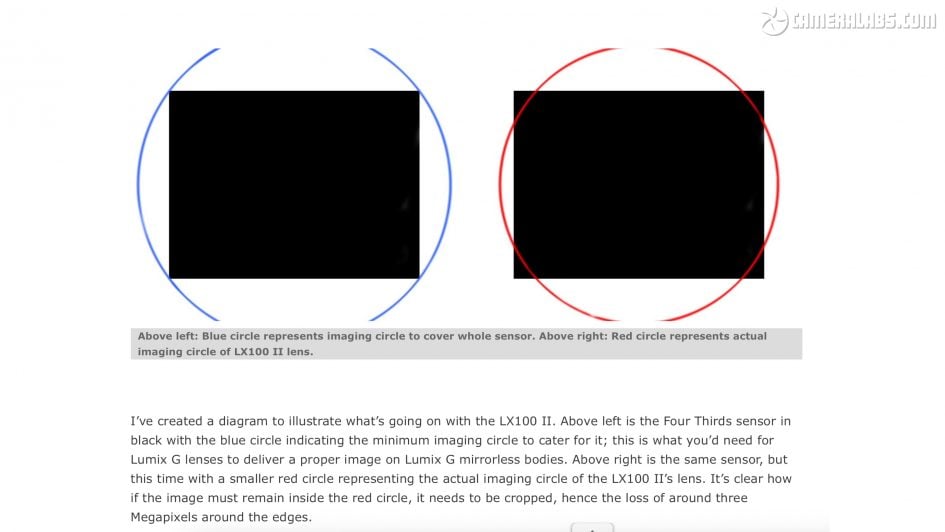
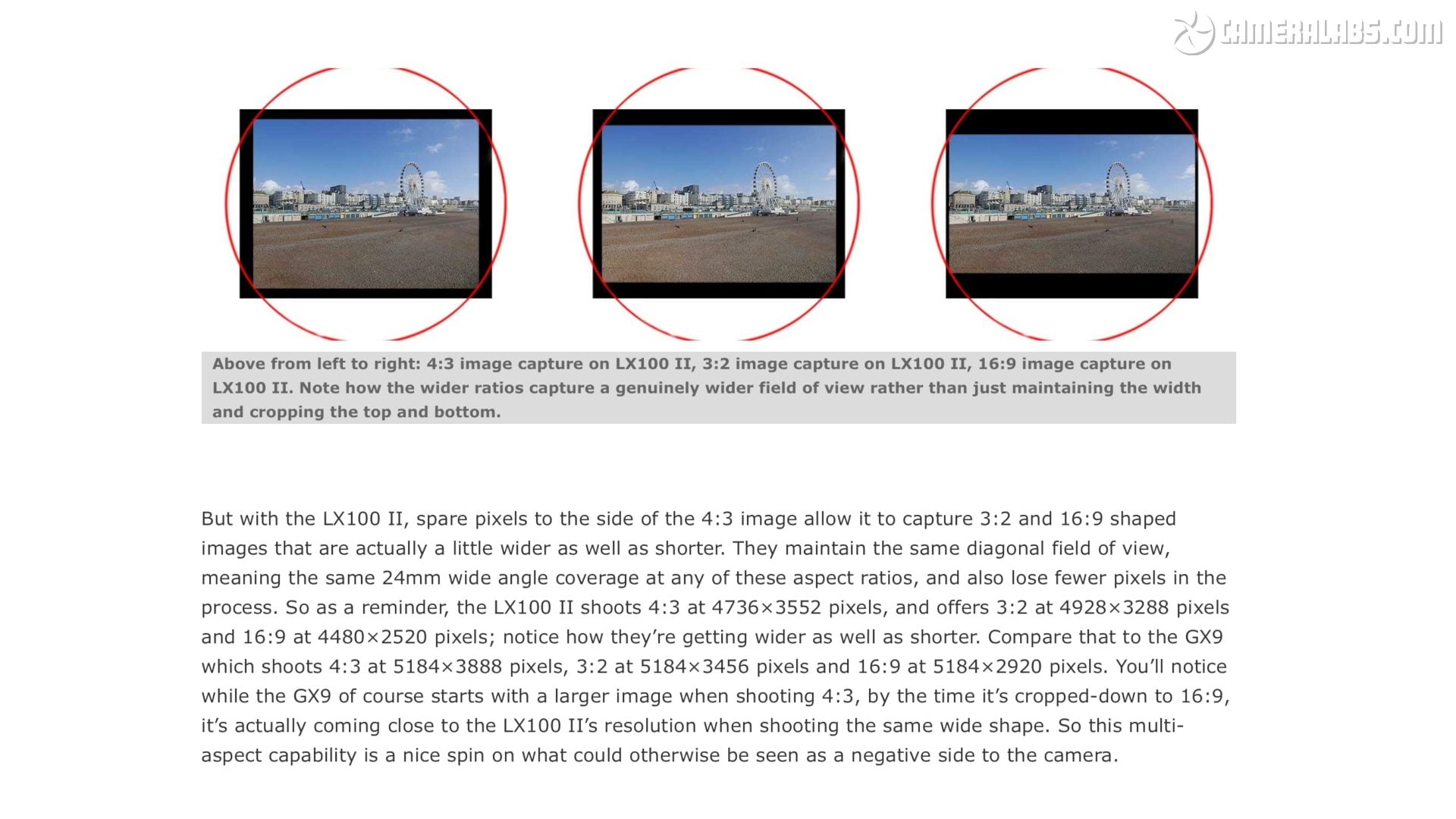
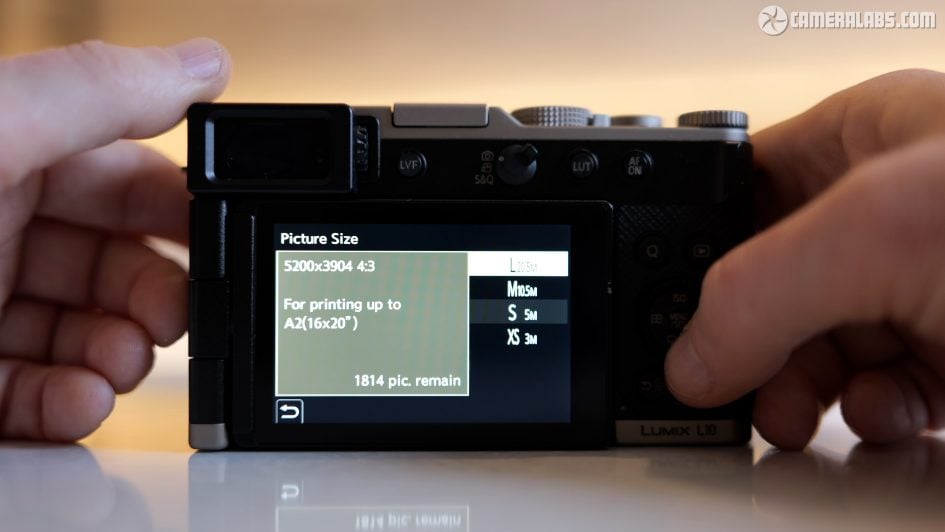
As before the lens design means the imaging circle can’t use the whole sensor area, but as my diagram from my LX100 II review shows, this does allow the camera to offer three different image shapes while maintaining the angle of view. So the 4:3 shape captures more height, but the 3:2 and 16:9 shapes genuinely capture more width. Annoyingly the square 1:1 mode still takes the 4:3 shape and crops it, when it could have used a taller height. But at least by starting with a higher resolution sensor, you’re now ending up with a bigger image size of 20 Megapixels versus 17 on the LX100 II.
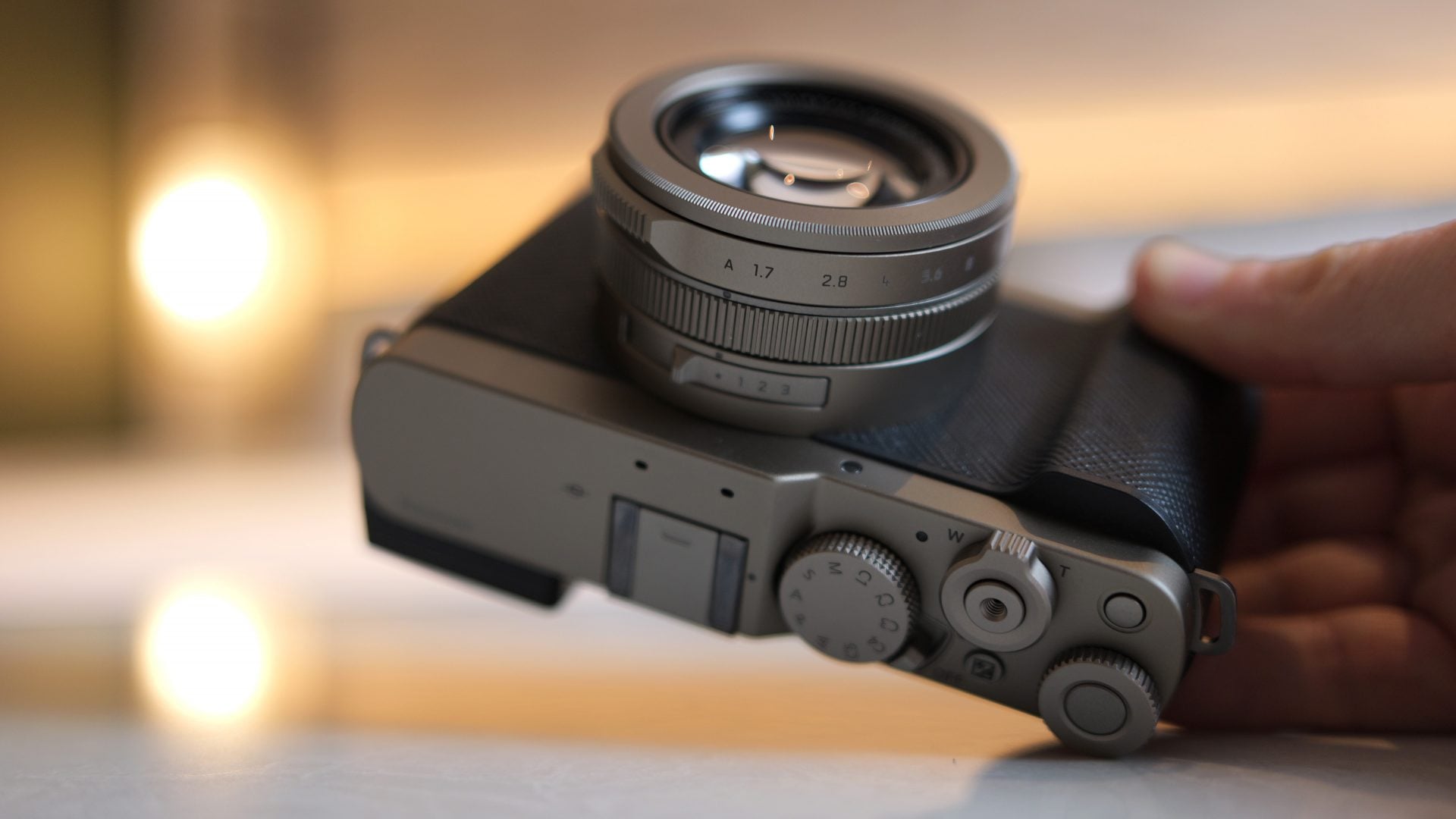
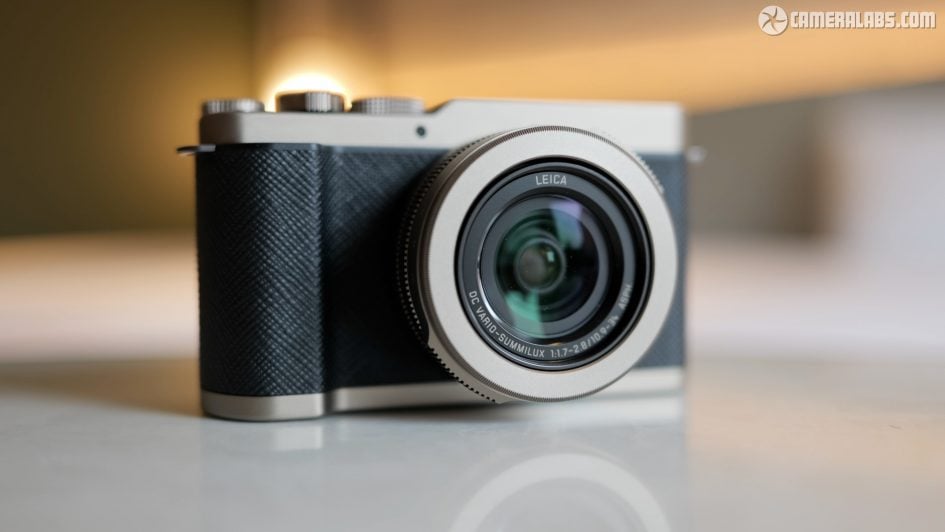
Meanwhile the lens remains the same as before, delivering an equivalent range of 24-75mm, with a bright f1.7-2.8 aperture and an impressive minimum focusing distance of just 3cm, along with optical stabilisation. There still isn’t a built-in ND filter but I think you can fit 43mm filters to the end of the barrel. In my tests so far the optical stabilization only proved mildly beneficial, but it’s better than not having any.
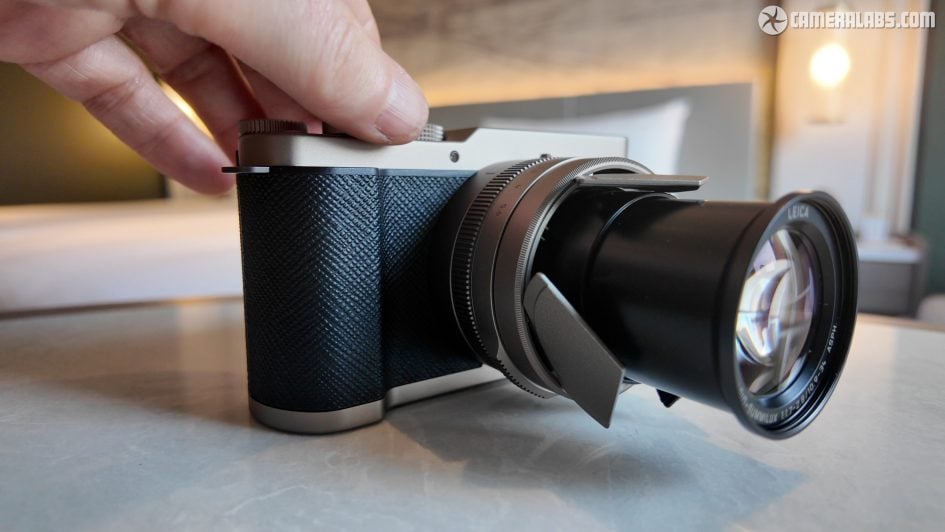
As before, notice how the lens has a manual aperture ring, along with a smooth customisable ring, but the switch closest to the camera is now labelled 1, 2 and 3. This still adjusts the aspect ratio as before by default, but can now be customised. Meanwhile on the side is a switch for Autofocus, macro and manual focus.
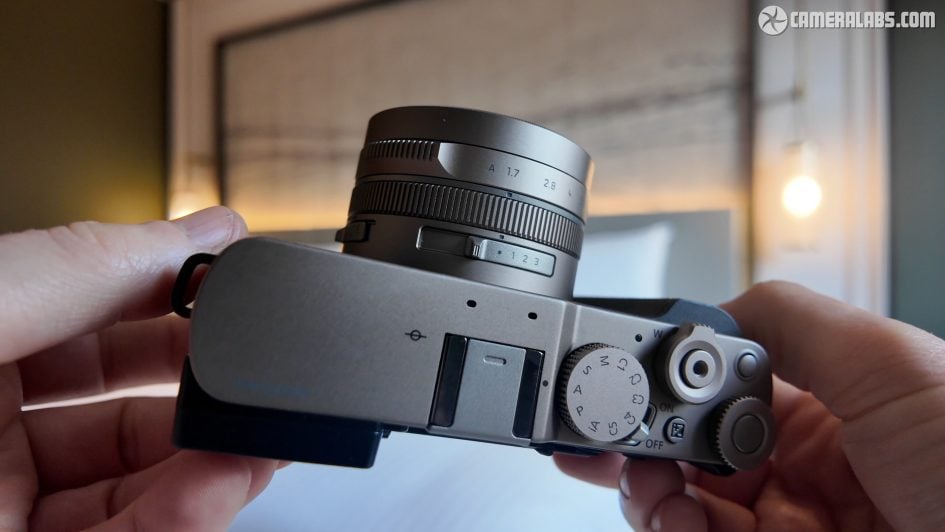
The standard package comes with a normal lens cap, but the Gold Titanium version is supplied with the automatic accessory where protective flaps are pushed out the way during power-up, before folding back again as it’s switched off. Very convenient.
On the top panel, the old dedicated shutter speed dial has been switched for a PASM dial with five Custom positions and Intelligent Auto. The fastest mechanical shutter is 1/2000, while the electronic shutter can fire as fast as 1/32000. Meanwhile a new small switch on the rear selects between stills, video or S&Q modes. Also note the exposure compensation dial of the LX100 II has been switched for a control dial with a custom button, while the shutter release on the Titanium Gold version is also threaded for use with a mechanical cable release.
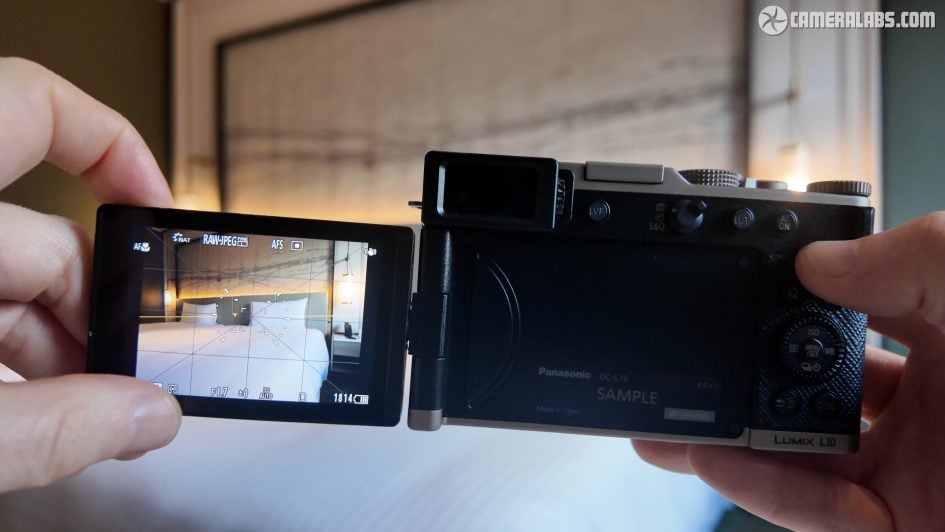
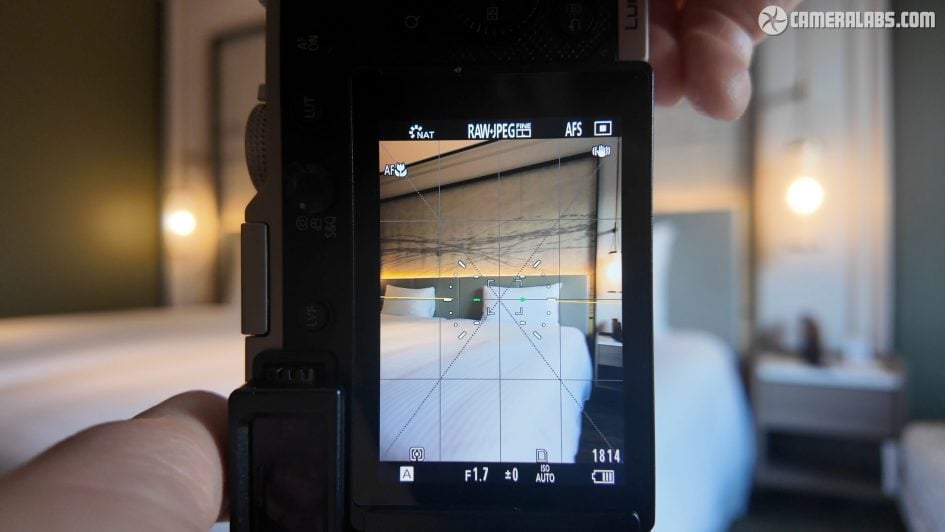
Round the back the L10 has received two big upgrades for composition: first the screen is now side-hinged and fully-articulated, allowing you it to face forward for easier vlogs, presentations or selfies, while the old field sequential viewfinder panel which shimmered for my eyes has mercifully been swapped for an OLED which delivers a much steadier image. The new panel has 0.74x magnification and 2.36 million dots. It’s small, but steady and I was very happy with it. And the L10 also considerately turns the shooting information to remain upright when taking photos or videos in the vertical orientation. Nice one, can we have that on the bigger Lumix cameras please? In terms of rear controls, there’s a tiltable thumbwheel, but sadly still no joystick, so to move the AF area you’ll either need to use the touch screen or buttons.
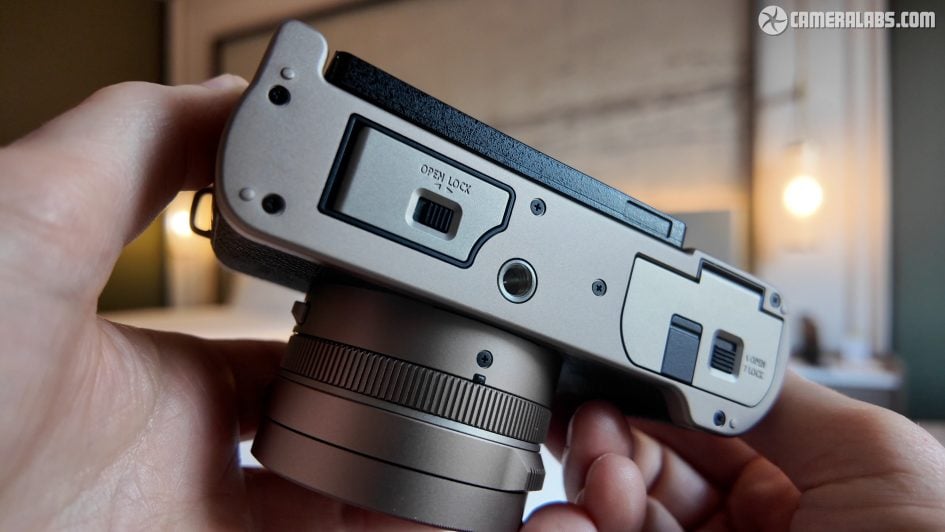
On the left side there’s two flaps, the upper one housing the useful addition of a 3.5mm microphone input, which coupled with the forward-facing screen, makes it much more suitable for vlogging. Below this is a USB C port for charging, data transfer or to use the camera as a USB webcam. There isn’t an HDMI port, but at least there is a fully-featured hotshoe that can use all the accessories. Below the camera are two compartments. Interestingly the SD slot has its own to the left of the tripod thread, while to the right is the battery compartment with the L10 powered by the same BLK22 as recent Lumix S cameras, so plenty of life.
From the Photo Style menus, you’ll find a wealth of options including new L Classic and L Classic Gold, as well as a variety of Monochrome modes and full V-Log for anyone who wants to grade, or LUTs for easy application of profiles in-camera.
Suffice it to say the new sensor and image processor also mean a substantial boost in video performance with the L10 offering uncropped 1080 from 24 to 240p, 4k from 24 to 120p and even a 4:3 Open gate option. Remember 4k on the LX100 II was cropped. There’s also MOV, MP4 and MP4 Lite codecs to choose from and the option to film in 10 bit 4:2:2 in some modes, and again in V-Log if you like.
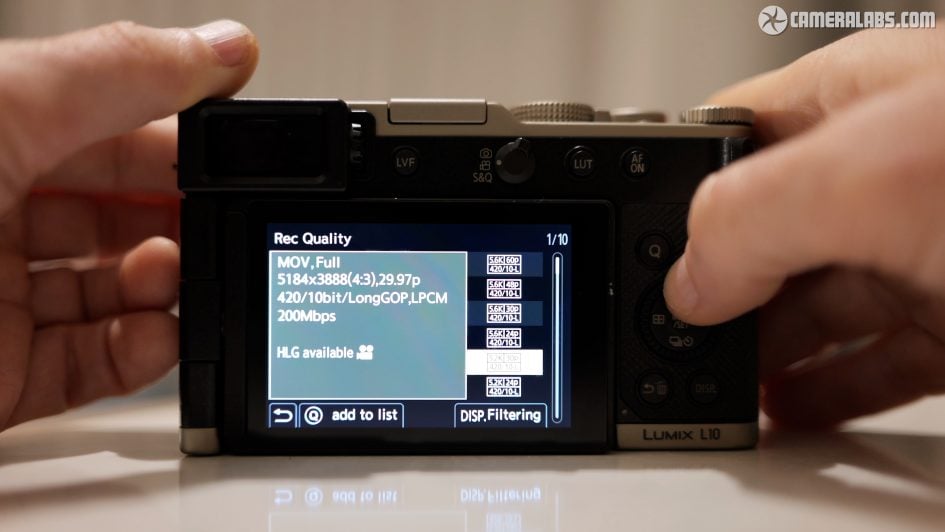
With the flip out screen, phase-detect autofocus and mic input, the L10 also becomes much more practical for vlogging, although you will need to be careful if you’re walking. There’s also plenty of opportunity for slow motion capture, with 4k 120. It’s amazing to look at the video options on the L10 compared to the LX100 II, although equally seven years have passed since then. You can see lots of examples in my video reviews earlier. PS – I’ve not had a chance to test overheating, but Panasonic quotes around 20 minutes of 4k 30 when thermal management is set to High. So it’s not going to be for long-form use, but should be fine for shorter clips.
Panasonic Lumix L10 verdict
The Lumix L10 becomes a very welcome new player in a market hungry for premium compact cameras. On the surface it does what we all asked for: coupling the lovely lens of the earlier LX100’s with an updated sensor. And while you still don’t get to use the whole area, the L10’s Four Thirds sensor from the GH7 still brings a small boost in photo resolution, hugely improved video options and the crucial upgrade of more confident phase-detect autofocus. Plus the image processor to go with it means all the latest features and picture profiles.
It would have been easy to leave it at that, but I’m delighted Panasonic also equipped the L10 with a flip-out screen and I’m relieved the viewfinder has switched to a far superior OLED panel. Plus there’s a mic input too.
In fact there’s very little to complain about. I do think the L10 would have greatly benefitted from a joystick, and in my tests the optical stabilisation only had a mild benefit, but beyond that it’s nit-picking about whether they should have recycled an old model name when LX100 III surely would have sufficed. Price-wise it also looks competitive and it’s interesting to compare it side-by-side with models like the Fujifilm X100 VI. Sure the X100 VI has a larger and more detailed sensor and uses all of it too, but the L10 fights back with a zoom lens that starts wider and ends longer, while also sporting a screen that can flip-forward, way more video features and a comfortably lower price tag.
In my view the Lumix L10 becomes the best premium compact camera if you’re shooting both stills and video. The photo experience is up there with the Fujifilm X100 VI, but the video capabilities are way ahead. And if you value a zoom over a prime lens, the L10 could be preferred for photo over the X100. Definitely a contender for the most desirable premium compact crown at this price point, but it could have been better with a built-in flash, joystick and more effective stabilization.
Check prices or buy the Lumix L10 in the USA at B&H or Adorama. Buy it in the UK from WEX or Panasonic UK, or in Europe at Calumet.de. Buy used gear from MPB. Sell your used gear to MPB. Or why not treat yourself to a copy of my In Camera book, an official Cameralabs T-shirt or mug, or treat me to a coffee! Thanks!