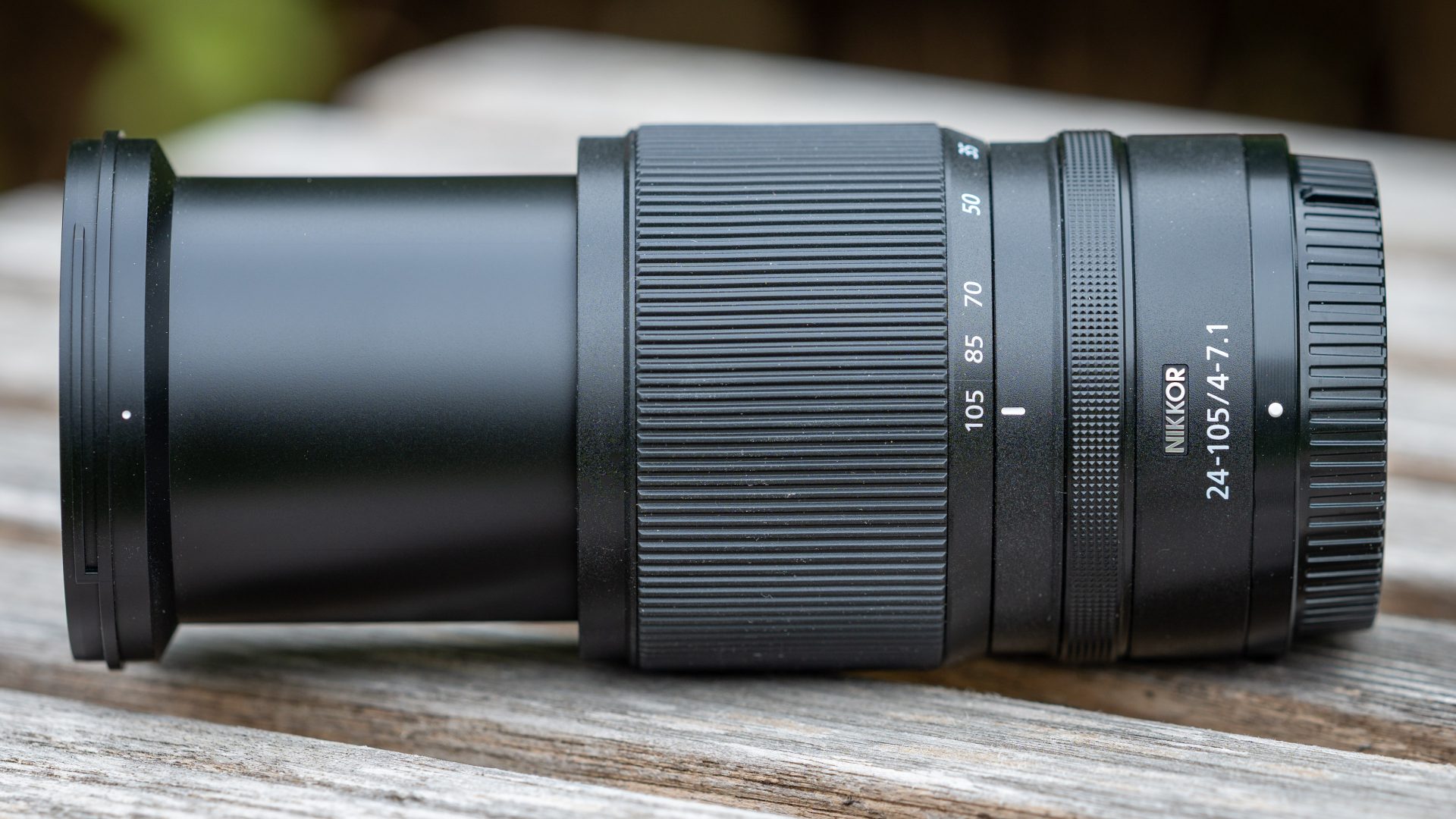
 Nikon's small and very light Z 24-105mm f4-7.1 offers good to very good optical properties and covers a versatile range from wide angle to moderate telephoto with its 4.4x zoom. It’s fully weather sealed and reaches a very nice 1:1.9 magnification for close-ups. Its major limitation is the slow focal ratio encountered when zooming in, which restricts low-light shooting capabilities and results in a meagre Bokeh. And there might be the issue that 105mm is not long enough for your purposes. Still, the new lens is a very interesting all-round zoom lens and its very good price/performance ratio clearly earns it a recommendation.
Nikon Z 24-105mm f4-7.1 review
-
-
Written by Thomas
Intro
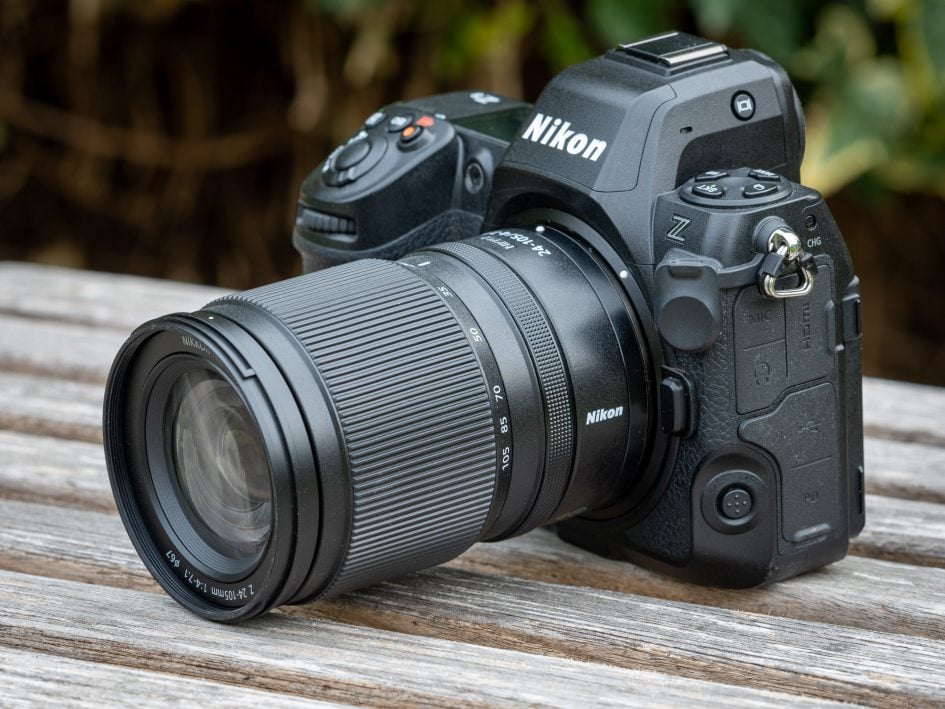
The Nikon Z 24-105mm f4-7.1 is a 4.4x zoom covering a wide-angle to moderate telephoto range. It is corrected for full-frame cameras but can also be used on a cropped body like the Z fc or Z 50 where it covers a field of view equivalent to 36-158mm focal length. The new lens is positioned below Nikon’s Z 24-120mm f4.0 S and has to make do without a dedicated focus ring or an extra function button. But then the new lens is less expensive, smaller, and substantially lighter – certainly enabled by the reduced focal ratio of only f7.1 at the long end. The Z 24-105mm f4-7.1 is fully sealed against the elements and and reaches a maximum magnification of 1:1.9 in close-up shooting but it misses optical image stabilization. So it relies solely on the body-based stabilization on Nikon’s full-frame Z cameras – which you’ll sorely miss on a Nikon Z fc or Z 50 camera.
The Nikon Z 24-105mm f4-7.1 costs 529 EUR (incl. 19% VAT) / 547 USD / 529 GBP (not including the lens hood). Read on for a detailed comparison of facts and features of the new lens vs. some alternatives.
Facts and features
Let’s compare the Nikon Z 24-105mm f4-7.1 (“Z 24-105” for short) to the Nikon Z 24-120mm f4 S (“Z 24-120”), Nikon Z 24-200mm f4-6.3 VR (“Z 24-200”), and the Tamron 35-100mm f2.8 Di III (“Tamron”). As usual I’ve rated the features with a [+] (or [++]), when it’s better than average or even state of the art, a [0] if it’s standard or just average, and [-] if there’s a disadvantage.
Size (diameter x length): 74 x 107mm (2.9 x 4.2in.) plus an estimated 40mm for the lens hood (not supplied) plus 55mm when zoomed in to 105mm focal length. The Z 24-120 is 84 x 118mm + 43mm lens hood + 55mm when zoomed in, the Z 24-200 is 77 x 114mm + 38mm lens hood + 63mm when zoomed in, the Tamron is 81 x 122mm + 33mm lens hood + 18mm when zoomed in. [+]
Weight: 350g (12.4 oz). Add an estimated 25g for the plastic lens hood (not supplied). This is much lighter than the Z 24-120 at 630g + 27g lens hood or the Z 24-200 at 565g + 22g lens hood. The Tamron is 571g + 35g lens hood. [+]
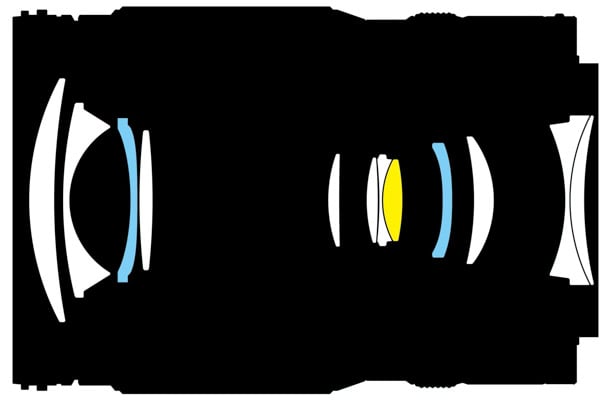
Optics: 12 elements in 10 groups including one special dispersion and 2 aspherical elements. There is no mention of special coatings in the marketing information. The Z 24-120 has 16 elements in 13 groups including 7 special dispersion and/or aspherical elements plus “ARNEO” anti-reflective coating and fluorine-coating on the front element to repel water, dust, and dirt and make cleaning easier. The Z 24-200 has 19 elements in 15 groups, the Tamron is a 15/13 design. [+]
Focal ratio: All three Z-Nikkors have a focal ratio of f4.0 at the short end. But only the Z 24-120 keeps this focal ratio over its entire zoom range. Here’s how the Z 24-105 darkens when zooming in: f4.2@31mm, f4.5@36mm, f4.8@41mm, f5.0@45mm, f5.3@52mm, f5.6@58mm, f6.0@65mm, f6.3@74mm, f6.7@89mm, f7.1@105mm (-1.7 stops). The Z 24-200mm reaches f5.6@48mm and its slowest focal ratio of f6.3 (-1.3 stops) at 80mm focal length. The Tamron is the fastest lens in this comparison with a constant f2.8 focal ratio. [-]
Minimum object distance is 0.19m (0.62ft.) at 24-50mm focal length and 0.27m (0.89ft.) at the 105mm zoom position. This results in a meagre working distance of 7-11cm but the maximum magnification of 1:1.9 at 70-105 mm focal length is very good. The Z 24-120 achieves 1:2.4 at 16cm working distance, the Z 24-200 goes to 1:3.4 at 49cm working distance, and the Tamron achieves 1:3.1 at the short end (7cm working distance) and 1:5.1 at the long end (46cm working distance). [+]
Image stabilization: No. The Z 24-105, Z 24-120, and the Tamron rely solely on the body-based stabilization on Nikon’s full-frame Z cameras. Only the Z 24-200 offers optical stabilization (VR) which works in conjunction with the Z full-frame cameras to achieve stabilization over 5 axes. [0]
Unlike the Z 24-120, Z 24-200, and the Tamron, the Z 24-105 has only a plastic bayonet. [-]
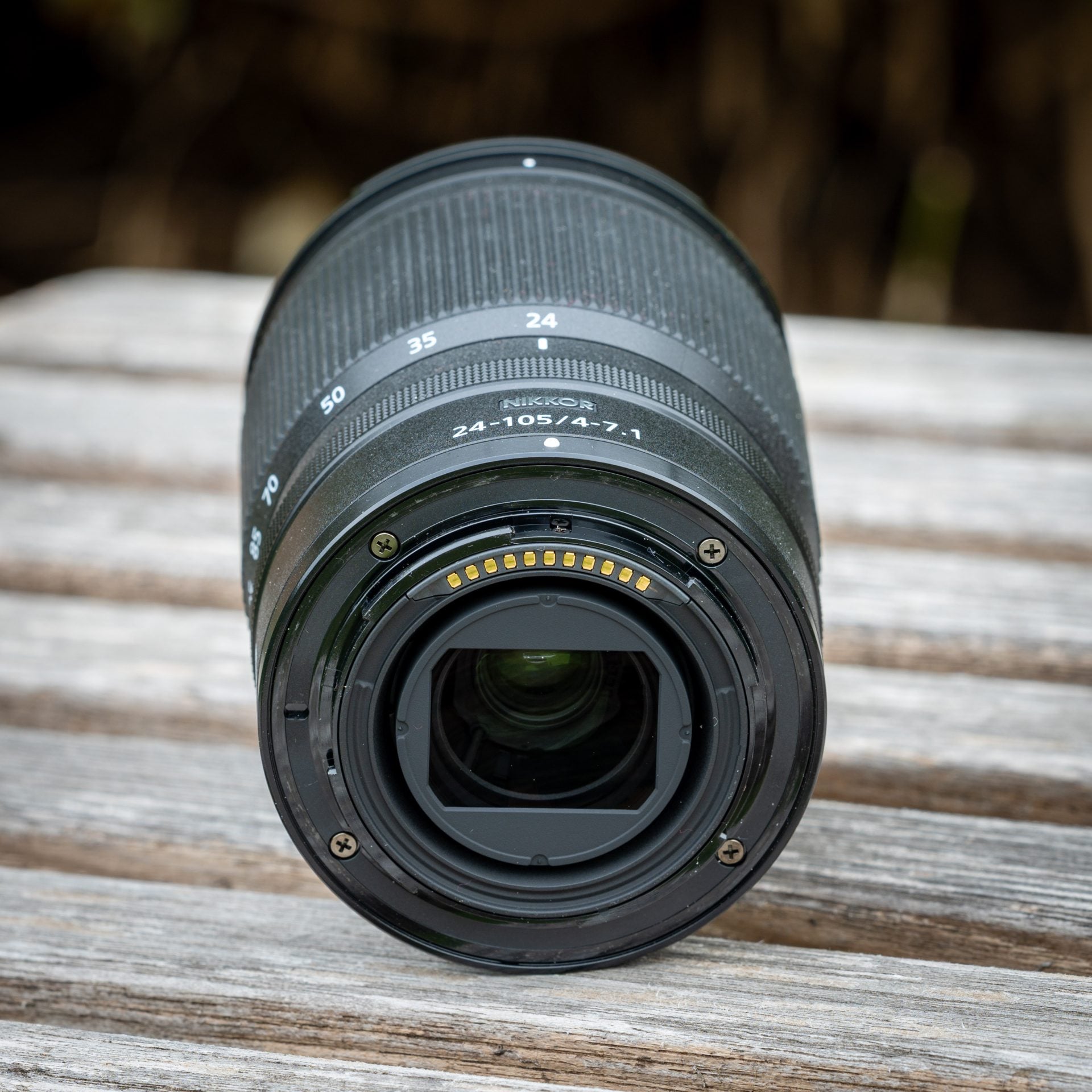
Filter-thread: The Z 24-105 uses 67mm filters just like the Z 24-200 and the Tamron. The Z 24-120 needs 77mm filters. [+]
Aperture ring and other control elements: All three Z-Nikkors have the usual multi-function control ring (located behind the zoom ring) which can be assigned to operate the aperture, exposure compensation, ISO or focus. It automatically falls back to focus control when the camera is switched to manual focus or if MF is assigned to it – except on the Z 24-120 which has a dedicated focus ring. The Z 24-105mm does not have the zoom lock switch of the Z 24-200 nor the lens function button or AF/MF switch of the Z 24-120 or a focus limiter switch. [0]
Autofocus: All lenses in this comparison offer autofocus with built-in stepper motor focus drive for the Z-Nikkors and a voice coil drive for the Tamron. Manual-focus override is by simply turning the control ring (if MF is assigned to it) or the dedicated focus ring on the Z 24-120 or Tamron. [+]
All lenses in this comparison cover full frame sensors or can equally be used on a cropped DX sensor where the Z 24-105mm has a field of view equivalent to a 36-158mm zoom lens on a full-frame camera body. [+]
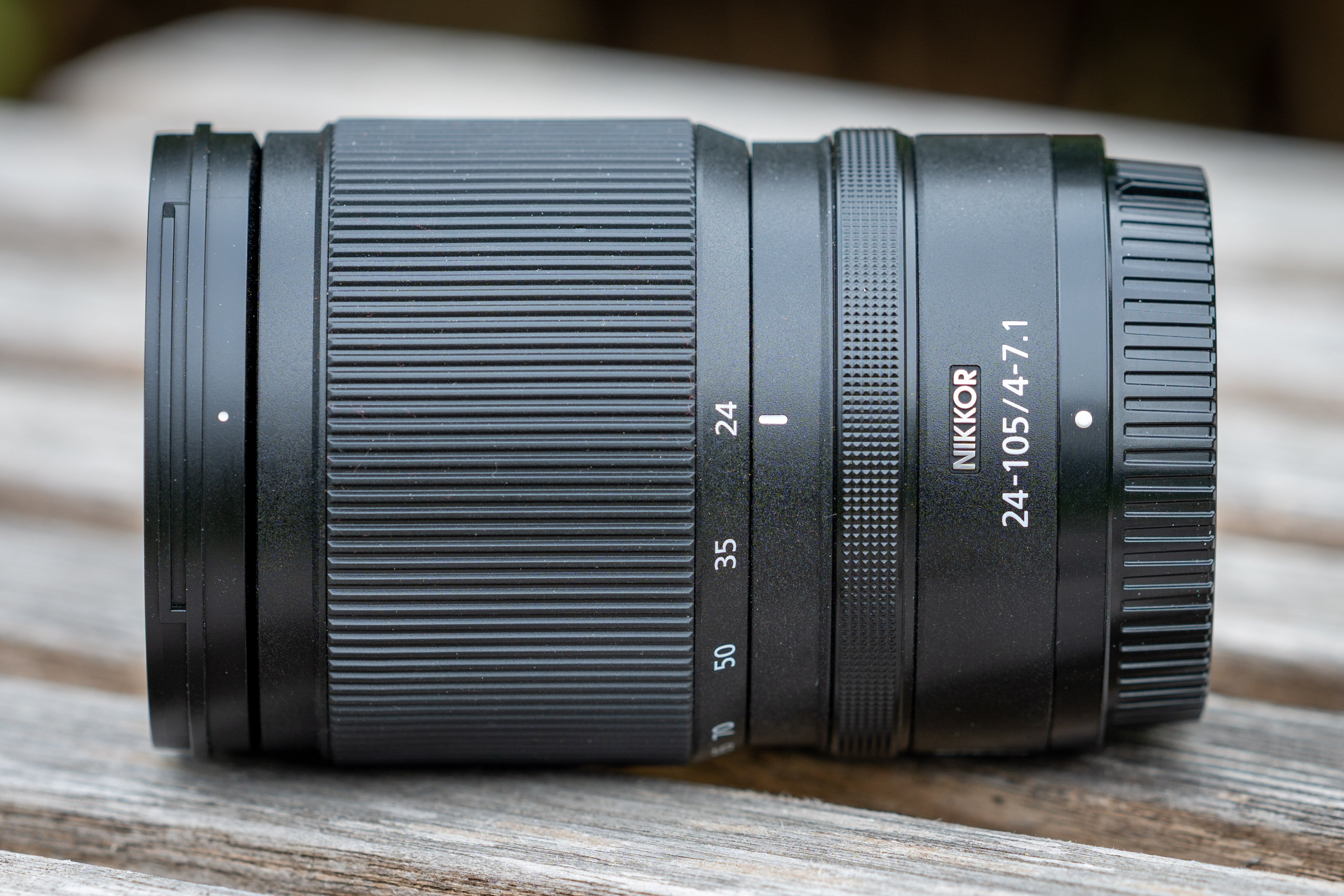
Price: 529 EUR (incl. 19% VAT) / 547 USD / 529 GBP (not including the HB-93B lens hood which is another 40 EUR / 37 USD / 34 GBP). The Nikon Z 24-120mm f4 S currently goes for 949 EUR / 997 USD / 849 GBP, the Z 24-200mm f4-6.3 VR is at 750 EUR / 797 USD / 649 GBP, the Tamron sells for 929 EUR / 929 USD / 799 GBP. [+]
Unlike the Z 24-120 and Z 24-200, the Z 24-105 comes without a pouch or lens hood; only the front and rear caps are included. The Tamron also sells without a pouch but the lens hood is included. [-]
Lens profile: All lenses in this comparison come with an integrated lens profile which can be controlled from the camera. Vignette control offers the usual options of High, Normal, Low and Off. Diffraction compensation can be activated or deactivated but Auto distortion control is always On – as it is for the Z 24-120 and Z 24-200 but not the Tamron. [+]
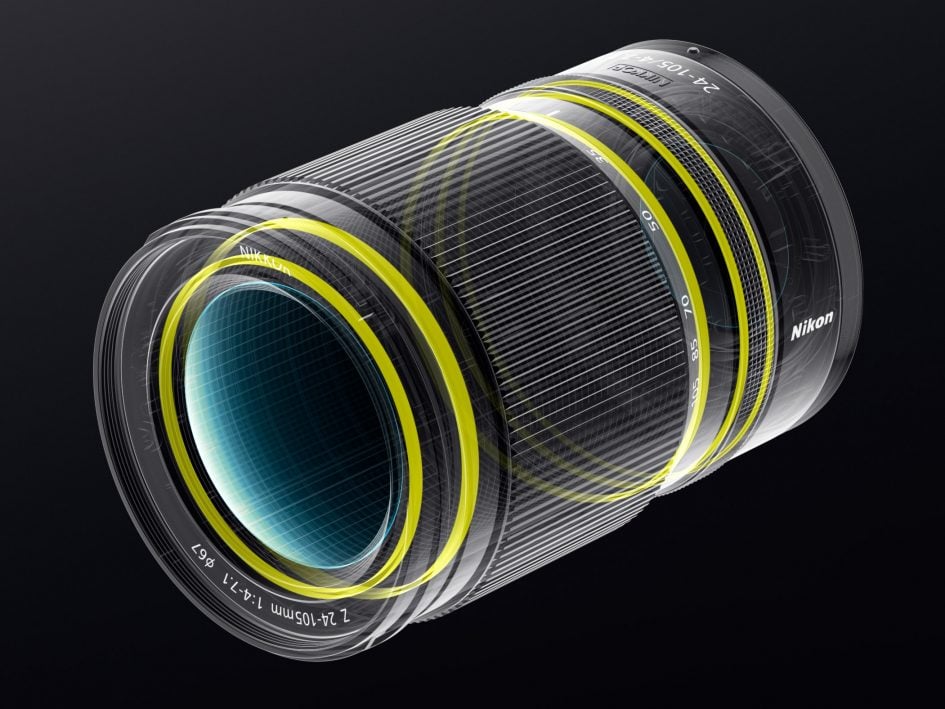
Sealing: All lenses in this comparison have a rubber grommet at the lens-mount plus further special weather-sealing throughout the construction. But unlike the other two Z-Nikkors the Z 24-105 and the Tamron do not have fluorine coating on the front lens to repel water, dust, and dirt and should make for easier cleaning. [0]
Use with teleconverters: None of the lenses in this comparison can be used with Nikon’s teleconverters for Z-mount. [0]
The score of 3[-]/4[0]/8[+] shows that the Nikon Z 24-105mm f4-7.1 is well featured: It is an affordable, compact, and very lightweight 4.4x zoom lens. It’s fully weather sealed and offers a very nice 1:2 magnification for close-ups. Its major draw-back is the meagre focal ratio: It may start at f4.0 but becomes darker real quick once you zoom in. And there might be the issue that 105mm is not long enough for your purposes. Still, the new lens should be a very interesting addition for customers looking for a small and very light all-round convenience zoom.
Three mid-range zoom lenses
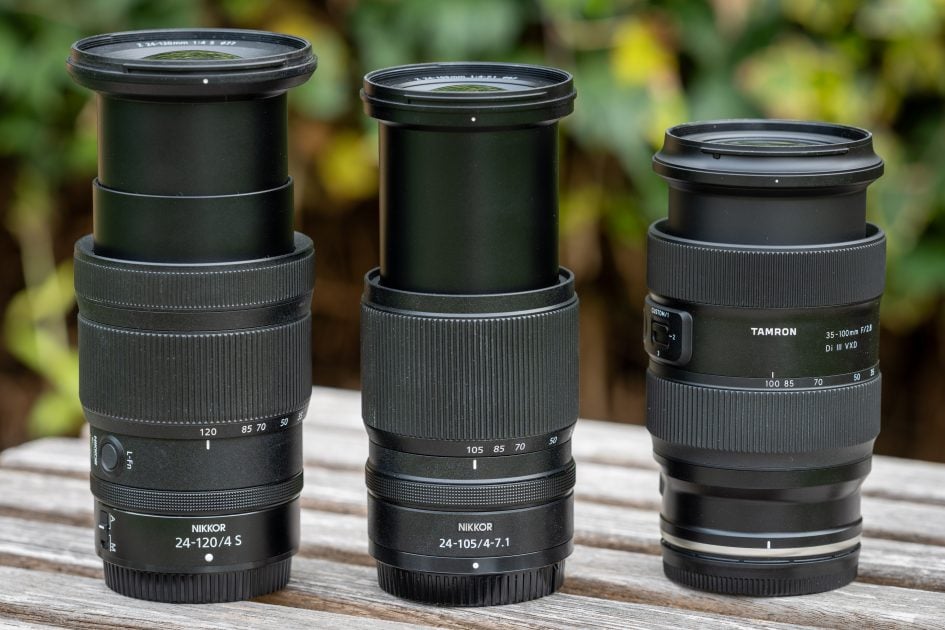
Above (from left to right): Nikon Z 24-120mm f4 S, Nikon Z 24-105mm f4-7.1, Tamron 35-100mm f2.8 Di III
Coverage
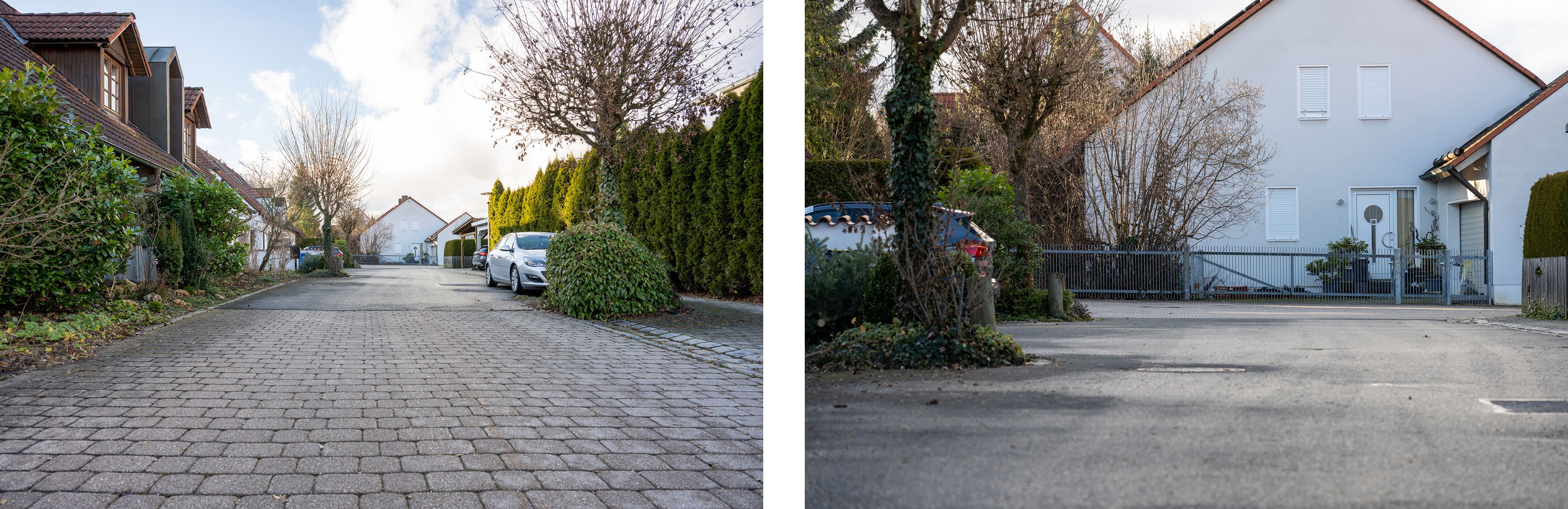
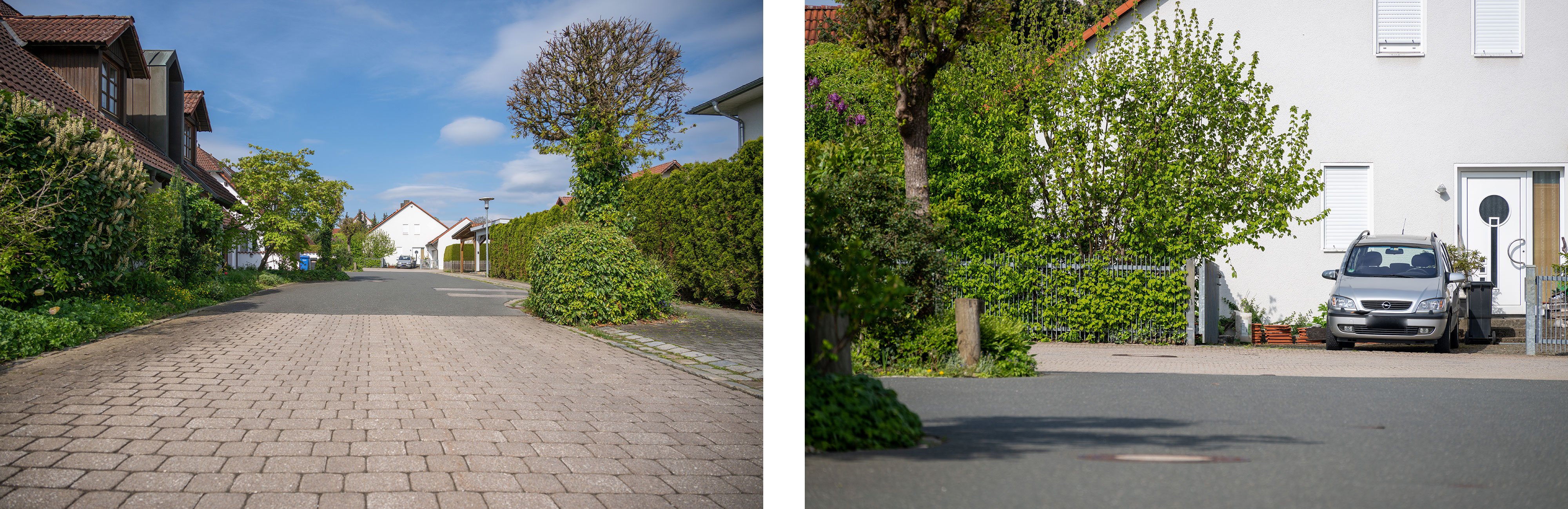
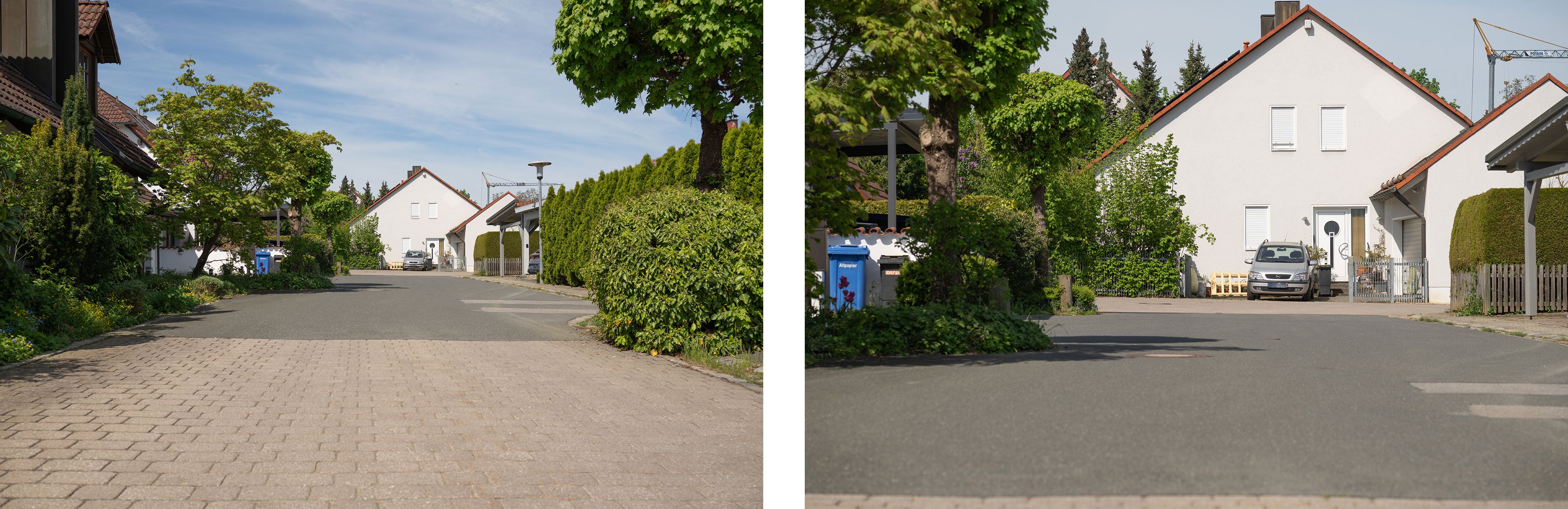
The 4.4x zoom-range of the Z 24-105 offers 12.5% less reach than the Z 24-120 and 47.5% less than the Z 24-200 which offers the most versatile 8.3x zoom-range. The Tamron has only a 2.9x zoom range as it starts at 35mm which visibly restricts the angle of view at the wide end (63 degrees vs. 84 degrees at 24mm focal length). See below (Distortion control is On):
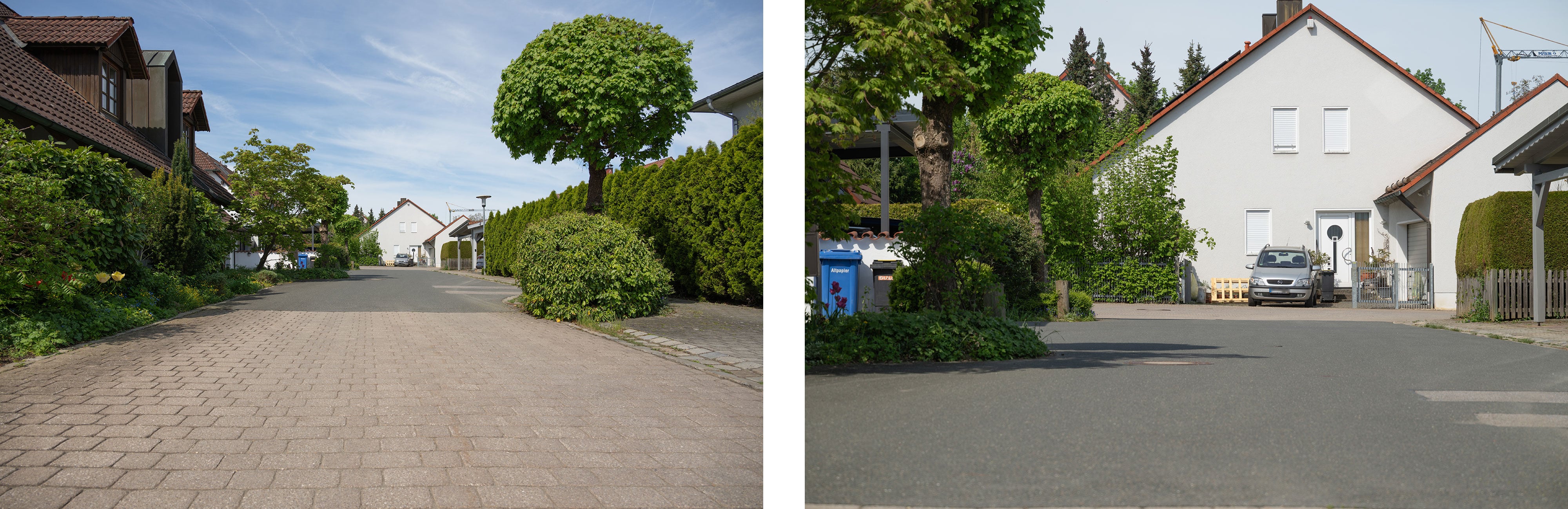
Above: Nikon Z 24-105mm f4-7.1 coverage on a full-frame camera at 24mm (left) and 105mm (right); click image for 4k version
Above: Nikon Z 24-120mm f4 S coverage on a full-frame camera at 24mm (left) and 120mm (right); click image for 4k version
Above: Nikon Z 24-200mm f4-6.3 VR coverage on a full-frame camera at 24mm (left) and 200mm (right); click image for 4k version
Above: Tamron 35-100mm f2.8 Di III coverage on a full-frame camera at 35mm (left) and 100mm (right); click image for 4k version
At the long end the difference between a focal length of 105mm versus 120mm is visible but not a big deal: To achieve the same angle of view as a 120mm lens images from the Nikon Z 24-105mm f4-7.1 need a 1.14x crop reducing resolution from 45MP to 34MP – which should hardly be visible. That’s different when compared to the Z 24-200: You’d need a 1.9x crop to achieve the same angle of view and reduce resolution drastically to 12MP.
Focus and zoom
Focus accuracy and repeatability is critical to consistently produce sharp shots. Repeatability (the accuracy of focus on the same subject after repeated focus-acquisition) of the Nikon Z 24-105mm f4-7.1 is very good at the long end (98.0% measured with Reikan FoCal) with no outliers over a series of 40 shots on the well lit and contrasty focus test target. And there is no focus variation whether the lens focuses from a closer distance or from infinity. At 105mm focal length the lens focuses in 0.27 sec from infinity to 1.12m (1:10 magnification) which is very fast.
The zoom ring has a throw of 95 degrees and a 41mm wide rubber surface with a good grip. Rotation is pretty stiff, but the lens still shows some zoom creep. The lens control / focus ring is 8mm wide with a metal surface. My copy of the lens showed some variation in how smoothly it could be turned: sometimes there was a harsh feeling to the movement.
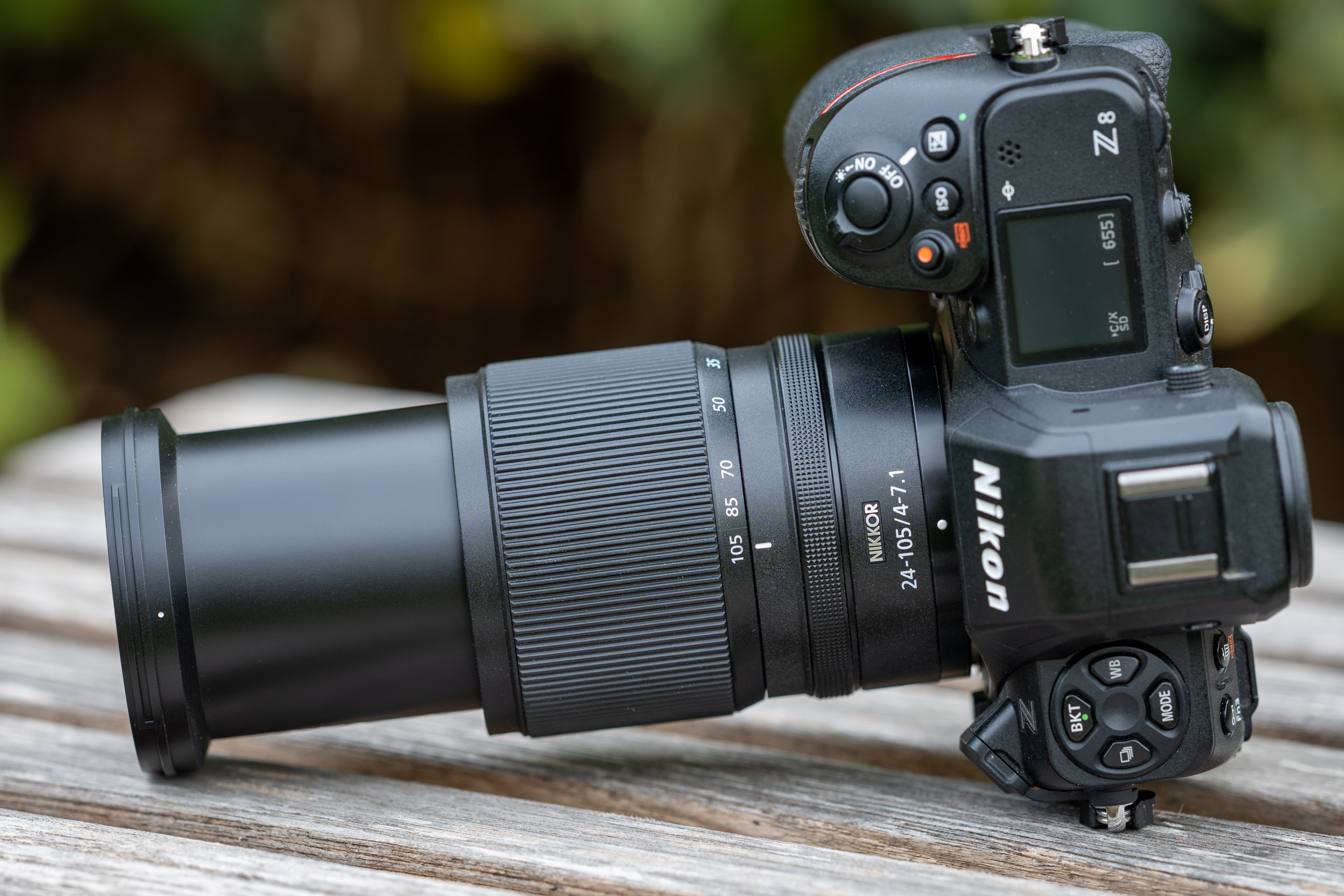
In photo mode AF-operation is inaudible from the outside. If you record video with the built-in microphone the AF-drive emits a low hum. Operation of the zoom ring is quiet – until you hit the limits of the zoom range with a slight “tock”.
As you pull focus, you’ll notice some focus breathing: The image became 4% less magnified when I adjusted focus from infinity to 1.12m at 105mm focal length. The same test at 24mm focal length produced a 1% decrease in magnification.
I also tested whether Nikon’s zoom lens allows you to change the focal length without altering its focus. This characteristic is called parfocal. I focused the lens at 105mm and then slowly zoomed back checking focus on the way. The Z 24-105mm f4-7.1 kept its focus not quite perfectly over the complete zoom-range. See the following 100% crops shot at 100mm f6.7 before and after re-focusing:

So when shooting stills you need to re-focus after changing the focal length and when shooting video you should have continuous AF activated.
Next check out my quality results!
Check prices on the Nikon Z 24-105mm f4-7.1 at B&H, Adorama, WEX UK or Calumet.de. Buy used gear from MPB. Sell your used gear to MPB. Alternatively get yourself a copy of my In Camera book, an official Cameralabs T-shirt or mug, or treat me to a coffee! Thanks!