 A long lens is only any good if there's enough light for you to use it and the FZ200's constant f2.8 aperture makes that more likely to be the case more often. In stadiums, at twilight, or just on plain dull days, you'll be taking better quality 200 ISO long shots with the FZ200 instead of 800 ISO ones with, say, the Canon SX50 HS; or if both are using the same ISO, the Panasonic will enjoy faster shutter speeds to freeze the action. The high resolution EVF makes it easier and more comfortable to frame shots and a button makes it easy to flip between the viewfinder and screen, though a proximity sensor to make it happen automatically would be better. Add in a great range of video options with the ability to attach an external microphone, a wide range of exposure modes and effects filters, excellent customisation options and physical controls and extremely good battery life and it's hard to think of any reason the Lumix FZ200 wouldn't come Highly Recommended.
Panasonic Lumix FZ200 review
-
-
Written by Ken McMahon
Intro
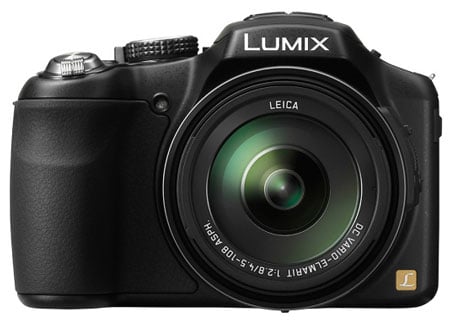
The Lumix FZ200 is Panasonic’s latest flagship super-zoom digital camera. Announced in July 2012 it replaces the best-selling Lumix FZ150 and shares the same 24x optical zoom range that’s equivalent to 25-600mm. But crucially where its predecessor had a variable aperture of f2.8-5.2, the new model boasts nothing less than a constant aperture of f2.8 throughout the entire focal range. Yep, that’s right, the FZ200 offers f2.8 all the way to its maximum equivalent focal length of 600mm.
In another welcome move away from its rivals, Panasonic has also upgraded the resolution of the FZ200’s electronic viewfinder from 201k pixels to 1312k dots; this delivers roughly the same degree of detail as the EVFs on the Lumix G products, albeit with a smaller apparent image size.
Panasonic also claims to have improved the sensor, although I’m pleased to report it has resisted the opportunity to increase the resolution – so the FZ200 sports the same 12 Megapixel resolution as its predecessor and still allows you to record files in the RAW format too. In terms of other headline specifications the FZ200 inherits the 12fps continuous shooting rate and 1080/50p/60p movies of its predecessor along with its external microphone input, making it one of the most highly specified super-zoom cameras on the market.
The Lumix FZ200 is however the third FZ to sport the 25-600mm lens range. In a market where manufacturers are in a constant battle to outscore each other with bigger numbers on the spec sheet, Panasonic deserves some credit for taking a step back and instead concentrating on the performance, handling and other features of the Lumix FZ200. Canon on the other hand, has taken the opposite track and produced the PowerShot SX50 HS, a camera with a 50x monster of a zoom that extends to 1200mm – twice the telephoto range of the FZ200. Superzooms are clearly aimed at shooters who want to get close to distant action, but how close is close enough? And, at what point do other factors begin to outweigh increasing telephoto reach. Here, I’ve tested and reviewed the the Lumix FZ200 alongside Canon’s flagship super-zoom, the PowerShot SX50 HS. Read my full review to find out which approach is the best fit for you.
 |
Panasonic Lumix FZ200 design and controls
The Lumix FZ200 shares very similar body styling with its predecessor, with a slightly beefed up appearance that adds a little to the weight and dimensions. Measuring 125 x 87 x 110mm and weighing 588g with the battery and card it’s almost the exact same size and weight as the Canon PowerShot SX50 HS and, with the latter’s squarer redesign the two are much closer in appearance than their predecessors.
The FZ200’s larger body makes for a slightly deeper hand grip and thumb rest than on the FZ150 and that makes it more secure as well as more comfortable to hold. At the front of the camera on the left side of the lens barrel the additional power zoom controls are retained as is the focus selector switch. On the top panel the previously vacant space on the left side of the viewfinder head is now home to a sliding catch that pops up the flash. That button’s old location, on the rear panel to the left of the viewfinder is the new home for the EVF/LCD toggle button.
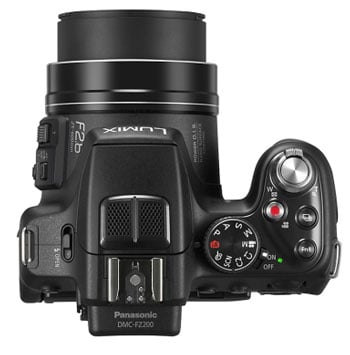 |
As before, the FZ200’s twin built-in microphones are mounted in the top of the pop-up flash housing just in front of the standard hotshoe. Moving on to the other side of the top panel, there’s been some major reworking of the layout here too. Panasonic has always favoured on/off switches in preference to buttons and nothing’s changed there, but the on/off switch has now been integrated into the mode dial. It still means that you can’t turn the camera on in playback mode simply by pressing the playback button alone, but it’s an improvement all the same.
Where the power switch used to be there’s a new Fn1 programmable function button and in front of that the direct movie record button and a larger burst mode button, then, right at the front of the grip, the shutter release with its zoom collar.
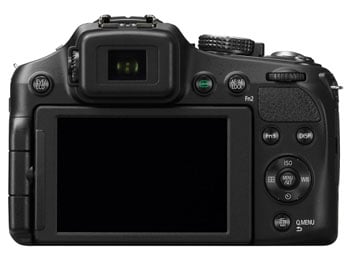
Round the back, the larger viewfinder box provides a clue to the new high resolution EVF to the right of which are playback and AF/AE Lock buttons, the latter also marked Fn2 and programmable. Then on the panel to the right of the fold out screen the final Fn3 programmable function button and display overlay buttons are positioned above the four-way controller with the Q.Menu button below. Note that unlike the PowerShot SX50 HS the FZ200’s rear controller is a pad, not a wheel. The FZ200 has a separate rear control dial mounted just above the thumb rest.
The four-way rear pad with its central menu/set button is physically the same as on the earlier FZ150, but the functions have been reassigned. With the profusion of programmable Fn buttons elsewhere, there’s no longer any need for one here and the exposure compensation function has been moved up to the control dial. The new layout, clock-wise from the top is ISO, white balance, Self-timer and focus area selection.
 |
The combined USB / A/V port and mini HDMI connector has been moved from the left to the right side of the body, but the external microphone socket – a key advantage the FZ200 enjoys over rivals including the PowerShot SX50 HS is in the same place on the left side under a small soft plastic cover. It’s still a 2.5mm jack though which means anyone using a third party mic like a Rode model will need to use a 2.5mm – 3.5mm adapter which might poke out inconveniently.
On the base of the camera, the door to the combined battery and card compartment is located on the right under the grip. The FZ200 uses a BLC12E Lithium Ion battery with a power rating of 1200mAh.
This replaces the smaller 895mAh BMB9E battery in the FZ150 and provides sufficient power on a full charge for a very impressive 540 shots. Remaining battery life is indicated on screen by a three-segment graphic. The Lumix FZ200 takes SD (HC and XC) cards and also has 40MB of built in memory – enough for a handful of shots or a few minutes of VGA video.
The built-in flash has a quoted range of 13.5 meters, (note that because of the FZ200’s constant aperture, that applies throughout the zoom range). The ISO sensitivity at which this is achieved isn’t stated, but it is exactly the same as the figure quoted for the PowerShot SX50 HS at its wide-angle lens setting. When set to auto mode, the flash pops up when required. It doesn’t pop up as far as it used to though, the redesigned flash head is about 20mm shorter than on the FZ150, so you’ll need to be more red-eye aware. In practice that means activating one of the red-eye flash modes, which fires a pre-flash to contract people’s pupils before the main flash and activating software Red-eye removal – though this only works with Face detect AF. You can force the flash on or off and there’s a slow sync mode with first and second curtain options. The Lumix FZ200 also has a standard hotshoe to which you can attach an external flash. There are three Panasonic models available, the FL220, FL360 and FL500 with Guide Numbers of 22, 36 and 50 (Metres, 100 ISO) respectively.
Panasonic Lumix FZ200 viewfinder and screen
The Lumix FZ200 retains the 3 inch 460k pixel LCD panel of its predecessor. The 3in diagonal and 3:2 aspect ratio remains the same as before, so there are thin black bars to the sides of 4:3 shaped photos or thicker ones above and below 16:9 video. It’s a fine screen and provides a bright contrasty view. The menu provides brightness control as well as contrast/saturation and even colour balance controls.
As before, the screen is hinged at the side, so can be turned inwards for protection when not in use, reversed for normal use and folded out to the side and rotated through 270 degrees to face up, down, forwards or any intermediate position. Articulated screens are popular option on super-zooms with Panasonic and Canon favouring the more versatile side-hinged method where the Sony Cyber-shot HX200V, Fujifilm HS30 EXR and Nikon Coolpix L510 provide screens with a more limited tilt capability.
The resolution remains at 460 thousand pixels – this is pretty much the norm on cameras in this class with Canon’s SX50 HS belatedly updating from the dated 230k pixel screen of its predecessor. Sony has been ahead of the game here for a while though, having introduced a 921k dot screen on the Cyber-shot HX100V in 2011.
In use, the FZ200’s screen provides a very similar, though slightly cooler image to the Canon SX50 HS. One thing worth noting here is that the 3 inch screen of the Lumix FZ200 may be slightly larger than the SX50 HS’s 2.8in LCD, but its 3:2 proportions mean that when shooting stills in the native 4:3 shape you’ll have narrow black bars down either side and the active area is actually slightly smaller than on the PowerShot SX50 HS. Switch to widescreen movie mode, though, and the situation is reversed, with the FZ200 displaying a significantly larger 16:9 image than the PowerShot SX50 HS. So, overall, the 2.8in PowerShot SX50 HS LCD screen is better suited to still shooting with a bigger display area than the 3 inch screen on the Lumix FZ200, something that isn’t at all obvious from a straightforward comparison of the specifications.
One big improvement is that Panasonic has redesigned all of its screen icons and information and the smaller, more detailed graphics are much less obtrusive, I’ll talk more about that in the handling section below.
While the screen is excellent, most people will, I expect, prefer to use the electronic viewfinder for composing shots. Panasonic has upgraded the FZ200’s EVF providing it with a 0.21 inch unit with a resolution of 1,312,000 dots. That’s only just short of the 1,440,00 dot resolution on the Micro four Thirds Lumix G3 (though the G3’s viewfinder is physically much bigger) and puts the FZ200 well ahead of the competition. The closest competitor is Fujifilm’s HS30 EXR with its 920,000 pixel viewfinder which at 0.26 inches is a little bigger than the FZ200’s. Next in line are the Canon PowerShot SX50, the Sony Cyber-shot HX200V, and the FZ200’s predecessor, the FZ150, all of which sport 0.2 inch EVFs with around 202 thousand pixels
The question is, how much difference does a higher resolution EVF like the Lumix FZ200’s make in practice? The image in the FZ200’s viewfinder is more detailed, brighter and less prone to tearing and rainbow effects than the SX50 HS’s. Small detail is easier to make out as are moving subjects, like birds in flight. Another thing that’s worth considering is that looking at a low resolution EVF can be quite tiring on your eyes. The FZ200’s higher resolution actually makes for a more comfortable viewing experience and one you’re likely to be able to work with for longer, particularly in low light.
Panasonic Lumix FZ200 lens and stabilisation
The Lumix FZ200’s headline feature is its zoom lens, but not for the same reason as the Canon SX50 HS. Where Canon has aimed long with a 50x zoom range, Panasonic has stuck with a 24x 25-600 range for the third successive FZ generation, instead doing something new that may prove more useful. The Lumix FZ200’s zoom has a constant f2.8 aperture throughout the range. Though this was a feature of early FZ models it’s something that has generally been abandoned in the quest for longer zoom ranges, but it’s reappearance on the FZ200 will be welcomed by many for whom low light performance and shallow depth of field are more worthwhile goals.
The FZ200’s zoom doesn’t provide much of an advantage at the wide angle setting, though even here it’s still half a stop brighter than the f3.4 of the SX50. Start to zoom in though and the SX50’s maximum aperture steadily decreases down to f6.5, whereas the Lumix FZ200’s remains a constant f2.8 all the way to 600mm. The more you zoom in with the SX50, the more of a difference there is in its low light performance compared with the FZ200. The SX50’s maximum aperture drops to f4 at 38mm – a one stop difference, and at the 185mm mark it closes down to f5.6 – a two stop difference with the FZ200 at the same focal length. Effectively that means you’d have to shoot at 1600 ISO on the SX50 HS where in the same situation you could choose 400 ISO on the FZ200 for the same shutter speed. And even at the FZ200’s maximum 600mm telephoto you can still shoot wide open at f2.8 – it’s a huge advantage in keeping the ISO down or shutter speeds higher under the same shooting conditions.
Panasonic Lumix FZ200coverage wide |
Panasonic Lumix FZ200
 coverage tele | |
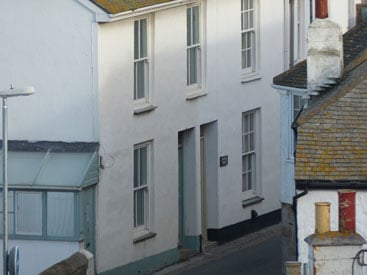 | ||
| 4.5-108mm at 4.5mm (25mm equiv) | 4.5-108mm at 108mm (600mm equiv) |
To test the FZ200’s depth of field capabilities I took some sample shots with the aperture wide open at f2.8 at 400mm and 600mm focal lengths. You can see the results below. The FZ200’s wider aperture not only gives it a low light advantage but also provides shallower depth of field. For the comparison below I set both cameras to aperture priority mode and selected the widest available aperture with the lens zoomed in to around 600mm – the maximum on the FZ200. As you can see, at f2.8 the FZ200 on the left is able to throw the background more out of focus than the SX50 on the right at f5.6.
Panasonic Lumix FZ200 and Canon PowerShot SX50 HS depth of field at 600mm | ||||
 | 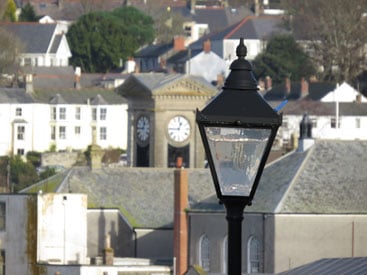 | |||
Panasonic FZ200 4.5-108mm at 108mm (600mm equiv) f2.8 | Canon SX50 4.3-215mm at 107mm (597mm equiv) f5.6 | |||
The second example below shows similar results with both lenses zoomed in to around 400mm and the subject closer to the camera. The result is quite similar though, with the FZ200 on the left able to throw the background more out of focus.
Panasonic Lumix FZ200 and Canon PowerShot SX50 HS depth of field at 400mm | ||||
 |  | |||
Panasonic FZ200 4.5-108mm at 74.3mm (413mm equiv) f2.8 | Canon SX50 4.3-215mm at 69mm (385mm equiv) f5.6 | |||
The FZ200 features Panasonic’s Power O.I.S stabilisation which moves the lens elements to compensate for camera shake and permit hand-held shots at slower shutter speeds. To test the Lumix FZ200’s, stabilisation I zoomed the lens to its maximum 600mm focal length and took a series of shots in shutter priority mode at progressively slower shutter speeds first with the stabilisation turned off, then with it turned on. As you can see from the crops below, the Lumix FZ200 can shoot at shutter speeds as slow as 1/10 with the stabilisation enabled, around six stops slower than convention suggests is possible without it. That’s pretty impressive by any standards and, in combination with the f2.8 constant aperture, gives the Lumix FZ200 truly unbeatable low light performance at the longer focal lengths where competitor models often struggle.
Panasonic Lumix FZ200 Power O.I.S Off/On | ||||
 |  | |||
100% crop, 4.5-108mm at 108mm 100 ISO 1/10th IS Off. | 100% crop, 4.5-108mm at 108mm 100 ISO 1/10th IS On. | |||
Panasonic Lumix FZ200 shooting modes
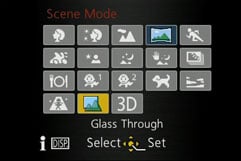
The FZ200’s mode dial is a much simpler affair than the FZ150’s, mainly due to the removal of the earlier model’s dedicated scene mode positions. They’re still available with the dial in the SCN position, selected from a menu along with all the others. In addition to the PASM and intelligent Auto exposure modes there are now two custom positions marked C1 and C2, SCN (with individual scene modes selected on screen), Creative Control effects and Movie mode.
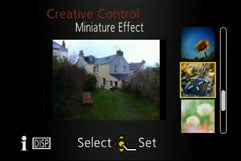
Panasonic introduced Creative Control filter effects on the FZ47 / FZ48 and extended the range on the FZ150 with the addition of eight new options and this remains the line up on the FZ200. The full list is Expressive, Retro, High Key, Low Key, Sepia, Dynamic Monochrome, Impressive Art, High Dynamic, Cross Process, Toy Effect, Miniature Effect, Soft Focus, Star Filter, and One Point Colour.
In some cases the titles of these effects are quite descriptive, others not so. Whether Impressive Art is impressive is really a matter of opinion, Dynamic Monochrome isn’t an HDR effect, but a high contrast monochrome filter. Cross process does look a little like the chemical process from which it takes its name and the star filter adds star bursts to specular light sources. High Dynamic claims to ‘produce the optimum brightness for light and dark parts’, but if you’re serious about dynamic range the HDR scene mode is a much better bet.
 |
 |
 |
| Dynamic Monochrome | Sepia | Star Filter |
Creative Control filters can be applied at the time of shooting or subsequently in the camera from the retouch menu. The latter route at least means you get the option of also having an original unfiltered image – if you shoot using the effect there’s no going back. Though one advantage of shooting with the effect that you don’t get if you apply it post is the option to further refine it by pressing the thumb wheel and adjusting sliders for exposure, depth of field and effect strength.
Most of the effects provide a degree of control over colour settings and focus and, as on the PowerShot SX50 HS, you can select the size and position of the focus zone in landscape and portrait orientations for the Miniature effect. Press the dedicated record button on the top of the FZ200 and you can start filming video with any of the effects applied live. The Miniature effect demands a degree of internal processing which reduces the recordable frame rate to around 3.5fps, but instead of showing jerky motion in real-time, these clips are simply played back around eight times faster than normal speed, which further enhances the effect. Obviously this means you’ll need to record for around eight times longer than you want the clip to last during playback – so if you want a one minute of accelerated Miniature footage, you’ll need to film for about eight minutes. You can see an example of this below, which took four minutes to film. But if you’re a real fan of Miniature effect movies, the SX50 version is a little more versatile, with the choice of three playback speeds
The Lumix FZ200 retains the 3D mode which takes a burst of images while you move the camera around 10cm sideways, before automatically selecting two photos from the group and using parallax information to generate a 3D image. It’s a similar approach to that pioneered by Sony. Two files are subsequently recorded by the camera: a conventional two dimensional JPEG for normal viewing, and an MPO file which contains the depth information and typically measures around 2MB. When connected to an ‘MPO-compatible’ 3DTV over an HDMI connection, both files are interpreted into a single 3D image; through, unlike commercially produced 3D content, the images only contain depth which extends ‘behind’ the screen, rather than in front of it.
In another acknowledgement of Sony’s eye for a popular feature, the FZ200 now also includes a panoramic shooting mode, replacing the FZ150’s Panorama Assist scene mode which provided an overlay to help you line up overlapping shots for stitching later on a PC. In similar fashion to Sony’s Sweep panorama feature, the FZ200 takes a sequence of shots as you rotate the camera to capture a panoramic scene and then assembles them in-camera to a single image. You can hold the camera in portrait or landscape mode, you have to specify which in advance. Finished panoramas are 8000 x 1080 pixels if shot in landscape orientation and 8000 x 1440 for portrait. Providing you keep on turning and keep the camera reasonably level the FZ200 will record a complete 360 view. If you’re a little uneven, or the subject makes it difficult to record overlapping images it will stop part way through and produce a panorama from what it has managed to capture – or you can press the shutter a second time to finish at a particular point. All in all it’s very simple to use and produces very good results.
Panasonic Lumix FZ200 Aperture Priority ISO vs HDR mode | ||||
 |  | |||
Program Auto 1600 ISO f4 1/8th | HDR Scene mode 1600 ISO f2.8 1/16 | |||
 |  | |||
The Lumix FZ200 retains the Handheld Night Shot and HDR modes previously seen on the FZ150; both of these stacking modes set the ISO sensitivity automatically. I’ve included an example of the HDR mode above. The ISO sensitivity and other exposure settings are automatic and I’ve compared the HDR mode shot here, which selected 1/15 ,f2.8 1600 ISO with my 1600 ISO Aperture priority mode shot with the essentially the same exposure at f4. For this low light scene with quite a lot of deep shadow, the HDR mode is a big improvement on the single frame Aperture priority shot with greatly improved shadow detail. As an added bonus, the HDR colour balance is also better. This is certainly a more dramatic improvement than I saw with the same scene using the SX50 HS i-Contrast tonal enhancement feature.
The FZ200’s HDR mode does well at boosting detail and the shadow to mid-tone regions, it isn’t as effective at highlight recovery though The histogram shows increased mid-tone detail, but there’s still that highlight spike on the right. You can see 100 percent crops from Handheld Night Shot mode on my Panasonic FZ200 noise results page.
Panasonic Lumix FZ200 movie modes
The FZ200 retains the same HD video modes as its predecessor, with a best quality 1080 mode at 50p or 60p depending on your region. There is something new for videographers, though, a new High Speed Motion Video move which slows down action by recording at fast frame rates. There are two options, a 100fps mode that records at 720p HD resolution and plays back at one quarter real time speed and a 200fps VGA mode that plays back at one eighth real time speed. The Canon SX50 HS and some IXUS / ELPH compacts have offered super slow motion video for some time, but Panasonic is the first to provide it in high quality HD resolution and it’s a welcome advance on the single speed 7.3x QVGA option on the FZ150. The example below shows the 100fps 720p mode. This is about an eight second recording that produced a 32 second clip. Regrettably, you can’t use the zoom during high speed recording.
As before, the Creative video mode allows PASM exposure modes and there’s the choice of two encoding formats, AVCHD or MP4, with Panasonic recommending the former for the best quality results or playback on HDTVs, and the latter for extensive editing or uploading.
The AVCHD mode can record video in either 1080p at 28Mbit/s, or 1080i or 720p, both at a rate of 17Mbit/s. 1080p footage is recorded at 50p or 60p depending on region, from a sensor output of 50p or 60p. 1080i footage is recorded at 50i or 60i depending on region, again from a sensor output of 50p or 60p respectively. 720p footage is recorded at 50p or 60p depending on region, again from a sensor output of 50p or 60p respectively. The MP4 mode can record video in Full HD 1080p, 720p or standard definition VGA, at rates of 20, 10 and 4 Mbit/s respectively. All three modes are encoded using progressive video at 25p or 30p depending on region, and in these modes, the sensor output is 25p or 30p respectively.
Using the best quality 1080p mode, you’re looking at about 200Mbytes per minute of footage, considerably more than the 1080i and 720p AVCHD modes which consume closer to 120 Mbytes per minute of footage. If you have an FZ200 from a non-European region, you might be able to keep filming until you either run out of memory or battery life. The exception as always are European FZ200s which are limited to clips lasting no longer than 29 minutes and 59 seconds, although if you’re using the MP4 format, the clip length is limited to 29 minutes and 59 seconds (or a file size of 4GB) regardless of where your model came from. Finally, Panasonic recommends using an SD card rated at Class 4 or faster for recording movies.
| |
|---|---|
| |
| |
| |
|---|---|
| |
| |
| |
|---|---|
| |
| |
| |
|---|---|
| |
| |
| |
|---|---|
| |
| |
| |
|---|---|
| |
| |
Panasonic Lumix FZ200
handling
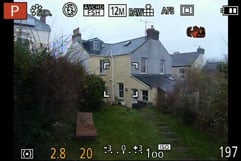
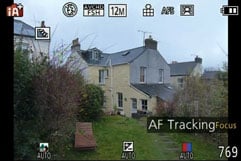
The FZ200 is quick, responsive and provides no shortage of custom buttons. It’s quick to start up and you can take a shot about a second after flicking the on switch. Panasonic has overhauled the design of the screen graphics and they’re now much smaller and generally less clunky looking and intrusive. Despite the LCD screen’s high resolution, Panasonic persisted with blocky looking graphics that wouldn’t have looked out of place on an 80’s home computer, so a restyle was long overdue. The new graphics not only look better, they allow you to see more of what’s on the screen. In the PASM exposure modes there are new scale bars that show your aperture and shutter speed combination at a glance in a much more legible format than the old numeric readouts. Both the viewfinder and the EVF can be configured to display information below the image rather than overlayed, though this reduces the image view considerably.
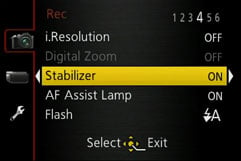
It’s a shame that Panasonic didn’t go one step further and redesign the layout of its Q.Menu overlay which I’ve criticised before for it’s poor design. But while it lacks the direct simplicity of the SX50 HS’s Func.Set menu, it does provide quick access to frequently used settings like Photo Styles (colour rendering) flash settings, image size and quality and AF area settings. The full menu is organised on three tabs for (stills) shooting settings, movie settings and camera setup. The first runs to six pages and the last eight, and with linear navigation (i.e. you need to scroll down through each page to get to the next) if what you want is page seven it can get a bit tedious. Of course, if you know what you’re looking for is on page seven (format, for example) you can go backwards, the menu is looped, but good design shouldn’t require you to memorise the location of 37 different settings.
 |
 |
 |
 |
 |
 |
 |
 |
 |
Thankfully, the FZ200’s numerous programmable function buttons mean less frequent trips to the menu. There are three in all, Fn1 mounted on the top panel, Fn2 is an option on the AF/AE lock button and Fn3 is on the rear panel just above the four-way controller. The same choice of thirteen functions is available for each of the three buttons including Photo style, Aspect ratio, Quality, Metering mode, Guide line overlay and Auto bracketing. If you’re a fan of manual focussing you can set the zoom lever on the side barrel to adjust the focus when in manual focus mode. Assigning the menu option for this to one of the Fn buttons means you can quickly switch back and forth between the two, avoiding a trip to page two of the setup menu.
Whereas the FZ150 mode dial had a single Cust position that recalled one of three menu-selectable saved configurations, the Lumix FZ200 has doubled up with C1 and C2 positions. There’s only one set on the C1 position, so this only increases the total number of custom sets by one, but it gives you two sets that are instantly accessible – you just need to turn the dial and start shooting – and two more that you can get to via the menu.
The FZ200’s 600mm maximum telephoto provides some challenges for those not used to shooting with long lenses. Keeping the lens steady at 600mm is difficult, but not impossible so long as you have the stabilisation enabled. Take a look at the first of the video samples above to get an idea of how much the camera moves around when you’re fully zoomed in. Of course, a lot will depend on how steady your hands are, I should also note that the video above was shot using the LCD screen, if you use the electronic viewfinder it’s possible to keep things steadier as the camera is pressed to your face.
The FZ200 may move around a bit at 600mm, but it’s far easier to keep track of moving subjects at this focal length than the 1200mm of the PowerShot SX50 HS. Even so, a monopod or some other support helps a lot. One slightly disappointing aspect of the FZ200’s telephoto performance is that, despite the f2.8 constant aperture, it frequently took longer to acquire focus when fully zoomed in than at the wide angle focal length.
Panasonic Lumix FZ200 Autofocus
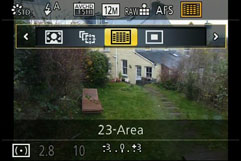
The Lumix FZ200 has four focus modes, 1-Area, 23-Area, AF Tracking and Face Detection. Face detection can detect up to 15 faces and lock focus on one of them. Multiple AF uses 23 areas to determine the best focus regions and there’s a single area AF option with a resizeable AF area that can be moved around the screen. Additionally there are three AF styles, the usual AFS and AFC single and continuous modes are joined by a third AFF, or Auto Focus Flexible mode. This is designed for shooting subjects like children and pets that move in an unpredictable manner.
Manual focusing is selected in the same was as on the FZ150 – with a three-position sliding switch on the lens barrel for AF, Macro AF and Manual. The focus is then adjusted using the rear control dial or, as I’ve already mentioned with the zoom controller on the lens barrel if you prefer. This is actually a much quicker and easier option as the rear control dial has multiple functions and pressing it in to cycle to the correct one can be frustratingly error prone.
I actually found manual focussing using the MF assist magnified screen and distance scale readout quite tricky. If your subject is static and well lit and the camera is mounted on a tripod it can work, but don’t expect to be able to use manual focus as a substitute for AF hand-held in poor light.
I should also mention that, like the PowerShot SX50 HS, the Lumix FZ200 supports face recognition. Up to six faces can be stored along with name, D.O.B. and a custom AF icon. Focus and exposure are prioritised on recognised faces which can be registered manually, or you can set things up so that the camera automatically registers frequently shot faces. It’s a feature that’s popular on Panasonic’s compact range and undeniably great fun to see the names of people appear below their faces when they’re recognised.
Panasonic Lumix FZ200 Continuous shooting
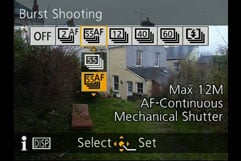
The Lumix FZ200’s continuous shooting specifications are essentially the same as its predecessor. You can shoot at up to 12fps at the full resolution without AF, or at 5.5fps or 2fps with autofocus; at 12fps you can capture up to 12 frames, while the slower speeds are limited only by memory.
To test the speed claims I fitted the FZ200 with a formatted Sandisk Extreme Pro UHS-1 SD card rated at 45MB/s. When set to the 12fps mode with best quality Fine JPEGs the FZ200 fired off a burst of exactly 12 frames in 0.9s – just over 13fps. That’s a very impressive performance in terms of speed, but under one second of action is a very short timeframe to capture and, even when things are moving quickly you usually need a two or three second burst to capture all the action with a bit of a buffer at the beginning and end of your sequence.
The 5.5 fps mode looks like it might be more useful for capturing longer sequences so that was my next test. With the same large fine JPEG setting I reformatted the card and switched to 5.5fps with single AF. This time the FZ200 fired fifteen frames before slowing appreciably, but continuing to shoot. The first 15 frames took 2.6 seconds, making 5.76fps, after that the rate slowed to around 2fps. So you can get a burst of about two and a half seconds at the 5.5fps speed which might actually be a more useful option than the faster one second burst. For a comparison I then switched to the continuous AF 5.5fps mode and fired a burst of 15 frames which sounded slower and more erratic, a fact born out by the numbers – just over 4fps.
Panasonic Lumix FZ200 Sensor
Like its predecessor Lumix FZ200 has a 12.1 Megapixel CMOS sensor which according to Panasonic is an updated version of the one found in the earlier model. This provides it with 1080p video and the ability to shoot slow motion HD footage in addition to fast continuous shooting (albeit for short bursts) and low light and HDR composite modes.
The FZ200 supports RAW shooting and offers two JPEG compression options, Standard and Fine. Maximum image size is 4000×3000 pixels and there are 20 smaller size options in 4:3, 3:2 and 1:1 aspect ratios. Full sized Fine quality JPEG files are around 4.5 to 5MB in size. The ISO sensitivity range is 100-6400 ISO and the shutter speed range is 60s to 1/4000.