Support Camera Labs by price checking using the flags below


Follow us!
Camera Labs RSS Feed
Camera Labs on Facebook
Camera Labs on Twitter


Latest camera reviews

Panasonic Lumix TZ10/ZS7
Canon EOS 550D / T2i
Canon PowerShot A3100IS
Olympus 'PEN' E-P2
Nikon COOLPIX S570
Canon IXUS 200 / SD980IS
Canon IXUS 120 / SD940IS
Sony Alpha DSLR-A550
Nikon COOLPIX L20
Canon PowerShot A1100IS
Canon PowerShot S90
Sony Alpha DSLR-A230
Panasonic Lumix GF1
Canon PowerShot G11
Canon IXUS 95 / SD1200IS
Canon EOS 7D
Sony Cyber-shot DSC-H20
Nikon D3000
Canon PowerShot SX120IS
Panasonic Lumix TS1 / FT1
Canon PowerShot D10
Canon PowerShot SX20 IS
Nikon D300s
Panasonic Lumix FZ38 / 35
Sony Alpha DSLR-A380
Sony Cyber-shot HX1
Nikon D5000
Nikon COOLPIX P90
Canon IXUS 100 / SD780IS
Panasonic Lumix TZ7 / ZS3
Canon PowerShot SX1 IS
Canon EOS 5D Mark II
Canon EOS 50D
Nikon D90
Canon EOS 1000D / XS

All reviews ....
   
 
  Best Buys: our top models
   
  Canon lenses
Nikkor lenses
Sony lenses
Budget DSLRs
Mid-range DSLRs
Semi-pro DSLRs
Point-and-shoot compacts
Superzoom / top compacts
Camera accessories


Camera Labs Forum

Any questions, comments or a great tip to share? Join our Forum and let everyone know.
   
 
  DSLR Tips


Panasonic Lumix DMC-L1 Gordon Laing, October 2006

Lenses and viewfinder / Screen and menus / Sensor and processing / Anti dust

Panasonic Lumix DMC-L1 lens coverage

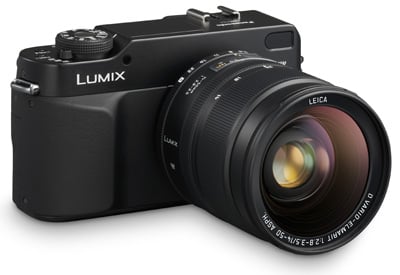
The Panasonic Lumix L1 employs a Four Thirds lens mount and is compatible with the existing range from Olympus and Sigma, which at the time of writing totalled 17 and 11 lenses from each manufacturer respectively. Like other Four Thirds DSLRs, the L1’s sensor size effectively reduces the lens field of view by two times, so the Leica 14-50mm kit lens delivers a 35mm equivalent focal length of 28-100mm. The range of the Leica lens in practice is illustrated below and you can read our full report on it in our Leica D 14-50mm review and video tour.


Panasonic Lumix DMC L1 with Leica 14-50mm coverage
Panasonic Lumix L1 at 14mm f8
Panasonic Lumix L1 at 50mm f8
14-50mm at 14mm, f8 (28mm equivalent)
  14-50mm at 50mm, f8 (100mm equivalent)


The Lumix L1 is currently only available as a kit with the Leica zoom, but there’ll be few complaints. This lens is undoubtedly one of the highlights of the entire package, sporting a useful general-purpose range and a bright focal ratio of f2.8-3.5 along with optical stabilisation – not to mention the promise of Leica’s reputation.

Panasonic Lumix L1 right view  
 
Support Camera Labs by shopping via these links


In practice it performs very well, delivering sharp results across the frame with minimal optical aberrations. The optical stabilisation is also effective and allowed us to easily handhold sharp results at equivalent focal lengths of 100mm using shutters of 1/13 as seen on the Gallery page – this confirms Panasonic’s quoted three stops of compensation.

Complying with the Four Thirds standard, the Leica zoom is also fully compatible with existing Olympus E-Series DSLRs, and there’s certainly been a lot of interest since Panasonic announced it would be available separately. We’ve performed our full suite of tests on the lens and you can read all about it in our Leica D 14-50mm review and video tour.

In the meantime, there are two points worth mentioning. First, like other Four Thirds cameras and lenses, the L1 and Leica zoom employ motor-assisted manual focus. While delivering fine adjustments, many photographers will prefer a true mechanical manual focus. You’ll also need the power-on the camera to manually focus and when you switch the camera off, the lens will reset itself to infinity; fortunately this focus reset doesn’t occur during power save mode though.

Secondly, the L1, like Panasonic’s all-in-ones and compacts, offers two optical image stabilisation (OIS) modes: Mode 1 delivers full-time compensation, while Mode 2 only stabilises when you take the picture but is slightly more effective. These two modes are only supported when you fit the Leica lens on the L1 body though; if you fit the lens to an existing Olympus body, it’ll only offer full-time Mode 1.

Panasonic Lumix DMC-L1 viewfinder

The Lumix L1 is based on the same internal optical path as the earlier Olympus E-330 which allows it to offer composition using the main colour monitor, along with the traditional optical viewfinder. We’ll discuss Panasonic’s implementation of this Live View feature on the next page, and concentrate on the optical viewfinder here.

Like the E-330, the Lumix L1’s viewfinder delivers 95% coverage with a 0.93x magnification. Also like the E-330 though, and indeed other Four Thirds bodies we’ve tested, the actual view itself appears relatively small compared to other digital SLRs. While partly down to the narrower 4:3 aspect ratio of the Four Thirds format, the apparent vertical height of the frame also appears slightly shorter.

Despite the relatively fast focal ratio of the Leica zoom, the viewfinder also appears a little dimmer than most digital SLRs with their kit lenses. This could be due to many factors including the semi-transparent mirror required for one of the E-330’s Live Views, which interestingly is not implemented on the L1.

Either way, the view is smaller and dimmer than most digital SLRs, and can become tricky to use under very dark conditions – for example we struggled to see stars through the L1’s viewfinder which were visible with the Canon EOS 400D / XTi and Nikon D80 even when coupled with their slower kit lenses. To be fair, you do get used to the L1’s viewfinder over time – and it does of course have a unique screen-based alternative for composition – but we’d recommend having a look through it yourself to see if the size and brightness will be an issue. It’s certainly a world apart from the viewfinder experience of, say, the Nikon D80.

While based on the Olympus E-330’s optical system, there are some differences. Both cameras may share the same main view and basic three-point auto-focus system with exposure information running vertically down the right side, but the L1 features a different selection of details. Below the aperture and shutter speed is an exposure compensation scale followed by a number of indicators including bracketing, flash mode and SD activity.

Unlike the E-300, there’s no indication of exposure and metering mode or battery life in the L1’s viewfinder, and neither camera shows the ISO value here either. For all this information on the L1 you’ll need to turn to its main colour screen – an approach with pros and cons which we’ll discuss on the next page.


Panasonic Lumix L1 features continued...

Lenses and viewfinder / Screen and menus / Sensor and processing / Anti dust


Support this site by checking prices below or shopping via our affiliate stores

USA readers


UK readers


All words, images, videos and layout, copyright 2005-2010 Gordon Laing. May not be used without permission.

About Us / How we test / Best Buys / Advertising / Home