Canon PowerShot SX130 IS
-
-
Written by Gordon Laing
Intro
Announced in September 2010, the Canon PowerShot SX130 IS is a 12 Megapixel super-zoom with a stabilized 12x optical zoom and 3in screen. It replaces the PowerShot SX120 IS, which itself replaced the SX110 IS, both highly popular models. As well as a longer zoom range and an additional 2 Megapixels of resolution, the PowerShot SX130 IS adds 720p HD video recording and some new scene modes.
The SX130 IS is aimed at photographers who want more control over exposure and other settings than is offered by most compacts. It’s also substantially bigger than the average compact, but while portability isn’t the biggest factor in this market, the price certainly is, and the SX130 offers a great range of features at an affordable price point.
The PowerShot SX130 IS doesn’t find itself alone in the budget super-zoom category though. It faces tough rivals at similar price points, such as Panasonic’s Lumix DMC-TZ8 / ZS5 and Sony’s Cyber-shot DSC-H55. In our full review we’ll see how Canon’s latest compares to help you find the right affordable super-zoom camera.
 |
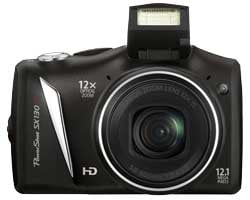
The PowerShot SX130 IS doesn’t look radically different to its predecessor, but there have been some significant style updates. The body shape is broadly the same but the contours have been exaggerated, giving it a bit of a ‘mini-SLR’ look. The black plastic casing is augmented with a silver metal-look strip on the right side which provides excellent purchase for the fingers of your right hand, while round the back the playback button has been moved to accommodate a thumb ridge.
The SX130 IS is slightly larger than its predecessor, and at 308g including AA batteries, heavier too. This isn’t a camera you can slip into your jeans pocket, and even when carried in a jacket or coat you’re going to know it’s there, but on the plus side it feels very comfortable to handle and the weight gives it a quality feel and added stability. One thing we found slightly disconcerting though was the tendency for the lens barrel to rattle slightly in the housing, but this didn’t have any negative effect on performance. Another thing that may help you make a quick decision if compactness is high on your list of priorities is that the PowerShot SX130 IS is around a third heavier than both the Sony Cyber-shot DSC-H55 and the Panasonic Lumix DMC-TZ8 / ZS5.
The gently curving top panel houses the manually activated pop-up flash unit alongside the mode dial, on/off button and shutter release. The mode dial sits proud of the sloping top surface and can be moved using just your thumb on the knurled perimeter where it extends beyond the camera’s back edge. It’s big and clearly labelled – you could probably use it quite easily with gloves on – but the mark against which you set the mode icon can be difficult to make out in low light. The shutter release is surrounded by a zoom collar with a slightly off-centre front-facing nipple for index-finger activation.
 |
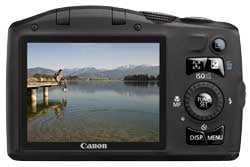 |
On the back panel there’s no change to the 3in / 230k screen and the control layout is similar to that of the SX120 IS with a thumb wheel for menu navigation which also tilts to provide one-touch access to ISO settings, flash, self-timer functions and macro and manual focusing. The Func.Set button at the centre of the control wheel is used to make menu selections and also activates the Func.Set shortcut menu, about which more later.
The control wheel is flanked at the top by buttons to activate Face detection and Exposure compensation and at the bottom by the Menu and Disp. buttons, the later toggling info overlays. On the right side near the top a soft plastic cover protects the AV /USB and DC in ports.
On the bottom, next to the slightly off-centre tripod bush there’s a spring-loaded door to the battery and media card compartment. Like its predecessor, the PowerShot SX130 takes a couple of AA batteries, and it now supports high-speed, high-capacity SDXC cards.
Mounted on the top panel, the PowerShot SX130 IS’s integral flash unit is a manually activated flip-up unit – you literally pull it up with a finger. If the flash is in the lowered position in low light a message appears in auto modes telling you to raise it. Pressing the flash button on the control wheel provides further settings in Program mode including Auto, forced on and slow synchro. In most auto modes the flash is fully automatic, in other words once raised it fires if the lighting conditions require it.
The quoted maximum range of the flash at the wide angle lens setting is 3 metres which, curiously, is a metre less than it’s predecessor was capable of. The extra height provided by the pop-up unit means the PowerShot SX130 is very good at avoiding red-eye. Even so, there’s a red-eye lamp feature which optionally illuminates the AF assist lamp prior to flash exposures and a red-eye correction software fix.
In Program and Manual modes, flash exposure can be adjusted in the same way as exposure compensation – up to plus or minus two stops in 1/3rd of a stop increments. If, for example, an object in the foreground is causing your subject to be under-illuminated you can use this to ensure your subject is properly exposed. You can also adjust the flash output itself to one of three levels.
We criticised the PowerShot SX120 IS for it’s poor flash recycling times and the SX130 fares no better – with up to six seconds wait for the flash to recharge between shots. This is a shortcoming that’s common to Canon’s AA powered compacts so if you like to fire off rapid shots indoors and in low light it’s something you’ll need to think carefully about.
As we’ve said, the PowerShot SX130 IS uses two AA batteries. When they run out, after around 130 shots with the supplied alkaline batteries, most people will want to replace them with rechargeable NiMH batteries. With Canon’s own NB-3AH NiMH rechargeables, the quoted battery life using the CIPA (Camera Imaging Products Association) standard is a much more respectable 370 shots and you’ll get similar performance with most quality brand NiMH cells with a 2500mAh rating.
Canon PowerShot SX130 IS coverage wide |
Canon PowerShot SX130 IS coverage tele | |
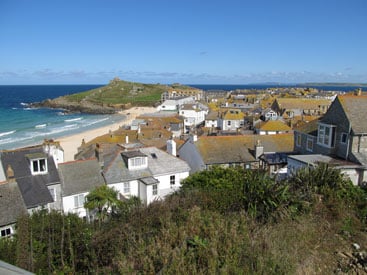 | 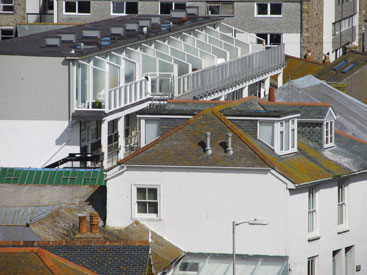 | |
| 5-60mm at 5mm (28mm equivalent) | 5-60mm at 60mm (336mm equivalent) |
The PowerShot SX130 IS’s 12x optical zoom lens has a range of 5-60mm, which in 35mm equivalent terms is 28-336mm. One of the criticisms we made of the SX120’s 6-60 (36-360mm equivalent) lens was that its 36mm maximum wide angle was barely a wide angle lens at all, so the extension at this end of the zoom range is very much welcomed, even at the cost of a little less telephoto power. And if you’re wondering why the SX120’s 60mm telephoto works out to a 35mm equivalent of 360mm whereas the same 60mm figure for the SX130 works out to a 35mm equivalent of only 336mm, it’s because the SX130’s 1/ 2.3in sensor is slightly larger than the 1/ 2.5in sensor used in the SX120.
The SX130 IS has a thick, sturdy lens bezel that, with the lens retracted, extends 16mm from the camera body. When the on/off button is pressed the lens extends a further 26mm and the camera is ready for action in a swift 1.5 seconds. The zoom takes just under three seconds to travel the full distance in either direction and, while the focus can tend to wander during zoom operation, in continuous AF mode it’s quickly pulled back without the need to half-press the shutter release to activate the AF.
We managed to nudge the zoom through 38 discrete steps in both directions which is an extraordinary level of control. Quite often with motorised zooms you find that similar short flicks of the zoom collar produce different amounts of movement, but each step on the PowerShot SX130 IS advanced the zoom by a precise and equal amount. If you like to have precise control during zooming you’d have to look hard to find a zoom with better fine motor control than the PowerShot SX130 IS. (We managed 36 steps with the Lumix TZ8, which is also excellent, but it lacks the Powershot SX130 IS’s precision and consistency)
The PowerShot SX130 IS has an optical image stabilization system which moves the lens elements to compensate for camera movements and eliminate the blurring that results. There are four options, Off, Continuous, Shoot only and Panning. Shoot only activates on first press of the shutter release and Panning makes adjustments only in the vertical plane so that you can pan to follow horizontally moving subjects. See the Blurring Action tutorial at our sister site DSLR Tips for an example of this.
Canon PowerShot SX130 IS: off / continuous | ||
 |  | |
100% crop, 5-60mm at 60mm, 1/10, 400 ISO, Program mode, IS off. |
100% crop, 5-60mm at 60mm, 1/10, 400 ISO, Program mode, IS on. | |
Although at 336mm, its maximum focal length is a little shorter than the PowerShot SX120 IS, the PowerShot SX130 IS’s maximum aperture at this focal length is f5.6, so effective image stabilization is crucially important. The photographer’s rule of thumb says that to avoid camera shake you should choose a shutter speed of at least one over the effective focal length – for the PowerShot SX130 IS that’s 1/336 of a second at the maximum telephoto setting.
The two crops above are taken from shots made with the SX130 IS zoomed to its maximum focal length at 400 ISO with an exposure of 1/10th of a second at f5.6 The shot on the left was taken with IS turned off, the one on the right with IS in Continuous mode. This is very impressive and amounts to four extra stops of exposure with IS enabled. One reason the image stabilization works so well is that the size, shape and weight of the PowerShot SX130 IS make it a very easy camera to hold steady. Even with the IS turned off we were able to get sharp shots at speeds as slow as 1/30th off a second (though the results were very inconsistent and you’ll always get better results with IS on).
 |
In Manual modes the PowerShot SX130 IS has two main autofocus modes. Face Detect tracks up to 9 faces in the frame with one face prioritized when the shutter release is half-pressed. The PowerShot SX130 IS’s Face Detection is quick and reliable, guaranteeing in-focus shots as long as people aren’t too far away and the lighting is reasonably good. In the absence of faces in the frame and when chosen as an option in Program and the Manual modes (Manual, Aperture priority and Shutter priority), Centre AF mode uses a central area of the frame to automatically determine focus. The AF frame size can be adjusted with a smaller frame effectively providing spot focussing at the centre of the screen.
It’s a shame the SX130 IS doesn’t employ the Face AiAF mode of some Canon compacts which automatically switches between face detection and a 9-area system in all modes. There is a 9-area AF system under the hood, but it’s only activated in the Auto, Easy and some scene modes when no faces are detected in the frame.
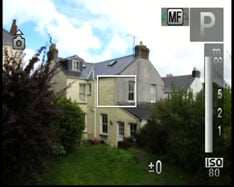
For Action shots of moving subjects Servo AF continually adjusts the focus while the shutter release is half pressed. Finally, there’s a manual focus option. While manual focus on a compact is never going to approach the ease of an SLR, the system on the PowerShot SX130 IS is fairly effective. It can be activated in the manual modes by pressing the 9 o’clock position on the control wheel and selecting Manual focus on the screen. Using the control wheel you adjust the focus using a scale on the right of the screen as a guide and by checking the central magnified portion of the screen. You don’t have to get it spot on as a half-press on the shutter release fine tunes your initial effort using the camera’s autofocus system, though this can be switched off if you prefer.
The manual recommends attaching the camera to a tripod which is a hint that manual focus isn’t an everyday tool, but something to use when the AF can’t cope, such as shooting at high zoom magnifications and in low light conditions in a theatre for example.
The PowerShot SX130 IS has a 3in TFT LCD screen with 230 thousand pixels. This size and resolution is now becoming something of a standard even on lower priced compacts, (the Lumix TZ8, with its 2.7in screen being one exception) but there’s nothing average about the PowerShot SX130 IS screen. It provides a bright, contrasty image with a wide viewing angle. Vertically, you can still see what’s going on from a viewing angle of about 45 degrees which means you can just about get away with composing shots while holding the camera above your head – as long as you hold it out in front of you a little.
One of the failings of LCD screens is that you really can’t see them very well in bright sunlight and the PowerShot SX130 IS is no exception. You can adjust screen brightness from the menu though.
The menu system on the PowerShot SX130 IS is the usual Canon two-tab arrangement, with shooting settings, including AF options, display overlay, and IS mode, on one tab and camera settings, including LCD brightness, format, power saving and time zone, on the other. Options on the menu are accompanied by short hints and tips describing their function at the bottom of the screen.
 |
 |
 |
But, other than on rare occasions, you’re not likely to need either of these menus because all of the commonly used settings are on an overlay menu activated by pressing the Func.Set button at the centre of the control wheel.
 |
 |
 |
In Auto mode the options are limited to image size, but in Program and the manual modes you can also set the white balance, colour rendering, continuous shooting, flash power and metering mode. Normally the ISO sensitivity would be included in this list, but on the PowerShot SX130 IS the top button on the control wheel gets you there directly.
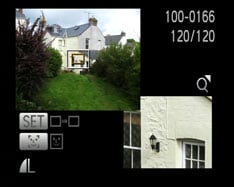
Playback mode retains the same camera settings tab as in shooting modes, the Shooting tab is obviously absent, replaced by playback tab and there’s a third tab for print settings. The Playback tab provides a slideshow with variable playback timing and a selection of transition effects, but no music. There are the usual erase, protect and rotate options along with some basic retouching tools for, among other things, rotating, cropping, red-eye reduction and Canon’s i-Contrast dynamic range enhancer. You can also assign categories to images which can later be used to filter playback. Pressing the Disp. button during playback toggles between display modes. Starting with a clean slate showing nothing but the image you can add basic information, more detailed info including EXIF data and a histogram and finally a focus check view which displays a magnified view of the focus areas.
In Auto mode the PowerShot SX130 IS has scene recognition, which was introduced in the SX120 IS. Scene recognition attempts to identify the scene in front of the camera and set the appropriate focus and exposure. A portrait shot in front of a window, for example, might produce the same metering reading as a landscape, but the two would require different exposure settings.
Scene recognition identifies people, landscapes and close ups, bright conditions, blue skies, sunsets, back-lighting or dark conditions, and displays an icon in the top right of the screen to tell you what it thinks it’s looking at. In the vast majority of cases it works well and, if in doubt, it defaults to generic auto mode. It can also tell if the camera is mounted on a tripod enabling the use of longer exposures for night scenes. The SX130 IS also features Easy mode, a point-and-shoot setting that leaves nothing for the photographer to do but, well, point and shoot.
Probably of more interest to the kind of photographer considering the SX130 IS over a more compact, simpler model are the manual exposure modes. In addition to Program mode which sets an aperture and shutter speed combination for you, the SX130 has two semi-automatic modes as well as full manual control.
Av and Tv modes are the Aperture and Shutter Priority modes that will be familiar to anyone who has owned a Canon SLR or advanced compact. Put simply, in Av mode you choose the desired aperture and the metering selects the appropriate shutter speed for a correct exposure. Shutter priority works the other way round.
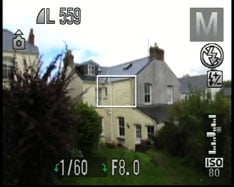
Switch the SX130 IS’s dial to M and you enter the world of fully manual operation. The initial aperture and shutter speed combination is displayed at the bottom of the screen. To change the settings you simply spin the control wheel, toggling between aperture and shutter speed using the exposure compensation button. An exposure scale on the right of the screen and an EV readout at the bottom to the right of your selected combination tells you (up to a maximum of + or – 2 stops) how far over or under exposed the shot will be.
Often, manual exposure control on a digital compact can be a fiddly business, but Canon’s system on the SX130 IS is a breeze. It helps that the LCD panel brightens and darkens as you over or under-expose, providing a visual clue that all is not as it should be.
Three scene modes, Portrait, Landscape and Kids & Pets are directly selectable from the mode dial and in the SCN position an additional 12 can be chosen using the Func.Set menu. This include some novel additions like fish-eye effect and Miniature effect – a faux tilt-shift effect that blurs the top and bottom of the frame. There’s also a Smart Shutter Scene mode which automatically fires the shutter when a smile is detected. The Smile shutter Scene mode can also be configured for Wink and Face self-timer operation and you can set it to take up to ten continuous shots – just to be on the safe side.
New to the PowerShot SX130 IS is the ability to shoot 720p video at 30 frames per second. Movies are encoded with H.264 at a rate of approximately 25 Megabits per second and saved in a QuickTime .mov wrapper. There’s a continuous shooting time limit of exactly 10 minutes when shooting HD video. Though that’s not likely to be a problem for casual HD videographers it could prove a pain for more serious projects.
| |
|---|---|
|
The PowerShot SX130’s optical zoom is fully functional during video recording and the motor is barely audible. While recording, the zoom has only one speed – super slow – taking a full 12 seconds to go the distance from wide to tele. This has a nice, majestic feel about it and the focus is rock steady throughout, but the option of a faster speed would be good to have.
In addition to the HD movie mode, standard modes at 640 x 480 (L) and 320 x 240 (M), both at 30fps are available. The resolution is changed from the Func.Set menu which has some other options like white balance adjustment and colour rendering options. You can also shoot movies in both HD and L resolutions using a Miniature (tilt-shift) effect. As well as blurring the top and bottom of the frame, this speeds up the action by 5, 10 or 20X, for a one minute clip, producing playback times of 12, 6 and 3 seconds respectively.
The PowerShot SX130 IS has two continuous shooting modes, one that locks the focus when the shutter is half pressed and another that continually focuses during shooting. Though neither is lightning fast, as you’d expect, the former provides a faster frame rate than the latter, quoted at 1fps against 0.6fps in the manual – figures that were borne out in our tests. There’s also a Continuous shooting LV mode that shoots continuously with the camera manually focussed. In the low light mode, the continuous shooting speed increased to 2.4fps, albeit with 1600 x 1200 images.
The PowerShot SX130 IS has a 1/ 2.3in CCD sensor which produces images with a maximum size of 4000 x 3000 pixels. There are a number of smaller image sizes available including a cropped 16:9 4000 x 2248 setting. Two JPEG compression settings are available – Fine and Normal – the former producing maximum resolution images with a file size of around 3MB.
Sensitivity settings range from 80 ISO to 1600 ISO with a Low light Scene mode that automatically sets the sensitivity between 400 and 3200 ISO. To see how the quality of the PowerShot SX130 IS measures-up in practice, take a look at our real-life resolution and high ISO noise results pages, browse the sample images gallery, or skip to the chase and head straight for our verdict.