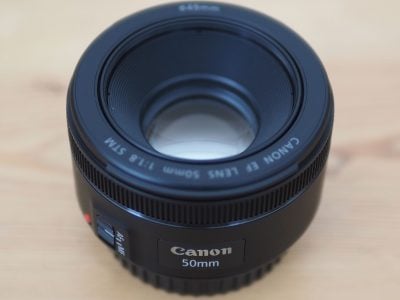
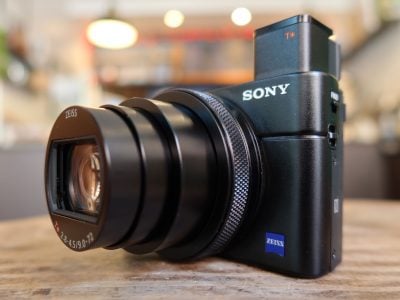
Canon EF 17-40mm f/4L USM lens, (tested with cropped-frame APS-C body)
-
-
Written by Gordon Laing
Intro
The Canon EF 17-40mm f/4.0L was announced back in February 2003 as a lightweight ultra wide-angle zoom and has since become a bit of a classic lens for owners of Canon EOS digital and film SLRs.
Its ultra-wide focal range delivers spectacular coverage on film or full-frame digital SLRs, although it’s sufficiently wide to also be considered as a general-purpose zoom on APS-C bodies like the EOS 30D and 400D / XTi. When fitted to an APS-C body, it delivers a range equivalent to 27-64mm, and while the long-end is clearly shorter than general purpose EF-S zooms, it does have the advantage of being compatible with a full-frame body should you wish to upgrade in the future.
In this review we’ll test the Canon E 17-40mm on a Canon EOS 400D / XTi body and compare it against EF-S lenses offering a similar general purpose range. To find out how this same lens performs on a full-frame body, check out our separate Canon EF 17-40mm with EOS 5D review.
In terms of looks and focal range, the EF 17-40mm is closest to Canon’s EF 16-35mm f/2.8L II. The EF 16-35mm II gets a little wider, although not quite as long, but the big difference is of course focal ratio: the EF 16-35mm II with a constant f2.8 aperture is a whole stop brighter than the EF 17-40mm, but that extra stop comes at a high cost. The EF 16-35mm II is almost twice the price of the EF 17-40mm, and 100g heavier too. In our view this makes the EF 17-40mm a bit of a bargain, and indeed it’s one of the cheapest ‘L’ lenses available.
In this review we’ve tested the EF 17-40mm with the Canon EOS 400D / XTi where it offers a general-purpose range; this may be a little shorter than the standard EF-S 18-55mm kit lens, but the EF 17-40mm offers a number of benefits including far superior build quality, quicker and quieter focusing, along with better overall image quality. Not only will the EF 17-40mm make the most of the Canon 400D / XTi’s potential, but unlike any of the EF-S models, it’s ready to fit right onto a full-frame body should you upgrade in the future.
So to see how the EF 17-40mm performs on the Canon 400D / XTi, we compared it against no fewer than three popular alternatives from Canon’s EF-S range: the EF-S 17-85mm, EF-S 17-55mm and the EF-S 18-55mm kit lens. Find out if it’s the perfect general purpose lens for your 400D / XTi in our Canon EF 17-40mm full review. And as always, check out the highlights in our Canon EF 17-40mm video tour.
Testing notes
Note: this is one of two Canon EF 17-40mm lens reviews on Cameralabs. Our other review compares the performance of the EF 17-40mm on the full-frame Canon EOS 5D where its full ultra-wide angle coverage is unleashed. To find out how it compares on a full frame body, check out our Canon EF 17-40mm with EOS 5D review which also has its own video tour.
Canon EF 17-40mm design and build quality
Mounted on a body like the Canon EOS 400D / XTi or the EOS 30D, the EF 17-40mm becomes a general-purpose lens which competes against a number of popular EF-S models. We’ve pictured it below alongside the three most common options: from left to right are the Canon EF-S 17-55mm, the EF 17-40mm, EF-S 17-85mm and EF-S 18-55mm lenses, each zoomed-out to their widest focal lengths.
With a diameter of 84mm and shortest length of 111mm, the EF-S 17-55mm is by far the largest of the lenses pictured, and at 645g, the heaviest too. The EF 17-40mm measures 84x97mm, so shares the same diameter as the relatively hefty EF-S 17-55mm, but is 14mm shorter, and at 475g it’s also 170g lighter. This makes the EF-17-40mm the same weight as the EF-S 17-85mm, but a little larger. Clearly the first three lenses pictured dwarf the EF-S 18-55mm kit lens, which measures 69x66mm and weighs just 190g.
Pictured below are the same lenses zoomed-in to their longest focal lengths. The EF 17-40mm performs its zoom within the constraints of its outer barrel housing, so doesn’t physically extend. In contrast, the EF-S 17-55 and 17-85mm models both extend by 26mm, although the former does so with a single barrel, while the EF-S 18-55mm extends by 9mm. Clearly the EF-S 17-55mm remains the largest of the group.
As you’d expect for an ‘L’ model, the EF 17-40mm boasts the best build quality of all four lenses compared here. The construction and materials are of a much higher standard than any of the EF-S lenses so far, which feel quite plasticky in comparison. The EF 17-40mm is also the only one here to claim a high resistance to dust and moisture.
Like all ‘L’ lenses, the EF 17-40mm’s zoom and focusing rings also feel much smoother and more tactile than the EF-S models which makes them much easier to finely adjust; the manual focusing ring is also much bigger than the ones on the EF-S models and feels like it was meant to be used.
Like the EF-S 17-55 and 17-85mm models, the EF 17-40mm also features a USM focusing motor which is both quick and quiet in operation – indeed Canon actually rates the EF 17-40mm as having the fastest AF in its class. Suffice it to say the end section doesn’t rotate either, which is good news for users of polarising filters, although they’ll need to dig deep for one which will fit on its 77mm thread. At least they won’t need to buy a lens hood though – as an ‘L’ model, Canon supplies one as standard with the EF 17-40mm.
Aperture
In terms of light gathering power, the EF 17-40mm features a constant f4.0 aperture throughout its range; this means the exposure won’t change as you zoom from one end to the other. The EF-S 17-55mm is by far the most impressive of the group here though, boasting a bright f2.8 aperture throughout its focal range. This allows it to deliver very small depth-of-fields and comfortably operate under considerably lower light levels. If you’re after ‘L’ build quality and a constant f2.8 aperture in a similar focal range, you’ll need to invest a significantly higher sum in the EF 16-35mm f2.8L II.
Canon EF 17-40mm coverage, zoomed-out with Canon EOS 400D / XTi
The Canon EF 17-40mm f/4.0L may offer ultra-wide coverage when mounted on a full-frame body like the EOS 5D, but actually delivers a range close to a standard kit lens when fitted on a body like the EOS 400D / XTi.
To illustrate the range in practice we mounted an EOS 400D / XTi on a tripod and photographed the same scene with the EF 17-40mm at its shortest and longest focal lengths, then repeated the process a few moments later with the standard EF-S 18-55mm kit lens for comparison.
Below are the shots taken with each lens at their shortest focal lengths. With a slightly wider equivalent focal length of 27 to the kit lens’ 29mm, the EF 17-40mm unsurprisingly captures a slightly wider field of view, although it’s pretty close. If you want a much wider field, you’ll need to go for something like the Canon EF-S 10-22mm.
Canon EF 17-40mm f/4L USM |
Canon EF-S 18-55mm f/3.5-5.6 | |
 |  | |
| 17-40mm at 17mm, f8 (27mm equivalent) | 18-55mm at 18mm, f8 (29mm equivalent) |
Canon EF 17-40mm coverage, zoomed-in with Canon EOS 400D / XTi
Next up came the long-end of each lens, and again below are shots taken with the EF 17-40mm and EF-S 18-55mm when zoomed-in. With equivalent focal lengths of 64 and 88mm respectively, the kit lens is clearly capable of capturing a noticeably smaller field – and this undoubtedly makes it a more flexible option for day-to-day use. The EF 17-40mm can feel a little too short as a single general-purpose lens, but it may suffice depending on your requirements and the other lenses you intend to use with it.
Canon EF 17-40mm f/4L USM |
Canon EF-S 18-55mm f/3.5-5.6 | |
 |  | |
| 17-40mm at 40mm, f8 (64mm equivalent) | 18-55mm at 55mm, f8 (88mm equivalent) |
Outdoor scene, Canon EF 17-40mm versus EF-S 18-55mm with EOS 400D / XTi
Canon 17-40mm results continued…
Outdoor / Resolution / Corner sharpness / Fringe and macro / Geometry / Vignetting
 |
To compare real-life performance we shot the same scene with the EF 17-40mm and EF-S 18-55mm lenses within moments of each other using a Canon EOS 400D / XTi at f8 in Aperture Priority mode. The 400D / XTi was set to Large Fine JPEG mode and the Standard Picture Style. The crops are taken from the originals and presented here at 100%. The image left was taken with the Canon EOS 400D / XTi using the EF 17-40mm at 22mm f8; the original JPEG measured 4.15MB. |
|
At first glance, the two lenses appear to deliver similar-looking results, but upon closer inspection some differences emerge. In the top row of crops showing the mountain ridge, the EF 17-40mm looks a little sharper on fine details like the areas of snow – these also show a little coloured fringing on the EF 18-55mm crops, but it’s pretty close. The middle row of crops taken from near to the centre of each lens appear virtually identical, but the biggest difference can be seen in the final row of crops. Here the EF-S 18-55mm sample is quite soft in comparison, losing the finest detail in the branches and foliage. Ultimately in this test with both lenses closed to f8, it was quite a close result, although as you’ll see over the following pages there are several areas where the EF 17-40mm comfortably out-performs the budget kit lens. |
Canon EF 17-40mm f/4L USM |
Canon EF-S 18-55mm f/3.5-5.6 | |
 |  | |
1/250, f8, 100 ISO |
1/250, f8, 100 ISO | |
 |  | |
1/250, f8, 100 ISO |
1/250, f8, 100 ISO | |
 |  | |
1/250, f8, 100 ISO |
1/250, f8, 100 ISO |