Support Cameralabs by shopping at our partner stores or donating via Paypal
 

Follow me!
Camera Labs RSS Feed
Gordon Laing and Cameralabs on Google+
Camera Labs on Facebook
Camera Labs on Twitter

 
  Latest camera reviews

Olympus E-PM1
Nikon V1
Sony NEX-5N
Canon 100HS / 115HS
Canon 300HS / 220HS
Canon S100
GoPro HD Hero 2
Canon 510HS / 1100HS
Canon 310HS / 230HS
Canon SX150 IS
Olympus E-PL3
Canon SX40 HS
Sony NEX-C3
Panasonic GF3
Fujifilm HS20 EXR
Panasonic FZ150
Olympus E-P3
Panasonic FZ47 / FZ48
Nikon COOLPIX S9100
Sony Cyber-shot HX100V
Sony Cyber-shot HX9V
Panasonic FX77 / FX78
Canon SX230 HS
Canon EOS T3 / 1100D
Panasonic Lumix G3
Sony Cyber-shot TX10
Canon 500HS / 310HS
Nikon D5100
Sony Cyber-shot W510
Nikon COOLPIX L24
Canon PowerShot A1200
Panasonic FS18 / FH5
Canon PowerShot A800
Panasonic TZ18 / ZS8
Canon PowerShot A3300IS
Canon EOS 600D / T3i
Panasonic TZ20 / ZS10
Canon IXUS 1000/SD4500
Sony Alpha SLT-A33
Panasonic Lumix GH2
Nikon D7000
Canon PowerShot G12
Canon PowerShot S95
Panasonic Lumix LX5
Nikon D3100
Canon EOS 60D
Canon EOS 550D / T2i
Canon EOS 7D
Nikon D300s
Canon EOS 5D Mark II
Nikon D90

All reviews ....


  Best Buys: our top models
   
  Best Canon lens
Best Nikkor lens
Best Sony lens
Best budget DSLR
Best mid-range DSLR
Best semi-pro DSLR
Best point and shoot
Best superzoom
Best camera accessories


Camera Labs Forum

Any questions, comments or a great tip to share? Join our Forum and let everyone know.
   
 
  DSLR Tips


lens rental
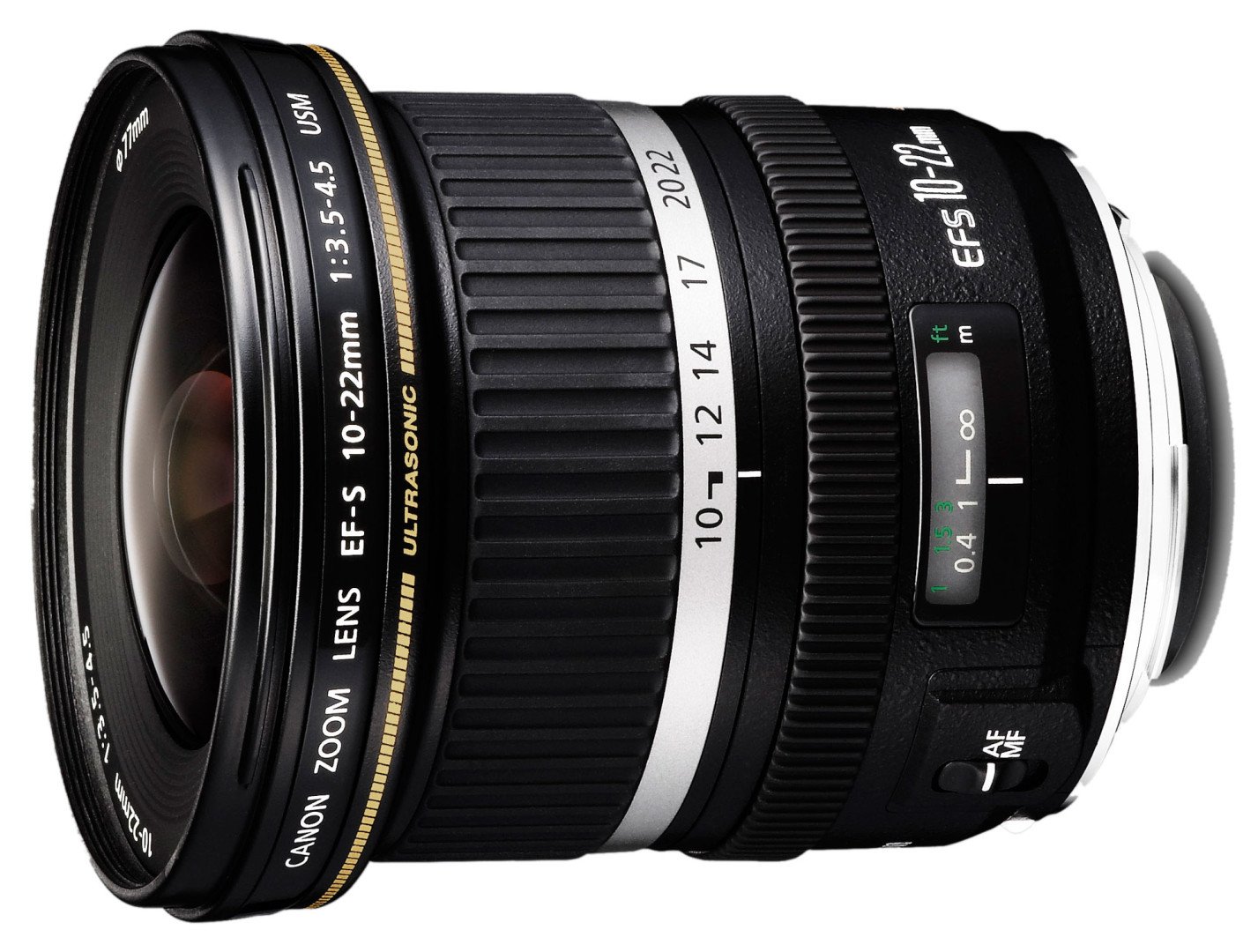
Canon EF-S 10-22mm f/3.5-4.5 USM Gordon Laing, February 2007

 
Canon EF-S 10-22mm design and build quality

Pictured below are the four zooms in Canon’s current EF-S range: from left to right the EF-S 10-22mm, EF-S 17-55mm, EF-S 17-85mm and EF-S 18-55mm lenses, each zoomed-out to their widest focal lengths.


from left: Canon EF-S 10-22mm, EF-S 17-55mm, EF-S 17-85mm and EF-S 18-55mm lenses - zoomed out


Measuring 84x90mm (diameter x length), the EF-S 10-22mm is roughly as wide as the EF-S 17-55mm and tall as the EF-S 17-85mm, but unlike the other lenses pictured here, doesn’t physically extend as you zoom-in. Like the Canon EF 17-40mm, an internal section shifts back and forth slightly as you adjust the zoom, but does so entirely within the limits of the outer barrel. This makes the EF-S 10-22mm appear much smaller than the EF-S 17-85 and EF-S 17-55mm lenses when all are zoomed-in - see below.


from left: Canon EF-S 10-22mm, EF-S 17-55mm, EF-S 17-85mm and EF-S 18-55mm lenses - zoomed in


With the same external barrel width as the EF-S 17-55mm, it’s not surprising to find the EF-S 10-22mm sharing the same 77mm filter thread. This is significantly larger than the 67mm thread of the EF-S 75-85mm or the 58mm of the EF-S 18-55mm lenses.

A lens hood (EW-83E) and carrying pouch (LP1319) are available for the EF-S 10-22mm, but you’ll need to buy them as optional extras. While this is the same situation as other EF-S lenses, it still seems a little mean not to at least include the lens hood. Pouches and hoods come as standard only with Canon’s L lenses.

The biggest physical difference between the four EF-S zooms is weight. At 385g, the EF-S 10-22mm may still be twice as heavy as the almost feather-like EF-S 18-55mm kit lens, but is noticeably lighter than the 475g EF-S 17-85mm and the relative heft of the 645g EF-S 17-55mm, although to be fair the latter does boast a constant f2.8 aperture.

The exterior design and build quality of the EF-S 10-22mm is to all intents and purposes identical to the EF-S 17-85mm and EF-S 17-55mm models. All have similar-feeling focusing and zoom rings, and position them with the focusing ring closest to the body and the zoom ring furthest. While all three lenses are a big step-up from the kit EF-S 18-55mm lens, none are in the same physical league as Canon’s L lenses. The zoom and focusing rings on L lenses feel much smoother and the overall build quality more confident.

In terms of focusing, the EF-S 10-22mm employs one of Canon’s USM motors which is both fast and quiet. It’ll focus from its closest 24cm distance to infinity in about half a second, and thanks to internal focusing, the filter mount doesn’t rotate – a relief for anyone who uses polarising or graduated filters.

If you found this review useful, please support us by shopping below!
All words, images, videos and layout, copyright 2005-2012 Gordon Laing. May not be used without permission.

/ How we test / Best Cameras / Advertising / Camera reviews / Supporting Camera Labs