Best Canon Lenses
Welcome to my Buyer’s Guide to the Best Canon Lenses! Whether you have a Canon DSLR or mirrorless camera – or both! – you’ll find out which lenses I can personally recommend from Canon, along with third-party manufacturers including Sigma, Tamron and Samyang.
I’m splitting this guide into three main sections depending on the type of Canon camera you own, and you can jump directly to each section as required. First I’ll start with my Best EF-M lenses for Canon EOS M mirrorless cameras, followed by my Best RF lenses for Canon EOS R mirrorless cameras; note these two systems are not compatible with each other.
After these I’ll cover my Best EF lenses for Canon DSLRs, including both EF and EF-S lenses, the latter designed specifically for cameras with ‘cropped’ APSC sensors. Note both EF and EF-S lenses can be adapted for use on Canon’s EOS M and EOS R mirrorless cameras, not to mention other mirrorless systems including Sony Alpha, so my EF guide equally applies to these models. Since the EOS M and EOS R systems are comparatively young, I’ll also include a handful of EF lenses in those guides as alternative options. As always I’ll link to my reviews and sample image galleries where available, along with including links to check the latest pricing.
Best EF-M lenses for Canon EOS M cameras
Canon launched its EOS M mirrorless system in mid-2012. This employs the EF-M mount for ‘native’ EF-M lenses, while an optional adapter allows you to fit any of the large catalogue of EF lenses. The ability to adapt existing EF lenses so well has meant Canon has only seen the need to launch a handful of lenses in the native EF-M mount, but there’s still some clear winners in the modest line-up, not to mention some third party options. Here are my recommendations!
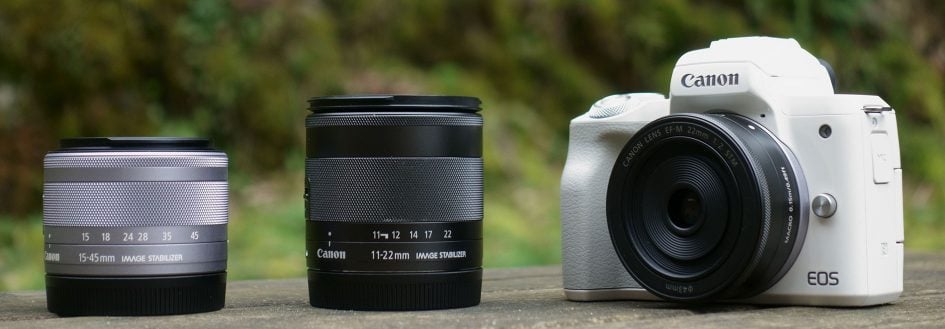
I’ll start with a general-purpose zoom. Canon offers two models: the original EF-M 18-55mm f3.5-5.6 IS STM which is rarely on sale anymore, and the more recent EF-M 15-45mm f3.5-6.3 IS STM. Both are budget models and you’ll almost certainly already have one if you bought an EOS M camera in a kit. If you’re buying a body alone, I’d go for the newer EF-M 15-45mm to go with it as it’s more compact and zooms comfortably wider, but if you fancy a longer range, the EF-M 18-150mm f3.5-6.3 IS STM will reach much further than either kit zoom.
While any of these three lenses will provide a good walkaround general-purpose option without breaking the bank, they are budget lenses, so won’t be making the most of your camera’s potential. For crisper photos and a greater opportunity for shallow depth-of-field or blurring effects, I’d recommend buying a fixed focal length or ‘prime’ lens. In Canon’s own range, the EF-M 22mm f2 STM delivers mild wide-angle coverage and a brighter aperture than the kit zooms, while also being the most compact lens in the catalogue; see my Canon EF-M 22mm f2 review so far.
If you prefer so-called ‘standard’ coverage equivalent to around 50mm, then you have two native choices: the Canon EF-M 32mm f1.4 STM is by far the best native lens Canon has made for EOS M bodies, delivering very crisp images and a bright aperture for attractive blurring effects; see my Canon EF-M 32mm f1.4 STM review for more details. It’s a great lens, but the Sigma 30mm f1.4 DC DN is now available in the native EF-M mount and delivers similar results at a comfortably lower price; in my tests the Canon 32mm is optically superior, but the Sigma still offers a comfortable step-up over the kit zooms at a more compelling price; see my Sigma EF-M lens review. Note that none of these three prime lenses has image stabilisation.
If you’re into wide angle photography or vlogging, there’s only one native zoom available: the Canon EF-M 11-22mm f4-5.6 IS STM. Fortunately it does the job, grabbing an enormous field of view from a compact barrel which also sports image stabilisation; see my Canon EF-M 11-22mm f4-5.6 IS STM review so far. If you own the EF adapter and don’t mind something larger though, you could save some money by going for the Canon EF-S 10-18mm f4.5-5.6 IS STM which may not reach as long, but zooms a tad wider while still offering image stabilisation – and it’s cheaper too. See my Canon EF-S 10-18mm f4.5-5.6 IS STM review so far.
If a 24mm equivalent field-of-view is wide enough and you value a brighter aperture for low light and shallow depth-of-field effects, then consider the Sigma 16mm f1.4 DC DN. It lacks the zoom and image stabilisation of the previous pair, and is larger too, but the higher quality and potential for blurring effects speak for themselves; see my Sigma EF-M lens review.
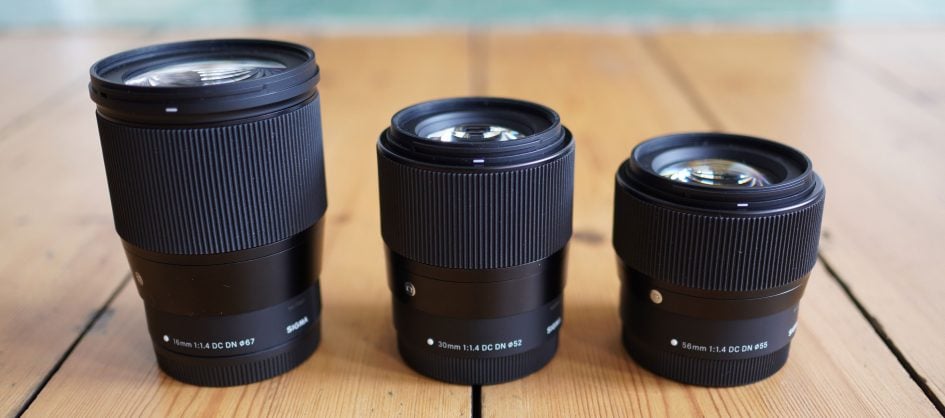
If you’re into portraits with shallow depth-of-field effects, or simply want to explore details and a greater opportunity for blurring than a kit zoom, then get yourself a 50mm prime lens. Mounted on an EOS M body with their cropped APSC sensors, these are transformed into 80mm equivalent lenses, delivering short telephoto coverage that’s perfect for people. If you want a native EF-M option, you’ll need to go for the Sigma 56mm f1.4 DC DN, a fantastic quality lens with a very bright aperture in a surprisingly compact barrel; see my Sigma EF-M lens review. But the Sigma 56mm is not exactly a cheap lens, so for a more affordable option, consider adapting the Canon EF 50mm f1.8 STM for roughly one quarter of the price. Sure the quality isn’t as good, nor the aperture quite as bright, but you’ll still enjoy way shallower depth-of-field effects than a kit zoom and it’s a perfect second lens for EOS M owners wanting to explore this creative side of photography without breaking the bank; see my Canon EF 50mm f1.8 STM review for more details.
If you want to reach more distant subjects, then you’ll be looking at a telephoto zoom, and the only native option is the Canon EF-M 55-200mm f4.5-6.3 IS STM. It’s a fairly compact and affordable lens, although as such it’s neither the brightest nor the best quality, and you may find 200mm isn’t long enough. So if you desire to get closer still for wildlife or sports and don’t mind carrying something larger, then adapt one of the many EF telephoto zooms available. At the affordable end, consider the Canon EF-S 55-250mm f4-5.6 IS STM which costs roughly the same as the EF-M option, while zooming a bit longer and sporting a brighter aperture without making the barrel too large. Alternatively I’d recommend the Canon EF 70-300mm f4-5.6 IS II USM which only costs about 50% more, but zooms 50% longer and sports a brighter aperture not to mention better quality overall – a great choice, although the barrel is now becoming large for an EOS M body.
Finally there’s a different kind of close photography and that’s macro. There’s one native option available with the Canon EF-M 28mm f3.5 Macro IS STM, which includes image stabilisation and built-in LED lighting. Alternatively consider adapting the Canon EF-S 35mm f2.8 Macro IS STM, again with image stabilisation a built-in light for a similar price. Both of these lenses can also double-up for general-purpose use with roughly standard coverage, albeit not with the bright apertures of the earlier suggestions.
Remember it’s also possible to adapt any EF or EF-S lens for use on an EOS M body, so for more suggestions, check out my Best EF lenses for Canon DSLRs guide. Or keep scrolling to find out about Canon’s full-frame EOS R system!
Best RF lenses for Canon EOS R cameras
Canon launched its full-frame mirrorless EOS R system in September 2018 sporting a new RF mount for native lenses. But while it’s one of the youngest lens mounts, Canon has been investing heavily to quickly grow the number of native lenses and already has not just the basics covered but also a number of exotic options. Most of the RF lenses to date also represent an upgrade in quality over existing or similar EF versions, albeit often with larger barrels and higher price-tags to match.
The EOS R system is also compatible with existing EF lenses using an optional adapter, providing an upgrade path for EOS DSLR owners and access to an enormous catalogue of lenses including many third party, not to mention second hand options. With native RF lenses covering the aspirational-end and adapted EF lenses providing an affordable alternative, EOS R is looking stronger and more flexible every day; it’s also revealing that Canon seems almost entirely focused on the RF mount for new lenses, indicating where the company believes the market is heading.
Starting with general-purpose zooms, there are already five native models available, consisting of three covering standard ranges, one offering a broader super-zoom range, plus a fifth more exotic option for those who desire the maximum aperture.
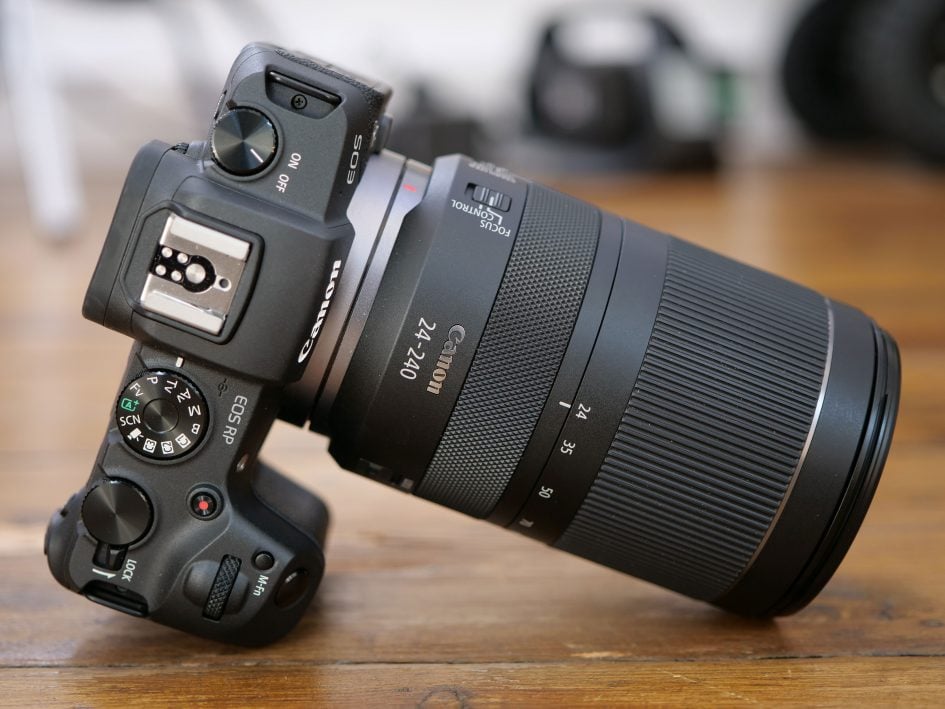
If you’re after the most affordable native zoom, perhaps to pair with one of the cheaper EOS M bodies, the Canon RF 24-105mm f4-7.1 IS STM trades a dimmer aperture at the long-end for a low price tag, roughly one third of the RF 24-105mm f4L IS USM. If you prefer a longer super-zoom range, there’s also the Canon RF 24-240mm f4-6.3 IS USM which manages to sell under four figures while sporting a 10x range’ see my Canon RF 24-240mm review-so-far.
The two best sellers in the native catalogue are the Canon RF 24-105mm f4L IS USM and Canon RF 24-70mm f2.8L IS USM, both of which feature optical stabilisation. The former strikes a good balance between price and performance and costs roughly the same as the earlier EF version; see my Canon RF 24-105mm f4L IS USM review so far.
In contrast, the RF 24-70mm f2.8 costs more than double the RF 24-105mm, so you really have to want that f2.8 focal ratio with optical stabilisation; in comparison, the older Canon EF 24-70mm f2.8L USM may miss out on IS, but costs two thirds the price and can be adapted easily. If you’re after a more affordable 24-70mm f2.8 with stabilisation, also consider adapting the Sigma 24-70mm f2.8 DG OS HSM Art or Tamron SP 24-70mm f2.8 Di VC USD, both of which are less than half the price of the RF 24-70mm f2.8, or roughly similar to the RF 24-105mm f4.
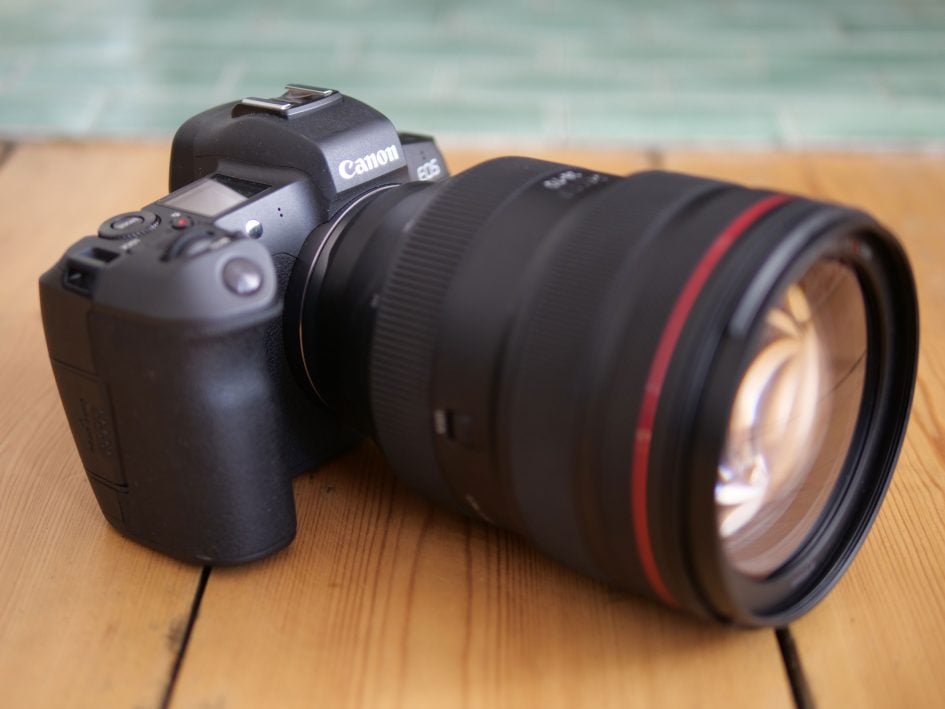
Finally there’s that fifth exotic lens I mentioned earlier: the Canon RF 28-70mm f2L USM, one of the most expensive lenses in the native RF catalogue, not to mention heavy and lacking stabilisation, but one with no rivals. It may give you a fairly standard range, but coupled with an unusually large f2 aperture, making it the ultimate event lens for those who demand the brightness of primes with the flexibility of a zoom; see my Canon RF 28-70mm f2L USM review so far.
If you prefer using a mild wide-angle prime lens for general-purpose use, one of the most compelling native options is also one of the most affordable: the Canon RF 35mm f1.8 IS Macro STM is, for me, the first no-brainer in the RF catalogue, being compact and lightweight, delivering decent optical quality, the chance for shallow depth-of-field effects, with optical stabilisation and even reasonable close-up capabilities. Every EOS R owner should have one; see my Canon RF 35mm f1.8 IS Macro STM review for details. If you’re happy to adapt, there’s a wealth of 35mm lenses in the EF mount, and while few are as affordable, it can be worth keeping an eye open, especially if you don’t mind paying more for a brighter lens.
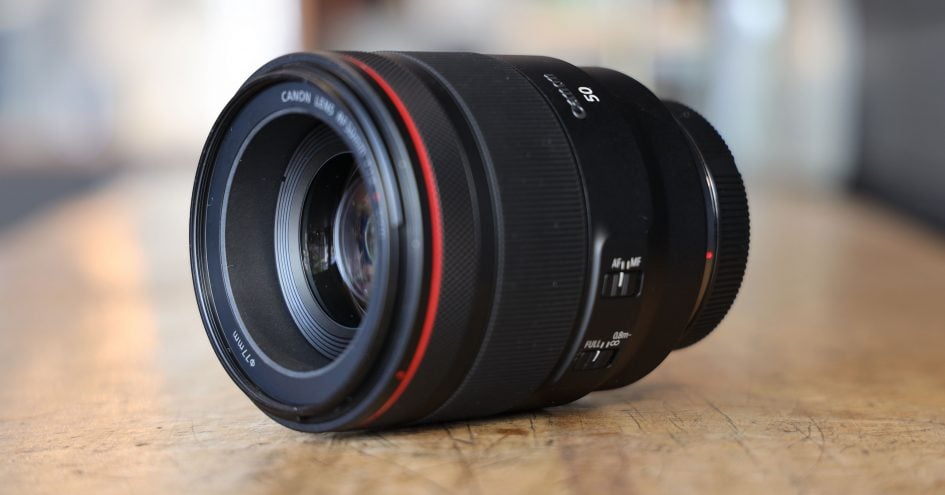
If you prefer so-called ‘standard’ coverage at 50mm, there’s two native options at polar opposites of the price-scale: at one-end is the low-cost Canon RF 50mm f1.8 STM, already the cheapest lens in the system, while at the other is the Canon RF 50mm f1.2L USM, the successor to the EF 50mm f1.2L USM in name and mount only, as it’s optically and physically a much different beast. At roughly twice the size and price of the EF 50mm f1.2L USM, it’s one of the most expensive 50mm lenses to date, but this is reflected in its performance which is superb even wide-open; see my Canon RF 50mm f1.2L USM review for more details. But if it’s too pricey, there are countless EF alternatives you can adapt, from the Canon EF 50mm f1.2L USM at half the price, even down to the Canon EF 50mm f1.8 STM which may be a budget model, but costs almost 20 times less. My choice though would be adapting the EF version of the Sigma 50mm f1.4 DG HSM Art, arguably one of the best standard lenses around and comfortably cheaper than the RF 50mm, squeezing just below four figures; see my Sigma 50mm f1.4 Art review for more details.
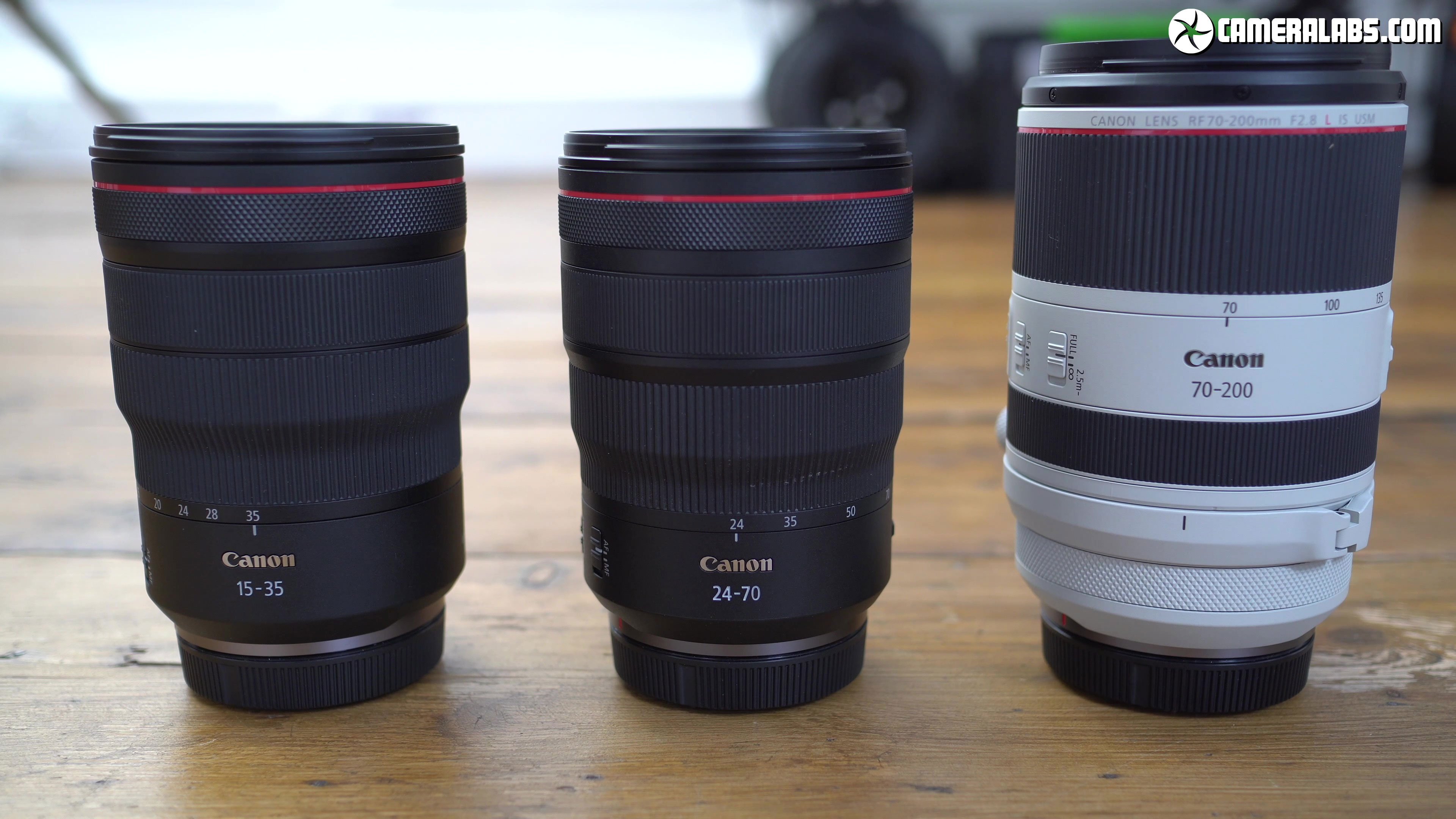
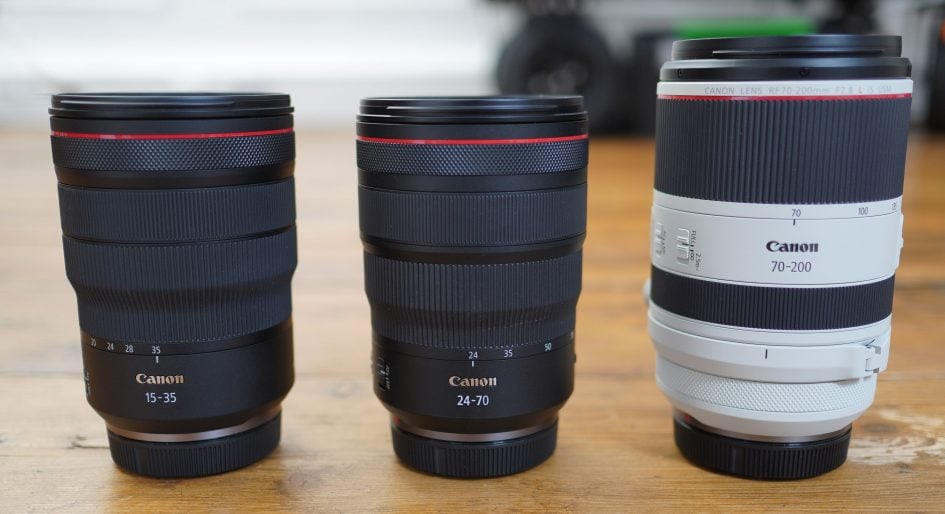
If you’re into wide-angle photography, there’s currently only one native zoom available: the Canon RF 15-35mm f2.8L IS USM, which offers a compelling alternative to the earlier EF 16-35mm f2.8L USM with fractionally wider coverage and optical stabilisation at a price of only about 15% more. You could of course adapt the EF lens and save some money, but I’d say it’s worth spending the extra on the RF version if you own neither model. Alternatively I’d suggest adapting the EF versions of either the Sigma 14-24mm f2.8 Art or Tamron SP 15-30mm f2.8 G2, both of which cost roughly half the price of the Canon RF 15-35mm f2.8, and the Tamron even includes optical stabilisation. See my Sigma 14-24mm f2.8 Art review and Tamron SP 15-30mm f2.8 review for more details.
If you’re into portraits, you’ll be looking for a short telephoto lens in the 85 to 135mm range, and there’s several options in the native RF mount as well as a wealth of adapted models. Starting with native, Canon already offers three short telephotos: the Canon RF 85mm f2 Macro IS STM is one of the more affordable models in the catalogue and delivers excellent results for the money including useful 1:2 close-up capabilities; see my Canon RF 85mm f2 Macro review for more details. If you’re after something brighter and more exotic, Canon offers two versions of its 85mm f1.2 in the native mount: the Canon RF 85mm f1.2L USM and Canon RF 85mm f1.2L USM DS. Both are on the reassuringly expensive side, costing more than their EF counterparts, but delivering excellent performance even wide-open. The difference between them is the DS version includes defocusing elements which deliver a different style of background bokeh, and add around 10% to the price. If you’re happy to adapt, the older EF 85mm f1.2L II USM comes in at around three quarters of the price of the standard RF model, although for my money I’d sacrifice the f1.2 aperture and go for the Canon EF 85mm f1.4L IS USM which is more affordable still and includes optical stabilisation. There’s also the Sigma 85mm f1.4 Art which is cheaper still, albeit lacking stabilisation; see my Sigma 85mm f1.4 Art review. If you’re happy with an f1.8 aperture, a wealth of other options becomes available including the Tamron SP 85mm f1.8 VC with stabilisation, or the old Canon EF 85mm f1.8 USM; see my Tamron SP 85mm f1.8 review. At the budget end though, Canon’s own RF 85mm f2 Macro is the new leader.
If 85mm is a little short, how about adapting the Sigma 105mm f1.4 Art, a stunning lens that’s still around two thirds the price of the Canon RF 85mm f1.2; check out my Sigma 105mm f1.4 Art review for more details. Alternatively at a slightly lower price there’s the Sigma 135mm f1.8 Art, perfect for more distant portrait work and one of the best lenses we’ve tested; see my Sigma 135mm f1.8 Art review for more details, and also see my Best Canon EF lens guide for more adapted ideas.
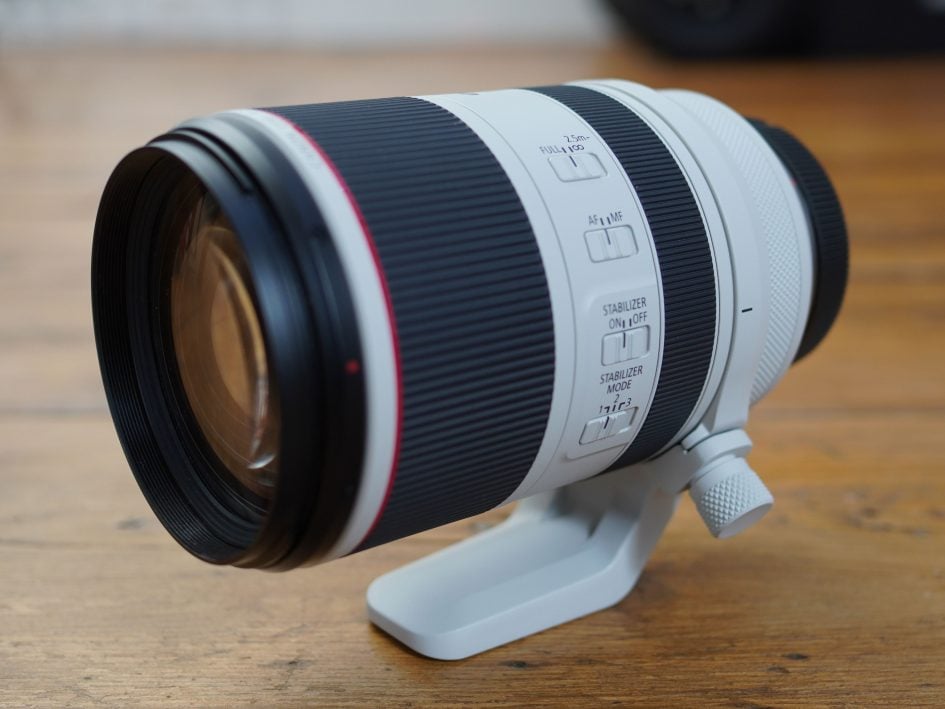
If you want something longer, or prefer to trade the brightest apertures for the flexibility of a zoom, then consider a telephoto zoom lens. In the native mount, there’s the Canon RF 70-200mm f4L IS USM and Canon RF 70-200mm f2.8L IS USM which may again be at the pricier end of the scale, but exploit extending barrel sto minimise the transportation size, while also delivering the quality we’ve already come to expect from the native RF lenses; see my Canon RF 70-200mm f2.8L review. That said, unless you desire the shorter barrel, it’s hard to ignore adapting the older Canon EF 70-200mm f2.8L IS USM that’s only two thirds the price of the RF version and has a non-extending barrel that’s arguably more resistant to dust and moisture as a result, or indeed the Canon EF 70-200mm f4L IS USM which sacrifices a stop of aperture to be even more affordable and lighter too. If you fancy something longer, there’s the Canon RF 100-500mm f4.5-7.1L IS USM, the successor to the EF 100-400 models, providing extra reach without a larger or heavier barrel; I really enjoyed using this lens and you can find out more in my Canon RF 100-500mm f4.5-7.1L IS USM review. Beyond 500mm, Canon now offers two super-telephoto prime lenses in the native RF mount, but interestingly in affordable versions that exploit the AF capabilities of mirrorless cameras to get away with surprisingly dim apertures in traditional terms. The Canon RF 600mm f11 IS STM and Canon RF 800mm f11 IS STM may be much dimmer than traditional super-telephoto primes but are smaller, lighter and considerably cheaper, getting them into the hands of a much broader range of photographers. Great for airshows, lunar and solar photography, or sports and wildlife in daylight conditions – see my Canon RF 600mm f11 and RF 800mm f11 review for more details.
Beyond these, there’s an enormous range of alternative telephoto zooms and primes available from Canon and third parties if you’re happy to adapt, and I’ll again refer you to my EF lens guide for more recommendations.
Finally for this EOS R lens guide are macro lenses, and so far there’s two models in the native mount with Macro in the title: the Canon RF 35mm f1.8 IS Macro STM and Canon RF 85mm f2 IS Macro STM. Both share the same 1:2 reproduction capabilities, just from different distances, so lack the 1:1 reproduction that’s generally regarded as being true macro. But 1:2 will still satisfy many photographers and both lenses are excellent choices at the affordable-end of the RF catalogue. If you need 1:1 magnification though, you’ll be adapting an EF lens, such as the Canon EF 100mm f2.8L IS USM or Tamron 90mm f2.8 VC II, both of which deliver excellent results, include optical stabilisation and double-up as decent portrait lenses; see my Tamron 90mm f2.8 review.
That’s it for my EOS R lens guide, but I’ll be updating it with new lenses and options as they become available. Also check out my EF lens guide below for more options.
Best EF lenses for Canon DSLRs
Welcome to my guide to choosing the best Canon EF lenses. I’ll help you navigate through one of the largest catalogues of lenses from both Canon and third parties to find the right models for you. While EF lenses are primarily designed for Canon DSLRs, they can also be successfully adapted to many other systems including Canon’s EOS M and EOS R mirrorless cameras, Sony’s Alpha mirrorless system, and a wealth of cinema cameras. There’s so many choices I’ve divided my guide into five sections depending on what you want to photograph, so scroll down and start short-listing your perfect lenses!

Best Canon General Purpose Lenses
General-purpose zooms handle most day-to-day shots, offering wide-angle to telephoto coverage. Unless you’re a specialist, you’ll probably keep a general-purpose zoom fitted to your DSLR more than any other lens so it makes sense to have a good one.
Most DSLRs are sold with a standard lens, but upgrading to a better model can give you superior image quality, a broader range, quicker focusing or brighter apertures for low-light work and blurred backgrounds. See my Best Canon General Purpose Lens Guide for the best models.

Best Canon Macro Lenses
If you’re into taking close-ups of flowers, insects or other tiny subjects, you’ll quickly become frustrated with the capabilities of a standard kit lens – they just can’t focus close enough to deliver a decent-sized image.
The answer is a Macro lens, which is designed specifically for high quality close-up photography. Many also double-up as respectable portrait lenses. So if you want big photos of small subjects, check out my Best Canon Macro Lens guide for the best models.

Best Canon Portrait Lenses
For many people, a good-looking portrait shot combines a flattering view of the subject against a blurred background. This is very easy to achieve with the right lens. The key behind a blurred background is having a lens with a small f-number, and the flattering perspective is down to a slightly magnified view. Lenses with small f-numbers also capture more light, which makes them ideal for shooting in low-light without a flash.
In my Best Canon Portrait Lens guide I’ll show you which models are best for the job.

Best Canon Telephoto Lenses
If you want to get close to a distant subject, you need a telephoto lens. These are ideal for sports and wildlife photography, along with capturing candid shots of people at a distance. They’re also great for getting closer to details in both natural and urban environments which are lost in a larger view.
Their broad flexibility coupled with a desire to zoom-closer than a standard kit lens makes a telephoto model the natural choice when most people start shopping for a second lens. See my Best Canon Telephoto Lens guide for recommended models.

Best Canon wide-angle Lenses
Wide-angle lenses capture bigger views than normal, allowing you to squeeze very large subjects into the frame. They can prove invaluable whether you’re trying to photograph a large building, cramped interior, sweeping landscape view, or even just a big group shot. They’re also ideal when you literally can’t step back any further.
So if you’re into landscape or architectural photography, or often find yourself stepping-back to squeeze-in the desired shot, then check out my Best Canon wide-angle Lens guide for the best models.