Best mirrorless camera 2023
If you’re shopping for a mirrorless camera, you’ve come to the right place! Mirrorless cameras pack the quality, control and flexibility of a DSLR with their large sensors, exposure adjustment and interchangeable lenses, but by dispensing with the mirror, have the potential to be smaller, lighter, quieter and faster. Since they use their main imaging sensor for focusing, metering and white balance, they also have the potential to track, focus and evaluate subjects right into the corners while also exploiting face and eye-detection, sometimes even for animal subjects. With 100% electronic composition, you’ll also be able to use a viewfinder for everything you’d see on the screen, including playing images, assisting focus, previewing effects, white balance and colour adjustments, as well as filming and playing movies, and even navigating menus – all much easier in bright conditions than using the screen, not to mention more comfortable for those who are longer-sighted.
The best mirrorless cameras have also banished performance issues of early models and now boast viewfinders with large, detailed images, not to mention focusing and burst shooting capabilities that most DSLRs can only dream of. Compared to a DSLR there’s inevitably greater power consumption, so batteries won’t last as long, but the latest models are certainly catching-up. For me, mirrorless cameras are more compelling than DSLRs in almost every category and price-point, and I personally made the switch ten years ago when Panasonic and Olympus launched Micro Four Thirds, later supplementing my collection with Fujifilm, Canon and Sony gear. Here are my recommendations!
Mirrorless systems
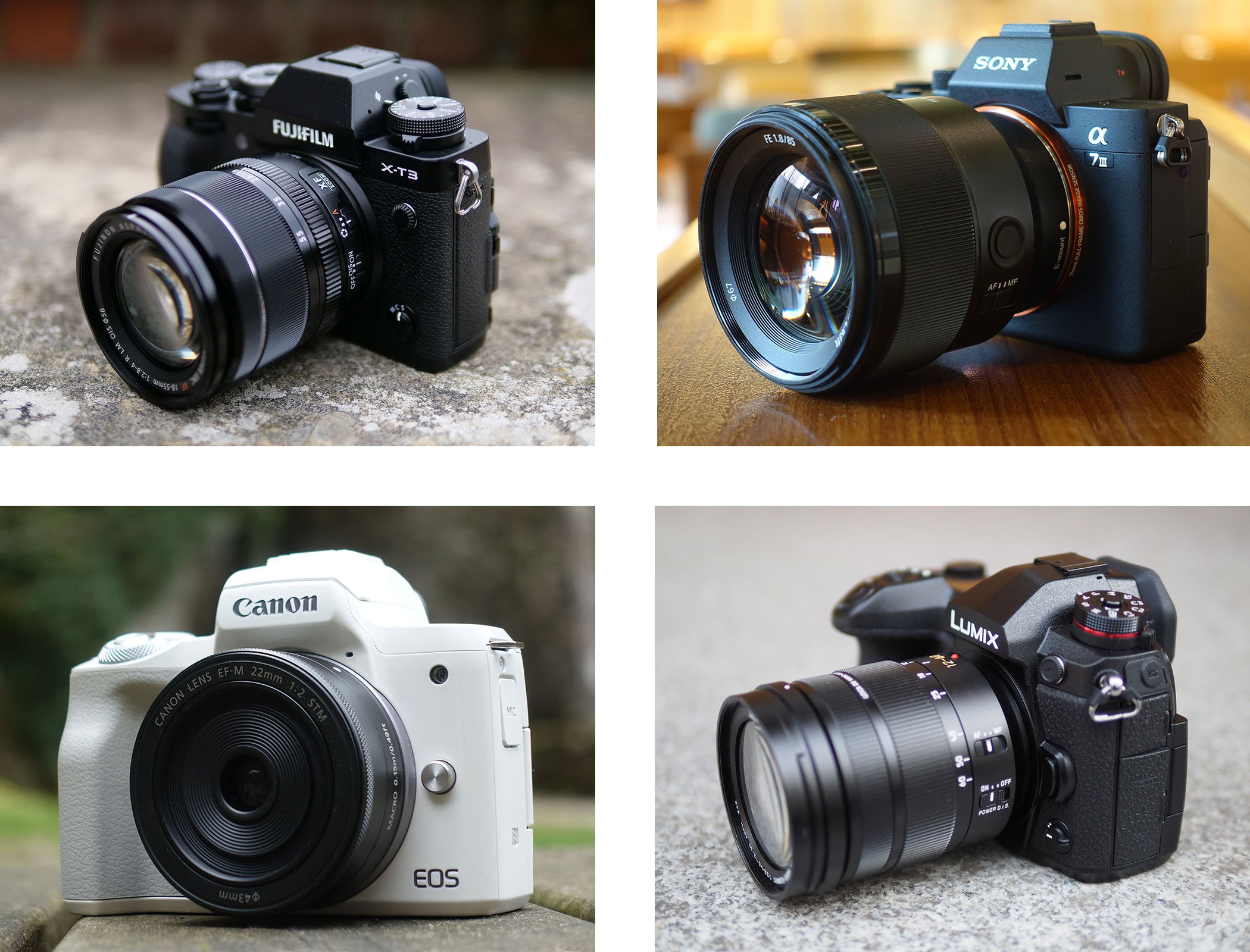
Like DSLRs, most manufacturers have developed their own mirrorless system with a lens mount that’s not compatible with rival systems. There’s Sony’s e-mount which is designed for APS-C or full-frame bodies. There’s Fujifilm’s X-mount, designed for APS-C bodies only. Canon has RF for APS-C or full-frame, as well as the older and now discontinued EF-M mount for APS-C. Nikon has the Z-mount for APS-C or full-frame bodies.
The exceptions are two alliances: Micro Four Thirds and L-mount. The former employs a Four thirds sensor that’s a little smaller than APS-C and was co-developed by Panasonic and Olympus who share the same mount, allowing them to use each other’s lenses, as well as third party models designed for the system. The second alliance is L-mount, based on Leica’s full-frame system, but now partnered with Panasonic and Sigma who have both released full-frame bodies and lenses, all of which are compatible with each other. I’ll be recommending a mix of all formats in each category.
Check prices at Amazon, B&H, Adorama, eBay or Wex. Alternatively get yourself a copy of my In Camera book, an official Cameralabs T-shirt or mug, or treat me to a coffee! Thanks!Best budget mirrorless cameras
New mirrorless cameras start around the $500 price, for which you’ll get a camera with an APS-C or Four Thirds sensor, a basic kit zoom lens and manual control; most will also have wifi to connect to your phone, but at this price you won’t generally get a viewfinder, so you’ll be composing with your screen only. If your budget is lower than $500, look for a second hand model or an entry-level DSLR instead.
Some of the best deals are on Canon’s older EOS-M system which may now be discontinued, but still represents a compelling option if you know what you’re getting into. There’s unlikely to be any new bodies or lenses produced for the system, but existing models may be good enough, and remember Sigma not only made a handful of prime lenses in the EF-M mount, but you can also adapt any old Canon EF DSLR lens.
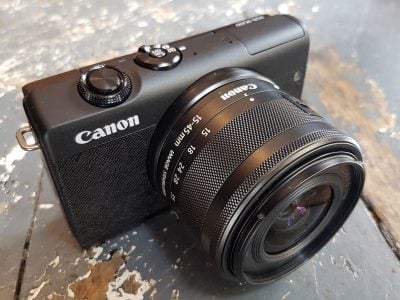
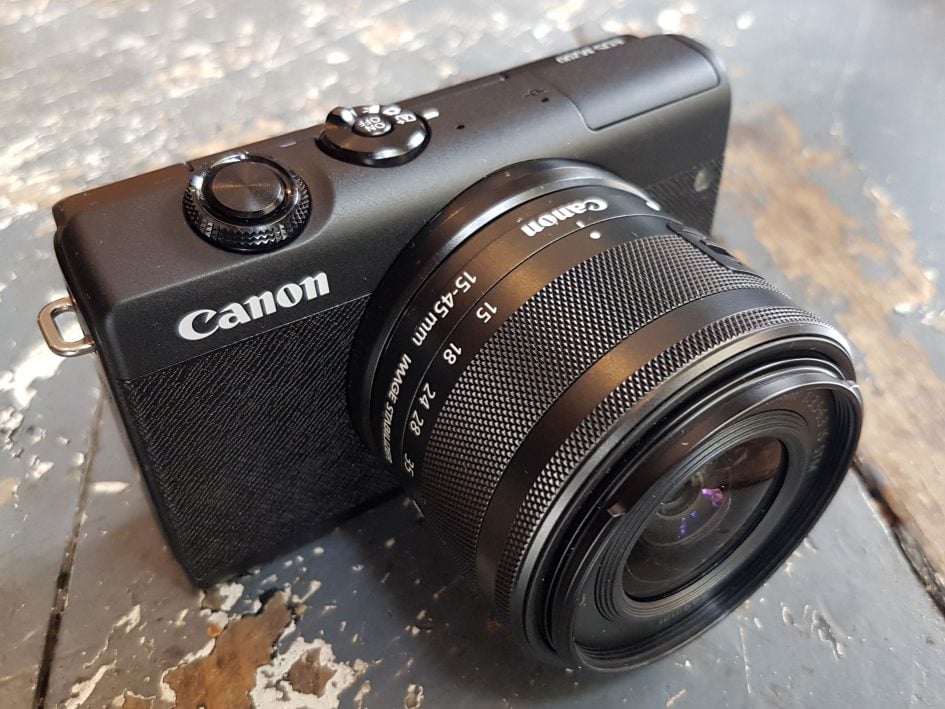
With those caveats in place, consider the entry-level Canon EOS M200 which sports a 24 Megapixel APS-C sensor, confident focusing, Wifi and a tilting touchscreen which can tilt-up to face you – not only is it a solid all-rounder, but it’s also an ideal entry-point for vlogging; see my Canon EOS M200 review for more details.
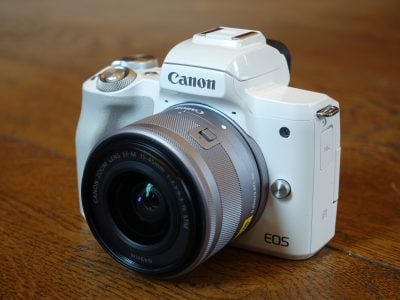
If your budget can stretch a little higher, it’s well worth considering the Canon EOS M50 which packs a 24 Megapixel APS-C sensor with great autofocus, a fully-articulated touchscreen, built-in viewfinder, Wifi and microphone input into a very compact body – a great all-rounder that’s ideal for vlogging and YouTube videos, although think of its video quality as being 1080 only as its 4k mode is too cropped to be useful; see my Canon EOS M50 review for more details. Note the more recent Mark II version is a very mild update, so go for whichever is cheapest.
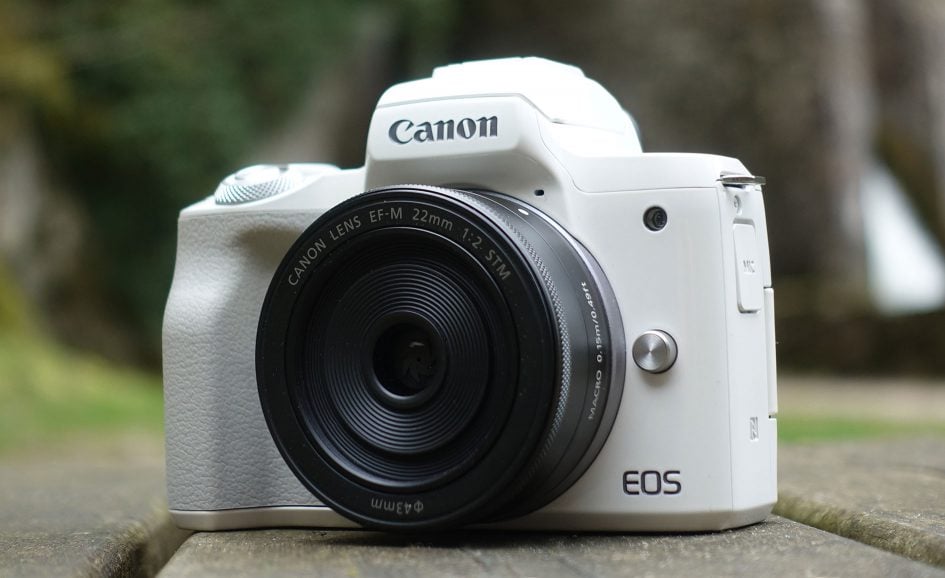
Above: Look for discounts on Canon’s EOS M50 or the later Mark II version, but compare closely with the newer R100 and R50.
Also keep an eye on the Panasonic Lumix G100, an older model that’s enjoying substantial discounting, and which gives you access to the wide selection of Micro Four Thirds lenses available. See my Panasonic Lumix G100 review for more details.
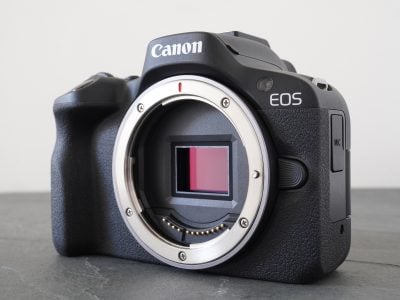
In terms of newer models, Canon’s entry-level model in their EOS R system is the R100. It may have a fixed screen and the video is best thought of as 1080 only, but it does have a viewfinder, takes 24 Megapixel photos with decent autofocus and has access to Canon’s latest RF lens system. It’s basic, but if you can’t stretch to the R50, it remains a good budget option. See my Canon EOS R100 review for more details.
Best Mid-range mirrorless cameras
The mid-range category, starting at around $700 for a body without a lens, is where things start to get more interesting as they normally include tougher bodies with a larger and more detailed viewfinder, faster shooting, better quality movies, more controls and improved connectivity including microphone inputs and sometimes headphone outputs which can greatly improve your audio quality for movies. Interestingly, the actual still photo quality may not be significantly improved over budget models though.
The first model to mention is the Sony A6100, sporting a 24 Megapixel APSC sensor, 4k video, 11fps shooting, viewfinder and tilting touchscreen. If you like Sony but your focus is on vlogging, consider the ZV-E10 instead.
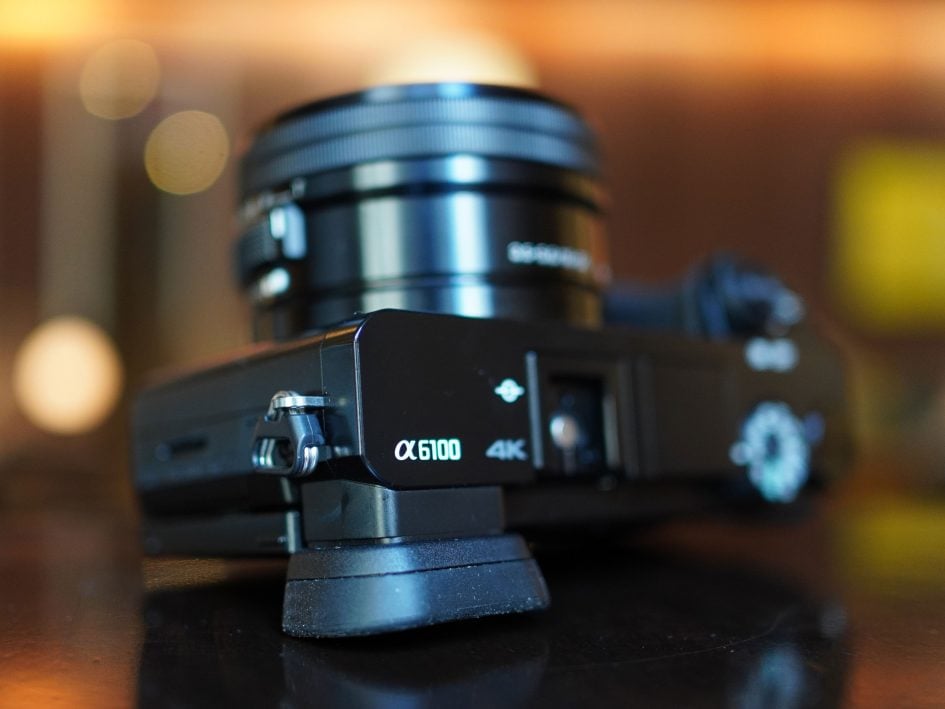
For around the same price as the Sony A6100, you could alternatively get the Canon EOS R50, which for me is the best of Canon’s budget cameras and a worthwhile step-up over the R100. The R50 gives you 24 Megapixel photos with good autofocus, a built-in viewfinder, fully-articulated touchscreen, microphone input and more. See my Canon EOS R50 review for more details.
Also keep an eye open for deals on the discontinued Canon EOS M6 II which offers uncropped 4k video with decent autofocus, albeit with an optional removable viewfinder and a screen that only tilts vertically. See my Canon EOS M6 II review for more details.
Spend a little more and you could get the Nikon Z50, with 21 Megapixel photos, built-in viewfinder, tilting screen, decent autofocus and access to Nikon’s Z lenses. With a budget still in three figures, you could alternatively get the Fujifilm X-T30 II or Fujifilm X-S10, which may be older models, but still deliver great-looking photos and respectable video, along with having access to an excellent selection of lenses. The X-T30 gives you their classic vintage styling, while the X-S10 goes for a more modern approach with the benefit of built-in stabilisation.
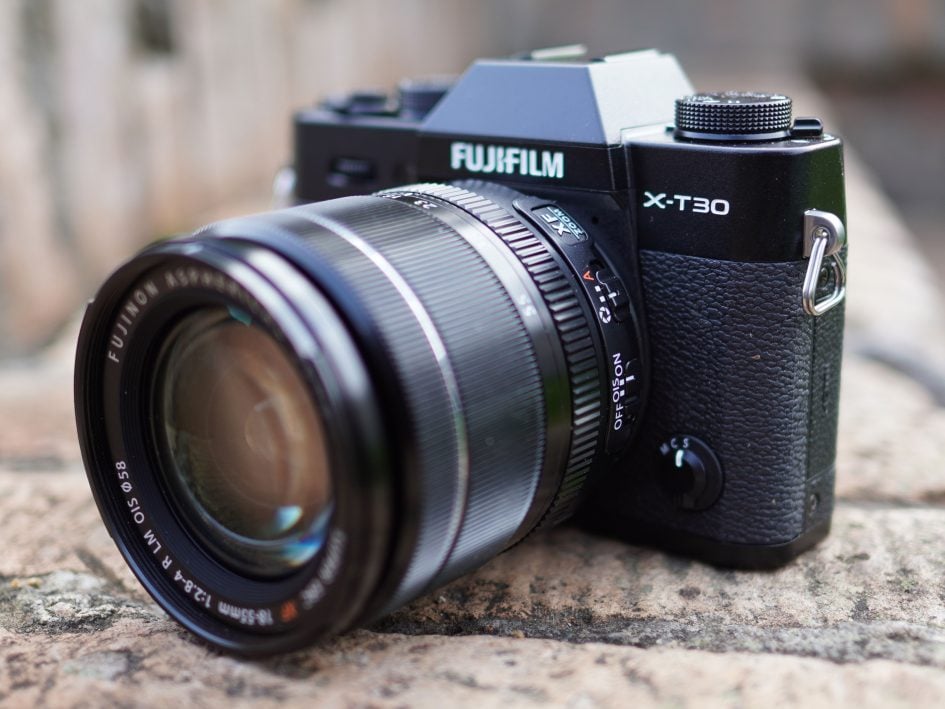
Above: Fujifilm’s X-T30 II is a compact but powerful camera that’s ideal to start building a system. Also consider the X-S10 which trades the retro styling and slimmest body for built-in stabilisation and a flip screen.
Canon’s EOS R10 is another good option around this price point, with a 24 Megapixel APS-C sensor, great autofocus, side-hinged flip-screen, mic input and built-in stabilisation, but compare closely with the EOS R50 which for me is the sweetspot in Canon’s budget line-up.
Also look out for bargain deals on the Panasonic Lumix G9, an older camera which may have a much smaller 20 Megapixel Four Thirds sensor, but still manages to deliver decent quality at all but the highest sensitivities. The continuous focusing isn’t quite as confident as its rivals, but it sports a bunch of modes which can capture action before you fully depress the shutter, not to mention a fully-articulated screen, built-in stabilisation, twin card slots, an enormous viewfinder image and 4k up to 60p, now in 10-bit internal thanks to a firmware update – indeed it’s one of the cheapest cameras to offer 4k 60p, making it a tempting choice for film-makers who can’t stretch to the GH series, or who like having the greater photo capabilities. See my Lumix G9 review for more details.
Just about squeezing into three figures is the OM System OM-5, an updated version of the classic Olympus OMD-EM5 III which was one of my favourite cameras to use. It looks great, is feature-packed, and has access to the huge selection of Micro Four Thirds lenses. If you’re happy with this format, it’s well worth a look.
Best high-end mirrorless cameras
Spend over $1000 on a body and you’ve entered the high-end category where cameras with Four Thirds or APS-C sensors become tougher and faster, targeting sports and action, or at least very active kids and pets. Built-in stabilisation becomes more common, video features become better too with less cropped footage and higher frame rates. You can also expect more detailed viewfinders and twin card slots on many models, and also begin to see older models with larger full-frame sensors, discounted to clear stocks.
Speaking of which, the two most affordable full-frame bodies kicking-off this category are the Sony A7 II and Panasonic Lumix S5, both older models but with great quality photos and video coupled with built-in stabilisation, making them good enough for many of us and of course providing access to full-frame lens systems.
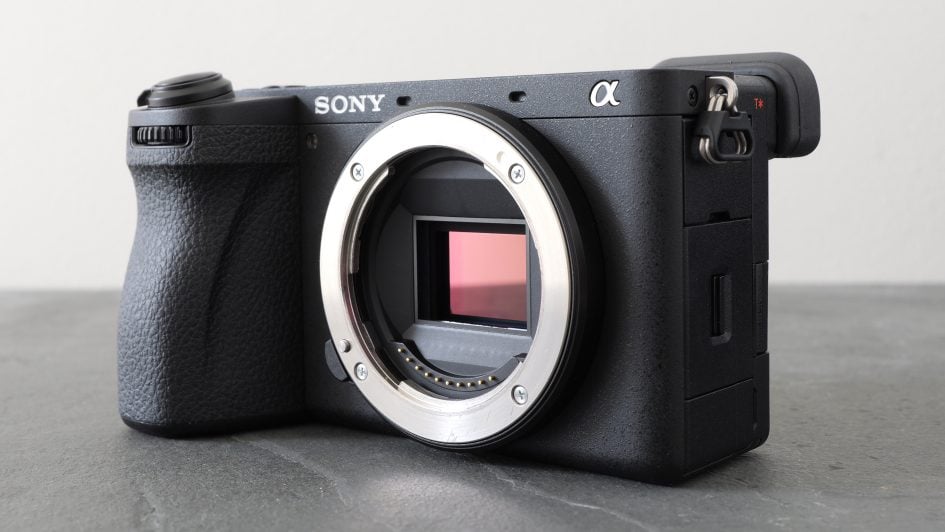
At the upper-end of the cropped APS-C market you’ll find options from Sony, Canon and of course Fujifilm. The Sony A6700 is their flagship APSC model, sporting 26 Megapixel photos, 4k 120 video, built-in stabilisation and fantastic autofocus which all make it an action and wildlife dream, whether you’re shooting photo or video. See my Sony A6700 review for more details.
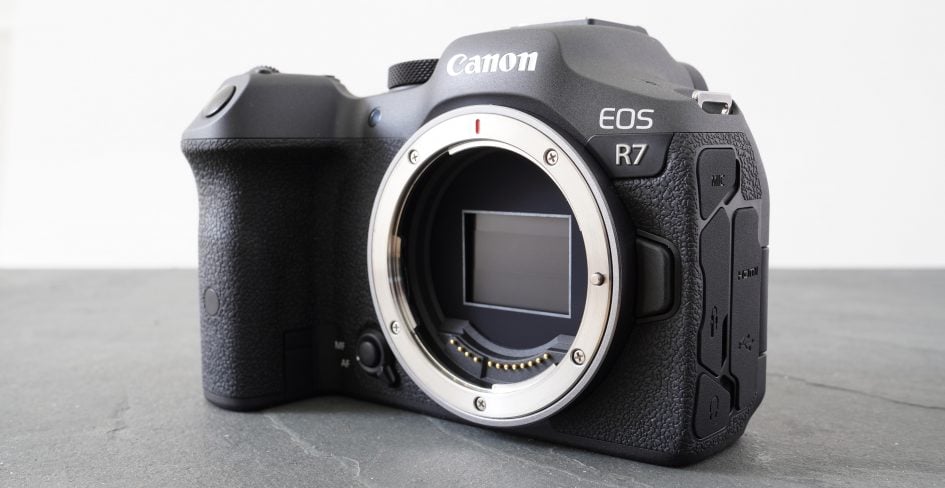
For around the same price as the A6700, consider the Canon EOS R7, again their flagship camera with an APSC sensor. The R7 is aimed at sports and wildlife with 32 Megapixel photos, dual slots, fast bursts, built-in stabilisation, great autofocus and video. It’s a solid contender if you desire a high-end experience but don’t want or need full-frame; indeed the crop imposed by APSC often makes it preferable for distant sports and wildlife. See my Canon EOS R7 review for more details.
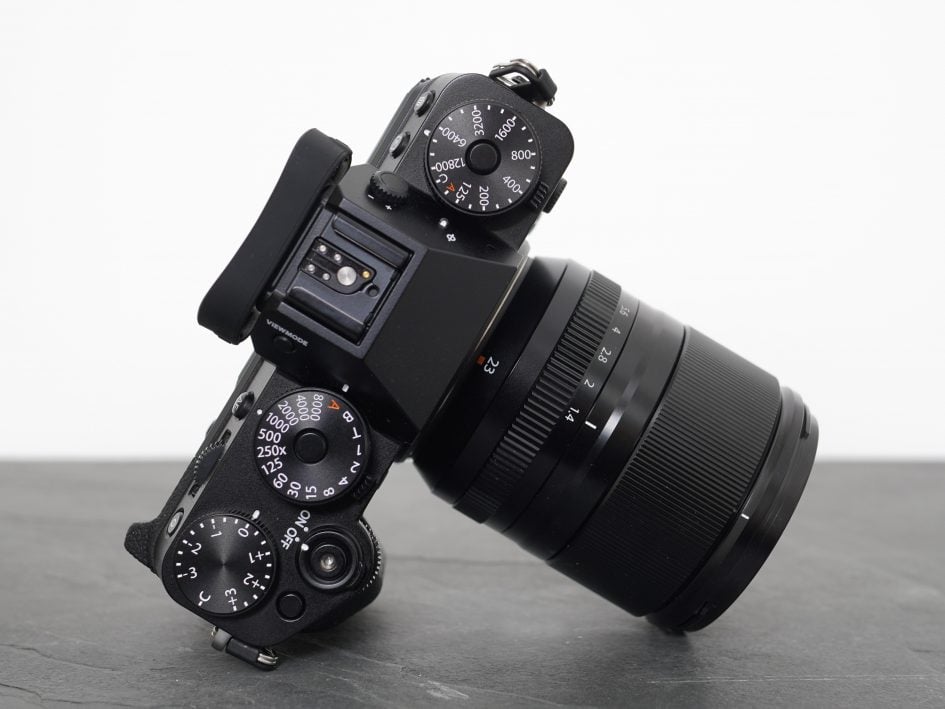
Above: Fujifilm’s X-T5 combines retro aesthetic with cutting-edge technology.
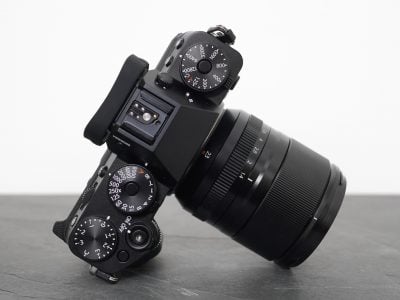
Arguably the best-featured camera with an APS-C sensor is the Fujifilm X-T5, which takes the already desirable X-T3 but adds the 40 Megapixel sensor with built-in stabilisation and larger battery from the X-H2, but packs it into the vintage-styled body many Fujifilm owners love. It may be priced uncomfortably close to the cheaper full-framers out there, but provides a higher-end feature-set that would cost considerably more on bodies with bigger sensors, coupled with a design aesthetic that will win many over. See my Fujifilm X-T5 review for more details. If you want all the bells and whistles from Fujifilm, consider the flagship X-H2 or X-H2S.
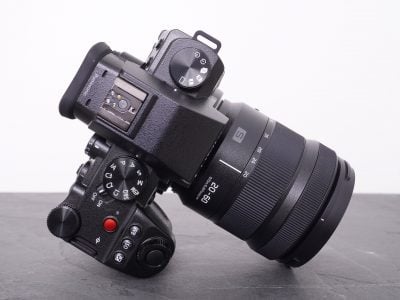
As you approach a body price of $2000, the full-frame market really opens-up. Arguably the most capable full-framer without breaking the bank is the Panasonic Lumix S5 II which packs 24 Megapixel photos, 6k open gate video, great autofocus, built-in stabilisation, and also has arguably the best ‘affordable’ kit zoom of any in this category with the 20-60mm. In fact the L-mount is a major selling point of the Lumix S bodies, giving them access not just to Panasonic’s own lenses, but Sigma’s growing range of excellent mirrorless lenses at decent prices. See my Lumix S5 II review for more details.
Also look out for deals on the now-replaced Sony A7 III, the previous winner in this category, packing a 24 Megapixel full-frame sensor with excellent autofocus, built-in stabilisation, fast burst shooting, great quality 4k video, eye-detection, twin card slots, decent battery life and a tilting touchscreen. It’s no longer the newest model around which has resulted in discounts maintaining its desirability; see my Sony A7 III review for more details. Note if you have an existing collection of Nikon F-mount lenses though, you will prefer the Nikon Z6 II which, for roughly the same money, also has a 24 Megapixel full-frame sensor, decent 4k (now with support for 10-bit) and built-in stabilisation. Firmware updates from Nikon are steadily improving its Z-series to become a serious rival to Sony, and they’ll focus adapted Nikon DSLR lenses better too.
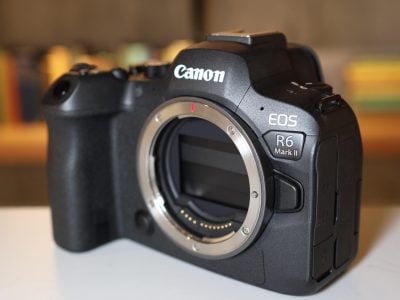
The two big players at around the $2000 to $2500 mark are the Canon EOS R6 II and Sony A7 IV, both offering pretty much everything anyone could ask for without becoming too specialist or pricey. The EOS R6 II delivers a lot of bang for the buck too, over-shadowed by the more expensive R5 but becoming one of the more compelling models in the series. The R6 II gives you built-in stabilisation, a flip screen, fast bursts, great autofocus, good controls, uncropped 4k video up to 60p and low noise images. See my Canon EOS R6 II review for more details.
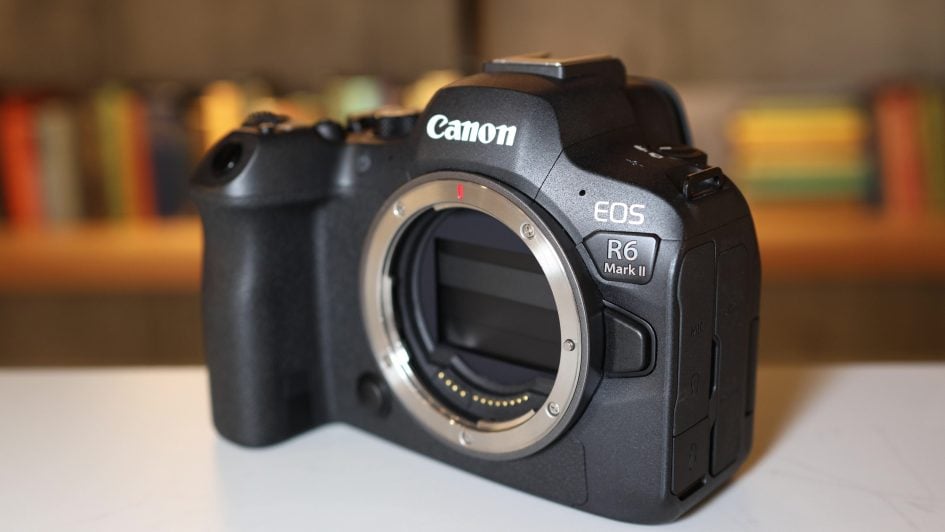
Above: Canon’s EOS R6 II offers a compelling combination of features.
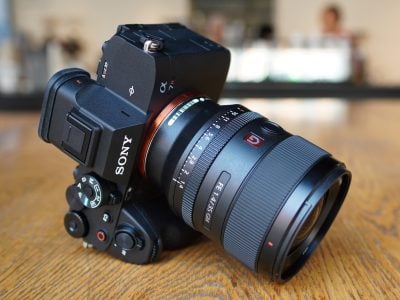
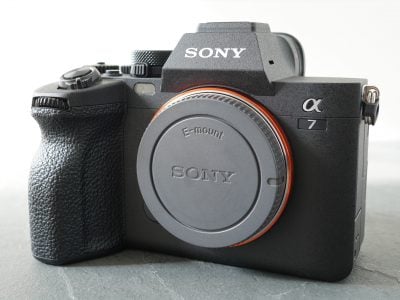
Meanwhile the Sony A7 IV may be classified as the entry-level model in Sony’s A7 lineup, but like its predecessors, will more than satisfy the majority of photographers, videographers and hybrid shooters. The Mark IV boosts the resolution to 33 Megapixels without compromising noise levels, enhances an already excellent autofocus system, sports 10 bit, 4k at 50 or 60p (albeit with a 1.5x crop), a flip screen, improved stabilisation and the ability to record clips longer than 30mins without overheating. It’ll even work as a standard USB webcam. The top burst speed of 10fps reduces to 8 when shooting RAW or even 6fps depending on compression and there’s still no focus bracketing or bulb timers, but it remains one of the most feature-packed and capable cameras at this price. See my Sony A7 IV review for more details.
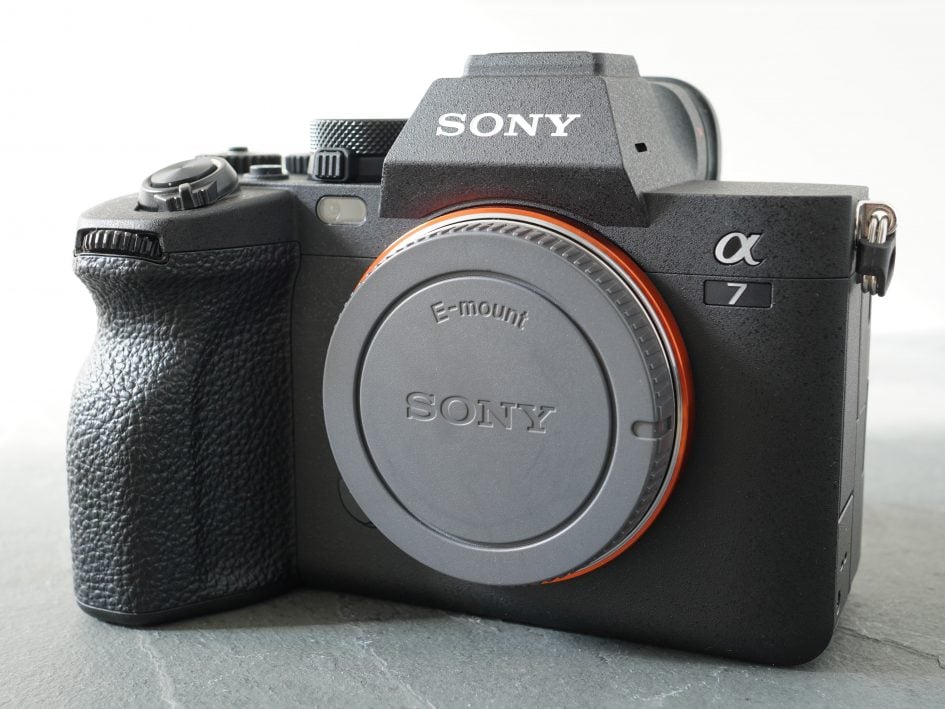
Above: Sony’s A7 IV is one of the most capable cameras at its price point, but compare with the Canon R6 II and watch for deals on the A7 III.
Beyond here we hit the $3000-plus mark with full-frame models like the Canon EOS R5, Sony A7r V and Nikon Z8 which all capture high resolution stills, fast bursts and great quality video, plus are packed with other features I’ve detailed in my reviews – see my Canon EOS R5 review and Sony A7r V review for more details. All are extremely powerful cameras.
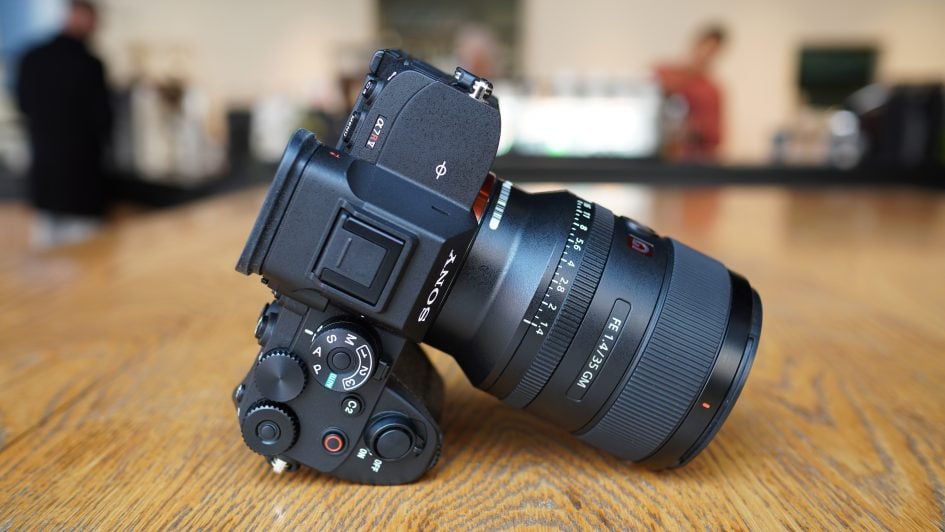
Above: Sony’s A7R V is one of the best high-end mirrorless cameras if you desire very high resolution photos.
Finally at the very top-end of the market are the Canon EOS R3 and Sony Alpha 1, the former aimed at pro sports and the latter aimed at pretty much anything you care to throw at it. They’re the most expensive full-frame mirrorless cameras to date, but extremely capable, especially the Alpha 1 which combines high res photo and video with pro-sports level burst speeds. See my Canon EOS R3 review and Sony Alpha 1 review for more details. PS – if you’re a sports or wildlife shooter who can’t stretch to either of these flagship models, consider the Sony A9 II or if you want the fastest speed of all, invest in the latest Sony A9 III.
Check prices at Amazon, B&H, Adorama, eBay or Wex. Alternatively get yourself a copy of my In Camera book, an official Cameralabs T-shirt or mug, or treat me to a coffee! Thanks!