Support me by shopping at Amazon!

Best mid range camera


If you're shopping for a mid-range DSLR or mirrorless Compact System Camera, you've come to the right place! At Camera Labs I write in-depth reviews of cameras but understand you're busy people who sometimes just want recommendations of the most outstanding products. So here I'll cut to the chase and list the best mid-range DSLRs and mirrorless Compact System Cameras around right now.

On this page you'll find the best mid-range models. These are aimed at those who want a step-up from an entry-level DSLR or mirror-less system without the cost, weight or complexity of a semi-pro model. Typically a mid-range camera will feature tougher build, quicker shooting, greater control and customization, more accessories and often better image and video quality than a budget model. As such they're ideal if you're after something more sophisticated that you can grow into without breaking the bank.

If you find my reviews useful and would like to support Camera Labs, please click and shop from the stores below or from my partner stores page. Alternatively why not buy me a coffee at my favourite cafe?! Just click the coffee cup on the right to buy me a treat via Paypal, and be sure to tell me what you'd like me to order! I really do appreciate your support!


Canon T3i / EOS 600D review


Canon's EOS T3i / 600D is an upper entry-level DSLR, which at first glance appears to be little more than the EOS T2i / 550D equipped with a flip-out screen and wireless flash control. Both cameras are roughly the same size and share the same 18 Megapixel sensor, core HD movie modes, viewfinder, 9-point AF system, 3.7fps continuous shooting, 3in 1040k screen and 63-zone metering system. There's also a great deal of overlap with the higher-end EOS 60D, such as the articulated screen, but Canon's also included scene detection in Auto along with useful Digital Zoom and Video Snapshot movie options. As such it becomes one of Canon's most confident and powerful video-equipped DSLRs, while also delivering great still photo quality. If you're into movies and don't need fast continuous shooting, it's an ideal choice, but compare closely with the Nikon D5100.

Pros: 18 Mpixels; HD video with mic input; flip-out screen.
Cons: Build quality, speed and AF same as cheaper 500D / T1i.
Overall: Great image quality and one of the best for movies.


Canon T4i / EOS 650D review


The Canon Rebel T4i / EOS 650D is the company's latest upper entry level DSLR. It technically replaces the T3i / 600D, but the older model will remain on sale while stocks last. So what's new? The resolution remains 18 Megapixels, the video 1080p and the articulated 3in/ 1040k screen looks much the same. Look a little closer though and you'll discover a raft of enhancements that make this quite different in terms of handling. The screen is now touch-enabled with smartphone style gestures, the 9-point AF system has been overhauled with cross-type sensors in all locations, while a new hybrid AF system embeds Phase Detect capabilities into the main sensor, allowing it to offer better continuous autofocusing in Live View and movies. Other improvements include 5fps shooting, new multiple exposure modes and two new lenses with Stepper Motor Technology for faster and quieter autofocus during video recording - an 18-135mm kit zoom and a new 40mm f2.8 pancake prime. A great choice for those looking for a decent step-up from a budget DSLR, but also consider Sony's SLTs if you're into action and continuous movie AF.

Pros: 3in articulated touch-screen. Best continuous movie AF from a traditional DSLR.
Cons: Basic 3-frame bracketing. Lacks the movie crop mode of T3i / 600D.
Overall: A solid step-up from budget DSLRs, but compare closely with Sony's SLTs.


Nikon D5200 review


The Nikon D5200 is the company's 'upper entry-level' DSLR, replacing the best-selling D5100 and offering a step-up in features over the budget D3200 without the expense or complication of the D7100. The D5200 inherits the 24 Megapixel resolution of the D3200, but employs a new sensor which in our tests delivers excellent results. It offers 1080p video at 24, 25 and 30p with stereo audio recorded by built-in microphones or via an external jack. The screen remains side-hinged for compositional flexibility and the viewfinder now regains the on-demand grid lines absent from its predecessor, although sadly there's still no proximity sensors. Completeing the specs are 5fps continuous shooting, the same 39-point AF system of the D7000 and support for an optional Wifi module for wireless remote control with a compatible smartphone. It all adds up to a worthy rival for Canon's EOS T4i / 650D, and while there are still pros and cons to each, those who choose the D5200 will be impressed by its quality.

Pros: Great quality; 1080p video with mic input; flip-out screen; optional Wifi.
Cons: C-AF in video distracting; no viewfinder proximity sensor or touchscreen.
Overall: A big step-up from budget models and one of the best Nikons for video.


Sony SLT A57


The Alpha SLT A57 is the mid-range model in Sony's innovative SLT range. SLT stands for Single Lens Translucent, and refers to their fixed internal mirrors which reflect a small portion of light to a fast AF system, while the majority passes through to the main sensor. The benefit is having the unique combination of fast and continuous AF like a DSLR, but with full-time Live Vie composition via a hinged screen or detailed electronic viewfinder. The fixed mirror also allows very quick burst shooting at 10fps, or 12fps in a crop mode. The main sensor delivers 16 megapixel images and can capture 1080p Full HD video with stereo sound, again with continuous tracking focus which DSLRs and even Compact System Cameras can only dream of. Sony's SLT cameras redefine what we can expect in this category for speed and focusing, especially for video.

Pros: 10fps shooting, fast and continuous AF for stills and video.
Cons: Optical DSLR viewfinder still preferable in low light or panning action.
Overall: A superb mid-range camera that's faster than most at this price.


Olympus E-PL5 review


The E-PL5 is the mid-range model in the Olympus PEN range. Like other PEN models, it's an CSC, based on the Micro Four Thirds format, which packs a large sensor into a small body. The E-PL5 employs the same 16 Megapixel sensor as the top-end OM-D E-M5 (see my semi-pro section), and this also means you get 1080p video. The continuous shooting isn't quite as fast, but is still impressive at 8fps. On the top is a hotshoe which supports flashes or an optional viewfinder, while round the back is a 16:9 touch-sensitive screen which tilts vertically for easy composition at unusual angles and can even flip round to face the subject. What really makes the Olympus PEN cameras stand out from the competition though is built-in stabilisation which works with any lens you attach. Couple all these features with great image quality straight out the box and you've got one of the best CSCs around. If money's tight, also consider the cheaper E-PM1 in the budget section, or look out for discounted options on its predecessor, the E-PL3.

Pros: Built-in stabilisation; great quality; 1080p movies; 8fps; tilting touch-screen.
Cons: 16:9 screen not iideal shape for shooting 4:3 photos.
Overall: Compelling features and quality make for a great CSC.


Sony NEX 5R


Sony's NEX-5R is the company's mid-range Compact System Camera (CSC), which packs a DSLR-sized sensor into a much more portable body. Like all NEX bodies, the 5R features nothing less than an APS-C sensor, which matches the size of those in most budget to mid-range DSLRs. The 5R's sensor sports 16 Megapixels and can also record 1080p movies. Sony's also squeezed-in a detailed 3in touch-screen which can tilt vertically for easier composition at unusual angles. Like most Sony cameras, the NEX-5R also boasts a wide array of innovative shooting modes which can stack multiple images to reduce noise, shake or generate spectacular panoramas. The neat focus-peaking guide greatly aids manual focusing in movies and there's also 10fps burst shooting. New to the 5R over its predecessor is built in Wifi which lets you upload images direct to Facebook or remote control the camera via a smartphone, and a bunch of quick and accurate phase detect AF points on the sensor to improve focusing accuracy. If you can live without the Wifi and AF enhancements though, look out for deals on its predecessor, the NEX 5N. See my Sony NEX 5N review for more details and check back soon for our 5R review!

Pros: Large APS-C sensor; tilting touch-screen; 1080p; Wifi; Phase Detect AF.
Cons: No hotshoe for third-party accessories.
Overall: One of the most feature-packed and best value CSCs.


Panasonic Lumix G6 review


Panasonic's Lumix G6 is a 16 Megapixel mirrorless system camera that's styled like a mini-DSLR and based on the Micro Four Thirds standard, giving it access to the broadest range of native lenses of any mirrorless system. The 16 Megapixel sensor and overall image quality remains much the same as the Lumix G5 before it, but there's a number of key improvements. Like its predecessor you can compose with an EVF or fully-articulated touch-screen, but the former has been greatly improved with an OLED panel, delivering a crisper and steadier image. The movie mode still offers 1080/50/60p, but now adds 24p along with a mic input, manual exposures, adjustable audio levels and focus peaking, the latter not even available on the GH3. The G6 also features Wifi and NFC, allowing you to wirelessly browse, transfer, share or backup photos along with offering remote control via a free app for iOS and Android devices. NFC can take care of the initial Wifi network and password details on compatible devices. The autofocusing also works in much lower light than before. It all adds up to one of the best cameras in this price point, whether you're looking at mirror-less or DSLR.

Pros: Quick focusing in low light; great EVF; Wifi / NFC; 3in articulated touch-screen.
Cons: Image quality similar to previous models; GPS data fiddly to add via phone.
Overall: A great all-rounder that's one of the best at this price point, DSLR or CSC.


Sony NEX 6 review


Sony's NEX 6 slots between the NEX 5R and the top-end NEX 7, and in many respects is a cross between them. Like all NEX models, it packs an APS-C sensor, but to avoid treading on the flagship's toes, Sony's fitted the NEX 6 with the same 16 Megapixel sensor as the 5R, leaving the NEX 7 to rule the roost with 24 Megapixels. But this does mean the NEX 6 enjoys the same on-chip phase-detect AF assistance as the 5R, compared to the 100% contrast-based NEX 7. Externally the NEX 6 greatly resembles the NEX 7, sharing its tilting screen, high resolution OLED viewfinder and popup flash, albeit not the magnesium alloy construction or mic input. And while it 'only' has two soft control dials, it does feature a first for the NEX system: a proper exposure mode dial, allowing you to switch between PASM and the auto modes with a simple twist. Like the NEX 7 there's a flash hotshoe, but joy-of-joys, it's a standard one making it easy to mount third-party accessories. And in one more trump over the NEX 7, it also boasts built-in Wifi which can push images to smartphones or direct to Facebook. Annoyingly the screen lacks the touch controls of the 5R, but for many the NEX 6 will be more tempting than the 7, especially bundled with the new 16-50mm Power Zoom lens. Are you sure you really need 24 Megapixels, a mic input and a non-plastic shell?

Pros: OLED viewfinder, tilting screen, standard hotshoe, Wifi, phase-detect AF.
Cons: Lacks the 24 Mpixels, mic input & tough build of the 7 and the touchscreen of the 5R.
Overall: If you're happy with 16 Mpixels and a plastic shell, it's arguably better than the NEX 7.


Canon EOS 60D review


Canon's EOS 60D may numerically be the successor to the EOS 50D, but Canon's repositioned it as a mid-range DSLR; think of it as a step-up from the EOS T3i / 600D and it makes perfect sense. It shares the same 18 Megapixel resolution and HD movie modes as that model, but features a larger, brighter penta-prism viewfinder, faster continuous shooting, a fully articulated screen, a more sensitive AF system, wireless flash control, an upper information screen, virtual horizon indicator, and much more. The body materials may be the same, but the EOS 60D feels better in your hands and much more like a semi-pro body, even without the ultimate toughness of magnesium alloy. An ideal step-up model without the cost, weight and complexity of a semi-pro DSLR.

Pros: Articulated screen; 5.3fps shooting; Full HD movies.
Cons: No continuous AF during movies; out-featured by D7000.
Overall: An ideal step-up model, especially for movie shooters.


Nikon D7000 review


Nikon's D7000 is the successor to the best-selling D90 and applies the same strategy of packing high-end features into a mid-range body. The resolution has been increased to 16.2 Megapixels, while the movie mode now captures Full HD 1080p at 24fps with support for autofocus while filming. Continuous shooting has accelerated to 6fps and the viewfinder coverage increased to 100%. There's a new 39-point AF system, while the metering now employs a 2016 pixel RGB sensor. Nikon's also toughened-up the D7000 by using magnesium alloy on the upper and rear plates, whereas most mid-range DSLRs are all plastic, and there are now dual SD memory card slots. It's an impressive spec which still stands comfortably against the newer D7100 below; indeed Nikon's kept it in the range as it remains a contender against current mid-range models, and represents great value at the discounted prices.

Pros: Tough; 6fps; 100% viewfinder; Full HD; dual SD slots.
Cons: Screen doesn't flip-out; movie AF indiscreet.
Overall: Semi-pro features at a very affordable price now the D7100 is available.


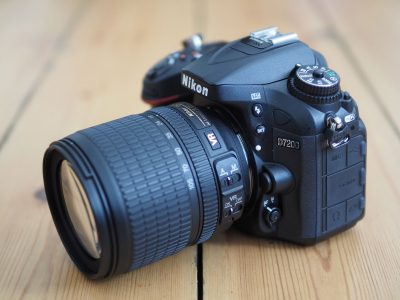
Nikon D7100 review


The D7100 is Nikon's latest upper mid-range DSLR aimed at enthusiasts. Slotting between the D7000 and full-frame D600, Nikon describes the D7100 as being the best that the DX-format can offer. It inherits the 100% viewfinder, 6fps shooting and twin SD card slots of the D7000, but increases the resolution to 24.1 Megapixels, boosts the AF system from 39 to 51-points, offers 1080p at 24, 25 and 30fps, boasts full weather-sealing and introduces a new 1.3x crop mode resulting in an overall field-reduction of two times at a resolution of 15.4 Megapixels and boosted speed of 7fps. It also becomes the company's second DSLR after the D800e to dispense with the low pass filter for sharper images. In our tests the images may not have been perceptively sharper than the D5200, but the D7100 offers so much more to the enthusiast photographer that it remains highly recommended. Just remember that you can essentially match the image quality with the D5200 and enjoy many of the same features with the D7000, both at a noticeably lower price.

Pros: 24MP; weatherproof; 6fps; 100% viewfinder; Full HD; dual SD slots.
Cons: Screen doesn't flip-out; no Wifi or GPS built-in; no better quality than D5200.
Overall: The most capable mid-range DSLR even if the lack of OLPF has little impact.

     
Camera Labs Buyer's Guides

Best mirrorless camera

Best budget DSLR


Best mid-range DSLR


Best pro DSLR


Best point and shoot camera


Best superzoom


Best camera accessories

Best Canon lenses

Best Nikon lenses


All words, images, videos and layout, copyright 2005-2013 Gordon Laing. May not be used without permission.

/ How we test / Best Cameras / Advertising / Camera reviews / Supporting Camera Labs