Best point and shoot compact cameras
If you're shopping for a point-and-shoot compact camera, you've come to the right place! At Camera Labs I write in-depth reviews of cameras but understand you're busy people who sometimes just want recommendations of the most outstanding products.
So here I'll cut to the chase and list the best point-and-shoot cameras around right now. I've fully tested each one and there's links to my reviews for more details.
If you find my reviews useful and would like to support Camera Labs, please click and shop from the stores below or from my partner stores page. Alternatively why not buy me a coffee at my favourite cafe?! Just click the coffee cup on the right to buy me a treat via Paypal, and be sure to tell me what you'd like me to order! I really do appreciate your support! |
| Pocket super-zoom: Panasonic TZ20 / ZS10 review |
|
|
|
|
| The Lumix DMC-TZ20 / ZS10 is the latest model in Panasonic's enormously popular travel zoom series. It may physically resemble last year's TZ10 / ZS7, but now features a broader 16x optical zoom, a touch-screen display, Full HD 1080i video, 3D photo capture, and enhanced GPS capabilities. Under the hood is a new CMOS sensor which avoids vertical streaking in movies, while also supporting fast continuous shooting. Panasonic's necessarily raised its game in the face of tough competition, but the TZ20 / ZS10 suffers from disappointing image quality when viewed at 100% on-screen. It's a deal-breaker for pixel-peepers, but the vast majority won't notice, or simply be willing to trade it for the impressive feature-set. Recommended so long as you understand the downsides.
Pros: 16x stabilised zoom with 24mm; 1080i video; GPS.
Cons: Patchy image quality even at 100 ISO when viewed up close.
Overall: Pixel-peepers beware, but it remains a great choice for most.
|
| Pocket super-zoom: Sony HX5 review |
|
|
|
|
| Sony's Cyber-shot DSC-HX5 is the company's first pocketable super-zoom camera and it's hit the ground running. It features a 10x (25-250mm equivalent) optical zoom, a Full HD 1080i movie mode, very fast burst shooting at 10fps and a built-in GPS which can pinpoint the locations of your shots. The HX5 also exploits its fast burst shooting in modes which combine multiple frames to reduce noise, or automatically generate panoramas with a simple sweep of the camera. Despite also recording altitude details, the GPS feels less integrated than the TZ20 / ZS10 above, but overall it's a highly compelling pocket super-zoom camera.
Pros: 10x zoom, 1080i video, 10fps burst, GPS, clever modes.
Cons: GPS less integrated than TZ20 / ZS10. Limited manual control.
Overall: A great all-round compact that's packed with innovation.
|
| Slim point-and-shoot: Canon ELPH 300 HS / IXUS 220 HS review |
|
|
|
|
|
Canon's ELPH 300 HS / IXUS 220 HS is a slim and stylish compact which strikes a great balance between features, quality and affordability. It employs a 12 Megapixel CMOS sensor with Canon's HS (High Sensitivity) system for decent low light performance. The body's slim, but packs-in a 5x optical zoom with very respectable 24mm wide angle coverage and a 2.7in screen. In terms of movies you can record Full HD 1080p, along with slow motion video and there's an 8fps burst mode too. No wonder it's become one of the best-selling point-and-shoot cameras on the market. PS - if you like it but fancy a longer 8x zoom and a bigger, more detailed screen, you could also consider the ELPH 310 HS / IXUS 230 HS.
Pros: Slim, stylish, 5x zoom with 24mm wide, 1080p video.
Cons: 2.7in screen a little smaller than some rivals.
Overall: One of the best slim compacts around. |
| Budget point-and-shoot: Canon A1200 review |
|
|
|
|
|
Canon's PowerShot A1200 is a 12.1 Megapixel budget camera with a 4x zoom. It's the second cheapest model in Canon's current line-up, but offers a surprising feature-set for its price point. Unlike most entry-level cameras, the zoom offers true wide-angle coverage, the video recording is in 720p HD, and there's even a small optical viewfinder which is handy when the screen becomes hard to view in direct sunlight, or if the battery is running low on charge. The lack of image stabilisation is the only real downside, but considering the other features and the asking price, it seems churlish to complain. A Highly Recommended point-and-shooter for those on a budget.
Pros: 4x zoom with 28mm wide; 720p video; viewfinder.
Cons: No image stabilisation; slow continuous shooting.
Overall: Lack of IS aside, an impressive camera for the money. |
| Mid-range super-zoom: Panasonic TZ18 / ZS8 review |
|
|
|
|
|
Panasonic's Lumix DMC-TZ18 / ZS8 is a simpler and more affordable version of the flagship TZ20 / ZS10 pocket super-zoom. It gives budget-conscious buyers exactly the same 16x optical range packed into the same compact body for a price that's around one quarter less. The resolution is also the same at 14.1 Megapixels, and some enthusiasts may actually prefer the image characteristics of its CCD sensor compared to the (C)MOS sensor in the TZ20 / ZS10. So as a no-frills super-zoom, it fits the bill, at least on paper anyway: you get the same zoom, same resolution, same auto and manual modes, and same body as the top-model, but at a cheaper price. It may be lacking the extensive feature-set of the TZ20 / ZS10, but you may not want or need it.
Pros: 16x stabilised zoom with 24mm; 720p video.
Cons: Slow burst shooting; modest 230k screen.
Overall: Ideal if you want the TZ20 / ZS10's zoom without the frills. |
| Pocket camera for enthusiasts: Canon S100 review |
|
|
|
|
|
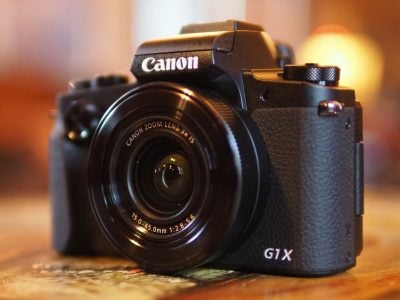
| Canon’s PowerShot S100 is an ideal choice for enthusiasts who want a pocket camera without compromising on control and features. It essentially takes the shell of the earlier S95 with its full manual control, RAW files and 3in / 460k screen, but squeezes-in a broader 5x optical zoom (24-120mm equivalent and still with f2.0 when zoomed-out), support for 1080p movies with optical zooming while filming, and even a built-in GPS. Canon's also switched the older 10 Megapixel CCD for a 12 Megapixel CMOS sensor, which may not be quite as punchy with the default settings, but supports 1080p video and faster shooting. If you’re after a truly pocket-sized camera with this degree of control and features, there’s not many alternatives. PS - the older S95 is also looking like a bargain right now. See our Canon S95 review.
Pros: Small body; 5x zoom; 1080p video; GPS; RAW files.
Cons: Previous S95 delivers punchier images with default settings.
Overall: A great pocket camera for enthusiasts. |
| Pocket camera for enthusiasts: Panasonic LX5 review |
|
|
|
|
|
| Panasonic's Lumix DMC-LX5 is the long-awaited successor to one of the most popular enthusiast compacts in recent years. The earlier Lumix LX3 delivered a winning combination of a bright and wide lens, sensible image resolution and high degree of manual control in a relatively pocketable package. Now two years on the Lumix LX5 builds on the success of its predecessor with a longer lens range, an accessory port and a number of discreet but worthy improvements. It certainly feels good in your hands, features a bright and wide lens with quick focusing and delivers decent quality results. The only flies in the ointment are the more pocketable Canon PowerShot S100 and an increasing number of compacts with DSLR-sized sensors like the Sony NEX.
Pros: Bright 24-90mm zoom; RAW; hotshoe; 3in/460k screen.
Cons: Slow continuous shooting; similar in size to EVIL models.
Overall: The best enthusiast's compact with a small sensor. |
| Touch-screen super-zoom compact: Canon ELPH 510 HS / IXUS 1100 HS review |
|
|
|
|
|
Canon's ELPH 510 HS / IXUS 1100 HS packs a 12x optical zoom and a large 3.2in touch-screen into a body that's slimmer than other pocketable super-zooms. It employs a 12 Megapixel CMOS sensor with Canon's HS (High Sensitivity) system for decent low light performance, can record Full HD movies at 1080p, offers miniature effects and super slow motion video options, while also shooting stills at up to 6.6fps (albeit at a reduced resolution of 3 Megapixels). The flagship model in the ELPH / IXUS range may not quite reach the 16x ranges of super-zoom rivals, but many will be happy to sacrifice some telephoto coverage for the slimmer body.
Pros: Large touch-screen; 12x zoom; 1080p video.
Cons: Some coloured fringing; screen requires firm touch.
Overall: The best touch-screen camera we've tested to date. |
| Credit-crunch point-and-shoot: Canon A800 review |
|
|
|
|
|
The PowerShot A800 is the cheapest point-and-shoot camera in Canon's 2011 line-up. It replaces the earlier A490 / A495 and sports 10 Megapixels, a 3.3x optical zoom and a 2.5in screen. It's a basic specification, but crucially hits a price-point lower than any Canon compact before it. At this price, there's understandably no image stabilisation, not HD movie recording or wide angle lens coverage, but what really impresses is the ease of use and sheer image quality, which manages to outshine many more expensive models. The A800 proves you can enjoy a big brand name with great image quality at a price which won't break the bank.
Pros: Great image quality for the money; long life from AA batteries.
Cons: No stabilisation; relatively small and coarse screen.
Overall: Surprisingly good image quality at a low price. |
Camera Labs Buyer's Guides
Accessories / Budget DSLRs / Mid-range DSLRs / Semi-pro DSLRs / Compacts / Superzooms / On Sale
|