Camera, DSLR and lens reviews |
|
|
20th May 2013: Canon PowerShot SX280 HS review!
The Canon PowerShot SX280 HS is a 12 Megapixel pocket super-zoom with a 20x optical range and built-in Wifi and GPS; the cheaper SX270 HS available in some regions is identical other than not having GPS or Wifi. The SX280 HS debuts Canon's latest DIGIC 6 image processor which claims to deliver 30% more detail than previous models and supports 1080p video in the MP4 format. The optical zoom operates in a 25-500mm equivalent range with a five-axis optical stabilizer, while the built-in GPS can automatically tag images with your location, and the built-in Wifi - a first for the SX series - lets you easily share and upload images. It's a solid specification from Canon, but how does it measure-up to rival pocket super-zooms? Find out in my in-depth Canon SX280 HS review!
14th May 2013: Zeiss Touit 12mm f2.8 review in progress!
I'm proud to bring you some of the first sample images, results and hands-on reports you'll find for the fabulous new Zeiss Touit 12mm f2.8 lens! I had a chance to try one out on a Fujifilm X-Pro 1 and took enough sample images to know this is one high quality lens. Touit (pronounced 'do-it') is a new series from Zeiss, designed for APS-C mirror-less cameras, and right now only available in either Sony NEX or Fujifilm X-mounts. There's two models: the 12mm f2.8 and the 32mm f1.8 and I got to test them both. It's really exciting to have some genuinely high-end native options, and I feel Zeiss have raised the bar for mirror-less cameras. Find out more in my Zeiss Touit 12mm f2.8 review and Zeiss Touit 32mm f1.8 review!
13th May 2013: Samsung Galaxy S4 review in progress!
The Galaxy S4 is Samsung's flagship smartphone. It's the successor to the hugely popular Galaxy S3 and like that model showcases the best of the Android platform. The S4 packs a bigger, higher resolution screen, faster processing and more radios into much the same form factor as before, but the big question for readers of Cameralabs is how the new 13 Megapixel camera measures-up. I've replaced my own Galaxy S3 with the S4 and have been shooting with it every day. I'm working on my Samsung Galaxy S4 review which concentrates on the camera quality and features, but can already share my resolution and noise comparisons against the older S3 and a broad selection of sample images for this exciting new handset!
10th May 2013: Olympus E-P5 preview!
The Olympus PEN E-P5 is a mirror-less camera based on the Micro Four Thirds standard. It's the successor to the two year-old E-P3 which makes it the new flagship in the Olympus PEN series. The E-P5 inherits the 16 Megapixel sensor of the OM-D E-M5 along with its built-in five-axis stabilization which works with any lens you attach. There's built-in Wifi for wireless remote control or image transfer, a top shutter speed of 1/8000 (the first for a compact system camera), and the touch-screen can now tilt vertically. Complementing the body are the new optional VF4 electronic viewfinder, and black versions of the 75mm, 45mm and 17mm f1.8 lenses. Find out more in my Olympus EP5 preview!
10th May 2013: Nikon 18-35mm review-in-progress!
The AF-S Nikkor 18-35mm f/3.5-4.5G ED is an 'affordable' wide angle zoom lens that's compatible with Nikon's full-frame FX format DSLRs. It's aimed at those who've bought lower-priced full-frame DSLRs like the D600, but equally works on cropped-frame DX format models, where it becomes equivalent to 27-53mm. Officially it's the successor to the older AF 18-35mm 3.5-4.5D ED, although that model remains on sale.The new AF-S 18-35mm sports a completely updated optical formula and naturally has been updated to feature SWM focusing. You can see how it performs on a D800 in my Nikon AF-S 18-35mm review, and later I'll add comparisons with the pricier 16-35mm f4 and 14-24mm f2.8!
7th May 2013: Canon SL1 100D review!
The Canon EOS Rebel SL1, or 100D as it's known outside North America, is the company's latest entry-level DSLR and the smallest and lightest model with an APS-C sensor to date. It's around 1cm smaller in every dimension than Canon's next smallest DSLR yet manages not to compromise on control, composition or connectivity. It may sport the same 18 Megapixels as earlier DSLRs but features an improved hybrid AF system with phase detect points spread over 80% of the sensor. Does a tiny DSLR with an optical viewfinder and native access to the full EF catalogue render mirror-less cameras redundant? I've been hard at work testing the new tiny DSLR and can now share my complete review, including comparisons with mirror-less cameras, real-life detail and noise for JPEG and RAW files, along with an extended sample images gallery and an in-depth look at the new movie capabilities! Check out my Canon EOS SL1 / 100D review!
1st May 2013: Canon 40mm pancake review!
The Canon EF 40mm f2.8 STM is the company's first 'pancake' lens, designed to be as small and light as possible. Measuring just 22.8mm thick, it protrudes to roughly the same degree as the grip on many DSLRs, and at 130g you'll hardly notice it when mounted. This in turn makes even larger DSLRs feel much more portable than before, and allows you to squeeze them into smaller bags or even certain pockets. Even though the EF 40mm f2.8 STM may be at least one stop slower than any of Canon's three 50mm lenses, it's proven popular due to its smaller size and surprisingly good quality. To help you decide if it's right for you, I tested its full-frame and cropped performance and compared its depth-of-field and bokeh. Check out my Canon EF 40mm f2.8 STM review!
29th April 2013: Nikon 80-400mm review!
The Nikkor AF-S 80-400mm f4.5-5.6G ED VR is a high-end telephoto zoom that's corrected for Nikon's full-frame FX-format DSLRs. It's the long-awaited update to the AF 80-400mm launched 12 years ago, and the dozen years between them has allowed Nikon to significantly improve the VR and AF - the latter now employing SWM to become an AF-S model - along with implementing an entirely new optical design. We've now completed our in-depth testing on what's proving to be one of the most exciting telephoto zooms to date. So check out our Nikon 80-400mm review!
24th April 2013: Panasonic Lumix G6 preview - Hands-on!
The Lumix G6 is Panasonic's latest mid-range mirror-less system camera. Styled like a DSLR but based on the Micro Four Thirds standard, it employs the same 16 Megapixel sensor as the G5, but couples it with a significantly improved electronic viewfinder employing an OLED panel for a clearer and more stable image, along with built-in Wifi and NFC for easy wireless communications. There's also 1080p video at 24p in addition to 50p or 60p, 7fps shooting, focus peaking, interval shooting and a newly-styled body that looks more professional. The G6 is also joined by a new 14-140mm zoom that's smaller, lighter and a tad brighter than before. I had a chance to shoot with the G6 and 14-140mm for several hours - find out how I got on in my Panasonic Lumix G6 hands-on preview!
24th April 2013: Panasonic Lumix LF1 preview - Hands-on!
Panasonic's Lumix LF1 is a new pocket-sized camera aimed at enthusiasts. Looking like a cross between the Lumix LX7 and Sony's Cyber-shot RX100 it's one of the smallest cameras to feature both a screen and an electronic viewfinder for composition. Despite the small size, Panasonic has also squeezed-in a 7.1x 28-200mm equivalent zoom along with Wifi and NFC for easy wireless communications. Sadly there's no room for a sensor that's bigger than the LX7's, but the combination of a tiny body with a viewfinder will already be whetting the appetites of many. Find out more in my Panasonic Lumix LF1 hands-on preview!
23rd April 2013: Panasonic Lumix TZ40 / ZS30 review!
Panasonic's Lumix TZ40, or ZS30 as it's known in North America, is the company's flagship travel-zoom. Successor to the best-selling Lumix TZ30 / ZS20, it shares the same 20x zoom range, 1080p video, 3in touchscreen and GPS with mapping. The new TZ40 / ZS30 adds new slow motion video modes, better GPS positioning in urban environments, enhanced stabilization and a more detailed screen. Most importantly it now sports built-in Wifi with Near Field Communications, or NFC for short, which takes care of the Wifi name and password when tapped against compatible devices. Once connected you can browse, transfer, share or backup photos, or remote control the camera with your iOS or Android phone. It adds up to one of the most compelling compacts around - find out everything in my Panasonic Lumix TZ40 / ZS30 review!
16th April 2013: Nikon D7100 review!
The D7100 is Nikon's latest upper mid-range DSLR aimed at enthusiasts. Slotting between the D7000 and D600, Nikon describes the D7100 as being the best that the DX-format can offer. It inherits the 100% viewfinder, 6fps shooting and twin SD card slots of the D7000, but increases the resolution to 24.1 Megapixels, boosts the AF system from 39 to 51-points, offers 1080p at 24, 25 and 30fps, boasts full weather-sealing and introduces a new 1.3x crop mode resulting in an overall field-reduction of two times at a resolution of 15.4 Megapixels and boosted speed of 7fps. It also becomes the company's second DSLR after the D800e to dispense with the low pass filter for sharper images. So is the quality better than the D5200 and is it a worthy upgrade for the D7000? We compared it with both to find out in our Nikon D7100 review!
12th April 2013: Tamron SP 70-200mm f2.8 review
The Tamron SP 70-200mm f/2.8 VC is the company's first 70-200mm f2.8 lens equipped with optical stabilisation. It covers a telephoto zoom range that's popular with short range sports and action shooters along with portrait photographers. Like other third party lenses, the attraction of the new Tamron is a high-end specification at a lower price than the main camera manufacturers, but as always the question is how the performance compares. To really put it through its paces we tested the Nikon version on a demanding D800 body - find out how it measured up in our Tamron 70-200mm f2.8 review!
9th April 2013: Panasonic Lumix GF6 preview
The Panasonic Lumix GF6 is the company's latest mirror-less camera aimed at consumers. It officially replaces the GF5, but contains sufficient upgrades to tempt many GX1 owners, although that model remains in the range for now. The GF6 appears to inherit the 16 Megapixel sensor of the GX1, although couples it with a new image processor. Inside there's now built-in NFC and Wifi for easy wireless transfer of images along with remote control via a smartphone. The other major new feature is a tilting touch-screen which can flip up by 180 degrees to face the subject. Find out more in my Panasonic Lumix GF6 preview which includes an exclusive video interview!
8th April 2013: Nikon COOLPIX A review
Nikon's COOLPIX A is the world's smallest camera to feature an APS-C-format sensor. The COOLPIX A's sensor measures the same size as those in Nikon's range of DX-format DSLRs and is coupled with a fixed 28mm equivalent f2.8 lens. The sensor features 16 Megapixels and like the recent D7100, dispenses with the optical low pass filter to promise sharper results. The camera also features a 1080p video, 4fps shooting, full manual control, a 3in / 921k dot screen, and a hotshoe which supports an optional optical viewfinder. Could this add to to the best compact camera for enthusiasts? Find out in our Nikon COOLPIX A review!
5th April 2013: Micro Four Thirds lens guide
Micro Four Thirds is the most established of the mirror-less camera systems. Jointly developed by Panasonic and Olympus, it brought mirror-less bodies and native lenses to the market at least one year before its first rival and now boasts over 40 native lenses from Panasonic and Olympus along with third parties including Sigma, Tamron, Samyang, Voigtlander. So while many rival mirror-less formats are struggling to offer even one lens in every category, Micro Four Thirds typically has two or more options available. But with such a variety where does the new or even long-term Micro Four Thirds owner begin to make their choice on a new lens? That's where my latest buyer's guide comes in, where I'll reveal the best Micro Four Thirds lenses!
25th March 2013: Fujifilm X-E1 review!
Fujifilm's X-E1 is a mirrorless compact system camera that employs the same 16 Megapixel X-Trans CMOS sensor and X-mount introduced with the X-Pro1, allowing it to exploit the same lenses and deliver the same quality as this popular model. The X-E1 also shares retro styling and analogue controls, but dispenses with the hybrid viewfinder for a smaller and more affordable body. In its place though is a very capable electronic viewfinder in addition to a screen for composition, and while it lacks the X-Pro1's PC Sync port, it does feature a popup flash and a microphone input. There's also a new stabilized 18-55mm kit lens with a brighter than average f2.8-4 aperture. It all adds up to a highly compelling camera as you'll discover in our Fujifilm X-E1 review!
22nd March 2013: Canon EOS T5i 700D preview!
Canon's EOS Rebel T5i, or EOS 700D as it's known outside North America, is an upper entry-level DSLR which replaces the recent EOS T4i / 650D. With only nine months between them, it's not surprising to find the 'new' model is identical to its predecessor other than a mode dial which can now freely rotate through 360 degrees, previews of Creative Filters in Live View, and a new external coating inherited from mid-range models like the 60D to provide a more durable finish. Oh, and the option of the new EF-S 18-55mm STM kit lens with its quicker and quieter focusing during movies. Perplexed by this modest refresh? Find out more in my Canon EOS T5i 700D preview.
18th March 2013: Canon EOS 6D review!
Canon's EOS 6D is the company's 'affordable' full-frame DSLR aimed at those upgrading from a mid-range camera, or looking for a backup for a pricier model. It features a new 20.2 Megapixel sensor, 4.5fps shooting and much the same movie modes as the 5D Mark III packed into the smallest and lightest full-frame DSLR from Canon to date. Most uniquely it also becomes the first Canon DSLR to boast both GPS and Wifi built into the body. The core specs may fall below its arch rival the Nikon D600, but as we discovered, the 6D offers better features and performance than you might think. We'll reveal all in our Canon EOS 6D review which includes in-depth comparisons with the Nikon D600.
12th March 2013: Samyang 85mm f1.4 review! Tested with D800e
The Samyang / Rokinon 85mm f1.4 is an affordable short telephoto lens with a bright focal ratio that's ideal for portrait work. Like other Samyang lenses, it's manual focus only, but comes in at a considerably lower price point than similar lenses from the big camera companies. If you're happy using manual focus the big question then is how does the quality measure-up? To find out I mounted the AE version on a Nikon D800e, followed by the premium Nikkor 85mm f1.4G. See how they compare in my Samyang 85mm f1.4 review and look out for updates with depth-of-field and bokeh comparisons.
6th March 2013: Nikon D5200 review!
The Nikon D5200 is the company's latest 'upper entry-level' DSLR. It's positioned between the entry-level D3200 and the mid-range D7100, and goes head-to-head against Canon's EOS T4i / 650D. The D5200 features 24 Megapixels, 1080p video, 5fps shooting, a 3in fully articulated screen and the same 39-point AF and metering systems as the D7000. It also supports an optional Wifi module for wireless remote control with a compatible smartphone. Find out all about it in my Nikon D5200 review where you'll see how the features and the quality compare to the Canon T4i / 650D!
4th March 2013: Panasonic Leica 25mm f1.4 review
The Panasonic Leica Summilux DG 25mm f1.4 is a standard lens for Micro Four Thirds cameras, including Panasonic Lumix G, Olympus PEN and Olympus OMD models. Mounted on a Micro Four Thirds body it delivers an effective focal length of 50mm, making it a classic standard lens, while the fast f1.4 focal ratio is ideal for use in low light or for achieving a shallow depth of field. It delivers excellent quality results, but is up against at least three other primes which are arguably more suitable for general-purpose use. In particular there's Panasonic's own 20mm f1.7 and the big question is how this compares to the 25mm. Find out which will be the best for you in my Panasonic Leica 25mm f1.4 review.
18th February 2013: Panasonic GH3 review
Panasonic's GH3 is the flagship of the Lumix G series, and the successor to the popular GH2. The GH3's headline features include a new 16 Megapixel sensor, improved screen and viewfinder, a multi-frame HDR mode along with 1080/50p/60p video, much higher movie bit rates, unlimited recording times, and both a headphone and microphone jack. But arguably most exciting of all it becomes the first Lumix G model to boast splash and dust-proof construction along with featuring built-in Wifi. It's the most powerful compact system camera from Panasonic to date, but goes up against key rivals including the Olympus OMD EM5 and Sony NEX 6. Find out how all three compare in my Panasonic GH3 review!
14th February 2013: Sigma 35mm f1.4 review
Sigma's 35mm f1.4 DG HSM is the company's first 35mm prime with a large aperture. Available in Canon, Nikon, Sony, Pentax and Sigma mounts, it goes head-to-head with the premium professional primes from the big camera companies but at a comfortably lower price. So the big question is how it compares against models like the Nikkor 35mm f1.4 and Canon 35mm f1.4? To really put it through its paces we got hold of the Nikon version, allowing us to test it on the most demanding full-frame DSLR to date, the 36 Megapixel D800; it also let us directly compare the Sigma against the Nikkor 35mm f1.4. Pro performance at an affordable price? Find out in our Sigma 35mm f1.4 review.
11th February 2013: Panasonic 7-14mm f4 review
Panasonic's Lumix 7-14mm f4 is an ultra-wide angle zoom lens for Micro Four Thirds cameras, including Panasonic Lumix G, Olympus PEN and Olympus OMD models. It delivers an effective focal length of 14-28mm, covering popular wide-angle focal lengths from mild to extreme, while the f4 aperture remains constant. The Panasonic 7-14mm may have been one of the first Micro Four Third lenses but remains one of the best, not to mention a compelling reason to invest in this mirror-less format - indeed it was a major factor in my selection of Micro Four Thirds for my recent world trip. So if, like me, you love the idea of a small and light but superb quality ultra wide zoom, check out my Panasonic Lumix 7-14mm review!
4th February 2013: Canon S110 review!
Canon's PowerShot S110 is a pocket-sized camera aimed at enthusiasts. Like previous S-series models, it packs a bright zoom lens, support for RAW and high degree of manual control into a very small body. The big new features are a touch-sensitive screen and built-in Wifi, the latter replacing rather than complementing the GPS on the older S100. The clever bit is the S110 can exploit the GPS in a compatible smartphone via Wifi. As before though the S110 is up against tough competition from other compacts aimed at enthusiasts including Panasonic's LX7, Sony's RX100 and the Olympus XZ-2. We'll help you choose the right one in our Canon S110 review!
30th January 2013: Olympus 45mm f1.8 review
The Olympus 45mm f1.8 is a short telephoto lens for Micro Four Thirds mirrorless cameras, including models by Panasonic and Olympus. With an effective focal length of 90mm and a bright aperture, it's primarily aimed at portrait shooters, but also surprisingly versatile in other situations. Close it to f4 and it'll deliver pin sharp images right into the corners, making it ideal for detailed buildings and landscapes. See how the resolution, depth-of-field and close-up capabilities compare against the Panasonic Leica 45mm f2.8 in my in-depth Olympus 45mm f1.8 review!
28th January 2013: Nikon 70-200mm f2.8 VR II review
Nikon's AF-S 70-200mm f/2.8G VR II is the latest version of its professional telephoto zoom lens. Featuring a fast f2.8 focal ratio, optical stabilization and tough build, it remains a popular choice for professional portrait and sports photographers. Compared to its predecessor, Nikon claims to have improved the optical design and stabilization, so to find out how it performs in practice we tested it with Nikon's most demanding full-frame body to date, the 36 Megapixel D800. Find out how it measures-up and whether it justifies the high asking price in our in-depth Nikon 70-200mm f2.8 VR II review!
21st January 2013: Panasonic Lumix G5 review
Panasonic's Lumix G5 is the latest in its growing range of mirrorless compact system cameras, or as it now likes to call them, DSLMs. Headline upgrades over the earlier G3 include a new 16 Megapixel sensor, 1080p video, 6fps shooting, three-frame HDR, a selection of art effects, a silent shutter option, a new lever for power zoom lenses and the ability to touch-focus with the screen while composing with the viewfinder. Like its predecessor, the G5 also includes a high resolution viewfinder, fully articulated touch-screen and of course a Micro Four Thirds mount, giving it the access to the broadest range of native lenses of any mirrorless system. Find out how it compares to the Wifi-equipped Sony NEX-6 in our Panasonic Lumix G5 review!
15th January 2013: Sigma 70-200mm f2.8 OS review
Sigma's 70-200mm f2.8 OS is the company's latest 70-200mm and its first to sport optical stabilization. Available for Canon, Nikon, Sony, Pentax, and Sigma's own mounts, it offers a more affordable alternative to the 70-200mm f2.8 options from the big camera manufacturers. So the big question then is how it compares? In his in-depth review, Cameralabs' lens tester Thomas put it through its paces on a 36 Megapixel Nikon D800 to really see if it could compete with pricier rivals. Find out whether it's the bright telephoto zoom for you in our Sigma 70-200mm f2.8 OS review!
10th January 2013: Sony NEX 6 review
Sony's NEX 6 is an upper mid-range mirrorless system camera, which slots between the NEX 5R and the top-end NEX 7. In many respects it's a cross between them, sharing the body shape, tilting screen, OLED viewfinder and popup flash of the NEX 7, and the 16 Megapixel sensor, phase-detect AF assistance and built-in Wifi and downloadable apps of the NEX 5R. Unique to the NEX 6 though are its standard flash hotshoe and exposure model dial. In my in-depth review I've taken a close look at the performance of the camera and in particular its built-in Wifi, downloadable apps and the new 16-50mm power zoom lens. Find out if this is the mirrorless camera for you in my Sony NEX 6 review!
7th January 2013: Nikon 70-200mm f4 review! With D800
The Nikon 70-200mm f4G is an exciting addition to the Nikkor lens catalogue, delivering the popular telephoto zoom range, but in a cheaper and much lighter package than the premium f2.8 version. But how do they compare in practice? Cameralabs' Nikon lens tester Thomas has been hard at work with a final production sample and can now reveal how sharp the new lens is for both DX and FX bodies including the D800, along with showing comparisons with the f2.8 version ahead of an in-depth 70-200mm group test. See his Nikon 70-200mm f4 review to find out if this is the ideal telephoto zoom for your Nikon DSLR!
26th December 2012: Panasonic FZ200 review!
Panasonic's Lumix FZ200 is the company's flagship super-zoom camera. Successor to the best-selling FZ150, it shares the same 24x (25-600mm equivalent) range but where its predecessor had a variable aperture of f2.8-5.2, the new model boasts a constant aperture of f2.8 throughout the entire focal range. Yep, that's right, f2.8 all the way to 600mm. In addition the FZ200 now sports an electronic viewfinder with six times the resolution of the FZ150. Considering it still has full manual control, a flash hotshoe, articulated screen and mic input, it's one of the best-featured super-zooms on the market. Find out how it compares to Canon's SX50 HS in my Panasonic FZ200 review!
17th December 2012: Canon SX50 HS review!
The Canon PowerShot SX50 HS is a 12 Megapixel super-zoom camera with a massive 50x optical range, equivalent to 24-1200mm - that's the world's longest super-zoom at the time of writing. Round the back, Canon has kept the articulated screen of its predecessor, but upgraded the panel to 2.8in / 460k. The hotshoe also remains, as does the manual control, but in a welcome new feature, in response no doubt to sales lost to Panasonic, the SX50 HS now offers RAW recording, although there's still no microphone input. Find out if the extended zoom range is a step too far or if it's the new King of the super-zooms in my in-depth Canon SX50 HS review!
13th December 2012: Cameralabs strap - now on sale!
I'm pleased to announce the official Camera Labs strap is back on sale, and for the first time you have the choice of two versions! There's the original Utility Strap, designed for heavier DSLRs and larger cameras, and now also a thinner version, designed for budget DSLRs, mirrorless system cameras and super-zooms. Both straps proudly feature the Cameralabs logo printed in white on black material and unlike previous Cameralabs straps are sling-style, designed for over-the-shoulder operation. The price? $30 USD for either version delivered anywhere in the world!
But be quick as there's only 100 and they're already selling fast! See the Cameralabs strap page for full details.
10th December 2012: Sony 10-18mm sample images
Sony's 10-18mm SEL-1018 is a very important new lens for the NEX system, as it finally brings ultra wide angle coverage to Sony's mirrorless format. Mount the SEL-1018 to a NEX body and you'll enjoy coverage equivalent to 15-27mm, and better still, the lens is optically-stabilised, making it one of the very few stabilized ultra-wide options in any system. The lens also boasts a constant f4 focal ratio, and usefully, a standard front filter thread. I've begun my tests and it's looking like a decent performer, but ahead of my final report, I wanted to share a selection of full resolution Sony 10-18mm sample images!
3rd December 2012: Nikon P7700 review!
The Nikon COOLPIX P7700 is the company's flagship compact aimed at enthusiasts. Successor to the popular P7100, it shares the same 7.1x 28-200mm optical range, but brightens the aperture by one stop throughout to f2-4. The optical rangefinder has gone, but the 3in / 921k screen is now fully articulated. The sensor remains slightly larger than most point-and-shoots at 1/1.7in, but the type has changed from a 10 Megapixel CCD to a 12 Megapixel CMOS, and with it the video upgraded from 720p to 1080p. Suffice it to say there's still loads of manual control and support for RAW, making the P7700 a popular choice for demanding enthusiasts and a key rival for Canon's G15. Find out how they compare in our Nikon P7700 review!
26th November 2012: Olympus E-PL5 review!
The PEN E-PL5 is the latest mid-range mirror-less compact system camera from Olympus. It inherits the superb 16 Megapixel sensor from the semi-pro OM-D E-M5, along with its 1080p movies, and while continuous shooting is a tad slower, it's still very quick at 8fps. There's a hotshoe which can accommodate an optional viewfinder, and a tilting 3in screen that's now touch-sensitive and can swivel round to face subjects. Crucially like all Olympus CSCs, it also boasts built-in stabilization which works with any lens you mount. Find out why the latest PEN is one of the best CSCs around in my Olympus E-PL5 review!
21st November 2012: Canon EOS M review!
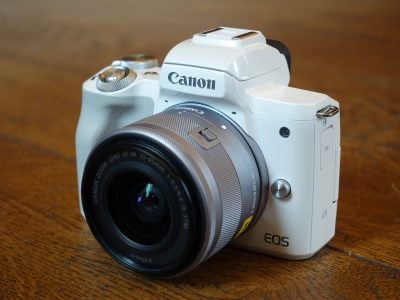
The EOS M is Canon's long-awaited entry into the mirror-less CSC market. It employs an 18 Megapixel APS-C sensor and a new EF-M lens mount with a 1.6x crop factor. Canon's launched the EOS-M with two native M-mount lenses, while the entire Canon EF and EF-S lens catalogue is supported with the optional EF-EOS M adapter. To see how the EOS M measures-up, I tested it with both the native EF-M lenses and a selection of EF models with the adapter, along with comparing its performance against rival compact system cameras. Find out if it's for you in my Canon EOS M review!
15th November 2012: Panasonic TS20 / FT20 review!
The Panasonic Lumix TS20 / FT20 is a water-proof, dust-proof and shock-proof camera with 16 Megapixels and a 4x zoom. You can submerge it to a depth of five meters, which may not be as deep as the more expensive Lumix FT3 and FT4 models nor the Canon D20, but it's sufficient for serious snorkeling, or simply playing about in the pool. To test the Lumix TS20 / FT20, we took it into the Atlantic surf off the coast of Cornwall in the South West of the UK along with the Canon PowerShot D20. Find out which underwater model will be best for you in our Panasonic TS20 / FT20 waterproof camera review!
12th November 2012: Canon G15 review!
Canon's PowerShot G15 is the latest model in the company's flagship G-series, replacing the G12 and positioned roughly between the S110 and G1 X. The G15 shares the same 28-140mm 5x range as its predecessor, but now boasts a focal ratio of f1.8-2.8, making the lens more than twice as bright. The sensor remains 1/1.7in, but Canon's switched from CCD to CMOS and bumped the resolution up to 12 Megapixels. It'll also now shoot 1080p video and the screen's bigger and more detailed. Is it still a relevant option for enthusiasts though? Find out in my Canon G15 review!
5th November 2012: Nikon D600 review!
The D600 is Nikon's most affordable full-frame DSLR to date and is aimed at those upgrading from a mid-range body or pros looking for a backup camera. As such it slots roughly between the D7000 and D800 and combines many aspects of both. Along with a new 24 Megapixel FX sensor, you get the 100% viewfinder and 3.2in screen of the D800 in addition to most of its movie features, along with the build and twin SD card slots of the D7000. Coupled with a 39-point AF system and 5.5fps shooting, it adds up to one of the most exciting DSLRs around. Find out if it's right for you in my in-depth Nikon D600 review which includes seven pages of comparisons with DX and full-frame bodies!
22nd October 2012: Nikon L810 review
Looking for an affordable big brand super-zoom? Nikon's COOLPIX L810 could be a good bet, sporting a 26x stabilised range, 16.1 Megapixel CCD and a 3in screen with 921k resolution. Essentially, it's a point and shoot super-zoom, with ease of use, compactness, and affordability being its major selling points. It's a combination which has seen it spend much of the year near the top of the sales charts, but how good is it really? Find out how it compares to Canon's SX500 IS in my Nikon L810 review!
17th October 2012: Canon D20 waterproof camera review
The Canon PowerShot D20 is a rugged waterproof camera designed for use outdoors in the kind of conditions you'd hesitate to take a conventional camera. It's waterproof to 10 Meters, dustproof, shockproof and can be used in temperatures from -10 to 40 degrees Celsius. It's Canon's second waterproof model and arrives three years after the original D10. Canon's swapped the sensor, broadened the zoom, added Full HD video and completely restyled the body. But how does it perform in practice compared to rivals? Find out in my Canon D20 review!
16th October 2012: Nikon vs Tamron 24-70mm f2.8
One of the most popular lenses in any catalogue is the 24-70mm f2.8. These offer a useful general-purpose range on full-frame (and cropped) bodies, while their bright f2.8 aperture is ideal for low-light and shallow depth-of-field portraits. Thing is, they don't come cheap, so the big question is how a third-party option compares to the big brands. In my 24-70mm comparison you'll see how the premium Nikon 24-70mm f2.8 compares against the cheaper, not to mention stabilized Tamron version, and for fun I've also included the Nikon 24-85mm as a budget wildcard.
11th October 2012: Sony RX100 review
Sony's Cyber-shot RX100 packs a large 20 Megapixel sensor, bright 3.6x zoom, 1080p video and 10fps burst shooting into a pocket-sized metal body. It's Sony's answer for enthusiasts who want a compact camera without compromising on quality and control, and unlike most efforts to date, it really looks like we've got what we want this time. Find out why this could be the perfect pocket camera for you in my Sony RX100 review!
3rd October 2012: Panasonic LX7 review!
The Panasonic Lumix LX7 is a high-end compact aimed at enthusiasts. It replaces the classic LX5 and while it shares the same 24-90mm equivalent range the focal ratio is now brightened from f2-3.3 to f1.4-2.3. This makes it the brightest overall compact, just pipping the Samsung EX2F at the tele end. Other upgrades include 1080p video, 11fps shooting and a 920k dot screen. In a world of system cameras and large sensor compacts the LX7 fights back by going bright. Find out why it remains a highly compelling option for enthusiasts my Panasonic LX7 review!
27th September 2012: Nikon 24-70mm f2.8 review!
The Nikon 24-70mm f2.8 is a top-end zoom aimed at portrait and wedding photographers. It's also ideal for anyone who desires a bright general-purpose zoom for a full-frame body. Like other 24-70mm f2.8 zooms, it's not exactly cheap, so prospective buyers need to know if it's worth the money. Find out how it performs on a demanding D800 in our Nikon 24-70mm f2.8 review, and don't forget to also check out our earlier Tamron 24-70mm f2.8 review as an alternative option.
24th September 2012: Canon SX500 IS review!
Canon's PowerShot SX500 IS is a compact super-zoom with a 30x optical range, 16 Megapixels, 3in screen, full manual control and 720p video. Canon describes it as the World's smallest camera with a 30x zoom and it certainly occupies a unique position in the market - after all, it zooms comfortably longer than pocket models like the best-selling Panasonic TZ30 / ZS20, yet is considerably smaller and lighter than the big guns like Canon's own SX50 HS. So does the SX500 offer an unbeatable combination of portability and reach? Find out in my Canon SX500 IS review!
12th September 2012: Sony A99 preview!
Sony certainly had a busy day, launching not one, but two cameras with 24 Megapixel full-frame sensors. So alongside the compact RX1 is the new flagship Alpha A99, which as expected, ditches the DSLR internals of the previous A900 for the semi-reflective SLT system. As such it becomes the first full-frame camera to support confident continuous AF during live view and movies, and like other Alpha SLTs, the sensor is stabilised which turns all lenses into anti-shake models. Ahead of my in-depth analysis, check out the headlines in my Sony A99 preview!
10th September 2012: Fujifilm HS30 EXR review!
The Fujifilm FinePix HS30 EXR is a 16 Megapixel super-zoom with a 30x optical range, manual zoom ring and a 3in flip-up screen. It replaces the HS20 EXR and while the resolution, lens range and screen size are unchanged, the HS30 EXR claims better low light performance and sports a brighter screen, more detailed viewfinder, face tracking for movies and a new rechargeable battery. At its heart though remain the innovative EXR modes which exploit the unique sensor to enhance detail, reduce noise or increase dynamic range. So how does it all work in practice? Find out in my Fujifilm HS30 EXR review!
3rd September 2012: Sony HX200V review!
Sony's HX200V is a 30x super-zoom camera with 18 Megapixels, 1080p video, a 3in tilting screen and built-in GPS for tagging your images with their location. As you'd expect from Sony it's not short on gadgets either sporting two intelligent auto modes, 3D shooting, Sweep Panorama and 3D panorama in addition to a range of stacking modes designed to get good results in low light. It sounds good on paper, but how does the successor to the popular HX100V compare to rivals in practice? Find out in my Sony HX200V review!
29th August 2012: Tamron 24-70mm review!
Tamron's SP 24-70mm f/2.8 Di VC USD is the first 24-70mm f2.8 zoom with built-in stabilization, and it's available for Canon, Nikon and Sony mounts. Until now, all 24-70mm f2.8 lenses for full-frame DSLRs have been bereft of stabilization, including Canon and Nikon's options, not to mention Sigma's alternative. Tamron cleverly spotted the opportunity to create something different, but is it any good? To find out we took the Nikon version and mounted it on a demanding D800. Find out how it measures-up in our Tamron 24-70mm f2.8 review!
27th August 2012: Panasonic FZ60 / FZ62 review!
Panasonic's Lumix FZ60 / FZ62 is a super-zoom camera with 16 Megapixels and a 24x optical range. It's the simpler of two new FZ models, but while it lacks the enthusiast feature-set of the pricier FZ200, it shares the same 25-600mm zoom range at a much lower price point. So if you want the zoom without the bells and whistles, it could be for you. Find out how it compares to rival super-zooms and how its new MOS sensor performs in my Panasonic FZ60 / FZ62 review!
20th August 2012: Canon ELPH 520 / IXUS 500 review!
The Canon ELPH 520 HS / IXUS 500 HS is a super-slim super-zoom camera, packing 10 Megapixels and a 12x optical zoom into a surprisingly compact body. The 520 HS / 500 HS also sports 1080p video and a large 3in screen. It's this compelling array of features which places it near the top of the current ELPH / IXUS range, but is it the right point-and-shoot camera for you? Find out in my Canon ELPH 520 / IXUS 500 review!
17th August 2012: Canon ELPH 110 / IXUS 125 review!
Canon's ELPH 110 HS / IXUS 125 HS is a point-and-shoot camera sporting 16 Megapixels, a 3in screen and a 5x optical zoom. It's the successor to one of Canon's most popular models, boosting the resolution, extending the zoom range and increasing the screen detail. Indeed it's already become another best-seller, so here I've put it through its paces, comparing it against the ELPH 520 HS / IXUS 500 HS with its longer 12x zoom. See my Canon ELPH 110 / IXUS 125 review to see which will be best for you!
13th August 2012: Nikon D800 review!
At long last I've finished my Nikon D800 review! Travelling commitments coupled with delayed third-party RAW converters has meant it's taken me a lot longer to complete my review than intended, but it's ready to go and a biggie! With over 15,000 words of in-depth analysis, seven pages of results, and numerous comparisons in JPEG, RAW and both full and down-sampled resolutions, you'll discover exactly how Nikon's remarkable 36 Megapixel DSLR measures-up against its arch rival, the Canon EOS 5D Mark III, not to mention medium format digital. Is this the ultimate DSLR, a specialist's dream or both? Find out in my Nikon D800 review!
10th August 2012: Nikon 24-120mm review - with D800!
Nikon's AF-S 24-120mm f4G is a general-purpose zoom that's corrected for full-frame bodies and compatible with the entire range of Nikon DSLRs. The 5x range goes from decent wide-angle to useful telephoto on a full-frame body, while also sporting a constant f4 aperture and Vibration Reduction. It's also a good option for DX bodies when complemented with an ultra wide zoom like the DX 10-24mm. Find out how it performs under the scrutiny of a D800 in my Nikon 24-120mm review!
6th August 2012: Canon T4i / 650D review - with 18-135mm STM
Canon's EOS T4i / 650D is the company's latest upper entry-level DSLR, sporting 18 Megapixels and 1080p HD video and becoming the first with a fully-articulated touch-screen display. The T4i / 650D also becomes the first EOS DSLR to offer continuous autofocusing during video and live view thanks to a new hybrid AF system which combines phase-detect and contrast-based technologies. So while it looks similar to the T3i / 600D from the outside, a raft of new technologies under the hood promise much improved handling. But how well does it all comes together in practice? Find out in my Canon T4i / 650D review!
|